Does life begin at 90? I don’t know about that, but in today’s classical music world, it’s probably safe to say that 90 is the new 70. Two days after the 90th birthday of composer Carlisle Floyd, whose opera “Prince of Players” was given its premiere by Houston Grand Opera in March, I stumbled across this piece on classical-music.com:
Curiously the impetus was Queen Elizabeth II, rather than Floyd, whose birthday fell on the very day the article was posted. The composer is conspicuously absent from the list. You can read more about Floyd in my June 11 Facebook entry, which wasn’t ready until Saturday evening and therefore may have escaped your attention.
Sadly, Phyllis Curtin, who created the title role of Floyd’s “Susannah” in 1956, propelling the 29 year-old composer to fame, died on June 5 at the age of 94.
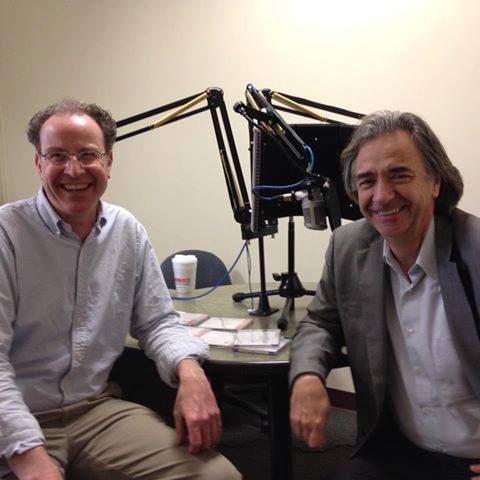
This Sunday night on “The Lost Chord,” I’ll be joined by Mariusz Smolij for the first of a two-part series, in which we sample from his recording projects for the Naxos label, focusing on Eastern European composers.
Smolij is known in the Greater Delaware Valley as the Music Director of the Riverside Symphonia, based in Lambertville, NJ, which he has directed for over 20 years. He is also music director of the Acadiana Symphony Orchestra and Conservatory of Music in Lafayette, LA, and formerly associated with the Houston Symphony Orchestra and the New Jersey Symphony Orchestra. He has taught conducting at the music school of Northwestern University in Chicago and was a founding violinist of the internationally acclaimed Penderecki String Quartet.
We’ll hear selections from a concert work by celebrated film composer Miklós Rózsa (he of “Ben-Hur” fame), as well as several by his lesser-known friend and colleague Eugene Zador.
That’s “Famished for Hungary” – Mariusz Smolij’s recordings of Hungarian music for the Naxos label – this Sunday night at 10 EDT, with a repeat Wednesday evening at 6, on WWFM – The Classical Network; or listen to it later as a webcast at wwfm.org.
Today is the 90th birthday of one of the most successful opera composers this country has ever produced. Carlisle Floyd was not yet 30 when he lured Phyllis Curtin and Mack Harrell to Tallahassee to sing in the world premiere of “Susannah” in 1956. The opera takes the Apocryphal tale of Susannah and the Elders and transplants it to rural Tennessee.
Floyd wrote the libretto and music while on the piano faculty at Florida State University. The work’s success soon spread to New York, and “Susannah” went on to become the most frequently performed American opera behind only Gershwin’s “Porgy and Bess.” It does feature two heart-melting arias that remain favorites of aspiring American sopranos, “Ain’t It a Pretty Night” and “The Trees on the Mountain.”
The directness of the drama and the uncluttered musical language struck a chord with both performers and audiences. Emboldened by his success, Floyd went on to compose ten more operas, all of them on his own librettos, drawing inspiration from such diverse sources as Emily Bronte’s “Wuthering Heights,” Robert Louis Stevenson’s “Markheim,” John Steinbeck’s “Of Mice and Men” and Robert Penn Warren’s “All the King’s Men.”
“Cold Sassy Tree,” based on the novel of Olive Ann Burns was given its premiere in 2000. It was intended to have been the composer’s swan song. Floyd had become too busy caring for his wife, who suffered from Alzheimer’s disease, to devote much further thought to composition. But following her passing, he found the inspiration for one last hurrah. The result was the recently completed opera “Prince of Players,” about 17th century actor Edward Kynaston, which was given its premiere at the Houston Grand Opera in March.
To have a new opera premiered at the age of 90 should be an inspiration to all of us who not only care about music, but who have ever puzzled over finding meaning in our lives. Happy birthday, Carlisle Floyd!
Tune in to WRTI this afternoon at 1:00 EDT to enjoy a broadcast of OperaDelaware’s acclaimed production of Franco Faccio’s “Amleto.” The 1865 opera, on a libretto of Arrigo Boito after Shakespeare’s “Hamlet,” lay unheard for over 130 years after its only revival in 1871. Boito, of course, would go on to provide Shakespeare-inspired libretti for Giuseppe Verdi’s “Otello” (1887) and “Falstaff” (1893).
Learn more about the opera and its remarkable reconstruction here:
WRTI can be heard in Philadelphia at 90.1 FM. Find a complete list of frequencies here: http://wrti.org/wrti-coverage-map; or listen online at wrti.org.
When composer Tim Keyes was in search of inspiration for his new oratorio, he knew all he had to do was return to “The Well.”
“The Well,” based on an episode from the Gospel of John, tells of Jesus’ encounter with a Samaritan woman, in which He, a Jew, gently erodes the cultural divide between them and introduces her to the concept of “living water,” a metaphor for salvation and eternal life.
Keyes first embarked on the project many years ago, in the early 1990s, while he served as music director for Marty Haugen, himself a prolific composer of liturgical music.
“I abandoned it, because I just wasn’t happy with how it was coming out,” Keyes says. “Then the Pope this year declared a Holy Year of Mercy, and I thought this was a perfect time to revisit it. But I revisited in a different way. I created something that lives somewhere between opera and Broadway. It has the emotional content of a Broadway production, but it has the musical content of an opera. It’s kind of a departure for me, but I think it works in a very interesting way.”
The oratorio, scored for eight soloists, choir and orchestra, will be given its premiere at Princeton University’s Richardson Auditorium tomorrow at 8 p.m., with the composer conducting the Tim Keyes Consort.
The program will also include works on themes of mercy and forgiveness by English Renaissance composer Richard Farrant (“Lord Who Throughout Thy Tender Mercy”), the Belgian-born French Romantic César Franck (his symphonic poem “Redemption”), and contemporary Irish composer Michael McGlynn (“Pie Jesu”).
You can find out more about it, Keyes the composer, and his consort, in my article in today’s Trenton Times.


6 responses