• Surviving Rusalka Week with Slavic Opera

    Surviving Rusalka Week with Slavic Opera

    by 

    in
    6 responses

    What precautions have you taken against Rusalka Week? None, you say? (Crosses self.)

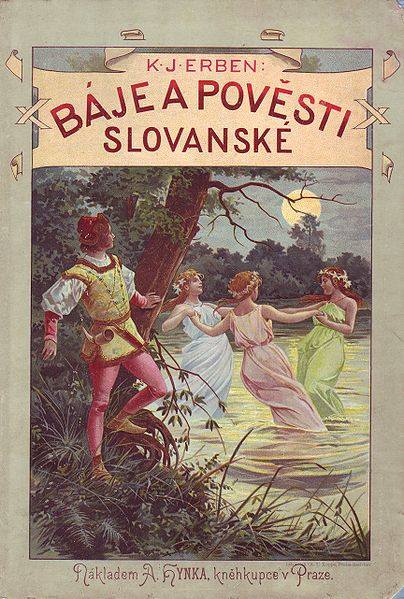
    In Slavic mythology, a rusalka is a spirit that dwells at the bottom of a river or lake. She lures unsuspecting men with her song, invariably resulting in a watery doom. Rusalki are never more dangerous than in early June, when the spirits roam free.

    There have been innumerable pieces of music written about water spirits – sirens, naiads, lorelei, undines, mermaids and melusinas. One of the best known of the bunch is Dvořák’s “Rusalka,” inspired by Czech fairy tales of Karel Jaromir Erben and Božena Němcová. Here is its most famous aria, the “Song to the Moon,” sung by Lucia Popp:

    https://www.youtube.com/watch?v=uoPTh_q7GYs

    Alexander Dargomizhsky, one of the pioneers of Russian nationalism in music, also composed an opera called “Rusalka.” His was based on a dramatic poem by Pushkin. Chaliapin recorded selections, but the complete opera is as rare as hen’s teeth.

    Rusalka Week is the backdrop for Rimsky-Korsakov’s opera, “May Night,” drawn from Gogol’s collection, “Evenings on a Farm Near Dikanka.” The Nikolai Golovanov recording from 1948 is still the one to beat.

    https://www.youtube.com/watch?v=I6PjqmjQ6qk

    Of course, it being YouTube, you will have to search for plot synopses and libretti yourself. You should have plenty of time to do so. You shouldn’t be out wandering at night during Rusalka Week anyway.


  • Fikret Amirov Rediscovered Azerbaijani Composer

    Fikret Amirov Rediscovered Azerbaijani Composer

    by 

    in
    4 responses

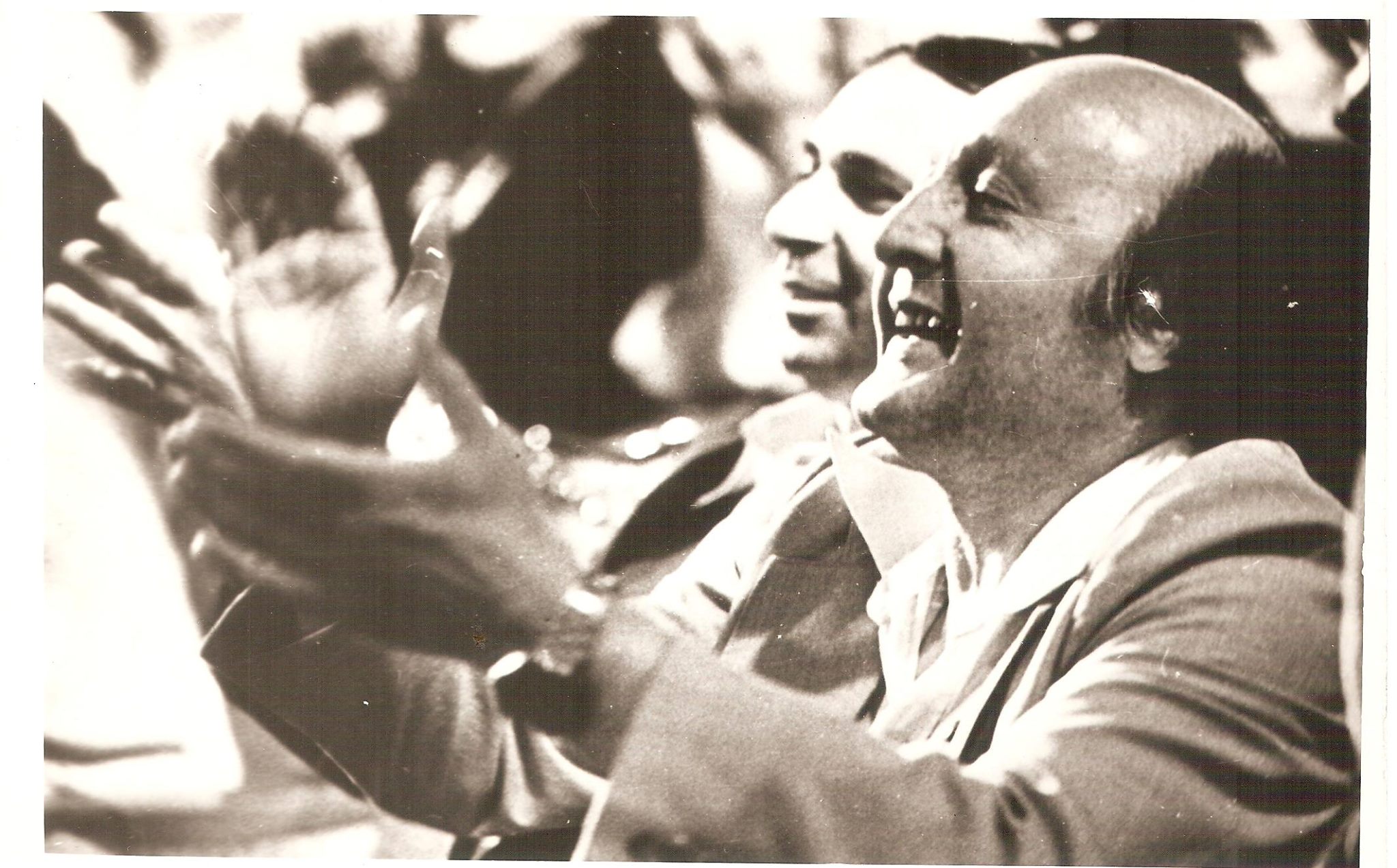
    Collectors of a certain vintage (and musical archaeologists who haunt used record shops) may remember Leopold Stokowski’s recording, with the Houston Symphony Orchestra, of “Azerbaijan Mugam” by Fikret Amirov. Its native title is “Kyurdi Ovshari.”

    That language barrier may in part explain Amirov’s relative obscurity in the West. Even taking into account the more accessible title, what exactly is a mugam? It turns out it is a highly rhapsodic and improvisatory form, alternating between song and dance episodes, characteristic of Azeri music. But you see what I mean.

    It is that very exoticism which makes Amirov difficult to market, yet at the same time, it is what makes him so interesting. In these multicultural times, when such a high-profile musician as Yo-Yo Ma traverses the Silk Road, perhaps Amirov’s day has finally come.

    This Sunday night on “The Lost Chord,” we’ll hear two works by Amirov (1922-1984), winner of the Stalin Prize in 1949, honored as People’s Artist of the USSR in 1965, and recipient of the USSR State Prize in 1980.

    His “Six Pieces for Flute and Piano,” of 1970, consists of “Song of the Aushug,” “Lullaby,” “Dance,” “In the Azerbaijan Mountains,” “At the Spring,” and “Nocturne.” If Amirov’s music at times reminds one of Khachaturian, one need only remember that Azerbaijan shares a border with Armenia. Without getting too much into politics, relations between the two countries are tense, to say the least. His music also bears the influence of other neighboring and nearby countries – Turkey, Russia, and Iran.

    This is something to bear in mind when approaching his full-length ballet, “The Arabian Nights.” The work, given its premiere in 1979, is one of the rare adaptations to come out of a region which gave us the original stories that make up “A Thousand and One Nights.” The world famous adventures of Sinbad, Ali Baba and Aladdin are enshrined in these tales, and each of them make an appearance in the ballet’s second act.

    Tonight, however, we’ll hear selections from Act I, which sets up the framing device, the unfaithful wife Nurida, the Sultan’s declaration of vengeance against all womankind, and the introduction of Scheherazade, the vizier’s daughter who enthralls the Sultan with her wit and creativity and finally restores his ability to love.

    I hope you’ll join me for “Azerbaijani Come Lately” – late works by Fikret Amirov – this Sunday night at 10 EDT, with a repeat Wednesday evening at 6; or that you’ll listen to it later as a webcast at wwfm.org.


    Stokowski conducts “Azerbaijan Mugam”:


  • Ross Amico Jazz WRTI Tonight

    Ross Amico Jazz WRTI Tonight

    by 

    in
    5 responses

    If you’ve never had the chance to hear Classic Ross Amico spinning the jazz, I’ll be donning the pork pie from 6 to 9 tonight on WRTI 90.1 FM in Philadelphia and at wrti.org. Stay cool, fools!


  • Radio Host’s Classical to Jazz Marathon on WRTI

    Radio Host’s Classical to Jazz Marathon on WRTI

    by 

    in
    6 responses

    How many radio hosts can do a “Wozzeck” warm-up show and then turn around and introduce an evening of jazz favorites? Well, this one will do his best.

    Join me this afternoon — and this evening — on WRTI, as I fill in for Mark Pinto and Jeff Duperon. I’ll be on at noon with some music of Bach and Barber. Alban Berg’s “Wozzeck” is coming up at 1:00, from the Lyric of Opera of Chicago. In between, it will be the opera preview.

    New releases, hosted by yours truly, will follow at 3:00. Then it’s “Discoveries from the Fleisher Collection” with Kile Smith and Jack Moore at 5:00. The focus this week will be on music by American composer Edward MacDowell.

    Jazz begins at 6. Somewhere along the way, I’ll grab some tea and a sandwich. Listen today, in Philadelphia at 90.1 FM. You’ll find a full list of frequencies at wrti.org.


  • Joan of Arc Film Scores on WWFM

    Joan of Arc Film Scores on WWFM

    by 

    in
    5 responses

    I suppose everyone is familiar with the basic story of Joan of Arc, the peasant girl who believed God chose her to lead the French against English forces during the Hundred Years’ War. She managed to convince the Dauphin, Charles de Valois (soon King Charles VII), to entrust her with an army, which she led to the besieged city of Orléans. There, without military training, she succeeded in achieving a momentous victory against Anglo-Burgundian forces. She was later captured, tried for heresy, and burned at the stake at the age of 19. Nearly 30 years later, the case was reopened and she was declared innocent. Revered for nearly 600 years, she was elevated to a national symbol by Napoleon in 1803 and finally canonized in 1920.

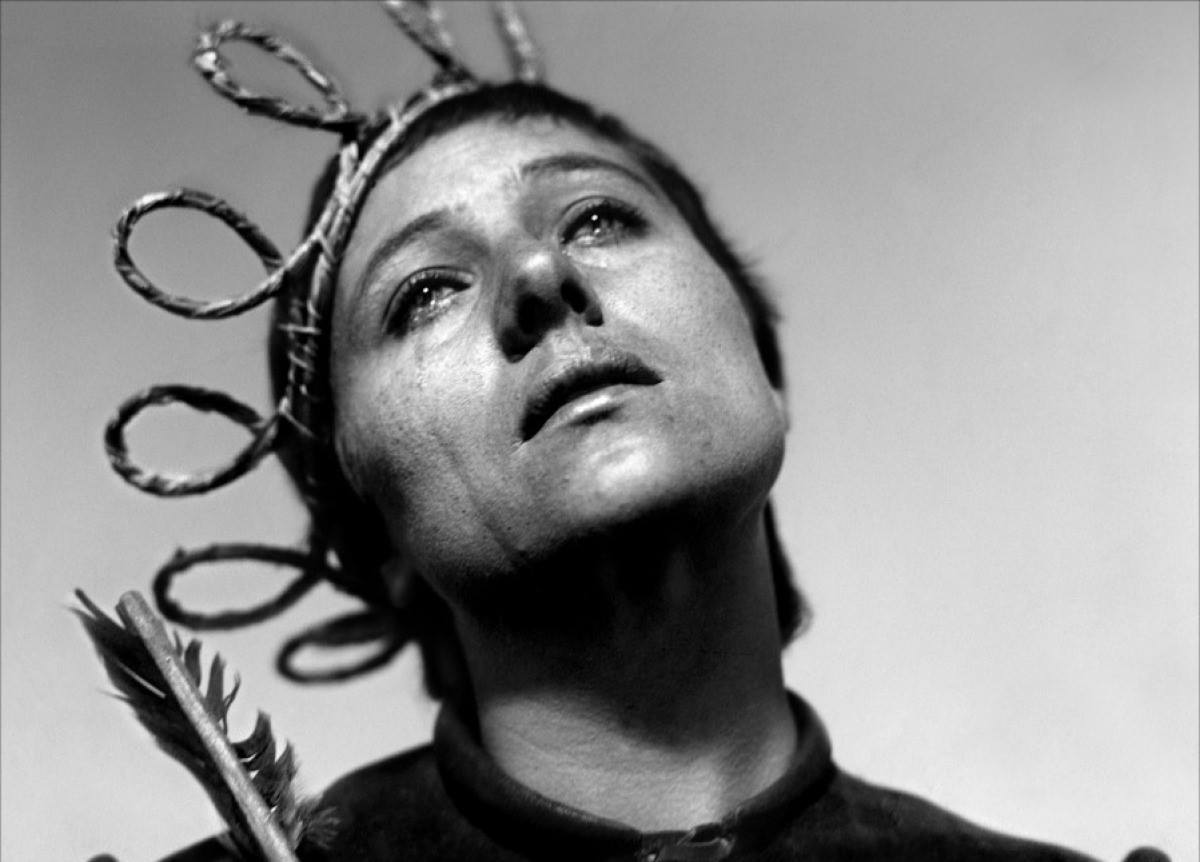
    This week on “Picture Perfect,” we’ll be listening to music for films inspired by Joan’s historical exploits, with two scores written in response to Carl Theodor Dreyer’s 1928 classic, “The Passion of Joan of Arc.” “The Passion of Joan of Arc” will be screened as part of this year’s The Princeton Festival. Soloists of Notre Dame Vocale will join the Princeton Festival Chorus and Princeton Symphony Orchestra to perform, with the film, “Voices of Light” by Richard Einhorn. That event will take place at Princeton University Chapel on June 9 at 8:30 p.m. Einhorn himself will give a free pre-performance talk at the Princeton Garden Theatre at 5 p.m. More information is available at princetonfestival.org.

    We’ll be sampling from Einhorn’s score, written in 1994, as well as one commissioned from Danish composer and conductor Ole Schmidt, also written to accompany the film, in 1983.

    In 1999, Luc Besson directed the “The Messenger: The Story of Joan of Arc,” with his then wife, Milla Jovovich, as the Maid of Orléans, and a starry supporting cast, including John Malkovich, Faye Dunaway and Dustin Hoffman (donning an Obi-Wan robe). The composer was Éric Serra. The score is primarily orchestral, but incorporates synthesized effects.

    Finally, we’ll turn to Otto Preminger’s “Saint Joan,” based on the play by George Bernard Shaw. Graham Greene wrote the screenplay for the 1957 film. Newcomer Jean Seberg was Joan, somewhat out of her league alongside veteran actors John Gielgud, Anton Walbrook and Felix Aylmer. Also, would you believe Richard Widmark as Charles VII? Unfortunately, “Saint Joan” was immolated by the critics. Mischa Spoliansky composed the lovely score. Here’s the film’s main title sequence, designed by the legendary Saul Bass:

    I hope you’ll join me for these scores written for films about Joan of Arc, on WWFM – The Classical Network, this Friday evening at 6 EDT, with a repeat Saturday morning at 6; or that you’ll listen to them later as a webcast at wwfm.org.


Tag Cloud

Aaron Copland (93) Beethoven (95) Composer (114) Film Music (144) Film Score (143) Film Scores (255) Halloween (94) John Williams (195) KWAX (229) Leonard Bernstein (104) Marlboro Music Festival (125) Movie Music (159) Mozart (91) Opera (213) Philadelphia Orchestra (89) Picture Perfect (174) Princeton Symphony Orchestra (109) Radio (88) Ross Amico (244) Roy's Tie-Dye Sci-Fi Corner (290) The Classical Network (101) The Lost Chord (269) Vaughan Williams (105) WPRB (397) WWFM (881)

DON’T MISS A BEAT

Receive a weekly digest every Sunday at noon by signing up here


RECENT POSTS