• American Boychoir’s решающий концерт

    American Boychoir’s решающий концерт

    by 

    in
    5 responses

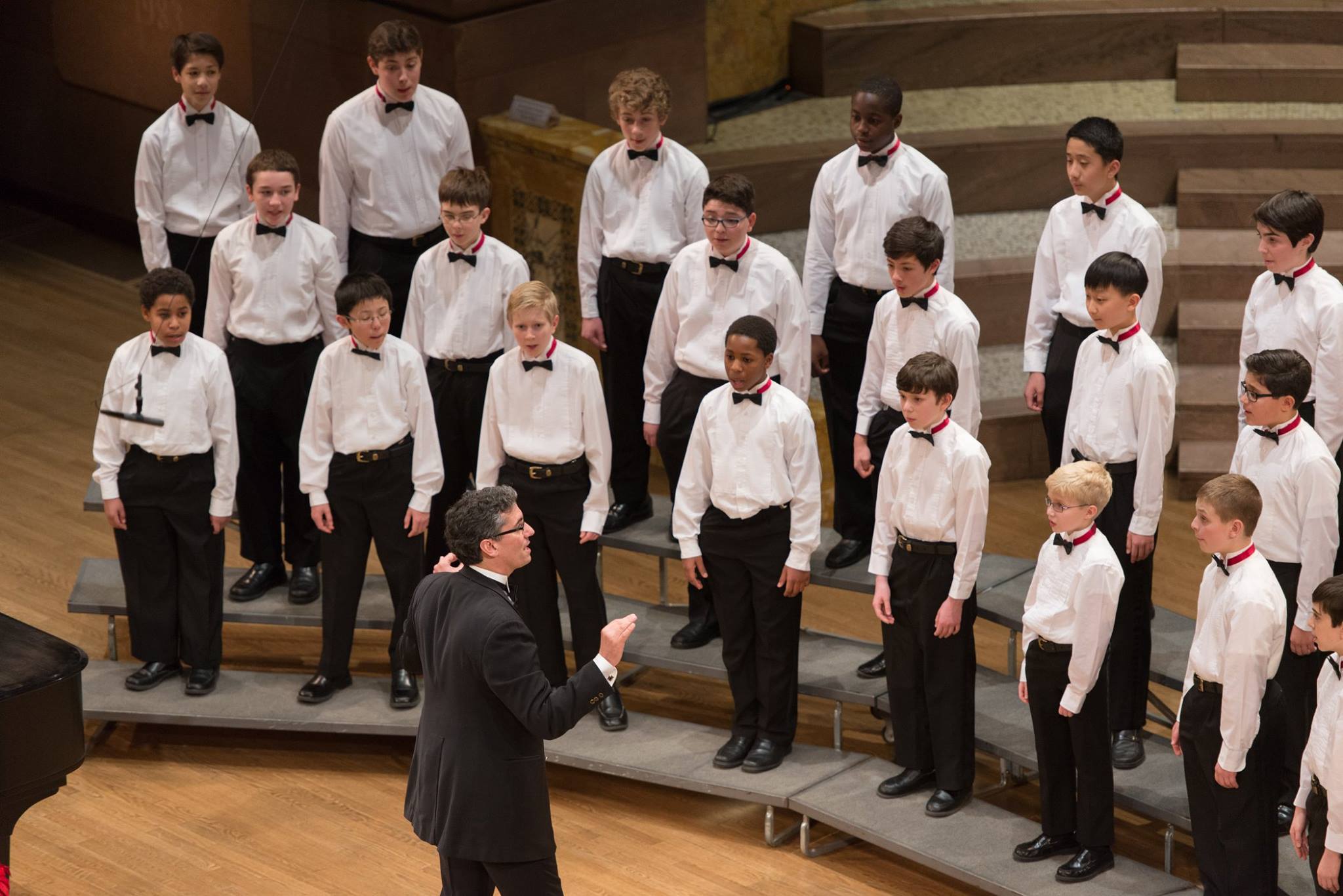
    Is this the The American Boychoir’s most important concert? It might very well be.

    “… [W]e are approaching a very important date for us, and that is the date where we are going to be meeting with the bankruptcy judge that is going to look at our finances and our financial model and is going to in essence decide whether we can continue or not,” says the ensemble’s artistic director Fernando Malvar-Ruiz, who nevertheless manages to remain upbeat.

    “We are looking great for this,” he says. “For example, in terms of music bookings, we are well ahead of the curve. Next year is all booked, and we are starting to book the following one. In terms of tuition money, we are well ahead of predictions. The only thing where we are not quite there is in our annual fund. That is something that we would really like to get as high as possible so that everything is looking not only as we predicted, but beyond. This benefit concert, hopefully, will help us raise some of the money that we still need to get there. But we are almost there.”

    The concert will take place on Sunday at 4 p.m. at Princeton University’s Richardson Auditorium. You can read more about it in my article in today’s Trenton Times.

    http://www.nj.com/times-entertainment/index.ssf/2016/06/classical_music_american_boych_1.html


  • Yannick Nézet-Séguin New Met Music Director

    Yannick Nézet-Séguin New Met Music Director

    by 

    in
    4 responses

    Yannick Nézet-Séguin has been named the new music director of the Metropolitan Opera. James Levine, who held the position for the past 40 years, agreed to step down at the end of this season because of health issues. Levine led his final performance as the Met’s music director, of Mozart’s “The Abduction from the Seraglio,” on May 7. He conducted the Met Orchestra in selections from Wagner’s “Ring” at Carnegie Hall on May 26.

    Yannick is a very fine conductor of opera and a seemingly unstoppable force, but even for such a fireball, maintaining his loyalty to Philadelphia (where his contract has been renewed through 2026) and the Orchestre Métropolitain in his native Montreal might be spreading things a bit thin. Congratulations, Yannick, and best of luck to you!

    Here’s the press release:

    YANNICK NEZET-SEGUIN NAMED THE METROPOLITAN OPERA’S MUSIC DIRECTOR

    The 41-year-old conductor will become only the third
    Music Director in the history of the Met

    New York, NY (June 2, 2016) – The Metropolitan Opera announced that the acclaimed conductor Yannick Nézet-Séguin will be the company’s new Music Director. The position has previously been held by only two artists in the company’s storied 133-year history—James Levine, who after 40 years in the position stepped down at the end of the recently concluded season to become the company’s first Music Director Emeritus, and Rafael Kubelik, who held the title briefly in the company’s 1973-74 season.

    In the Met’s 2017-18 season, Nézet-Séguin will assume the interim title of Music Director Designate. He will become Music Director in the 2020-21 season, the first season in which he is available to take over the full responsibilities of the position. However, he will immediately become involved in the company’s artistic planning, which happens many years in advance.

    As Music Director, Nézet-Séguin will be responsible for the overall musical quality of the Met. He will have artistic authority over the company’s orchestra, chorus, and music staff, and will work in tandem with Met General Manager Peter Gelb to oversee the planning and casting of each Met season, including repertoire choices, new productions (including the selection of creative teams), revivals, and commissions.

    Nézet-Séguin will initially conduct five different operas each season he is Music Director, as well as concerts with the Met Orchestra. In each of the seasons in which he is Music Director Designate, Nézet-Séguin will conduct two operas. Next season at the Met, he will conduct his first Wagner opera with the company, a revival of Der Fliegende Holländer.

    “Becoming the Music Director of the Metropolitan Opera is the fulfillment of a lifelong dream for me,” said Nézet-Séguin. “I am truly honored and humbled by the opportunity to succeed the legendary James Levine and to work with the extraordinary orchestra, chorus, and staff of what I believe is the greatest opera company in the world. I will make it my mission to passionately preserve the highest artistic standards while imagining a new, bright future for our art form.”

    “Yannick was the clear choice of the Company,” said Gelb. “He is the right artist at the right time to lead us forward into a new and what I believe will be a glorious chapter in the history of the Met.”

    “The Metropolitan Opera has been the great artistic love of my life, and it has been tremendously rewarding to see the company develop and improve over the past 45 years,” said Levine. “I offer my heartfelt congratulations to Yannick on taking the musical reins, and I look forward to seeing the good work continue under his watch.”

    “The MET Orchestra enjoys a tremendously fruitful, positive relationship with Maestro Nézet-Séguin, and we are delighted in his appointment as Music Director,” said Jessica Phillips, clarinetist and chair of the Met’s Orchestra committee. “He embodies the artistic leadership, musical excellence, and respect for rich tradition that opera lovers around the world have come to cherish. We eagerly look forward to working together to shape this new era at the Met.”

    “The singers and stage performers at the Met welcome Yannick Nézet-Séguin, joining the historic line of artists from James Levine’s great tenure back to Toscanini and Mahler,” said David Frye, tenor and chair of the Met’s chorus committee. “Yannick has led great performances with the company, and we’re eager to expand our collaboration.”

    Nézet-Séguin made his Met debut in the 2009-10 season, conducting a new production of Bizet’s Carmen. He has returned in every subsequent season, leading acclaimed performances of Verdi’s Don Carlo, Gounod’s Faust, Verdi’s La Traviata, and Dvořák’s Rusalka. He led the opening night performance of the Met’s 2015-16 season, a new production of Verdi’s Otello.

    Nézet-Séguin’s operatic career was launched when he was appointed Chorus Master and Assistant Conductor of the Montreal Opera at age 23. Since then, he has conducted a wide breadth of repertoire at a number of the leading companies, including the Vienna State Opera; the Royal Opera House, Covent Garden; La Scala; Dutch National Opera; and the Salzburg Festival, in addition to the Met. He is also a frequent guest conductor of the Berlin Philharmonic, the Vienna Philharmonic, the Bavarian Radio Symphony Orchestra, the London Philharmonic, and the Chamber Orchestra of Europe.

    Since 2012, Nézet-Séguin has been Music Director of the Philadelphia Orchestra, which announced today that he has extended his contract with them through 2025-26. (A separate press release on that announcement is available.) Given the close proximity of New York and Philadelphia, Nézet-Séguin will be able to easily commute between his two posts, and the Met and the Philadelphia Orchestra will also be exploring the possibilities for artistic collaboration between the two institutions.

    He is also the Music Director of Montreal’s Orchestre Métropolitain and of the Rotterdam Philharmonic, a position he will resign at the conclusion of the 2017-18 season.

    Each season, the Met presents more than 200 performances in its home at Lincoln Center and transmits 10 live performances to more than 2,000 movie theaters in 70 countries around the world.

  • Musical Wanderlust Composers Abroad

    Musical Wanderlust Composers Abroad

    by 

    in
    9 responses

    It’s music by composers abroad this morning. Yet to come, Ignaz Moscheles anticipates a trip to Scotland. Derek Bermel studies Thracian folk music in Bulgaria. Benjamin Britten and Lennox Berkeley soak up Catalan folk music in Spain. Colin McPhee is captivated by gamelan music in Bali. Reynaldo Hahn writes us some musical postcards. Michael Torke gives us “An American Abroad.” And birthday boy Sir Edward Elgar vacations in Italy.

    At 9:00, Thomas Lento of The Princeton Festival will stop by to let us know what’s on offer in terms of musical events for those of us who will remain in the Princeton area for the month of June – including chamber and instrumental music, jazz and choral concerts, musical theater (Sondheim’s “A Little Night Music”), dance, opera (Britten’s “Peter Grimes”), and a screening of the classic Carl Theodor Dreyer film “The Passion of Joan of Arc” accompanied by the Princeton Symphony Orchestra.

    We’re seized by musical wanderlust this morning until 11 EDT, on WPRB 103.3 FM and wprb.com.


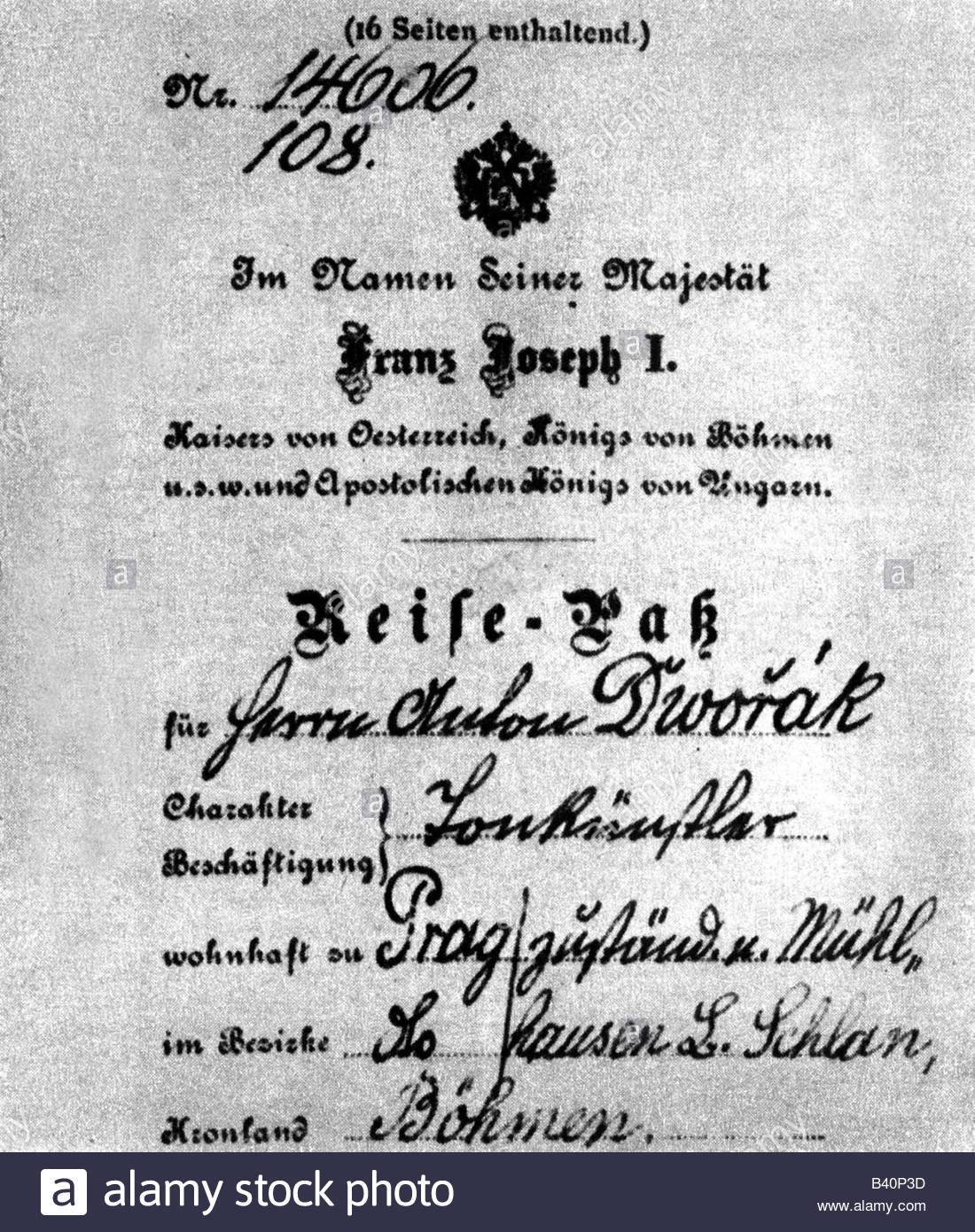
    PHOTO: Antonin Dvořák’s passport


  • Summer Travel with Composers

    Summer Travel with Composers

    by 

    in
    3 responses

    With Memorial Day past, the season of summer travel has unofficially begun. This morning on WPRB, composers venture abroad, traveling for study, work and leisure.

    Antonin Dvořák is lured to America with a job offer to head the National Conservatory of Music in New York. Julius Röntgen develops a friendship with Edvard Grieg that leads to spending summers with his wife in Norway. Darius Milhaud serves as secretary to the French ambassador to Brazil. Ignaz Moscheles anticipates a trip to Scotland. Derek Bermel studies Thracian folk music in Bulgaria. Benjamin Britten and Lennox Berkeley soak up Catalan folk music in Spain. Colin McPhee is captivated by gamelan music in Bali. And birthday boy Sir Edward Elgar vacations in Italy.

    In addition, Reynaldo Hahn sends some musical postcards, Johann Strauss beckons us with the polka “On Vacation,” and Michael Torke gives us a portrait of “An American Abroad.”

    At 9:00, we’ll pause to catch our breath with a visit from Thomas Lento of The Princeton Festival. He’ll drop by to let us know what’s on offer in terms of musical events for those of us who will remain home in the Princeton area for the month of June – including chamber and instrumental music, jazz and choral concerts, musical theater (“A Little Night Music”), dance, opera (“Peter Grimes”), and a screening of the classic Carl Theodor Dreyer film “The Passion of Joan of Arc” accompanied by the Princeton Symphony Orchestra.

    I hope you’re up early and already packing. We follow the composers abroad this morning, from 6 to 11 EDT, on WPRB 103.3 FM and at wprb.com. You’ll find us in rumpled linen and comfortable footwear, just in case, on Classic Ross Amico.


  • Vaughan Williams Pastoral Symphony Ormandy 1972

    Vaughan Williams Pastoral Symphony Ormandy 1972

    by 

    in
    4 responses

    On this, the day after Memorial Day, I’ve stumbled across a YouTube video of a concert broadcast of Eugene Ormandy conducting the Philadelphia Orchestra in Ralph Vaughan Williams’ “A Pastoral Symphony” (his Symphony No. 3), which was completed in 1922.

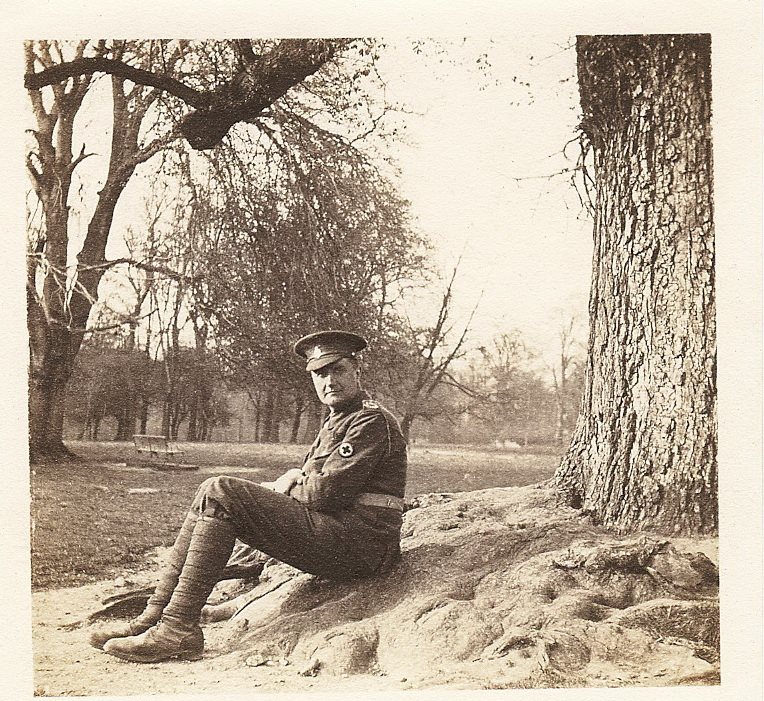
    While a good many of Vaughan Williams’ pieces are indeed pastoral, this one has something of a haunted undertow that belies its placid moniker. The composer was serving with the Royal Army Medical Corps in France during the First World War. At the end of the day, he would drive his ambulance up to the top of a hill and listen to a bugler practicing. On one occasion, the bugler accidentally played the interval of a seventh, as opposed to an octave. The trumpet solo in the second movement of the symphony enshrines this memory.

    It is pastoral, all right. As peaceful as the dead. The great Benita Valente sings the wordless soprano part in the final movement, like a distant milkmaid wandering the countryside. The contrast with the waste and destruction of the war leads to a moving and intense elegy that takes over, in this particular recording, around the 31 minute mark.

    Vaughan Williams’ next symphony, the Symphony No. 4, spilled over with rage and violence, clearing the air for one of the most hopeful utterances in all of music, his Symphony No. 5, composed, oddly enough, during the darkest days of World War II.

    Peter Warlock, who famously characterized Vaughan Williams’ music as “just a little too much like a cow looking over a gate,” called the Pastoral Symphony “a truly splendid work” and “the best English orchestral music of this century.”

    Ormandy and the Philadelphians performed the piece on October 12, 1972, to mark the centennial of Vaughan Williams’ birth. 1972 also happened to mark the semicentennial of “A Pastoral Symphony.”


Tag Cloud

Aaron Copland (93) Beethoven (95) Composer (114) Film Music (144) Film Score (143) Film Scores (255) Halloween (94) John Williams (195) KWAX (229) Leonard Bernstein (104) Marlboro Music Festival (125) Movie Music (159) Mozart (91) Opera (213) Philadelphia Orchestra (89) Picture Perfect (174) Princeton Symphony Orchestra (109) Radio (88) Ross Amico (244) Roy's Tie-Dye Sci-Fi Corner (290) The Classical Network (101) The Lost Chord (269) Vaughan Williams (105) WPRB (397) WWFM (881)

DON’T MISS A BEAT

Receive a weekly digest every Sunday at noon by signing up here


RECENT POSTS