• Debussy 20th Century Music Dark Horse?

    Debussy 20th Century Music Dark Horse?

    by 

    in
    8 responses

    Is Claude Debussy the dark horse of 20th century music? While seemingly the entire musical world was polarized between Stravinsky and Schoenberg, no one seemed to care that 20th century music never would have happened without Debussy.

    Debussy saw to it that music could be as diffuse as the light in an impressionist painting. He swirled his brush in the harmonic procedures of the 19th century and devised a 21-note scale to obscure the conventional sense of tonality. True to form, Debussy played fast and loose even with his own system.

    He also challenged the traditional use of instruments, using strings, winds and brass for coloristic ends as opposed to pushing lyricism for lyricism’s sake. The layout of an orchestra is undermined, with each instrument instead frequently treated as a soloist in a great chamber ensemble.

    He also stretched the concept of piano music, so that eighth notes, quarter notes, and half notes are as illusive as objects viewed through a heat shimmer. His chords seem to have no resolution (the composer referred to them himself as “floating chords”) and whole tone scales abound.

    Had he not died of cancer in 1918, at the age of 55, who knows how far he would have gone?

    Happy birthday, Claude Debussy!


    “Feux d’artifice” (“Fireworks,” 1913), from the second book of Preludes, played by Marc-André Hamelin:

    While not my favorite Debussy piece, “Jeux” (“Games,” 1912) is really out there:

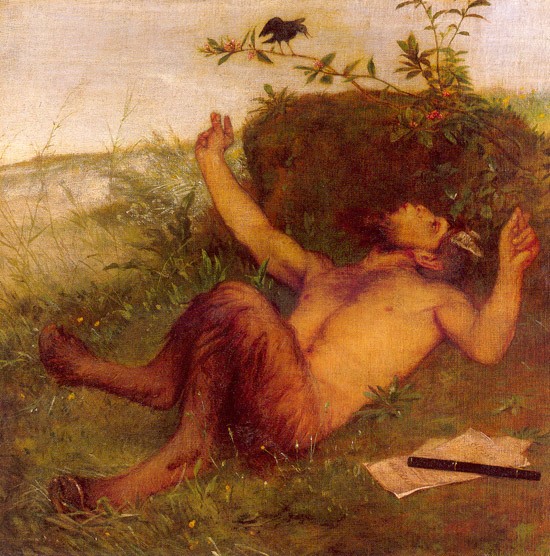
    From much earlier, the chromatic flute and recurring tritone in a work everyone can enjoy, “Prélude à l’après-midi d’un faune” (“Prelude to the Afternoon of a Faun,” 1894), danced here by Nureyev:

    https://www.youtube.com/watch?v=zzzF21CFJFE

    PHOTO: Fauning over Debussy


  • Circus Music Radio Show Fun with Ross Amico

    Circus Music Radio Show Fun with Ross Amico

    by 

    in
    3 responses

    Why should these morose looking clowns have all the fun?

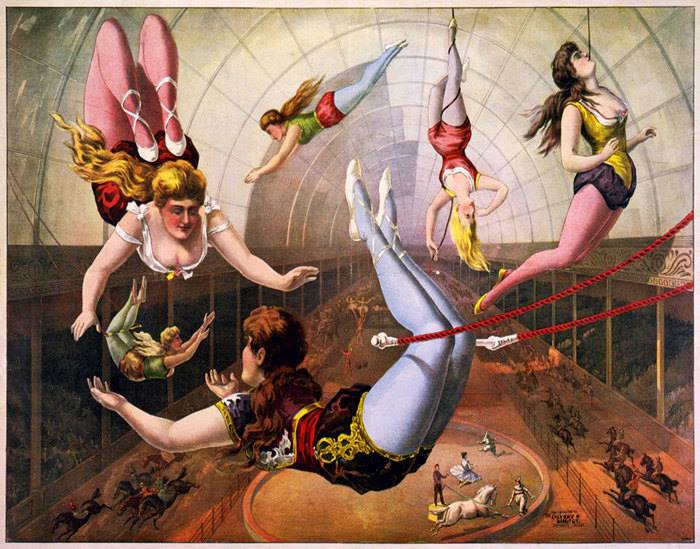
    Join me for five hours – yes, FIVE HOURS – of musical evocations of the circus, a theme which is not perhaps as one-note as it may read, with works like Lord Berners’ “Luna Park,” Douglas Moore’s “The Pageant of P.T. Barnum,” Walter Piston’s “The Incredible Flutist,” Nino Rota’s “La Strada Ballet,” Erik Satie’s “Parade,” and Rodion Shchedrin’s “Old Russian Circus Music.” Sure, there will be plenty of 4/4 swagger and graceful trapeze waltzes, and also film scores from some classic circus movies. But hopefully you won’t walk away with a sugar headache from too much cotton candy.

    I can’t claim that it will be the Greatest Show on Earth, but I hope you will spend some time with me under the Big Top. I’ll be there from 6 to 11 ET, at WPRB 103.3 FM, or online at wprb.com. It’s all latex and spangles this week, on Classic Ross Amico.

    BTW – I’ve got you coming and going today. Listen to me on your way to work at WPRB, from 6 to 11. Then hear me on your way home on WRTI 90.1 FM (or wrti.org), from 2 to 6. I’ll be launched from a cannon over the lunch hour.


  • Orientalism in Film: A Musical Journey

    Orientalism in Film: A Musical Journey

    by 

    in
    6 responses

    Orientalism is a term used to reflect evocations of the East by Western writers, artists and designers. This week on “Picture Perfect,” we’ll take a look at Orientalism in the movies, with musical selections from four films set in faraway lands.

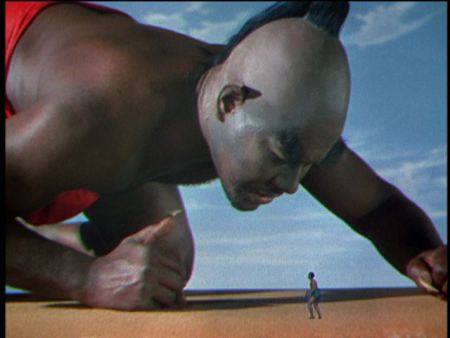
    Two of them are loosely based on tales from “The Arabian Nights,” depicting the East as a kind of fairy world. The Alexander Korda production of “The Thief of Bagdad” (1940) features Sabu as the thief, Conrad Veidt as a slippery vizir, and a scene-stealing Rex Ingram as the djinn. The score is one of the earliest and most charming of Miklós Rózsa.

    “The Seventh Voyage of Sinbad” (1958) is really a showcase for the special effects of Ray Harryhausen. In particular, it contains a kind of rehearsal, in the skeleton duel, for the classic sequence in “Jason and the Argonauts.” The alternately sinuous and percussive music, by Bernard Herrmann, fits the images like a Persian slipper.

    Director David Lean turned to the historical exploits of T.E. Lawrence for “Lawrence of Arabia” (1962). The film won seven Academy Awards and made international superstars of Peter O’Toole and Omar Sharif. Maurice Jarre won the first of his three Oscars for his music. Jarre himself conducted on the film’s soundtrack, even though, for contractual reasons, Sir Adrian Boult received the screen credit.

    Finally, Sean Connery is Mulay Ahmed Muhamed Raisuli the Magnificent, sherif of the Riffian Berbers, in John Milius’ “The Wind and the Lion” (1975). The score represents composer Jerry Goldsmith at his finest. In fact, so happy was he with the effort that he was convinced that he finally had a lock on the Oscar – then he went to see “Jaws.” Goldsmith would finally be honored the next year for his music to “The Omen.”

    I hope you’ll join me for these examples of Orientalism at the movies – a theme that’s really an excuse for me to play some of my favorite scores – this Friday evening at 6 ET, with a repeat Saturday morning at 6; or that you’ll listen to it later as a webcast at wwfm.org.


    The skeleton duel from “The Seventh Voyage of Sinbad”:

    PHOTOS: Ingram in “The Thief of Bagdad” (top), with, left to right, Connery and Candice Bergen in “The Wind and the Lion,” Kerwin Matthews fighting the skeleton in “The Seventh Voyage of Sinbad,” and Peter O’Toole with Omar Sharif in “Lawrence of Arabia”


  • Circus Music Radio Show This Week

    Circus Music Radio Show This Week

    by 

    in
    4 responses

    All summer long we boys
    dreamed ’bout circus joys!
    Down Main Street comes the band,
    Oh! “Ain’t it a grand and glorious noise!”

    We take our inspiration from Charles Ives’ “The Circus Band” this week, with a program of musical evocations of the Big Top.

    We’ll hear works like Douglas Moore’s “The Pageant of P.T. Barnum,” Nino Rota’s “La Strada Ballet” and Rodion Shchedrin’s “Old Russian Circus Music.” We’ll also have snappy circus favorites like Julius Fucik’s “Entry of the Gladiators,” Juventino Rosas’ “Over the Waves” (a.k.a. the trapeze music), and Aram Khachaturian’s “Sabre Dance,” with perhaps even a circus-oriented film score or two.

    Is this kind of thing really sustainable for FIVE HOURS??? Tune in tomorrow to WPRB 103.3 FM or online at wprb.com, from 6 to 11 a.m. ET, to find out. We’ll keep the plates spinning on Classic Ross Amico.


  • Midday Classics Red Convertible a Midlife?

    Midday Classics Red Convertible a Midlife?

    by 

    in
    3 responses

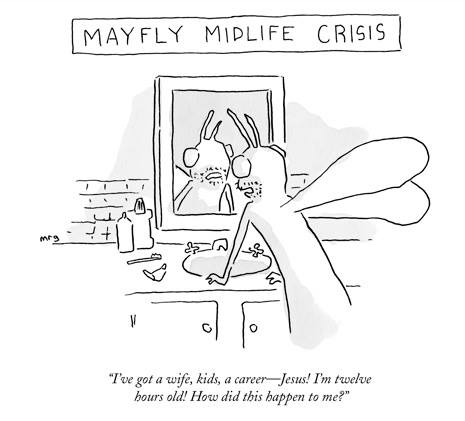
    Will I live out my midlife crisis on “Midday Classics?” I won’t know what’s on the playlist until I show up. Tune in today to Philadelphia’s classical and jazz station, WRTI 90.1 FM or wrti.org, from 10 to 2 ET, to find out.

    Actually, now that I think about it, 12 to 3 is “At Your Request.” Get in on the fun by filling out the form, when you follow the link:

    http://wrti.org/programs/your-request#stream/0

    I’ll be climbing into my red convertible soon.


Tag Cloud

Aaron Copland (93) Beethoven (95) Composer (114) Film Music (144) Film Score (143) Film Scores (255) Halloween (94) John Williams (195) KWAX (229) Leonard Bernstein (104) Marlboro Music Festival (125) Movie Music (159) Mozart (91) Opera (212) Philadelphia Orchestra (89) Picture Perfect (174) Princeton Symphony Orchestra (109) Radio (88) Ross Amico (244) Roy's Tie-Dye Sci-Fi Corner (290) The Classical Network (101) The Lost Chord (269) Vaughan Williams (105) WPRB (397) WWFM (881)

DON’T MISS A BEAT

Receive a weekly digest every Sunday at noon by signing up here


RECENT POSTS