• Moura Lympany Tax Day Music

    Moura Lympany Tax Day Music

    by 

    in
    3 responses

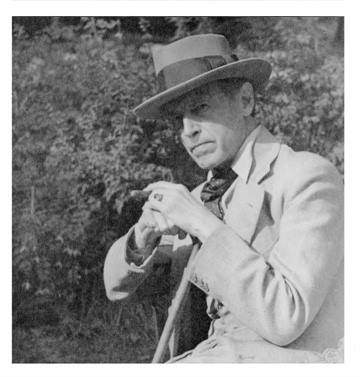
    Music for Tax Day, performed by the great Moura Lympany.


  • Passover Korngold’s Hollywood Psalm

    Passover Korngold’s Hollywood Psalm

    by 

    The Jewish celebration of Passover begins at sunset. One of my favorite composers, Erich Wolfgang Korngold, wrote this “Passover Psalm” in 1941, on a commission from Rabbi Jacob Sonderling. Sonderling, rabbi of Fairfax Temple in Los Angeles, which he founded, invited a number of prominent composers to write music for the synagogue.

    Korngold, who was one of the most celebrated opera composers of his youth, lived out the war years in Hollywood, where he revolutionized the art of film scoring. He was the recipient of two Academy Awards, for his music to “Anthony Adverse” (1936) and “The Adventures of Robin Hood” (1938).

    The “Passover Psalm” and “Prayer,” both written for Sonderling, are the only sacred works Korngold ever composed.

    https://www.youtube.com/watch?v=5cpvsi4TFto


  • Pulitzer Music Prize History & Preview

    Pulitzer Music Prize History & Preview

    by 

    in
    2 responses

    Tomorrow afternoon, the Pulitzer Prize committee will announce this year’s winners and nominees. In anticipation, tonight on “The Lost Chord,” we look back on the history of the Pulitzer Prize for Music.

    Really, other than Copland’s “Appalachian Spring” and Ives’ Symphony No. 3, how often do you get to hear this stuff? Okay, the operas of Menotti and Robert Ward get revived from time to time, and Jennifer Higdon has been very fortunate for a composer in her prime. Yet most of the Pulitzer winners remain elusive.

    We’ll have a chance to sample three of them, as part of our annual “Pulitzer Surprises” show – including the very first, William Schuman’s “A Free Song” (1943), recorded for the first time only in 2011, and the most recent, Caroline Shaw’s “Partita for 8 Voices” (2013).

    Shaw – at 30, the youngest recipient in the history of the category – is currently a Ph.D. candidate at Princeton University. Her work for string quartet, “Ritornello 2.sq.2.j,” will be performed by the JACK Quartet in Princeton this Tuesday.

    The “Partita” is certainly the highlight of tonight’s program, with a dizzying array of genres and techniques ably navigated by the a cappella ensemble, Roomful of Teeth.

    Also on the program will be a sampling of William Bolcom’s “12 New Etudes for Piano,” the Pulitzer-winner from 1988.

    You can hear it tonight at 10:00 ET, with a repeat Thursday night at 11, or catch it later as a webcast at http://www.wwfm.org.


  • Mussolini’s Violin Amati Auction: History For Sale

    Mussolini’s Violin Amati Auction: History For Sale

    by 

    in
    2 responses

    Mussolini’s Amati is up for auction.

    http://www.telegraph.co.uk/news/worldnews/europe/italy/10758780/Mussolini-the-musicians-violin-to-be-sold.html

    PHOTO: Unfortunately, he played everything “alla marcia”


  • Passover Movie Music From Biblical Epics

    Passover Movie Music From Biblical Epics

    by 

    This week on “Picture Perfect,” with Passover right around the corner, it’s an hour of music from epics inspired by the Old Testament – including “Samson and Delilah” (Victor Young), “Solomon and Sheba” (Mario Nascimbene), “Sodom and Gomorrah” (Miklós Rózsa) and “The Ten Commandments” (Elmer Bernstein).

    We begin and end with two Cecil B. DeMille productions. DeMille could always be counted on to give his audience a good show. Both “Samson” and “The Ten Commandments” feature sultry temptresses, violent, bare-chested men, and plenty of austere moralizing. The climactic special effects in both films are still sublime.

    Tyrone Power was originally cast as Solomon in King Vidor’s “Solomon and Sheba.” However, he died of a massive heart attack during shooting (at the age of 44), paving the way for Yul Brynner to assume the role of the wise king. Brynner, of course, would later become DeMille’s pharaoh Rameses. With Gina Lollobrigida as the Queen of Sheba, you know there has to be an orgiastic dance.

    Miklós Rózsa characterized “Sodom of Gomorrah” as “an intriguing subject which developed into a bad picture,” and most critics agreed. Any film that casts Stewart Granger as Lot should be taken with a pillar of salt. Rózsa determined not to score any more Biblical epics after “Sodom,” though his music is nothing to be ashamed of. It possesses that classic Rózsa epic sound, much beloved thanks to his work on “Quo Vadis,” “Ben-Hur” and “King of Kings.”

    Chariots! Tunics! Histrionic acting! Get in on the fun, this Friday evening at 6 p.m. ET at http://www.wwfm.org .

    Miss a show? Past and recent installments of “Picture Perfect” and “The Lost Chord” are archived for your enjoyment at the WWFM website. Click on “webcasts,” and then select the show.

    PHOTOS: Victor Mature’s stuffed lion vs. Charlton Heston’s cotton candy beard


Tag Cloud

Aaron Copland (92) Beethoven (95) Composer (114) Film Music (118) Film Score (143) Film Scores (255) Halloween (94) John Williams (185) KWAX (229) Leonard Bernstein (99) Marlboro Music Festival (125) Movie Music (133) Opera (198) Philadelphia Orchestra (86) Picture Perfect (174) Princeton Symphony Orchestra (106) Radio (87) Ralph Vaughan Williams (85) Ross Amico (244) Roy's Tie-Dye Sci-Fi Corner (290) The Classical Network (101) The Lost Chord (268) Vaughan Williams (102) WPRB (396) WWFM (881)

DON’T MISS A BEAT

Receive a weekly digest every Sunday at noon by signing up here


RECENT POSTS