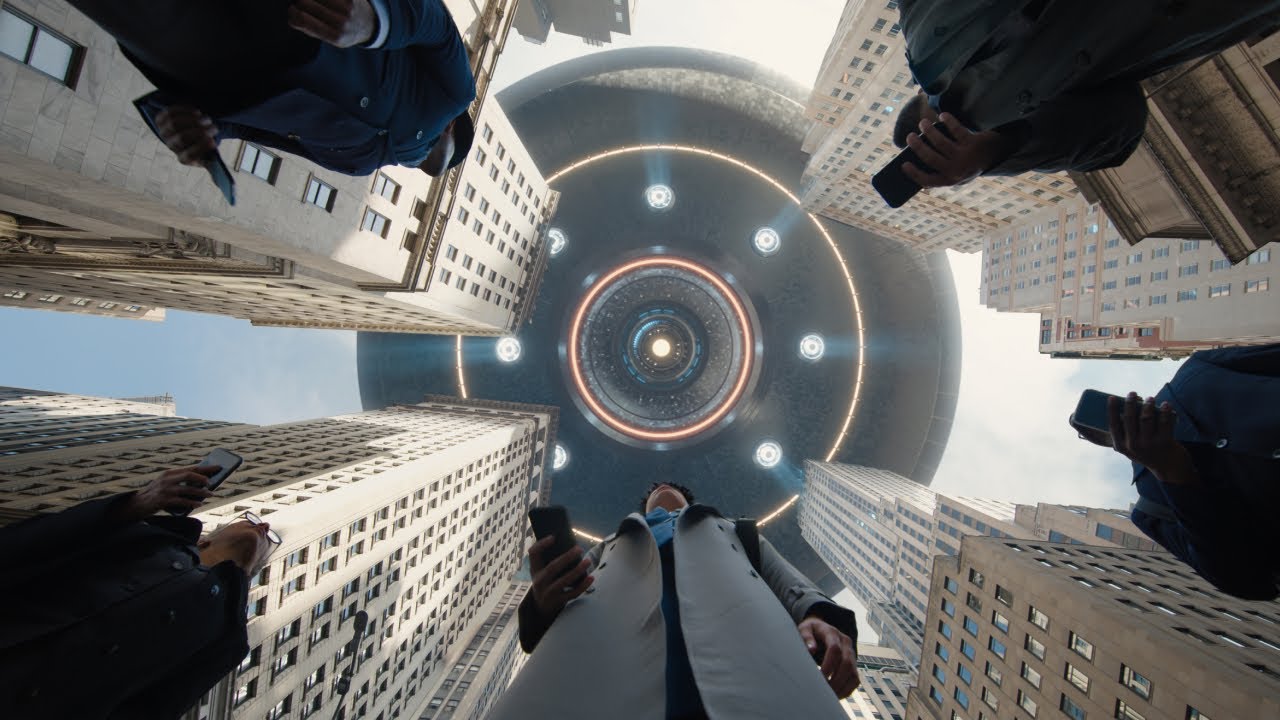
Martin Scorsese’s Super Bowl commercial provides quite the platform for Mexican composer José Pablo Moncayo (1912-1958), whose “Huapango” reaches its largest audience ever.
Here’s the music, shorn of Scorsese’s visuals:
It’s not just for Cinco de Mayo anymore!
The Super Bowl attracts over 100 million viewers and conspiracy theorists.
The most widely-recognized of American classics? Perhaps. Next to “Fanfare for the Common Man” and “The Stars and Stripes Forever,” I can think of few others. George Gershwin’s “Rhapsody in Blue” is 100 today.
I once heard it performed on a New Year’s Day concert in Milan. As late as the mid ‘90s, it seemed European musicians still hadn’t acquired that innate ability to swing. But the world’s a lot smaller place now, and they seem to have gotten it.
Here’s the first recording, with Gershwin at the piano and Paul Whiteman conducting. The work is abridged and played a little faster than we’re accustomed to hearing today, in large part to be able to fit it onto two sides of a 12-inch 78 rpm record.
The first recording I acquired, on LP, was with Leonard Bernstein as conductor and pianist with the New York Philharmonic, made for Columbia Records in 1964. The performance really is more expansive than most. As the years went by, I enjoyed hearing different takes on the piece, some of them attempting to recreate its original jazz band debut.
The work has been dismissed by cognoscenti as corny. In 1934, composer Constant Lambert derided it as “neither good jazz nor good Liszt.” As recently as two weeks ago, the New York Times ran an article under the title “The Worst Masterpiece,” with pianist Ethan Iverson making a straw man argument that Duke Ellington was a more important composer. Of course the “Rhapsody” is not true jazz, any more than Brahms’ Hungarian riffs could be construed as authentic Hungarian music. But it is 100 percent American.
“Rhapsody in Blue” is one of those rare pieces of classical music whose appeal transcends genre. I have an uncle, who is by no means a classical music person, who is obsessed with the work. It’s a crowd-pleaser, and deservedly so. If anything, its winning combination of optimism, energy, and naiveté reminds us of America’s “better angels” (a phrase I borrow from Lincoln on his birthday). The work is as refreshing now as it ever was, even if, one hundred years on, it seems more and more like a distant dream. It’s still a dream to be celebrated.
Bernstein, 1964
Bernstein live, 1976
Michael Tilson Thomas’ quite different conception
Incorporating Gershwin’s 1925 piano roll
Peter Nero and the Philly Pops at Independence Hall
In Woody Allen’s “Manhattan”
Paul Whiteman, who conducted the premiere of “Rhapsody in Blue,” introduces and leads it here, beginning at the 51-minute mark (with interlude for “voodoo drums???”) in the insane, pre-Code curio, “King of Jazz” (1930). Just don’t watch it too close to bed!
Live footage of Gershwin playing “I Got Rhythm” in 1931
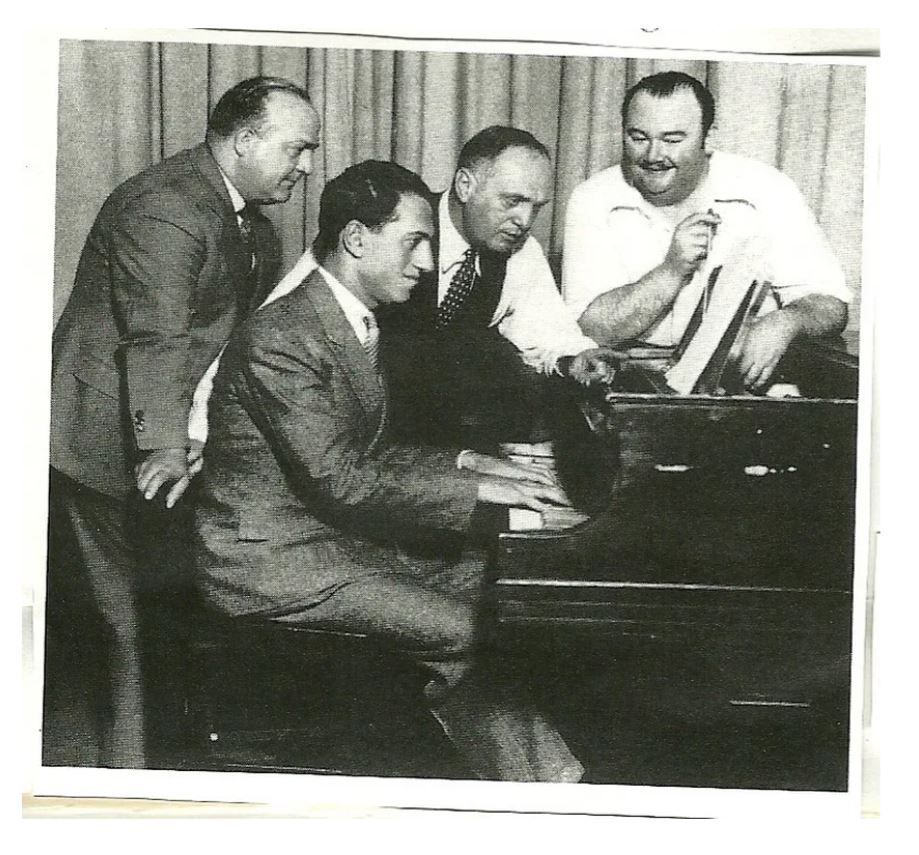
PHOTO: (left to right) Ferde Grofé, Whiteman’s orchestrator and later composer of the “Grand Canyon Suite;” Gershwin at the piano; theatrical impresario Samuel “Roxy” Rothafel; and Whiteman, with his baton
Super Sunday! Of the great composers, none enjoyed football more than Dmitri Shostakovich. Russian football, that is (basically soccer). Shostakovich attended games whenever and wherever he could. He kept meticulous records of statistics and wrote articles for sports publications. He even became qualified as a referee. On one occasion he invited the entire Leningrad Dynamo over to his apartment for dinner.
In 1930, he composed a football ballet, “The Golden Age.” The scenario follows a Soviet team that falls victim to match rigging in the decadent West. The players are harassed by police and imprisoned by the evil bourgeoisie. Fortunately, the local workers overthrow their capitalist overlords and everyone lives happily ever after.
Shostakovich is said to have coined the phrase, “Football is the ballet of the masses.”
“The Golden Age” (1930) – fast-forward to the 55-minute mark for “Tea for Two.”
“Football” from “Russian River” (1945), composed for the NKVD Song and Dance Ensemble (the entertainment corps of the secret police!)
In America, everyone play football. In Soviet Russia, football play you!
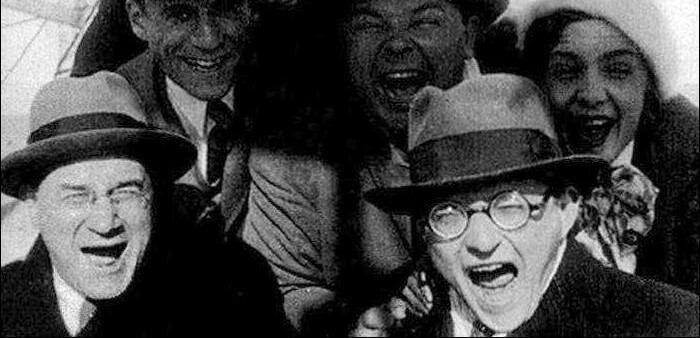
PHOTOS: Shostakovich at the stadium, actually enjoying himself for a change
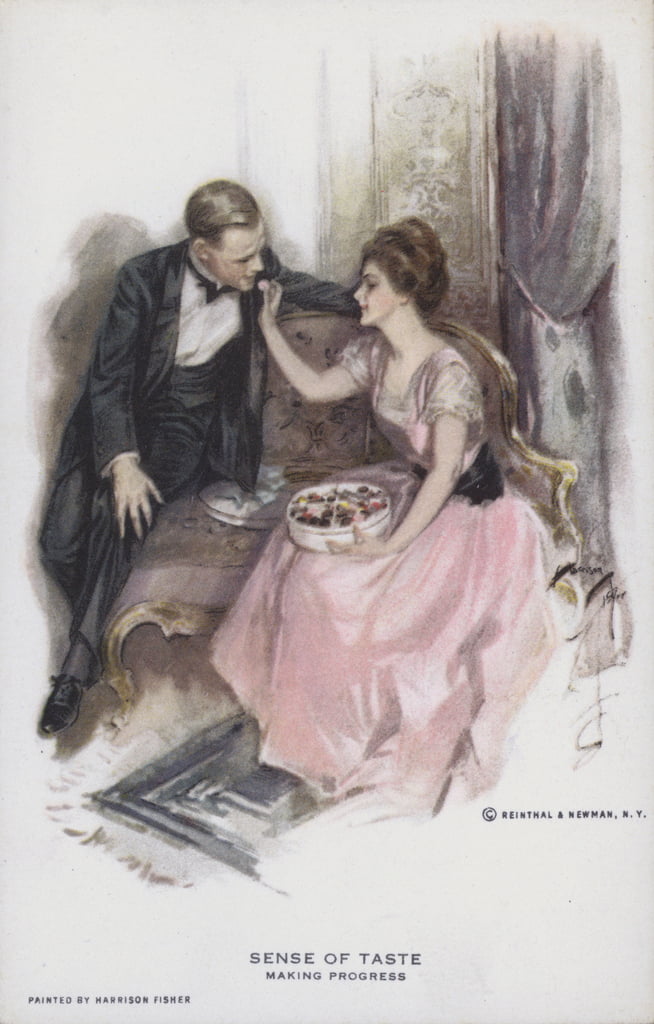
This morning on KWAX, it’s flowers and chocolate for breakfast. I’ll do my best to indulge your sweet tooth and lend a serotonin boost with a special Valentine’s Day sampler.
Luxuriate with an assortment of decadent Fritz Kreisler violin bonbons, a suite from Lord Berners’ ballet “Cupid and Psyche,” Victor Herbert’s orchestration of Franz Liszt’s “Liebestraum,” Henry Mancini’s arrangement of Nino Rota’s “Love Theme from Romeo and Juliet,” and some romantic reveries by Gilbert & Sillivan, Charles Ancliffe, and Leonard Bernstein.
Better limber up those lips. It will be an hour of musical confections for Valentine’s Day on “Sweetness and Light,” this Saturday morning at 11:00 EST/8:00 PST. Hear it exclusively on KWAX, the radio station of the University of Oregon!
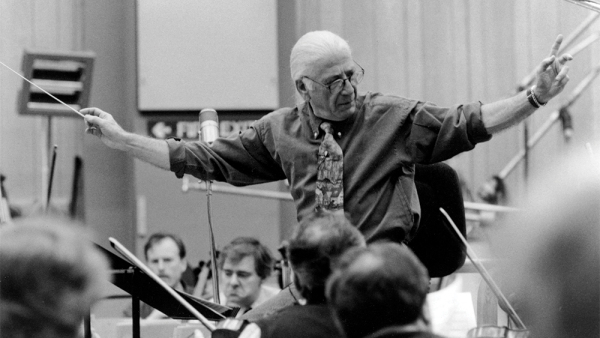
When he was a kid, Jerry Goldsmith loved going to the movies to enjoy the music – just the way I loved going to the movies as a kid to enjoy Jerry Goldsmith!
Goldsmith, born on this date in 1929, wrote indelible scores for dozens of films, such as “The Sand Pebbles” (1966), “The Blue Max” (1966), “The Flim-Flam Man” (1967), “Planet of the Apes” (1968), “Patton” (1970), “Papillon” (1973), “Chinatown” (1974), “The Wind and the Lion” (1975), “MacArthur” (1977), “The Boys from Brazil” (1978), “The Great Train Robbery” (1979), “Alien” (1979, butchered in sound editing), and “Star Trek: The Motion Picture” (1979).
For television, he wrote for “Dr. Kildare,” “The Twilight Zone,” “Gunsmoke,” “The Man from U.N.C.L.E.” and “The Waltons.”
By the 1980s, the films began to get weaker. It seemed like Goldsmith was always getting tossed the projects John Williams passed on, or cheap knockoffs of Williams’ successes. By his final decade, he was stuck writing for such garbage as “The Mummy” (1999), “The Haunting” remake (1999), and “Looney Tunes: Back in Action” (2003). A notable exception was “L.A. Confidential” (1997), but rarely were his later projects up to his talent.
Goldsmith had a reputation for being able to compose at white heat, so he was frequently called upon to write replacement scores for films like “The River Wild” (1994), “Air Force One” (1997) and “The 13th Warrior” (1999). He composed and recorded the score to “Chinatown,” one of the best of the 1970s, in only ten days.
Incredibly, he was honored with but a single Academy Award (of 18 nominations), for his influential score to “The Omen” (1976). Goldsmith died in 2004, at the age of 75. If he were to come back today, he would mop the joint with all the moody droners and computer noodlers, with their narrow palettes and paucity of inspiration.
Happy birthday, Jerry. I hope they’re still making good movies wherever you are.
17 responses