• Arthur Butterworth Centenary Rediscovered

    Arthur Butterworth Centenary Rediscovered

    by 

    in
    2 responses

    I so often observe musical birthdays and anniversaries on this page, especially round ones, but from time to time one will slip past, either because I’d already done a post about one of my shows or there simply weren’t enough hours in the day.

    During my interminable wait for jury consideration in a Zoom antechamber the past couple of mornings, I passed the time in part by running my eyes across my CD shelves, which not surprisingly, in a collection containing some 10,000 specimens, yielded a number of curiosities and a few discs I had never even listened to. One is a 2-CD set on the Dutton label of music by Arthur Butterworth, whose centenary, I noted, as I read the liner notes, commenced on August 4.

    I was familiar with Butterworth (no relation to Vaughan Williams’ friend George Butterworth) only from a recording of his Symphony No. 1 of 1957, coupled on another album, on the Classico label, with the Symphony No. 2 of Ruth Gipps. The Dutton program also includes Butterworth’s 1st, conducted by Sir John Barbirolli, along with the 4th Symphony and the Viola Concerto, both conducted by the composer. Butterworth, a brass player, took up the instrument for a better understanding of how to write for strings.

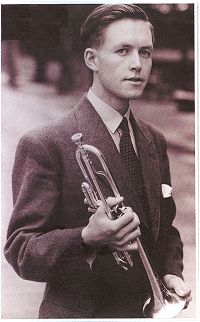
    Prior to that, like the composer Malcolm Arnold, he acquired ample experience of the orchestra from the inside, as a trumpeter in the Scottish National Orchestra, from 1949-55, and in the Hallé Orchestra, from 1955-62. He was also closely associated with the brass band movement, working with Besses o’ th’ Barn (of which he was a member) and the Black Dyke Band and writing test pieces for various brass championships.

    In common with so many other English composers, Butterworth clearly revered Sibelius. His musical language is conservative and broadly tonal; accessible, if not exactly tunefully ingratiating. It can be dark and at times rather desolate, but also blistering and exhilarating. In addition, the 4th Symphony recalls Carl Nielsen, the great Dane, whose distinctive sound also pervades the works of Butterworth’s compatriot, Robert Simpson.

    Many composers can be somewhat bashful about admitting to extramusical influences on their work, insisting that their music should be regarded as just that – absolute music, rigorously argued by putting it through abstract forms. Above all, it should not be interpreted as evocative of anything else. But Butterworth was a nature poet, clearly prone to introspection, and he credits his slow movements, especially, to the impressions he received while on walks with his dog across the forests and beaches of Scotland.

    Butterworth also had a Vaughan Williams connection, taking lessons with RVW, beginning in 1950, when his mentor was in his late 70s.

    Interestingly, Butterworth is not the only composer from the vicinity of Manchester to have gravitated to Scotland and pick up on its Nordic vibe. Peter Maxwell Davies was born outside Manchester 11 years later. Max kept a home in the Orkney Islands for some 45 years. For me, the latter’s symphonies, for as much as I enjoy some of his other music, have been tough nuts to crack – and it’s not been for want of trying!

    Also included in the Butterworth set is a 27-minute spoken lecture, in which the composer talks about his life, work, and influences.

    He died as recently as 2014, like Sibelius, attaining the venerable age of 91.

    If you’re interested in mid-century English music and you are fascinated by Sibelius at his most austere and strangely beguiling, this music might be for you. No doubt there is worth in this butter, but it doesn’t exactly melt in your mouth!

    Happy belated 100th, Arthur Butterworth!

    The individual movements of the Dutton album have been posted separately as a YouTube playlist at the link:

    Dutton Vocalion Records

  • Jury Duty Dismissed Freedom Feels Great

    by 

    in
    4 responses

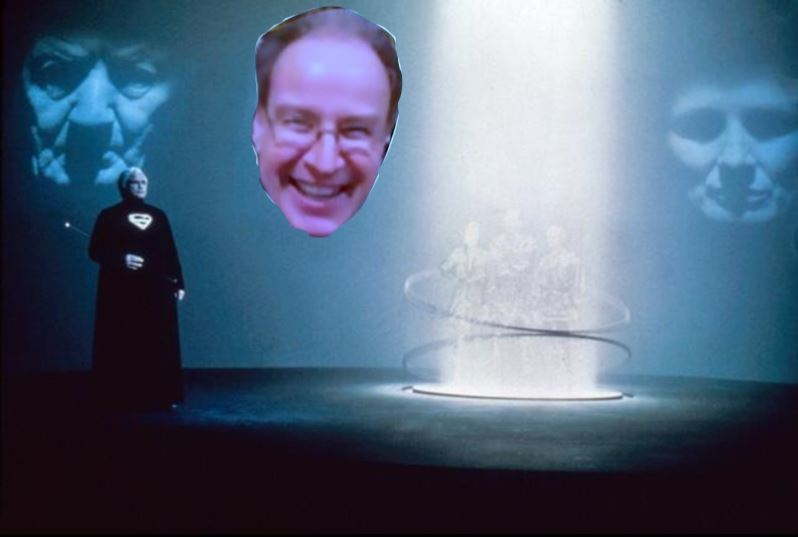
    Yayyyyyyy! After sitting in a Zoom antechamber for over two hours, someone on the jury staff came on and said that if we can see her and hear her voice, she has good news: we’ve all been dismissed. Good news, indeed! I guess no one really wants to do jury duty, so it’s a good thing they threaten to fine you and toss you in the hoosegow. They never even interviewed me. (Maybe they saw yesterday’s Superman post.) Such a load off! This has been hanging over me since October, when I had to request a postponement. So happy! Now I can get back to grocery shopping and fretting about Christmas and working on my radio shows like a human.

    FREE! FREE!! FREEEEEEEEEEE!!! HAHAHAHAHAHA!!!!


  • Jury Duty Week My Experience

    Jury Duty Week My Experience

    by 

    in
    9 responses

    Summoned for jury duty this week.


  • Nostalgic Holiday Movies Roy’s Sci-Fi Corner

    Nostalgic Holiday Movies Roy’s Sci-Fi Corner

    by 

    in
    One response

    Anyone familiar with Roy’s Tie-Dye Sci-Fi Corner knows that our nostalgia runs deep. I was at a post-Thanksgiving gathering the other night, and what was streaming on a wall-set in the television room, clearly visible from the kitchen, but “Chitty Chitty Bang Bang.”

    For those of us of a certain age, family movies were an essential part of the holidays, as the networks kept kids entertained so that the adults could catch-up after the meal. Roy and I have shared our fond recollections of those halcyon days with salutes in recent years to “Willy Wonka and the Chocolate Factory,” “Chitty Chitty Bang Bang,” “20,000 Leagues Under the Sea,” and (with apologies) the “Star Wars Holiday Special.”

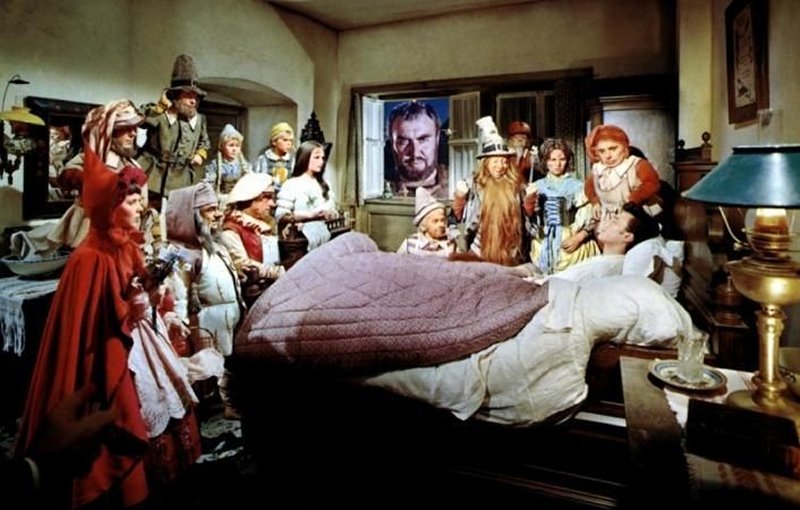
    This weekend, we had planned to carry on the tradition with a nostalgic recollection of George Pal’s star-studded Cinerama classic “The Wonderful World of the Brothers Grimm” (1962). However, the conversation has been postponed, as I suspect at least one of us is still in the process of metabolizing his intake of Thanksgiving tryptophan.

    Since one of the film’s chapters, the Puppetoon-laden “The Cobbler and the Elves,” is a Christmas segment, the delay will do nothing to diminish the timely nature of the discussion. We hope you’ll join us for a Grimm time in the comments section, when we livestream on Facebook, YouTube, etc., this Friday evening at 7:00 EST!

    https://www.facebook.com/roystiedyescificorner

    Thank you for your understanding, and enjoy the rest of your holiday weekend!


  • Ormandy’s All-American Philadelphia Sound

    Ormandy’s All-American Philadelphia Sound

    by 

    in
    7 responses

    This week on “The Lost Chord,” it’s one more trip to the well, with well-played works of American composers rendered by Eugene Ormandy and the Philadelphia Orchestra.

    Slake your thirst with selections from “Five Songs of William Blake” by Virgil Thomson (born on this date in 1896), the Symphony No. 7 by Roy Harris, and “Four Squares of Philadelphia” by Louis Gesensway.

    Gesensway was born in Latvia in 1906. A violin prodigy, he was one of the founders of the Toronto Symphony Orchestra. He came to Philadelphia at the age of 19, where he played under both Stokowski and Ormandy.

    In his mid-20s, he took a leave of absence to study composition with Zoltán Kodály. “Four Squares of Philadelphia” was described by the composer as a “symphonic poem for large orchestra, narrator and street criers.”

    The piece opens with a recitation of William Penn’s prayer, then continues with musical evocations of Washington Square (in early morning, during Colonial times, with street criers hawking their wares), Rittenhouse Square (on a bright and cheerful afternoon), Logan Square (with its fountains at dusk), and Franklin Square (at night, evocative of noisy bridge traffic, a side excursion into Chinatown, and musical interjections from the honky tonk joints located around the square in the 1950s).

    Be there or be square. Eugene Ormandy serves up the last of the Thanksgiving leftovers. I hope you’ll join me for “All-American Ormandy III,” now in syndication on KWAX, the radio station of the University of Oregon!


    Remember, KWAX is on the West Coast, so there’s a three-hour difference for the Trenton-Princeton area. Here are the respective air-times of my recorded shows (with East Coast conversions in parentheses):

    PICTURE PERFECT, the movie music show – Friday on KWAX at 5:00 PACIFIC TIME (8:00 PM EST)

    THE LOST CHORD, unusual and neglected rep – Saturday on KWAX at 4:00 PACIFIC TIME (7:00 PM EST)

    Stream them here!

    https://kwax.uoregon.edu/


    PLEASE NOTE: This show was recorded in 2015 and employs material reissued on compact disc for the first time on the Albany and Bay Cities labels. All three of these performances have since been remastered (including the wholly restored “Five Blake Songs”), as part of Sony Classical’s 120-CD box set of Ormandy’s Philadelphia mono recordings, “Eugene Ormandy: The Columbia Legacy,” in 2021.

    The first installment of Ormandy’s stereo recordings were released earlier this month in an 88-CD box, also from Sony, “Eugene Ormandy/The Philadelphia Orchestra: The Columbia Stereo Collection,” on November 17.

    Both Sony sets sound fantastic (with the caveat that the first is in mono). Both are highly recommended.


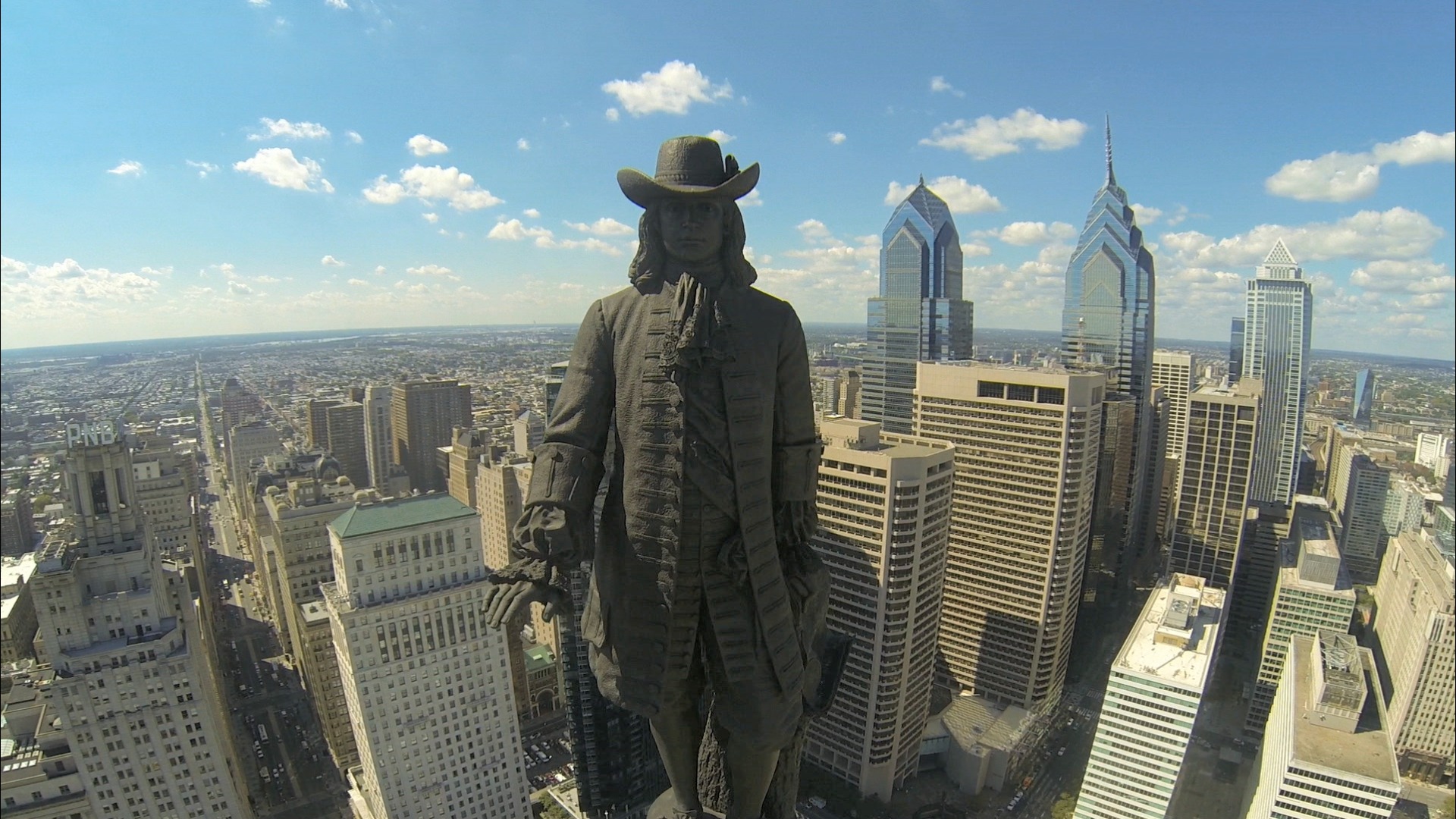
    PHOTO: Statue of Penn, high atop the city he founded


Tag Cloud

Aaron Copland (93) Beethoven (95) Composer (114) Film Music (144) Film Score (143) Film Scores (255) Halloween (94) John Williams (195) KWAX (229) Leonard Bernstein (104) Marlboro Music Festival (125) Movie Music (159) Mozart (91) Opera (213) Philadelphia Orchestra (89) Picture Perfect (174) Princeton Symphony Orchestra (109) Radio (88) Ross Amico (244) Roy's Tie-Dye Sci-Fi Corner (290) The Classical Network (101) The Lost Chord (269) Vaughan Williams (105) WPRB (397) WWFM (881)

DON’T MISS A BEAT

Receive a weekly digest every Sunday at noon by signing up here


RECENT POSTS