• Opera Ballet Scandals Wagner Verdi

    Opera Ballet Scandals Wagner Verdi

    by 

    in
    One response

    In the 19th century, when your opera was accepted in Paris, it meant you definitely needed a ballet. It was tradition. It provided a danced divertissement for French audiences, who were accustomed to a little light entertainment in the middle of an evening heavy on singing.

    Richard Wagner bemoaned the fact, when “Tannhäuser” was accepted there, and he ruffled quite a few feathers when he frontloaded his ballet, essentially “getting it out of the way,” by including it in the first act as a bacchanale – which makes perfect dramatic sense in the Venusberg, the sensual realm of Venus.

    Nevertheless, Parisian aristocrats were none too happy, as this conflicted with their dining schedules. (There’s a reason they call it “fashionably late.”) French soldiers too were accustomed to arriving with full bellies and light spirits to ogle dancers during their traditional appearance in a later act.

    For this, among other reasons, “Tannhäuser” was met with whistles and catcalls. By the third performance, the backlash had become so intense, with interruptions of up to 15 minutes at a time, that Wagner finally withdrew the opera.

    Giuseppe Verdi wasn’t crazy about the whole ballet idea either. Nevertheless, when he was invited to submit “Macbeth,” originally composed in 1847, for performance in Paris (first in 1852, and when he didn’t follow through, for a second time in 1864), he acquiesced. Of course, Verdi being Verdi, it became a much more involved undertaking than he had anticipated, and he wound up revising the entire opera.

    Privately, he expressed reservations about the inclusion of ballet in opera, but unlike Wagner, he figured out ways for it to suit the drama AND at the accepted place in an evening’s entertainment. In short, when life gave him lemons, he made limoncello.

    Verdi was a canny enough showman to know to give the public what it wanted: cavorting witches!

    You go, Joe! Happy birthday!


    Totally Goth witches’ chorus from “Macbeth”:

    https://www.youtube.com/watch?v=7b4tKhV5mcg

    Act III Witches’ Dance from Taiwan:


    “The Three Witches from Macbeth” (1827) by Alexandre-Marie Colin


  • Remembering Finnish Composer Rautavaara

    Remembering Finnish Composer Rautavaara

    by 

    in
    2 responses

    The great Finnish composer Einojuhani Rautavaara was born on this date in 1928. In his later years, he was rightly regarded as one of the world’s great composers, the grand old man of Finnish music and the spiritual heir of Jean Sibelius. As a young man, he had actually worked as Sibelius’ chauffeur! In all, he composed eight symphonies, nine operas, 14 concertos, and dozens of other orchestral and vocal compositions. After he died in 2017 at the age of 87, I presented a five-hour marathon of his music on WPRB Princeton.

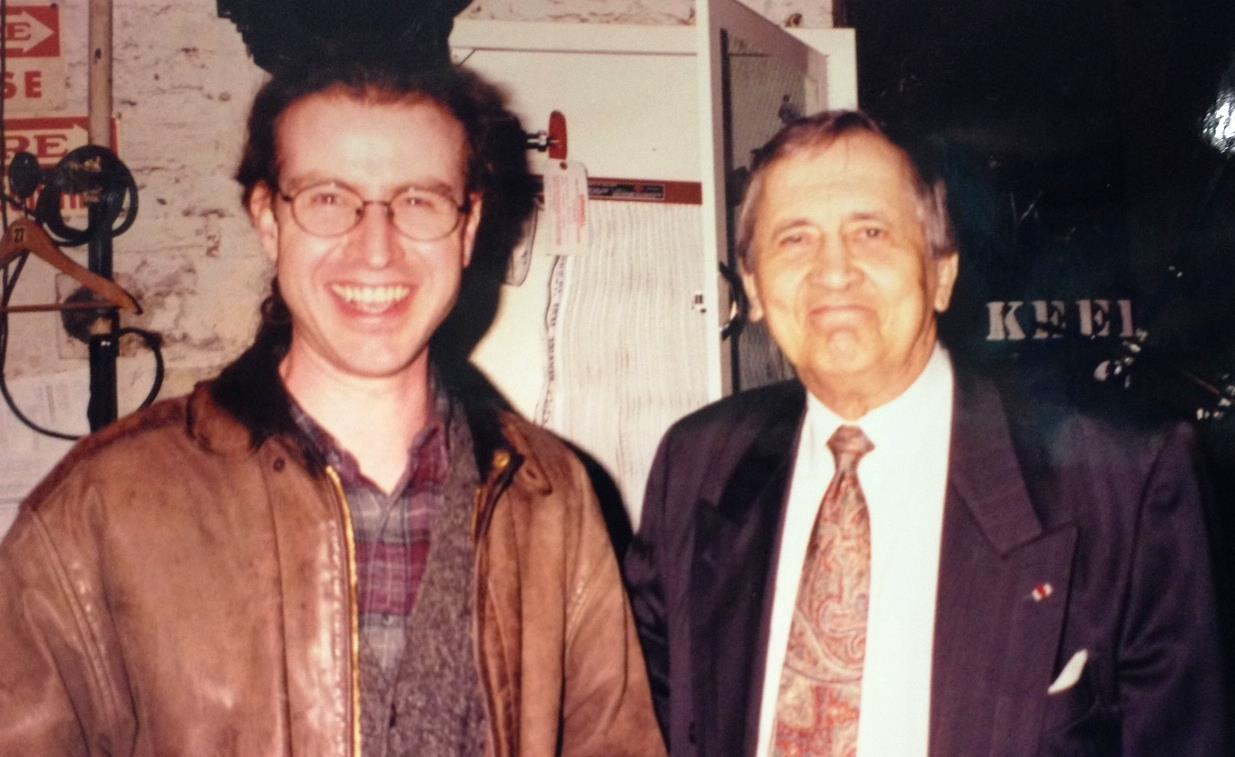
    I was lucky to meet him once, in 2000, backstage at Philadelphia’s Academy of Music, prior to the first performance of his Symphony No. 8. He was kind enough to sign my Naxos CD of his Symphony No. 3, the Piano Concerto No. 1, and the so-called concerto for birds and orchestra “Cantus Arcticus.” I wonder what he thought of this peculiar, 33-year-old, American fan?

    Here’s a performance of the Piano Concerto No. 1, with my recent acquaintance, Yifei Xu of the New Jersey Festival Orchestra, as the soloist.

    The Philadelphia Orchestra touring Rautavaara’s Symphony No. 8, “The Journey.” I didn’t even know this video existed!

    https://www.youtube.com/watch?v=llL8YGvVkkc

    “Cantus Arcticus,” with bird songs recorded by the composer in the bogs of Liminka, near the Arctic Circle:


    PHOTO: Ross and Rautavaara. Holding the camera: Sibelius’ grandson, the filmmaker Anssi Blomstedt!

    A more complete account here:


  • Bernstein’s Unanswered Question Harvard 1973

    by 

    in
    8 responses

    50 years ago today: Leonard Bernstein delivers the first of six lectures, collectively titled “The Unanswered Question,” while serving as Charles Eliot Norton Professor of Poetry at Harvard University.


  • Saint-Saëns’ Danse Macabre Halloween Classic

    by 

    in
    6 responses

    I don’t care how stealthily one creeps through the graveyard at midnight. You won’t get through the Halloween season without encountering Camille Saint-Saëns’ “Danse Macabre.”

    Saint-Saëns, born on this date in 1835, originally set Henri Cazalis’ poem – about the personification of Death summoning the departed from their graves to cut a rug until cockcrow – as a chanson, or art song, for voice and piano in 1872. Two years later, he expanded it, putting some flesh on its bones and crafting it into the beloved symphonic poem, which has been a staple of Halloween programs ever since.

    Someone married the classic 1937 cartoon short “Skeleton Frolic” – pretty well, I think – to the orchestral version.

    It’s also used effectively in this modern trailer for the 1922 silent classic “Häxan.”

    And featured prominently in this scene from Jean Renoir’s 1939 film “Rules of the Game.”

    Here it is, in its original version. José Van Dam sings it, with Jean-Philippe Collard at the piano.

    That’s celebrating Saint-Saëns‘ birthday, with some rather “grave” thoughts! Bon anniversaire, mon vieux!


    Translation of the text, by Henri Cazalis:

    Zig, zig, zig, Death in cadence
    Striking a tomb with his heel
    Death at midnight plays a dance-tune
    Zig, zig, zag, on his violin

    The winter wind blows, and the night is dark;
    Moans are heard in the linden trees
    White skeletons pass through the gloom
    Running and leaping in their shrouds

    Zig, zig, zig, each one is frisking
    You can hear the cracking of the bones of the dancers
    A lustful couple sits on the moss
    So as to taste long lost delights

    Zig zig, zig, Death continues
    The unending scraping on his instrument
    A veil has fallen! The dancer is naked
    Her partner grasps her amorously

    The lady, it’s said, is a marchioness or baroness
    And her green gallant, a poor cartwright
    Horror! Look how she gives herself to him
    Like the rustic was a baron

    Zig, zig, zig. What a saraband!
    They all hold hands and dance in circles
    Zig, zig, zag. You can see in the crowd
    The king dancing among the peasants

    But hist! All of a sudden, they leave the dance
    They push forward, they fly; the cock has crowed
    Oh what a beautiful night for the poor world!
    Long live death and equality!


  • American Werewolf in London & Monster Memories

    American Werewolf in London & Monster Memories

    by 

    in
    3 responses

    From the time I was a little kid, I was fascinated by monsters. I used to sit on the couch next to my mother, transfixed by the old Universal horror classics on Chiller Theatre on WPIX out of New York. Saturday afternoons were spent at my grandparents’ house with Dr. Shock on Channel 17 out of Philadelphia. I remember the smell of the print and pulp of Forrest Ackerman’s “Famous Monsters of Filmland,” of the stale chewing gum in Topp’s Creature Feature trading cards, and of Testors Glue, with its warning of harmful vapors on the tube, as I assembled with sticky fingers Aurora monster models acquired from Hobby Hang-Out.

    Monsters were my first passion. Then came comic books. Then came “Star Wars.” Then came classical music. Parallel to these ran a lifelong love of the movies, and movie monsters were my favorites.

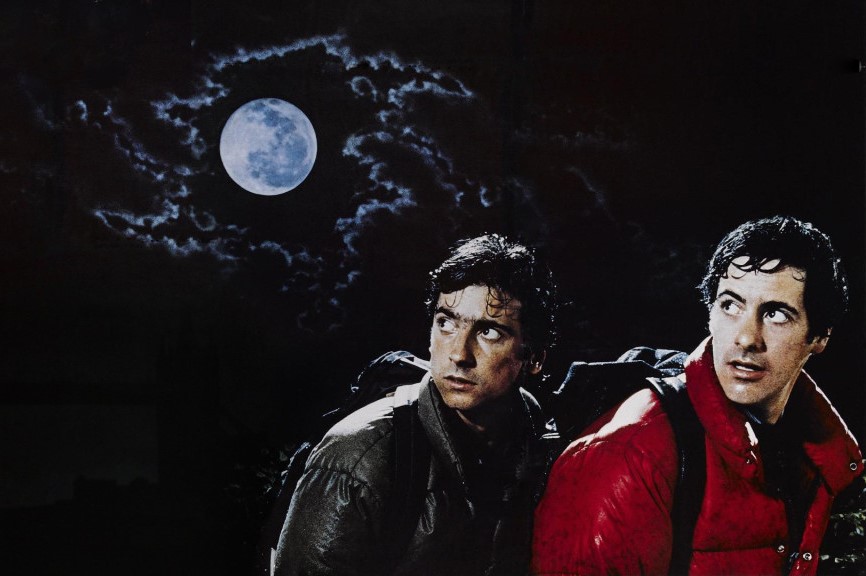
    I offer all this as preamble to the fact that Roy and I will be discussing “An American Werewolf in London” tomorrow night, as we continue our month-long celebration of Halloween, on Roy’s Tie-Dye Sci-Fi Corner.

    Ironically, I was a rather squeamish kid. I may have been drawn to monsters, but I always had complex feelings about the anguish and tragedy that were part and parcel of their existence, and certainly I didn’t want to see any blood. So into my teens I had mixed feelings about the Hammer films of the 1950s and ‘60s, with their buckets of Technicolor gore. And I was definitely very wary of anything more modern that ran the risk of splatter or viscera. I remember, I had a lot of apprehension when my mother took me to see “Day of the Dolphin” in the theater – not a monster movie, but rated PG!

    My favorite monster was always the werewolf. I still have Nancy Garden’s book on the history of the werewolf (“Werewolves,” from Lippincott’s “The Weird and Horrible Library”) that my parents bought me at F.A.O. Schwarz on one of our trips in to New York City. Later, I acquired Sabine Baring-Gould’s 1865 study “The Book of Were-Wolves.” On one memorable occasion, when I was about 10 years old, my parents allowed me to stay up and watch “The Werewolf of London” with Henry Hull and Warner Oland.

    The thing is, there weren’t very many good werewolf movies. I assume it’s because, of all the movie monsters, the werewolf was the hardest to pull off. Put a guy in a cape and give him fangs and you’ve got a vampire. But it took some real skill to engineer a palatable werewolf, especially in the old days. Even among all the monster cereals spawned by Count Chocula, including Franken Berry, Boo Berry, and the only vaguely recollected Yummy Mummy, Frute Brute was always the weakest.

    Since I was weaned on the Universal films, I was all about atmosphere, broodingly-lit Gothic landscapes full of shadows and mists. Of course, these were necessary in order to effectively sustain believability, when nobody back in the day vaguely resembled a wolf. In the classic 1941 version of “The Wolfman,” always the best of the vintage werewolf movies, Bela Lugosi’s supporting character was represented, in monster form, by a genuine canine; but when it came to Lon Chaney, they gave him a toupée, teeth, and whiskers. Not that I loved him any the less for them. I hasten to add, the transformations, for the time, and certainly Jack Peirce’s makeup, were brilliant.

    But by the 1980s, effects had come a long way, and now we could witness the genuine process of shapeshifting. What was sacrificed in terms of the power of suggestion was superseded by eyepopping elongation of limbs and growing fur. 1981 brought a werewolf bumper crop, between Joe Dante’s “The Howling,” with Rob Bottin’s never-look-away transformations, and John Landis’ “An American Werewolf in London,” with Rick Baker’s excruciating, interminable, and astonishing metamorphoses.

    I was 15 years-old, dipping a toe into contemporary horror, but still apprehensive about anything too lurid. I was nervous about seeing “Excalibur,” of all things, as I was afraid, with its R rating, that there might be some arm-loppings. (There were.) I was a very sensitive teenager.

    Yeah, there were some gross elements to “American Werewolf,” a real change of pace for director John Landis, then known pretty much for his comedies-of-excess “Animal House” and “The Blues Brothers,” but like “The Wolfman,” the film managed to insinuate itself into my consciousness, and I remember thinking about it for days afterward.

    It’s been years since I’ve last seen it, and I have not really kept up with developments in the werewolf genre, being interested in neither graphic violence nor CGI, so “American Werewolf,” for me, was always the film that met the high-water mark set by Chaney. The scares and pathos were there, but bizarrely, at the time, there were also some pretty good jokes. The film ran with all the wild grace of a lone wolf. I can’t wait to rewatch it and talk about it tomorrow night.

    There will be a bad moon rising, on the next “Roy’s Tie-Dye Sci-Fi Corner.” Bring your silver bullets to the comments section. It will be our time to howl, on Facebook, YouTube, etc., this Sunday evening at 7:00 EDT!

    https://www.facebook.com/roystiedyescificorner


    Last night, Roy’s special guest was filmmaker Jeffrey Morris, who dropped by to discuss some of his favorite episodes of “Space: 1999.” Morris is raising funds for a documentary about the cultural impact of the Eagle, the iconic spacecraft from the cult television series. Here’s a link to the show, if you’re a “1999” fan.

    Also, the documentary’s Kickstarter page, if you would like to see it happen. Among the subjects who have agreed to take part in the project are actor Nick Tate, who played Alan Carter on the show, and Academy Award winning special effects artist Brian Johnson (both of whom have been past guests on “Roy’s Tie-Dye Sci-Fi Corner”). There are only five days left in the fundraiser, so think about it, and if it’s something you want to support, make your pledge. Morris is a dynamic personality, a passionate and skilled filmmaker who knows how to get things done. Every cent will be onscreen. The documentary is bound to bring fresh attention to a fondly-remembered show that is, nevertheless, always slipping further into the past. You can read more about Morris’ vision here:

    https://www.kickstarter.com/projects/1924935609/the-eagle-has-landed-sci-fi-documentary


Tag Cloud

Aaron Copland (93) Beethoven (95) Composer (114) Film Music (144) Film Score (143) Film Scores (255) Halloween (94) John Williams (195) KWAX (229) Leonard Bernstein (104) Marlboro Music Festival (125) Movie Music (159) Mozart (91) Opera (213) Philadelphia Orchestra (89) Picture Perfect (174) Princeton Symphony Orchestra (109) Radio (88) Ross Amico (244) Roy's Tie-Dye Sci-Fi Corner (290) The Classical Network (101) The Lost Chord (269) Vaughan Williams (105) WPRB (397) WWFM (881)

DON’T MISS A BEAT

Receive a weekly digest every Sunday at noon by signing up here


RECENT POSTS