• Rachmaninoff 150th Birthday Broadcast

    Rachmaninoff 150th Birthday Broadcast

    by 

    in
    6 responses

    This Sunday night on “The Lost Chord,” get a piece of the Rach!

    With the impending sesquicentenary of the birth of Sergei Rachmaninoff on April 1, enjoy an hour of historic performances.

    We’ll hear Rachmaninoff play his own “Symphonic Dances” in a recently rediscovered, fly-on-the-wall recording, captured surreptitiously at the home of Eugene Ormandy in 1940. Then Ormandy will introduce – and conduct – the Philadelphia Orchestra, in a special memorial performance of Rach’s “Isle of the Dead,” given only days after the composer’s death, in 1943.

    We’ll round out the hour with a literal party piece – as Rachmaninoff tosses off the Ukrainian folk song, “Bublichki,” or “Bagels,” in 1942.

    The recordings are from a 3-CD boxed set issued by Marston Records, the record label of industry legend Ward Marston. Now based in West Chester, PA (he was born in Philadelphia in 1952), Marston is one of classical music’s most revered audio engineers. Incredibly, he has been blind since birth.

    Marston’s work in restoration and conservation of historic audio has been both miraculous and rapturously received. His acclaimed remasterings have appeared on the Andante, Biddulph, Naxos, Pearl, RCA, and Romophone labels. For more information and a complete catalogue of Marston Records releases, visit marstonrecords.com.

    Then join me for an hour of Sergei Rachmaninoff in vintage recordings. That’s “Rach of Ages,” for the 150th birthday of Sergei Rachmaninoff, this Sunday night at 10:00 EDT, on WWFM – The Classical Network and wwfm.org.

  • Haydn Wood’s Enduring Melody

    by 

    in
    3 responses

    Haydn Wood was born on this date in 1882. Although his name is pronounced “Hayden,” his parents, both musicians, indeed named him for Franz Joseph Haydn. Wood composed larger works for the concert hall, including concertos for piano and violin, and there was once a symphony, now lost, but his reputation rests on his light music and songs. He composed over 200 ballads.

    This was one of his biggest hits, one of the great tear-jerkers of the First World War. Wood was riding atop a double-decker bus when the melody came to him. He hopped off and jotted it down onto an envelope by lamplight. The text was added by Frederick Weatherly.

    During the war, the song sold 50,000 copies of sheet music. Its singing was used in the rehabilitation of shell-shocked soldiers, who had lost the ability to speak. It was recorded many, many times.

    These days, it’s often employed to add flavor to period dramas. Of the earliest recordings, John McCormack’s rendition was notably popular.

    Happy birthday, Haydn Wood!


  • Wild Movie Music Picture Perfect on WWFM

    Wild Movie Music Picture Perfect on WWFM

    by 

    in
    2 responses

    This week on “Picture Perfect,” March goes out like a lion… and a bear… and a baby elephant… and the tiger Shere Khan!

    We’ll hear selections from John Barry’s music for “Born Free” (1966), based on Joy Adamson’s memoir about the raising of Elsa, an orphaned lion cub who grows to adulthood and is eventually released into the Kenyan wilderness. The music proved a double Academy Award winner for Barry, who was recognized for Best Original Score and Best Original Song.

    Jerome Moross, best known for his music to “The Big Country,” had such a strong personality that his immediately recognizable sound extended even to his work on the National Geographic special, “Grizzly!” (1967), a documentary about a pair of ecologists studying North American bears. “Grizzly!” sports an energetic Americana score that is very much cut from the same cloth.

    The Korda Brothers’ adaptation of Rudyard Kipling’s “The Jungle Book” (1942) stars the charismatic Indian actor Sabu, as Mowgli, raised by wolves, who yearns to reconnect with his human roots. (For the record, Kipling pronounced “Mowgli” so that the first syllable rhymes with “cow.”) Miklós Rózsa wrote the enchanting score.

    And we can’t get through the hour without hearing Henry Mancini’s “Baby Elephant Walk,” from “Hatari!” (1962). So many exclamation points in these wilderness titles! The film was directed by Howard Hawks and starred John Wayne. In case you’re wondering, “Hatari!” is Swahili for “Danger!”

    Take a walk on the wild side, with a spring in your step, on “Picture Perfect,” music for the movies, this Saturday evening at 6:00 EDT, on WWFM – The Classical Network and wwfm.org.


  • Bluebeard’s Enduring Myth & Bartók’s Castle

    Bluebeard’s Enduring Myth & Bartók’s Castle

    by 

    in
    7 responses

    Like any myth worth its salt, the disturbing fairy story of Duke Bluebeard embeds itself in the recesses of the unconscious, only to color and confirm subterranean anxieties or perceived truths about the wider world.

    The best-known version of the story is the one by Charles Perrault, set down in the 17th century. Perrault’s popular retellings of Little Red Riding Hood, Cinderella, The Sleeping Beauty, and Puss in Boots served to codify these timeless folk tales for the modern age.

    Bluebeard as an archetype informs the characterizations of so many of the tortured antiheroes of the Gothic novel – the mysterious and brooding nobleman who lives in a dank castle of many chambers that surely contain their share of skeletons, be they literal or figurative.

    Sometimes Bluebeard really is the menace of Perrault, the volatile madman who lives in a house full of corpses. At others (as in “Jane Eyre”), he is a tragic hero who harbors a guilty secret that cuts him off from all happiness, love, and normalcy. Only gradually do the heavy doors grind open on rusty hinges to reveal their truths. The chambers are like the dark corners of his psyche, vulnerabilities he holds close, to the point of near-destruction or even beyond. Only understanding and acceptance have the power to alter his world.

    That said, sometimes Bluebeard really is a murderous creep who’s all about control and over-the-top cruelty.

    And what about his bride, named Judith in Béla Bartók’s opera, “Bluebeard’s Castle?” Is her curiosity a liberating force or a destructive one? The parable of fatal curiosity extends back through the Biblical stories of Lot’s wife and Eve and the Classical myths of Pandora, Eurydice, and Psyche.

    The tale positively drips with allegory. If there is anything that is clear about the Bluebeard story, it’s that it would take two very special people to make this unusual relationship work. There’s no way any outside observer would ever, ever, EVER understand.

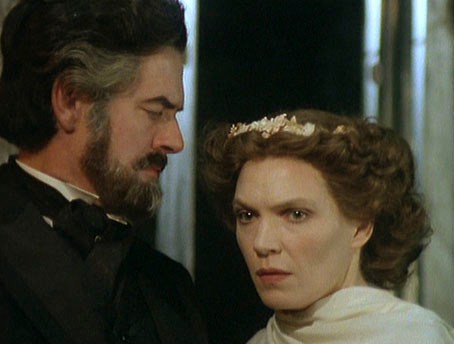
    On Béla Bartók’s birthday, I stumbled across this 1988 film of “Duke Bluebeard’s Castle.” It’s not sung in the original Hungarian. English-speaking viewers may find that a plus; anyone else, I think, will find compensation in its atmosphere and insight.

    In whatever language, the music is still terrific. Happy birthday, Béla Bartók!


  • Christopher Gunning Poirot Composer Dies

    Christopher Gunning Poirot Composer Dies

    by 

    in
    5 responses

    I just learned the composer Christopher Gunning has died. I have a few of his concertos and symphonies in my own collection, but fans of David Suchet’s Poirot will certainly recognize this:

    Here’s a video of Gunning at home, talking about some of his symphonies:

    And a substantial teaser for his Violin Concerto:

    Gunning was 78 years-old. R.I.P.


Tag Cloud

Aaron Copland (93) Beethoven (95) Composer (114) Film Music (145) Film Score (143) Film Scores (255) Halloween (94) John Williams (195) KWAX (229) Leonard Bernstein (104) Marlboro Music Festival (125) Movie Music (160) Mozart (91) Opera (213) Philadelphia Orchestra (89) Picture Perfect (174) Princeton Symphony Orchestra (109) Radio (88) Ross Amico (244) Roy's Tie-Dye Sci-Fi Corner (290) The Classical Network (101) The Lost Chord (269) Vaughan Williams (105) WPRB (397) WWFM (881)

DON’T MISS A BEAT

Receive a weekly digest every Sunday at noon by signing up here


RECENT POSTS