• Freaky Friday 1976 Retro Comedy Review

    Freaky Friday 1976 Retro Comedy Review

    by 

    in
    9 responses

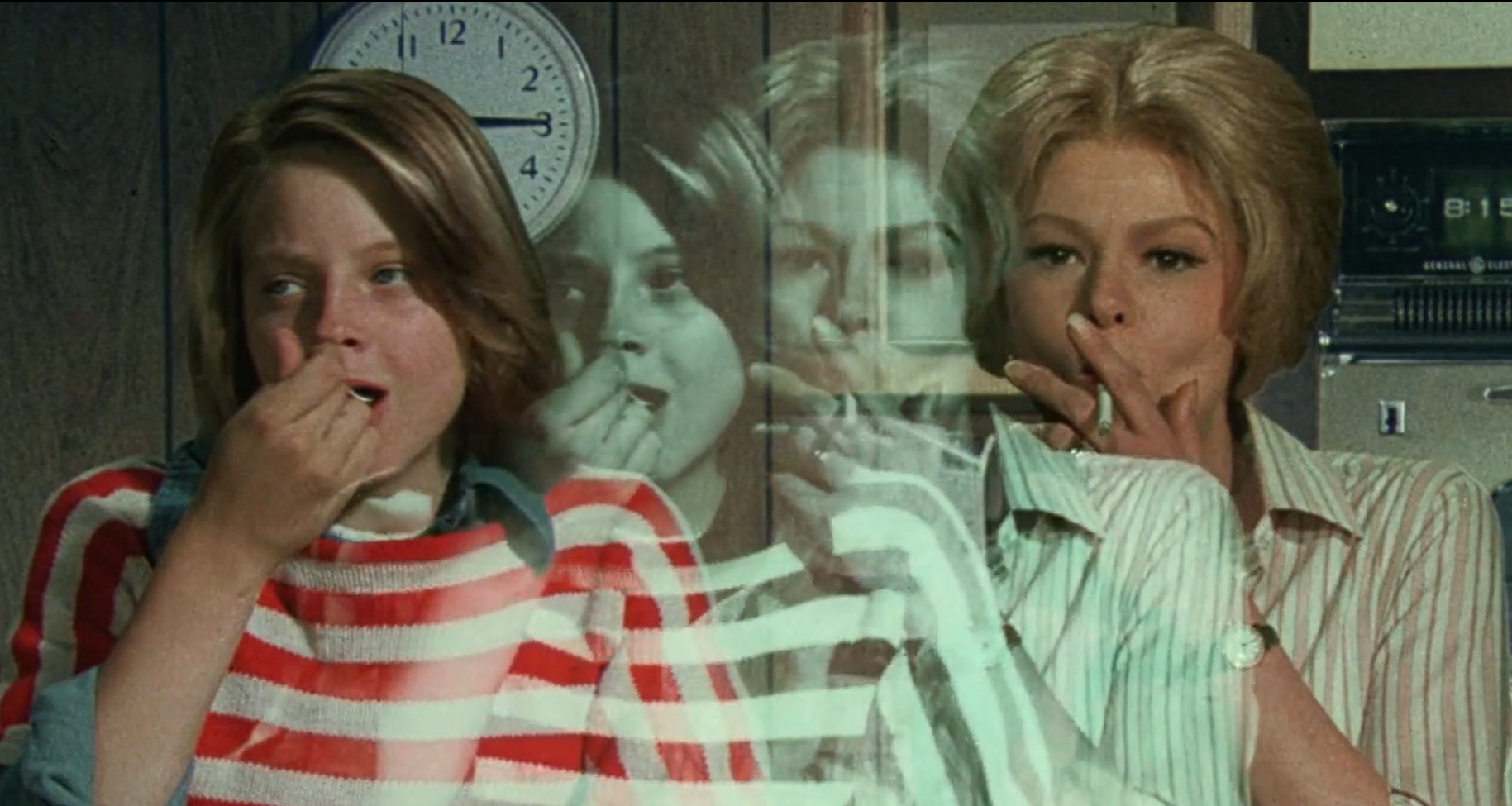
    When Roy suggested “Friday the 13th” for Friday the 13th, I reflexively nixed it. I’m not a slasher guy. But when he came back with a counteroffer of “Freaky Friday” (1976), a memorable Disney farce from our childhood, I said sure, why not.

    Barbara Harris and Jodie Foster are the whole show, as mother and daughter who, through unexplained supernatural circumstances, swap identities, leading to a day of very, very broad farce (too much detergent in the washing machine, mom on water skis, a burnt turkey, etc., etc.). It’s not exactly Preston Sturges, but it is an undemanding 97 minutes that leaves no lasting damage to the viewer’s psyche, even as it does no favors to the reputation of law enforcement.

    In the supporting cast, John Astin (TV’s Gomez Addams) and Marc McClure (Superman’s Jimmy Olsen) are joined by a gallery of familiar comic faces (Dick Van Patten, Kaye Ballard, Ruth Buzzi, Marvin Kaplan) who show up with puzzlingly little to do. Marie Windsor, one of the hottest dames in ‘40s noir, has a memorable, if somewhat dispiriting turn as an aged alcoholic housekeeper. (Oh, the ‘70s.)

    Toss some salt over your shoulder and bring your horseshoe to the comments section, when we livestream on Facebook, YouTube, etc. Roy and I push our luck, as we converse about “Freaky Friday,” on the next Roy’s Tie-Dye Sci-Fi Corner, this Friday the 13th at 7:30 PM EST!
    https://www.facebook.com/roystiedyescificorner


  • Jeff Beck’s Classical Guitar Legacy

    Jeff Beck’s Classical Guitar Legacy

    by 

    in
    7 responses

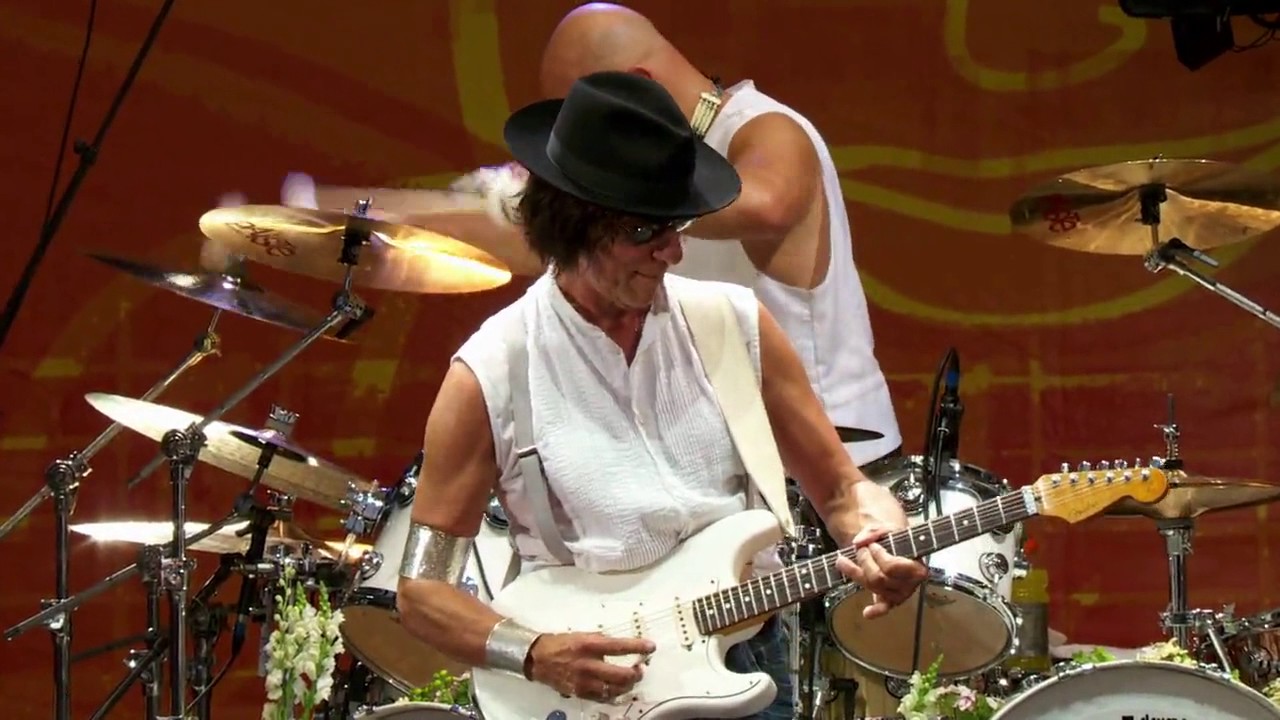
    As the world mourns the passing of rock guitarist Jeff Beck, whose influential career spanned an eventful 60 years, it’s to be remembered that he also recognized beauty in the music of other genres, often consolidating it with his own style.

    Among his 16 Grammy nominations (and eight wins) was a cover of “Nessun dorma,” the standout aria from Puccini’s “Turandot,” recognized as Best Pop Instrumental Performance of 2010. Here it is in concert.

    Beck also recorded an arrangement of the Adagietto from Mahler’s Symphony No. 5.

    Thanks to “The Guv’nor” for helping to get the word out. Good music is good music. R.I.P.


  • Milton Babbitt’s Lost Film Score Rediscovered

    Milton Babbitt’s Lost Film Score Rediscovered

    by 

    in
    One response

    Yesterday, in writing about experimental composer Milton Babbitt on his birthday, I remarked upon his softer side, as “a frustrated show composer” (according to Stephen Sondheim, a Babbitt pupil), a lover of jazz, an admirer of the film scores of Bernard Herrmann, and a friend of John Williams. I was interested to discover that Babbitt himself had scored a film, “Into the Good Ground” (1949), which also includes selections from Handel’s “Messiah” performed by the First Methodist Church Choir of Germantown, PA (a neighborhood in Babbitt’s hometown of Philadelphia).

    Whether or not you find the content agreeable – the film was produced by Pathescope for the Presbyterian Church and its publishing branch, Westminster Press, so you can expect a good sermon – it is very interesting to hear what Babbitt does with it. I find it very much in the tradition of the film work undertaken by Aaron Copland and Virgil Thomson for the WPA and Richard Arnell for the U.S. Department of Agriculture.

    I would love to hear the score free from the film, perhaps worthy of inclusion in the series of music for short subjects recorded by the PostClassical Ensemble (so far documenting works by Aaron Copland, Silvestre Revueltas, and Virgil Thomson)? You’ll find the albums on CD and freshly-recorded scores issued with the films on DVD at the link, all highly recommended.

    https://www.postclassical.com/discography

    There’s certainly plenty of other material out there, including Richard Arnell’s music for Robert Flaherty’s “The Land” and Ulysses Kay’s score for “The Quiet One.” It’s niche market, to be sure, but a fascinating corner of our musical heritage, now largely forgotten.


  • Milton Babbitt Serial Simplicity

    Milton Babbitt Serial Simplicity

    by 

    in
    5 responses

    Who cares if you read this?

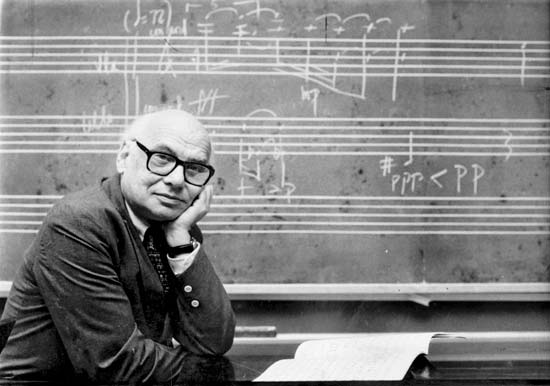
    Milton Babbitt, a staple at Princeton University for many years, was born in Philadelphia on this date in 1916. Babbitt gained widespread notoriety for an essay he wrote for High Fidelity magazine, titled “Who Cares If You Listen?” It turns out the provocative stance was actually the result of an editorial decision, and that Babbitt’s original title had been “The Composer as Specialist” – not likely to generate nearly as much controversy.

    While he frequently composed in a serial style, Babbitt’s music is often fairly lucid, without undo congestion and with a minimum of soul-crushing dissonances. On the contrary, he often achieved a paradoxical simplicity under the guise of complexity.

    In the 1960s, Babbitt became interested in electronic music, apparently for its rhythmic precision, as opposed to any unusual timbral considerations. I find it endearing that he was also fond of jazz and musical theater and that late in life he enjoyed a friendship of sorts with film composer John Williams. (They bonded over Bernard Herrmann.) His one-time student, Stephen Sondheim characterized him as “a frustrated show composer.”

    Babbitt himself was a saxophonist. In 1946, he penned a musical, “Fabulous Voyage,” a retelling of Homer’s “The Odyssey.”

    He was the recipient of an honorary Pulitzer Prize in 1982. Babbitt died in Princeton in 2011, at the age of 94.

    Listen here for “Penelope’s Night Song” from “Fabulous Voyage”:

    https://soundcloud.com/phillipc…/penelopes-night-song-from

    “Composition for Twelve Instruments” (1948):

    “Reflections” (1974) for piano and synthesized tape:

    Milton Babbitt on electronic music:

    John Williams talks Babbitt in The New Yorker

    https://www.newyorker.com/culture/persons-of-interest/the-force-is-still-strong-with-john-williams?fbclid=IwAR1-ndYl2wO4btjBdjgEBam70F8tEE7mLR51ykWmV5VHqb8ZcI5L_SgO5qI

    If you’re interested in learning more about Princeton’s important role in the history of computer music and haven’t done so yet, do check out this podcast, produced by the Princeton University Engineering Department.

    Composers & Computers, a podcast

    I profiled the podcast’s creator, Aaron Nathans, in September for the Princeton weekly U.S. 1.

    https://www.communitynews.org/princetoninfo/artsandentertainment/a-good-ear-for-stories-and-electronic-music-inspires-a-princeton-podcast/article_93780110-3384-11ed-93a9-1ba8b9106ed7.html

    Happy birthday, Milton Babbitt!


  • Grieg Goes Electric Ragna-Rock Guitar

    by 

    in
    3 responses

    Edvard Grieg on electric guitars? Get ready to Ragna-rock!


Tag Cloud

Aaron Copland (93) Beethoven (95) Composer (114) Film Music (145) Film Score (143) Film Scores (255) Halloween (94) John Williams (195) KWAX (229) Leonard Bernstein (104) Marlboro Music Festival (125) Movie Music (160) Mozart (91) Opera (213) Philadelphia Orchestra (89) Picture Perfect (174) Princeton Symphony Orchestra (109) Radio (88) Ross Amico (244) Roy's Tie-Dye Sci-Fi Corner (290) The Classical Network (101) The Lost Chord (269) Vaughan Williams (105) WPRB (397) WWFM (881)

DON’T MISS A BEAT

Receive a weekly digest every Sunday at noon by signing up here


RECENT POSTS