• Fritz Reiner The Real Whiplash

    Fritz Reiner The Real Whiplash

    by 

    in
    4 responses

    Before “Whiplash,” there was Fritz Reiner.

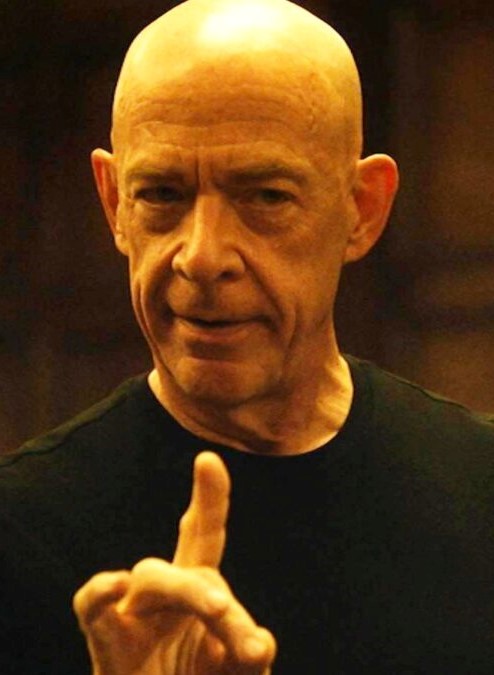
    J.K. Simmons earned an Oscar for his portrayal of ruthless bandmaster Terence Fletcher in Damien Chazelle’s breakout film. It’s no secret that Chazelle modeled Simmons’ sociopath on his real-life band instructor at Princeton High School.

    Classical music has had more than its share of Terence Fletchers, but few burned as ferociously as Fritz Reiner. From a musician’s standpoint, Reiner was one of the most dreaded conductors, in an era when tyrants of the podium still very much roamed the earth. With a glower that could make Bela Lugosi quake – and sporting quite the similar hairline – Reiner was forged in Hungary at the twilight of the Austro-Hungarian Empire. Hungary at the time had quite the reputation for churning out great conductors. George Szell, Eugene Ormandy, Antal Doráti, Ferenc Fricsay, Sir Georg Solti, and István Kertész all achieved considerable international success.

    Among Reiner’s own teachers was Béla Bartók, with whom he studied piano. Reiner would later repay the favor with what many consider to be the benchmark recording of Bartók’s “Concerto for Orchestra.” He also worked closely with Richard Strauss in Dresden, and his recordings of Strauss’ works are equally revered. All in all, the Chicago Symphony under Fritz Reiner was a surefire choice to give the ol’ hi-fi a good workout in the early days of stereo.

    In 1928, Reiner became a naturalized American citizen. He began to teach conducting at the Curtis Institute of Music in Philadelphia, where among his pupils was Leonard Bernstein. His first American post was as principal conductor of the Cincinnati Symphony. He took over the Pittsburgh Symphony for a decade, beginning in 1938. Then he spent several years at the Met. But it was as music director of the Chicago Symphony that he attained legendary status.

    For a master interpreter of some of the largest and most challenging works in the repertoire, his baton technique was notable for its precision and economy. Much of what he achieved, unfortunately, was through the brutality he exuded in rehearsals. Reiner emerged from an Old World steeped in aristocratic privilege. At the top of their profession, conductors then were regarded as gods-on-earth. When drive and ego were bolstered by absolute power, working conditions could become downright perilous. Before strong musicians’ unions, conductors exercised the authority to fire anyone on a whim. So when musicians played for Reiner, they played as if their lives depended on it – or at the very least their livelihoods.

    Did it make for better musicmaking? You can’t argue with the excellence of Reiner’s Chicago Symphony.

    Were you rushing or were you dragging?

    Fritz Reiner: A Marriage of Talent and Terror

    https://drgeraldstein.wordpress.com/2013/10/12/fritz-reiner-a-marriage-of-talent-and-terror/

    Reiner finally gets his “perfect concert”

    https://csosoundsandstories.org/125-moments-101-fritz-reiners-perfect-concert/?fbclid=IwAR27Vi_fsWhdExZqJPF5SRRmJqpp9jsoaNXDJ6tVbfAmjbo5ZNTEhPPfKkY

    I guess even autocrats have their cuddly moments. Happy birthday, Fritz Reiner.


    Reiner conducts Beethoven

    Big band Bach

    Benchmark Bartók

    Strauss’ “Salome”

    And, to keep it seasonal, “Waltz of the Flowers” from “The Nutcracker”

    https://www.youtube.com/watch?v=mgaS9CZ7KsQ


  • Hanukkah Music: Ludwig, Altman & Klezmer Nutcracker

    Hanukkah Music: Ludwig, Altman & Klezmer Nutcracker

    by 

    in
    3 responses

    Hanukkah begins at sunset. This Sunday night on “The Lost Chord,” kick off the Festival of Lights with a little musical sustenance.

    We’ll hear David Ludwig’s “Hanukkah Cantata.” Ludwig, who studied with Richard Danielpour, Jennifer Higdon, and Ned Rorem at the Curtis Institute of Music and John Corigliano at Juilliard, is also the nephew of pianist Peter Serkin, the grandson of Rudolf Serkin, and the great-grandson of Adolf Busch. The text of his cantata, compiled by Cantor Dan Sklar, is sung in English and Hebrew. The work falls into eight movements, wholly befitting for this eight-day celebration.

    We’ll follow that with Ludwig Altman’s “Theme and Variations on ‘Ma’oz Tzur,’” the Hanukkah melody also known as “Rock of Ages.” Altman was born in what was once Breslau, Germany (now Wroclaw, Poland). He studied at the University of Breslau, and then at Berlin’s State Academy for Sacred Music. With the rise of the Nazis, he was restricted to employment in Jewish organizations.

    In 1936, he emigrated to the United States, settling in San Francisco, where he became organist and choral director at Congregation Emanu-El. For over three decades, he was also organist of the San Francisco Symphony. Altman’s variations on a Hanukkah theme will be performed with another composer of note, Barbara Harbach, at the console.

    Then we’ll round out the hour with “A Klezmer Nutcracker” – with apologies to Peter Ilych Tchaikovsky – in a lively recording made by the Boston-based ensemble Shirim. Kazatsky ‘til you dropsky!

    We’ll do our best to lay a sound foundation for eight days of fried food, sugar, and cheese. Join me for “Latke Tonic,” music of substance for Hanukkah. We’ve got oil to burn, this Sunday night at 10:00 EST, on WWFM – The Classical Network and wwfm.org.


    David Serkin Ludwig, Composer
    Milken Archive of Jewish Music
    Shirim Klezmer Orchestra


  • The Littlest Angel 1969 Movie Review

    The Littlest Angel 1969 Movie Review

    by 

    in
    2 responses

    Here’s our little conversation about “The Littlest Angel” (1969). Little Johnny Whitaker finds himself in heaven, under the care of Fred Gwynne, Cab Calloway, Connie Stevens, Tony Randall, John McGiver, and E.G. Marshall (as God). Not the littlest discussion, since it still ran to an hour and a half, but there were plenty of nostalgic digressions, leavened by a little aseasonal misanthropy, since I started out with a headache. But the Advil soon took effect, and things were merry and bright in the Tie-Dye universe. You can eavesdrop on our ruminations here.

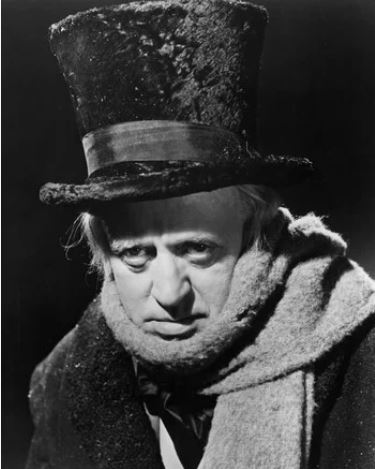
    Next week, “Scrooge” (1970) is undoubtedly more my speed (it’s not just a story; it’s a lifestyle), with Leslie Bricusse riding the coattails of Lionel Bart’s smash musical “Oliver!” Albert Finney and Alec Guinness (as Marley’s ghost) do their game best to put a fresh spin on Dickens’ oft-adapted “A Christmas Carol.”

    We’ll be boiled in our own pudding with a stake of holly through our hearts, on this heartwarming Christmas edition of Roy’s Tie-Dye Sci-Fi Corner. Join Fezziwig for a round of “Roger de Coverley” in the comments section, when we livestream on Facebook, YouTube, etc., NEXT WEEK AT A SPECIAL TIME: THURSDAY EVENING, DECEMBER 22, AT 7:00 EST!

    https://www.facebook.com/roystiedyescificorner

    Thank you very much… Thank you very much…


  • Dickens Movie Music Picture Perfect

    Dickens Movie Music Picture Perfect

    by 

    in
    4 responses

    ‘Tis the season for… “Humbug!”

    This week on “Picture Perfect,” we’ll have a Dickens of a time with a garland of music from movies inspired by his writings. Tune in for selections from “Nicholas Nickleby” (1947) by Lord Berners, “Oliver Twist” (1948) by Sir Arnold Bax, “David Copperfield” (1969) by Sir Malcolm Arnold, and “A Christmas Carol” (1951) by Richard Addinsell.

    Blame it on an undigested bit of beef, a blot of mustard, a crumb of cheese, a fragment of an underdone potato. There will be more of gravy than of grave about it. Take your pick of Dickens on “Picture Perfect,” music for the movies, this Saturday evening at 6:00 EST, on WWFM – The Classical Network and wwfm.org.


  • Beethoven’s Birthday A Christmas Gift Idea

    Beethoven’s Birthday A Christmas Gift Idea

    by 

    in
    5 responses

    Only nine days until Christmas. Are you feeling the heat yet?

    Just remember, the Christmas season isn’t all about the gifts. It’s also about the birth of…

    BEETHOVEN!

    That’s right, Beethoven’s birthday is widely celebrated on today’s date. There’s no actual record of when he was born, but we know he was baptized on December 17, 1770. So it’s likely today is the anniversary of his nativity.

    As you sweat it out on line at the post office or checkout counter, consider amusing yourself by contemplating what you might get classical music’s most iconic composer.

    Here’s a literal wish list scrawled by Beethoven. Among the desired items: soap, a mousetrap, a knife, and a metronome. In 2011, the list sold at auction for over $73,000.

    Happy birthday, Ludwig Van, with angry sugar plums dancing in your head!


    More about the contents – and the context – of Beethoven’s list:

    https://inlibris.com/item/bn51798/


Tag Cloud

Aaron Copland (93) Beethoven (95) Composer (114) Film Music (145) Film Score (143) Film Scores (255) Halloween (94) John Williams (195) KWAX (229) Leonard Bernstein (104) Marlboro Music Festival (125) Movie Music (160) Mozart (91) Opera (213) Philadelphia Orchestra (89) Picture Perfect (174) Princeton Symphony Orchestra (109) Radio (88) Ross Amico (244) Roy's Tie-Dye Sci-Fi Corner (290) The Classical Network (101) The Lost Chord (269) Vaughan Williams (105) WPRB (397) WWFM (881)

DON’T MISS A BEAT

Receive a weekly digest every Sunday at noon by signing up here


RECENT POSTS