• Iceland’s Hilarious & Horrifying Yule Lads

    Iceland’s Hilarious & Horrifying Yule Lads

    by 

    in
    3 responses

    I’m sorry I didn’t tell you sooner, but if you didn’t put a shoe in your window last night, you are in for a world of irritation through Christmas. Oh, wait a minute, that’s probably the case anyway.

    The Yule Lads are Iceland’s greatest metaphor for holiday annoyance and frustration. In their most anodyne form, the Lads leave gifts for children (in the shoe). But in their purest, most primordial sense, they are major pains in the ass. And their mother will kill you.

    Today, the Lads are most frequently portrayed as a bevy of affable Santa Clauses, rewarding the good with welcome gifts and penalizing the naughty with rotten potatoes. But in days of yore, they were amoral pranksters and homicidal trolls who devoured children.

    According to Icelandic lore, the Lads are thirteen in number. Mostly they harass and steal from Icelandic farmers. They descend from the mountains, staggering their arrivals and departures, beginning thirteen nights before Christmas. For those who can’t be bothered to do the math, that would be December 12.

    Each has his own exasperating speciality, whether it be harassing sheep, stealing milk, eating crust out of pans, licking spoons, stealing leftovers, licking bowls, slamming doors, eating skyr (a kind of Icelandic yogurt), stealing sausages, peeping through windows, sniffing for bread, stealing meat with a hook, or eating candles.

    For Tolkien fans, surely the Lads are the basis for the thirteen Dwarves [sic] who visit Bilbo Baggins, eating him out of house and home and imperiling his dishes.

    Their mother is the ogress Grýla, who seeks children to boil in her cauldron. If you happen to find yourself in her gnarled claws, remember, she has to release you if you repent!

    The Yule Lads are frequently accompanied by Jólakötturinn, the Yule Cat. The cat eats those who don’t receive new clothes before Christmas. This is tied in to the Icelandic work ethic. In the old days, if farm hands processed their autumn wool in a timely fashion, they were rewarded with new garments. If not, they received nothing, thereby leaving them vulnerable to the Yule Cat. Better sheer them sheep!

    In 1746, the practice of parents tormenting their children with Christmas monster stories was officially banned.

    Get festive in the way only Icelanders can, with these “Icelandic Folk Dances” by Jón Leifs.

    Björk sings about the Yule Cat

  • Remembering John Aler American Tenor

    Remembering John Aler American Tenor

    by 

    in
    8 responses

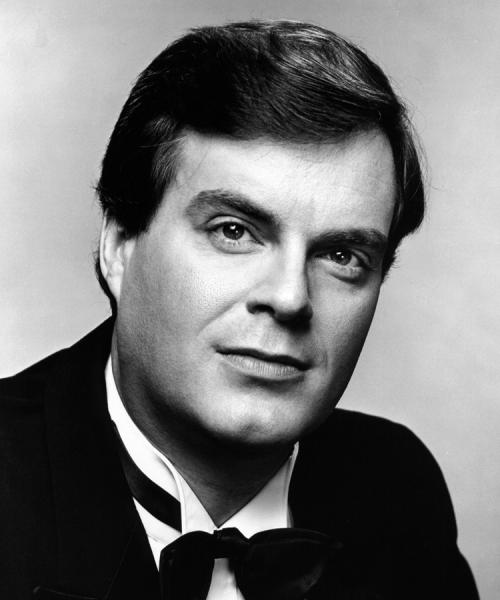
    I am sorry to learn that the American tenor John Aler has died. Aler appeared with major orchestras and performed in some of the world’s great opera houses. A notable exception was the Met, whose gargantuan hall he regarded as unsuited to his leggiero voice.

    I heard him in person once, when he came to Philadelphia back in 1986, to participate in a series of concerts of Berlioz’s 90-minute symphony-of-sorts “Roméo et Juliette,” with Riccardo Muti conducting the Philadelphia Orchestra and the Westminster Choir. Rounding out the triumvirate of soloists were Jessye Norman and Simon Estes. Happily, everyone reconvened at Memorial Hall in Fairmount Park to record the piece for EMI. If I remember correctly, there is a poster from this very series of concerts adorning the stairwell of Westminster Choir College’s Bristol Chapel in Princeton.

    Aler made some fine recordings: he was recognized with four Grammy Awards, including those for Best Vocal Soloist Performance and Best Classical Album (both for Berlioz’s Requiem) in 1986, Best Opera Recording (Handel’s “Semele”) in 1994, and Best Classical Album (Bartok’s “The Wooden Prince” and “Cantata Profana”) also in 1994.

    Certainly these were impressive achievements, and by no means isolated peaks in his discography. However, Aler makes it clear in a conversation with Bruce Duffie (linked below) that while recordings are a great resource, they are no substitute for the real thing.

    “…[T]here is nothing like being in a performance,” he says. “There’s no recording, there is no television, there is nothing like being in that hall, even when you listen to it on the radio, or when you hear a tape of it. Hearing it you think, well gee, that was great but gosh I’d have loved to have been there. I’ll never forget how really sad I felt when I heard a tape of a great performance of Turandot from San Francisco from ’70-something with Pavarotti and Caballé. It’s some of the greatest singing I’ve ever heard. As great as that tape was, I wanted to be there! That’s the exciting thing about music, about art really. I went to see the Monet exhibit at the Baltimore Museum of Art recently. We’re so used to seeing these images on posters, on postage stamps, on mugs, God, they’re everywhere! But when you go and actually see the paintings, it’s just really staggering; it’s incredible. It’s so important because it makes you remember that the work is the thing, no matter how many reproductions are made and how many calendars you pin up on your wall. You think it is pretty, but it’s not! The real thing is primarily stunning, and that’s what a great performance is.”

    Aler died on Saturday at the age of 73. R.I.P.


    “Where’er you walk” from Handel’s “Semele”

    From Rameau’s “Les Boreades”

    In duet with Mariana Cioromila (Cioromila died in June)

    From Adolphe Adam’s, “Le Postillon de Lonjumeau”

    Vaughan Williams (“On Wenlock Edge”), Bach, and Schumann

    “The Green-Eyed Dragon” by Charles Wolsely & Greatrex Newman, from a fun album called “Songs We Forgot to Remember”

    A conversation with Bruce Duffie

    http://www.bruceduffie.com/aler.html


  • Angelo Badalamenti Twin Peaks Composer Dies

    Angelo Badalamenti Twin Peaks Composer Dies

    by 

    in
    2 responses

    While I wouldn’t ordinarily equate them with Sergei Prokofiev and Sergei Eisenstein, the symbiotic relationship of Angelo Badalamenti and David Lynch – and their working methods – were astonishingly similar. Badalamenti could never have done what Prokofiev did on “Alexander Nevsky,” but at the same time, Prokofiev, despite his fondness for the grotesque, could never have crafted the moody scores conjured by Badalamenti for “Blue Velvet” and “Twin Peaks.”

    Lynch’s musical good luck charm also appeared as an espresso-obsessed gangster in “Mulholland Drive” and accompanied Isabella Rossellini from the piano in her onscreen performance of “Blue Velvet.”

    Julee Cruise, with whom Badalamenti collaborated several times, including on the hit single “Falling” (her vocals overlaid onto the “Twin Peaks” theme music), died earlier this year, in June. Lynch can currently be seen in an amusing cameo, as crusty director John Ford, in Steven Spielberg’s “The Fabelmans.”

    Angelo Badalamenti died yesterday at the age of 85. R.I.P.

    https://www.hollywoodreporter.com/movies/movie-news/angelo-badalamenti-dead-david-lynch-composer-blue-velvet-1235280660/

    Badalamenti’s “Twin Peaks” theme (instrumental):

    With Cruise’s vocals:


    TOP: Badalamenti has Rossellini’s back

    BOTTOM: With Lynch and Cruise


  • Casals’ Lost Christmas Oratorio “El Pessebre”

    Casals’ Lost Christmas Oratorio “El Pessebre”

    by 

    in
    2 responses

    Pablo Casals is remembered primarily as one of the great cellists. But did you know he was also a composer?

    This Sunday night on “The Lost Chord,” we’ll hear selections from what must be Casals’ most ambitious piece, his Christmas oratorio “El Pessebre,” or “The Crib” (once commonly translated as “The Manger”).

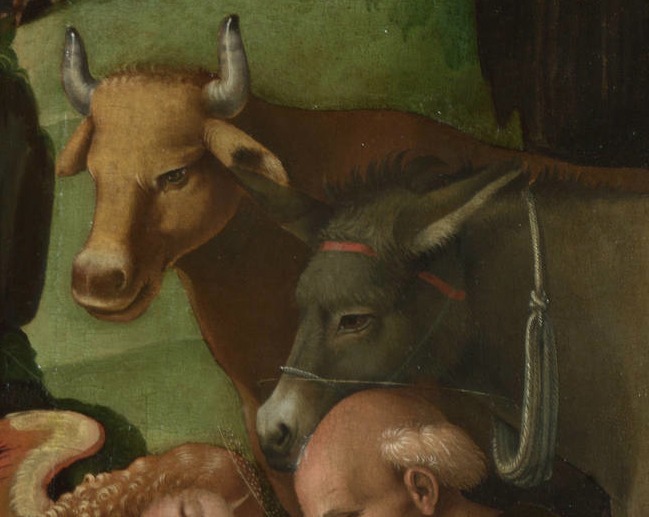
    The text, by Catalan poet Joan Alavedra, was conceived in response to questions posed by his five-year-old daughter, who asked him, as he was setting up his crèche, what each of the figures at the Nativity – including the animals – said.

    The project provided something of an escape for both artists. The work was begun while they were under house arrest in 1943. The folk-like simplicity of the oratorio is disturbed only occasionally by intimations of a troubled world. Casals added a prayer for peace to the concluding “Gloria” and refused to allow the work to be performed in Franco’s Spain. Instead, it was given its premiere in Acapulco, Mexico, in 1960.

    As long as you don’t go into it expecting Christmas music of the caliber of that written by Casals’ idol, Johann Sebastian Bach, the oratorio makes for a charming and disarming musical experience. Said Casals, “The figures in a crèche are folk figures. Why, they can’t sing twelve-tone music!”

    Casals’ recording of the piece (highlights from which I first heard on a stethoscope-style pneumatic headset on a flight to Europe, back in the 1980s!), to my knowledge, has never been released on CD. Even so, this one, with Lawrence Foster conducting, is probably about as good as it’s going to get.

    Ox me no more questions; mule find out soon enough! I hope you’ll join me for “Catalan Christmas,” selections from “El Pessebre,” this Sunday night at 10:00 EST, on WWFM – The Classical Network and wwfm.org.


    BONUS: Casals’ arrangement of a traditional Catalan carol, “The Song of the Birds.” It was he who popularized the carol internationally in a version for solo cello, which he would sometimes include on his recitals as an encore.


  • Avengers Christmas & Space 1999 Talk

    Avengers Christmas & Space 1999 Talk

    by 

    in
    4 responses

    Last night I must have been getting blocked by telepaths, because I was having a dickens of a time remembering anyone’s names (Dennis Leary, Judy Davis, George Sanders, etc.). Either that, or Roy’s COVID fog is spreading. Or, I suppose, I may just be getting old.

    But it is the Christmas season, so I’ll be charitable to myself and chalk it up to an undigested bit of beef, a blot of mustard, a crumb of cheese, a fragment of underdone potato… There was more of gravy than of grave about last night’s discussion.

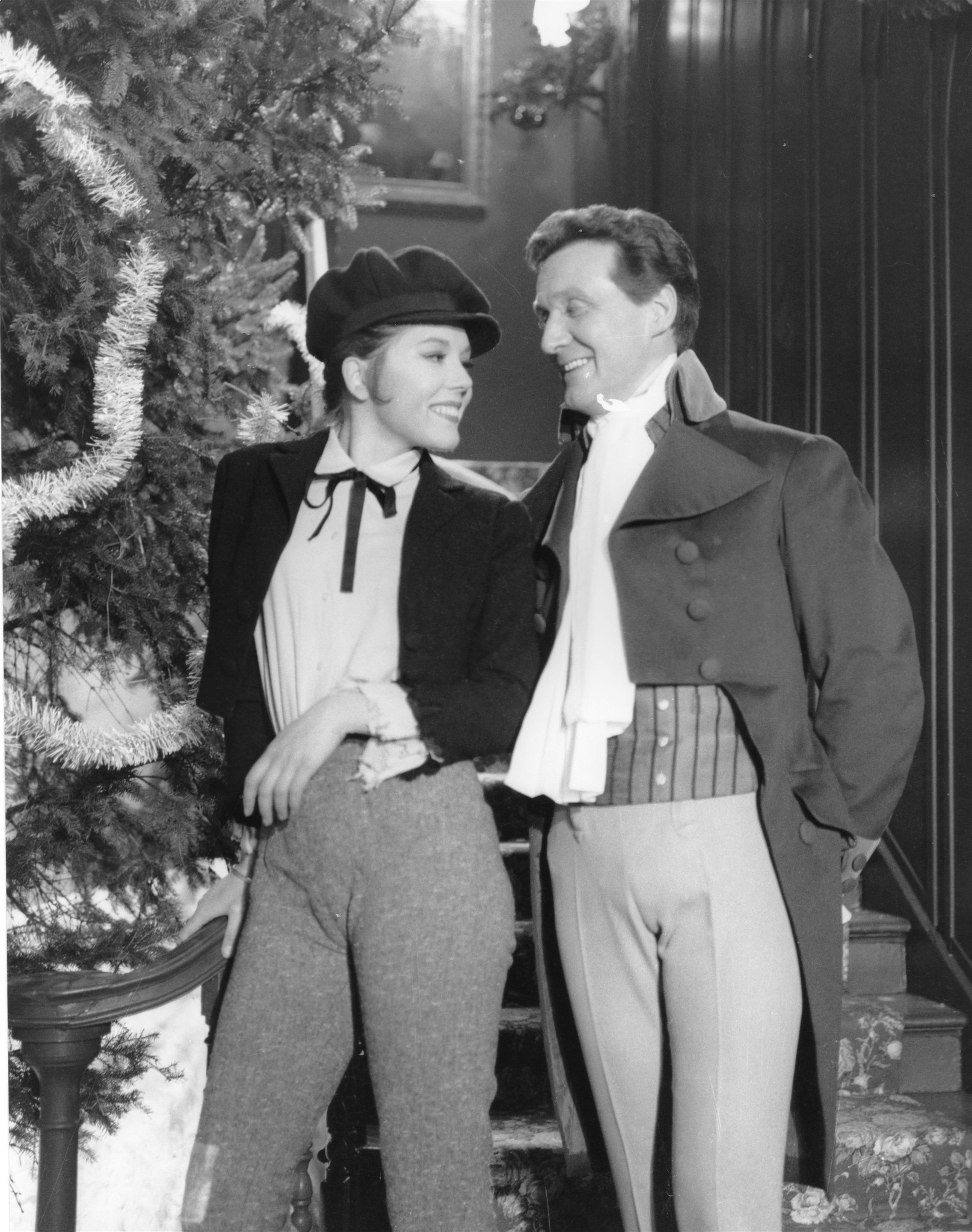
    At least “The Avengers” (1961-69) is still fresh. Here’s our conversation about the series and its 1965 holiday episode “Too Many Christmas Trees.”

    We don’t know what we’re doing next week yet (we’re still negotiating over Christmas devil movies), but if you’re a “Space: 1999” fan, you might enjoy a special edition of Roy’s Tie-Dye Sci-Fi Corner, tomorrow afternoon, as David Hirsch and Robert Wood join Roy to discuss their new book, “Maybe There: The Lost Stories from Space: 1999.”

    Drop by, “Space” out, and leave your comments, when they livestream on Facebook, YouTube, etc., THIS SUNDAY AFTERNOON AT 2:00 EST.

    https://www.facebook.com/roystiedyescificorner


Tag Cloud

Aaron Copland (93) Beethoven (95) Composer (114) Film Music (145) Film Score (143) Film Scores (255) Halloween (94) John Williams (195) KWAX (229) Leonard Bernstein (104) Marlboro Music Festival (125) Movie Music (160) Mozart (91) Opera (213) Philadelphia Orchestra (89) Picture Perfect (174) Princeton Symphony Orchestra (109) Radio (88) Ross Amico (244) Roy's Tie-Dye Sci-Fi Corner (290) The Classical Network (101) The Lost Chord (269) Vaughan Williams (105) WPRB (397) WWFM (881)

DON’T MISS A BEAT

Receive a weekly digest every Sunday at noon by signing up here


RECENT POSTS