• Animated Film Scores Uplifting Movie Music

    Animated Film Scores Uplifting Movie Music

    by 

    in
    4 responses

    “Music is a moral law,” wrote Plato. “It gives soul to the universe, wings to the mind, flight to the imagination… and life to everything.”

    That includes computer-generated imagery.

    While my distaste for the overkill of CGI in alleged “live action” movies is quite well known, I have to concede that, when shelling out the clams for a big-budget movie, one stands a better chance these days of getting a quality ride if one banks on the solely computer-animated feature. Put an action hero in a computer-animated landscape, and everything looks incredibly fake. But integrate the characters, by creating them in the computer as well, and the result is often much more absorbing, imaginative, and even wittier than your run-of-the-mill Hollywood blockbuster.

    Furthermore, in a day when so many movies sport scores made up of droning electronics punctuated by colorless action cues, the computer-generated feature seems to attract composers who still understand how to write music.

    This week on “Picture Perfect,” we’ll listen to enlivening scores from four computer-generated films.

    We’ll hear selections from the first installment in the “Ice Age” franchise, by David Newman (son of Golden Age heavy-hitter Alfred Newman, brother of Thomas Newman, and cousin of Randy Newman).

    We’ll also have some of John Williams’ music from “The Adventures of Tintin,” after the comic book adventurer created by Belgian artist and writer Hergé. Tintin’s popularity in Europe failed to translate into big domestic box office, comparatively speaking, but the score is Williams’ best of its kind – an exciting adventure piece full of leitmotifs and great action cues – since the first of the Harry Potter films.

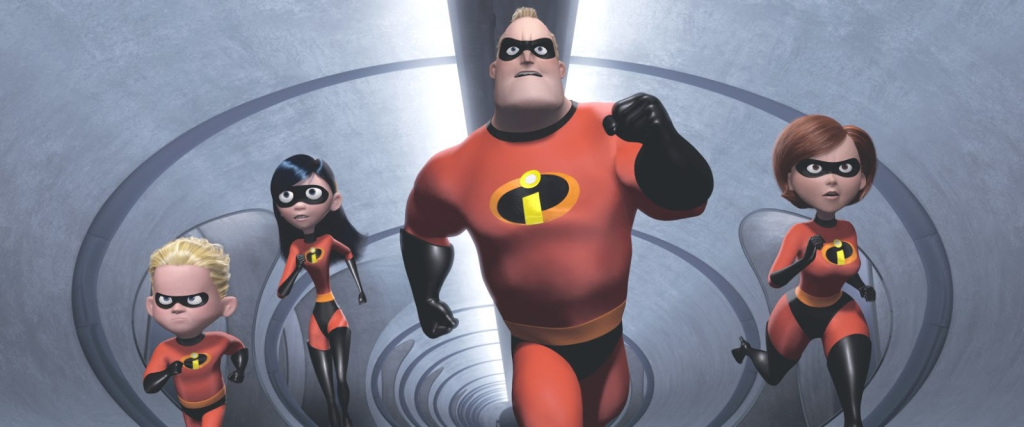
    We’ll round out the hour with two projects scored by Michael Giacchino for Pixar Animation Studios. Giacchino’s break-out success was the sly superhero satire, “The Incredibles,” for which he composed in the swinging ‘60s espionage style popularized by John Barry when writing for the James Bond films.

    We’ll also hear selections from Giacchino’s Academy Award-winning score to “Up.” “Up” was nominated for Best Picture at the 82nd Academy Awards, only the second animated feature ever to be included in the category.

    I think we can all use a little animation, can’t we? I hope you’ll join me for an hour of selections from computer-animated adventures, on “Picture Perfect,” music for the movies, this Saturday evening at 6:00 EST, on WWFM – The Classical Network and wwfm.org.
  • César Franck Bicentennial A Late Appreciation

    César Franck Bicentennial A Late Appreciation

    by 

    in
    9 responses

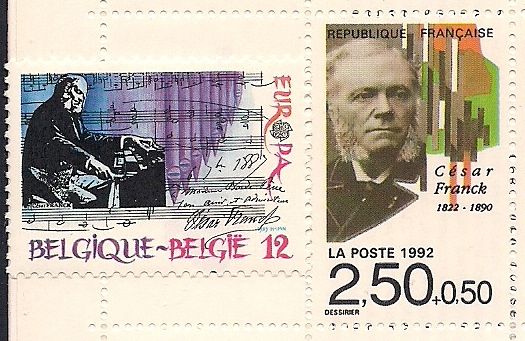
    The Belgian-born French composer César Franck was born on this date 200 years ago.

    I was slow to warm to Franck’s highly-regarded Symphony in D minor, in particular to the insipid theme of the last movement. It’s taken decades, but I think I’ve finally gotten to the point where I’m willing to concede its overall greatness.

    Much more congenial to me have always been Franck’s symphonic poems and his lovely chamber music.

    No comment on the organ works – although I once attended a “Franckathon” at St. Clement’s Church in Philadelphia, back in the 1990s, at which his complete output for the instrument was presented, with two intermissions. Just to say that I did. Well, that and for the free doughnuts and coffee.

    He may very well have had the finest mutton chops in the world, I’ll grant him that.

    Happy bicentennial, César Franck!


    Symphony in D minor (insipid theme starts at 28:39)

    “Le Chasseur maudit” (“The Accursed Huntsman”)

    Piano Quintet in F minor

    Violin Sonata in A major

    “Grande pièce symphonique,” played by Marcel Dupré

    Prelude, Chorale and Fugue

    https://www.youtube.com/watch?v=wHftZ2-w4XE

    And, for the season, “Panis Angelicus”


  • The Avengers Emma Peel Christmas Special

    The Avengers Emma Peel Christmas Special

    by 

    in
    5 responses

    This week being what it’s been, I somehow forgot to write a stand-alone promotion of this evening’s Roy’s Tie-Dye Sci-Fi Corner. At least I did mention it at the end of my Monday post, in which I linked our Sunday discussion of “Chitty Chitty Bang Bang.”

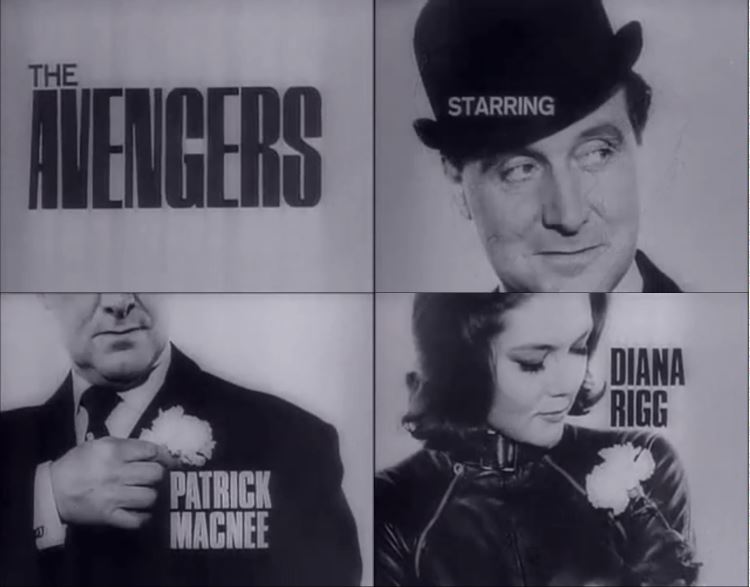
    Tonight, Roy and I will be at our stylish best, though a mite confused as to which side of the road to drive, during our conversation about “The Avengers” (1961-9). Not Iron Man, Captain America, and the gang, mind you, but the snazzy UK spy-fi series, widely regarded to have achieved its apex when Diana Rigg as Emma Peel bantered with Patrick Macnee’s John Steed. Week after week, the duo managed to defend Britain against a seemingly endless procession of nefarious plots, a surprising number of them with the aim of world domination.

    To narrow our focus and keep it seasonal, the conversation will center on the surreal holiday episode, “Too Many Christmas Trees” (1965), in which Mrs. Peel and Mr. Steed find themselves at a fancy dress at a manor house overseen by Charles Dickens fanatics. Great fun for admirers of the series, with plenty of wry smiles for Dickens lovers – and some wonderfully bizarre dream sequences.

    We have Great Expectations for this Droodless mystery, in which Oliver Twist (Mrs. Peel) and Sidney Carton (Steed) experience Hard Times in a Bleak House. It will the best of the times and the worst of times when you join us in the comments section, as we livestream on Facebook, YouTube, etc., this Friday evening at 7:30 EST!

    https://www.facebook.com/roystiedyescificorner


  • Sibelius Footage & a Personal Connection

    Sibelius Footage & a Personal Connection

    by 

    in
    6 responses

    A day late and a dollar short. The story of my life!

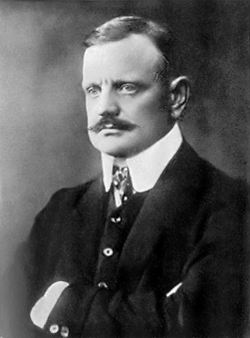
    The day after Jean Sibelius’ birthday anniversary, there’s plenty of cigar smoke in this six minutes of historic footage of the composer and his family, in and around their home, Ainola, located about 20 miles outside Helsinki.

    I had the good fortune to enjoy a friendship with one of the composer’s grandchildren, the son of Heidi (featured at the link), when he was living in Philadelphia and later, believe it or not, my hometown of Easton, PA!

    Anssi Blomstedt, a documentary filmmaker, now makes his home back in Helsinki. He also directed a feature film, “Axel” (1990), about Sibelius’ friendship with Axel Carpelan. It was Carpelan who suggested the name “Finlandia” for what became Sibelius’ most famous composition, and Sibelius dedicated his most frequently-performed symphony, the Symphony No. 2, to him.

    The film is based on a novel, “Axel,” by Bo Carpelan, who was the subject’s great-nephew. Come to think of it, Anssi gave me a copy of the book, and it occurs to me that I never read it. Perhaps I’ll add it to my January reading list.

    Speaking of “Finlandia,” if you’ve never seen this, you owe it to yourself to watch it. You won’t be sorry. In fact, it will probably make you want to move to Finland.


  • Sibelius, Time, and Feeling Unstuck

    Sibelius, Time, and Feeling Unstuck

    by 

    in
    7 responses

    I don’t know what’s going on with me. First of all, it doesn’t feel like Christmas. I could blame it on the early start for Advent or the weather being too warm. The grass keeps greening here, and there’s still new growth. And now, suddenly, it’s the birthday of Jean Sibelius. So much for “8 Days of Sibelius,” as I have been known in past years to celebrate the composer in a series of daily posts starting at the beginning of the month. Whatever it is that has gotten into me, I seem to have become unstuck in time. And not like Vonnegut’s Billy Pilgrim, mind you.

    Be that as it may, so much of the wonder of music, especially long-form music, is how it plays with our perception of time. Symphonies are often narratives, even if there is no story. The internal logic of a piece creates the illusion of movement, a sense of connections being made, and even varying degrees of momentum.

    Sibelius was a master at manipulating time in works like his Symphony No. 5. The piece begins with a musical sunrise, the merest suggestion of the grandeur to come, with perhaps a meditation of the natural world stirring to life; and then somehow, before we know it, the ground is shifting seismically beneath our feet, and we’re in the middle of a scherzo. The effect is thrilling, yet, when executed properly (always a challenge for conductors), seems totally organic.

    And that ending! There is no other symphony like it in the repertoire. It’s as if the composer has mastered time itself, and brought everything to an abrupt halt, over six staggered, monolithic chords, leaving the listener suspended at the very peak of sublimity,.

    Sibelius worked hard to achieve his effects. The Symphony No. 5 was given its world premiere on his 50th birthday, December 8, 1915. A second version, which only partly survives, was unveiled the next year. The final version, the version we all know and love, was given its performance on November 24, 1919. To contemplate the level of objectivity he managed to attain in reshaping the raw material of his first thoughts is staggering. Like Beethoven, Sibelius worked very hard to realize his genius.

    Perhaps whenever I get to feeling unstuck, a healthy attitude would be to imagine myself, like someone listening to Sibelius’ Symphony No. 5, suspended between moments of sublimity.

    Happy birthday, Jean Sibelius.


    Symphony No. 5 (final version, 1919)

    Original version (1915, with some very notable differences)


Tag Cloud

Aaron Copland (93) Beethoven (95) Composer (114) Film Music (145) Film Score (143) Film Scores (255) Halloween (94) John Williams (195) KWAX (229) Leonard Bernstein (104) Marlboro Music Festival (125) Movie Music (160) Mozart (91) Opera (213) Philadelphia Orchestra (89) Picture Perfect (174) Princeton Symphony Orchestra (109) Radio (88) Ross Amico (244) Roy's Tie-Dye Sci-Fi Corner (290) The Classical Network (101) The Lost Chord (269) Vaughan Williams (105) WPRB (397) WWFM (881)

DON’T MISS A BEAT

Receive a weekly digest every Sunday at noon by signing up here


RECENT POSTS