Even Ursula K. Le Guin thought her 1971 novel “The Lathe of Heaven” unfilmable. There were simply too many ideas and shifting realities to be communicated in a visual format.
It took PBS heavy hitters, WNET’s David Loxton (executive producer of “Great Performances” and “American Playhouse,” Academy Award winner for “The Times of Harvey Milk”) and WGBH’s Fred Barzyk (whose programs aired on GBH, HBO, ABC, CBS, and NBC, an Emmy and Peabody Award winner), to prove her wrong.
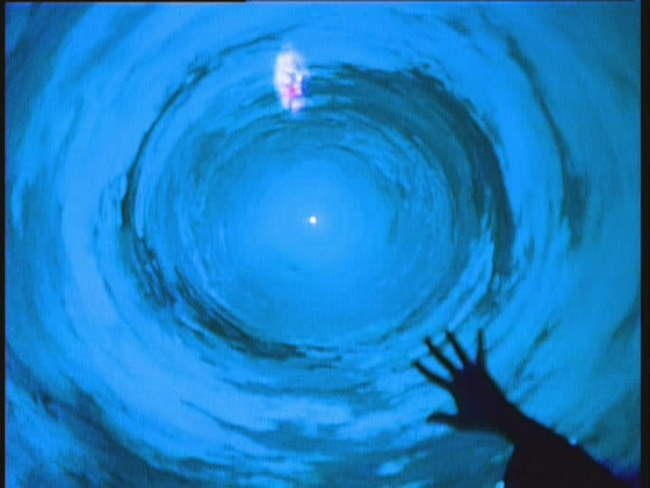
Last night, Roy and I tested ourselves against “The Lathe of Heaven” (1980), a no-budget adaptation that miraculously gets just about everything right. If you’re curious to explore more ambitious speculative fiction than the superhero junk cluttering today’s multiplexes, definitely check this one out. The surviving source material is rather primitive (remastered from two-inch Quadruplex videotape), but the transfer at the link is not bad.
Fortunately, the power of the original story is such that the message transcends the medium. You can watch us grapple with some of the themes during last night’s discussion here:
On Sunday, Roy will welcome special guest Shawn Tabor, executive director, writer, and producer at Battlegrounds Productions, who is currently serving as property master and military consultant, among other things, on the web series “Star Trek: New Voyages.” Tabor will talk about his experiences on the show and friendship with William Windom, an actor known to “Star Trek” fans for his role in the original series episode “The Doomsday Machine.”
Make the voyage to the comments section to give “props” to Shawn Tabor, on the next Roy’s Tie-Dye Sci-Fi Corner. The conversation will livestream on Facebook, this Sunday evening at 7:30 EDT!
There is a pithy quote you may have heard to the effect that England and America are two countries divided by a common language. The observation is sharp and spot-on, so naturally it has been attributed to two of the greatest wits of their day, George Bernard Shaw and Oscar Wilde. Yet these attributions are without verifiable foundation. (The closest Wilde ever came in print: “We really have everything in common with America nowadays except, of course, the language.”)
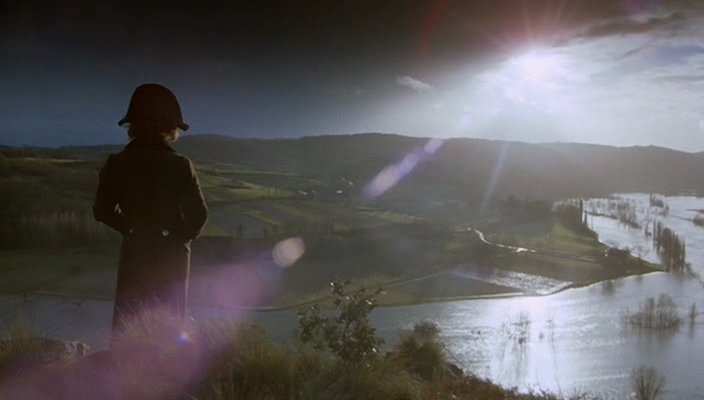
Similarly, we all know what is meant by “Napoleon complex.” But did you know there is every possibility that Napoleon was not short? Like the commonality of language that divides the English and the Americans (and I know that Shaw and Wilde were Irish), it turns out that there may be some confusion over Napoleon’s actual height on account of two different systems of measurement that happened to use the same terms.
Be that as it may, this week on “Picture Perfect,” with Bastille Day (July 14) right around the corner, we’ll surge to power on the allegedly diminutive shoulders of Napoleon Bonaparte. The focus will be on the Napoleonic Wars – which is to say, movies set, at least in part, between about 1803 and 1815.
There is a lot of unlikely casting in these films. The first English language adaptation of Leo Tolstoy’s “War and Peace” (1956) stars Audrey Hepburn, Henry Fonda, and Mel Ferrer, with Herbert Lom as Napoleon. Lom is fine; but Henry Fonda? At least the music is by Nino Rota.
Stanley Kramer’s “The Pride and the Passion” (1957) is loosely based on the novel “The Gun,” by C.S. Forester. Forester is best known for the nautical adventures of Horatio Hornblower – also set during the Napoleonic Wars.
The film depicts the story of a British officer (Cary Grant) who is ordered to retrieve a large cannon from Spain. But before he can do so, he must lend assistance to the leader of the Spanish guerillas (Frank Sinatra!) in the transport of the weapon across 600 miles of treacherous ground to reclaim the city of Avila from the French. Further complications arise from their respective feelings for Sinatra’s mistress (Sophia Loren).
The score is by Trenton-born George Antheil, self-proclaimed “bad boy of music.” Antheil achieved lasting notoriety as the composer of the raucous “Ballet Mécanique” in the 1920s. He would later embrace a more conservative language for his symphonies and for his music for the movies. Antheil composed over 30 film scores. “The Pride and the Passion” would be his last.
Ridley Scott’s first feature, “The Duellists” (1977), is based on a story by Joseph Conrad. It relates the tale of an obsessive duellist (Harvey Keitel), who takes it as a personal affront when he is arrested by a fellow hussar (Keith Carradine) for crossing swords with the mayor’s nephew, whom he has fatally wounded. This sets the two men in a kind of combative pas de deux, a series of duels that spans the entire Napoleonic era. The sheer beauty of the film is matched by Howard Blake’s haunting score.
Abel Gance’s “Napoleon” (1927) is widely regarded as one of the towering achievements in all of cinema. I’ve had the good fortune to see it on the big screen twice. However, it was with a new score by Carmine Coppola, the father of Francis Ford Coppola, who financed the film’s revival. The original score was by Arthur Honegger. Honegger was the famed French composer (of Swiss birth), who was one of the members of Les Six, a lose collective of artists that also included Francis Poulenc and Darius Milhaud.
Gance’s epic was gargantuan at the time I saw it, in the 1980s – about four hours long. A more recent restoration places the film’s running time at 5 ½ hours. That’s still down from a 9 ½ hour version shown in 1927!
The film is crowned by a celebrated triptych, for which the screen widens to accommodate the simultaneous projection of three reels – an extraordinary innovation for its time. “Napoleon” is full of such touches. Apparently, there had even been a sequence shot in 3-D, which was left on the cutting room floor. If you’re at all interested in the squandered potential of cinema, this is a film which must be seen in the theater.
I hope you’ll join me for music from big movies set during the Napoleonic Wars. It will be a satisfying show by any measure, this Saturday evening at 6:00 EDT, on WWFM – The Classical Network and wwfm.org.
PHOTO: A brooding Harvey Keitel in the extraordinarily beautiful “The Duellists”
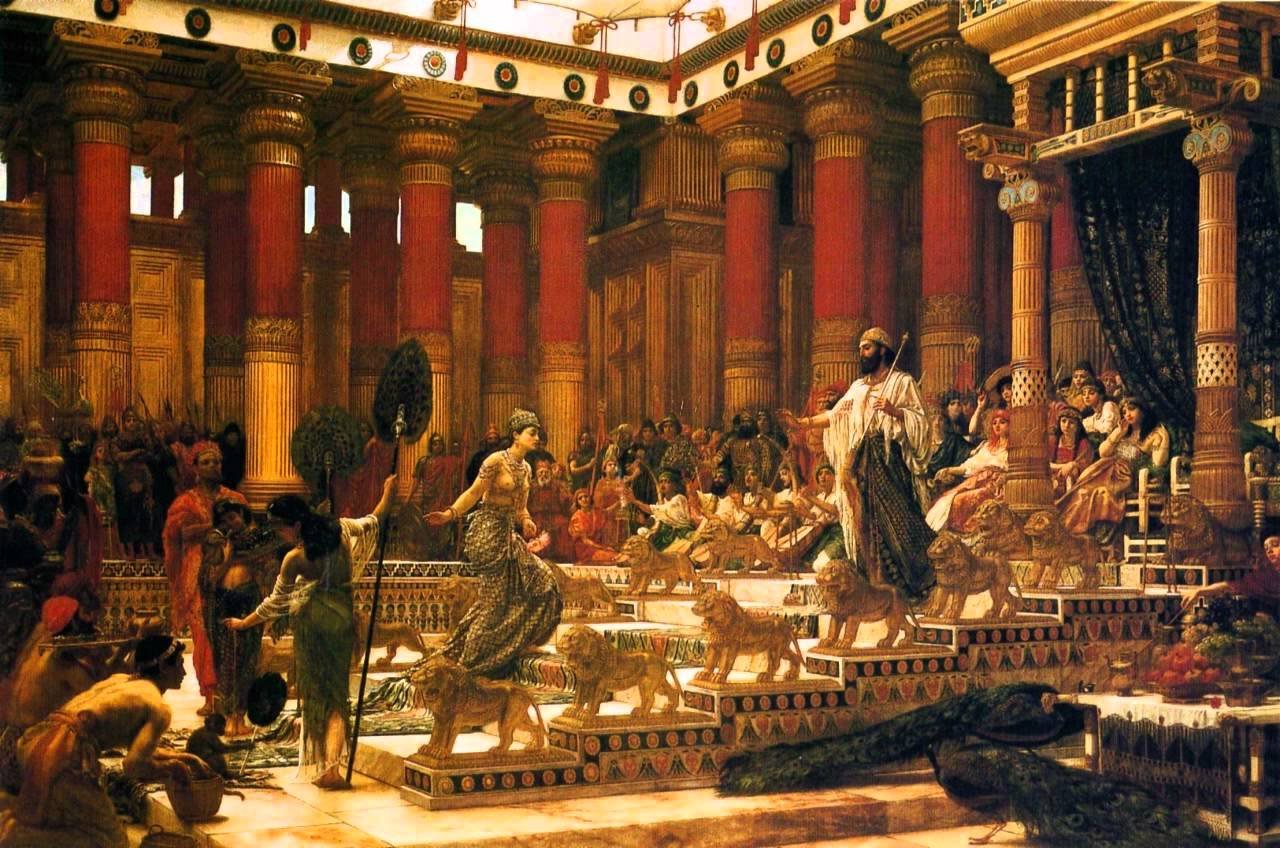
It’s music that’s so over-the-top, Cecil B. DeMille would have blushed. Ottorino Respighi gets all quasi-biblical in this suite from “Belkis, Queen of Sheba.” The ballet spectacle, set at the court of King Solomon, was given its first performance at La Scala in 1932. The finale featured over a thousand performers, which likely accounts for the work’s subsequent neglect. Grandiose even by Respighi standards, the concluding orgiastic dance whipped the opening night audience into a frenzy.
Think big, and aim high! Happy birthday, Ottorino Respighi!
When they were handing out the looney, they must have found themselves with an overabundance when it came to July 8.
Today marks the birthday anniversaries of two of music’s wackiest pianist-composers.
George Antheil, self-proclaimed “Bad Boy of Music,” was born in Trenton, NJ on this date in 1900. His “Ballet Mécanique,” scored for synchronized player pianos, airplane propellers, siren and electric bells, inspired one of the great classical music riots at its Paris premiere in 1926.
Antheil would practice the piano with such ferocity that he would have to pause, periodically, to thrust his hands into two fish bowls filled with ice water. Before the start of a recital, he would remove a pistol from a silk holster sewn into his jacket and place it atop the piano, to telegraph the message that he would brook no nonsense.
Later, he became a Hollywood film composer, a war correspondent, the author of a column of advice to the lovelorn, an expert in endocrinology, and co-inventor, with actress Hedy Lamarr, of a frequency-hopping system for the guidance of Allied torpedoes that would become the basis for modern spread-spectrum communications technology. Neither Antheil nor Lamarr would ever see a dime for their invention.
In 1944, he scored a notable success with his Symphony No. 4, after it was taken up by Leopold Stokowski and later Sir Eugene Goossens, who recorded it. Antheil was also the author of a bestselling autobiography, “Bad Boy of Music.” He died of a heart attack at the age of 59. A third recorded cycle of his symphonies is currently underway, on the Chandos label. Not bad for a boy from Trenton.
Wouldn’t you know, Percy Aldridge Grainger was also born on this date, outside Melbourne, Australia, in 1882. Another one of classical music’s great eccentrics, Grainger was obsessed with physical fitness. Rather than drive or take the train between towns and recitals, it was his preference to jog. He was also known to throw a ball over one side of a house, and then race around to the other side to catch it.
Enamored with Nordic culture, he went out of his way to use only Anglo-Saxon words, avoiding in his letters anything of Norman or Latin origin. This extended to his scores, in which he eschewed Italian musical terms in favor of their English equivalents. In 1928, he married Ella Ström, from Sweden, during a concert at the Hollywood Bowl. On the program was his new work, “To a Nordic Princess.”
Lest his cultural quirks be misconstrued in an increasingly black-and-white world, Grainger’s embrace of “blue-eyed English” was as idiosyncratic as everything else in his character. He bristled against the dominance of German music, he served in the U.S. Army against Germany in WWI, he embraced music from a wide diversity of cultures, all the way to Bali, he championed works by African-Canadian-American composer R. Nathaniel Dett, and he adored Duke Ellington and George Gershwin.
Grainger was unusually close to his mother and exhibited sadomasochistic tendencies. He donated whips and blood-stained clothes to the Grainger Museum, which he founded in 1932. His request to have his skeleton displayed – posthumously, of course – was denied.
Later, while living in White Plains, NY, he experimented with electronics and “machine music,” in a sense paralleling an obsession of Antheil, who besides “Ballet Mécanique,” wrote such works as “Airplane Sonata” and “Death of Machines.”
Sadly, only the tiniest portion of Grainger’s output is known by the general public, and he is celebrated as the composer of such folksy trifles as “Country Gardens,” “Molly on the Shore,” and “Shepherd’s Hey.” But Grainger’s treatment of harmony and rhythm could be highly original. He was a brilliant musician, and wholly unconventional in more ways than one.
Grainger died in White Plains in 1961 at the age of 78. His remains, including his skeleton, rest in Adelaide.
Happy birthday, you wacky, wacky boys.
Grainger, “Scotch Strathspey and Reel”
Grainger orchestration of Debussy’s “Pagodes”
His imaginary ballet, “The Warriors”
Grainger plays “Molly on the Shore”
R. Nathaniel Dett’s “Juba”
Antheil, “Ballet Mécanique” – presumably in its revision, because of the use of live pianists – with the annoying Fernand Léger film
Antheil, “Jazz Symphony”
Antheil, Symphony No. 4 “1942”
Antheil, “Specter of the Rose” (from the film score, 1946)
Antheil speaks!
PHOTOS: Antheil packing heat (top), and the multifaceted Grainger
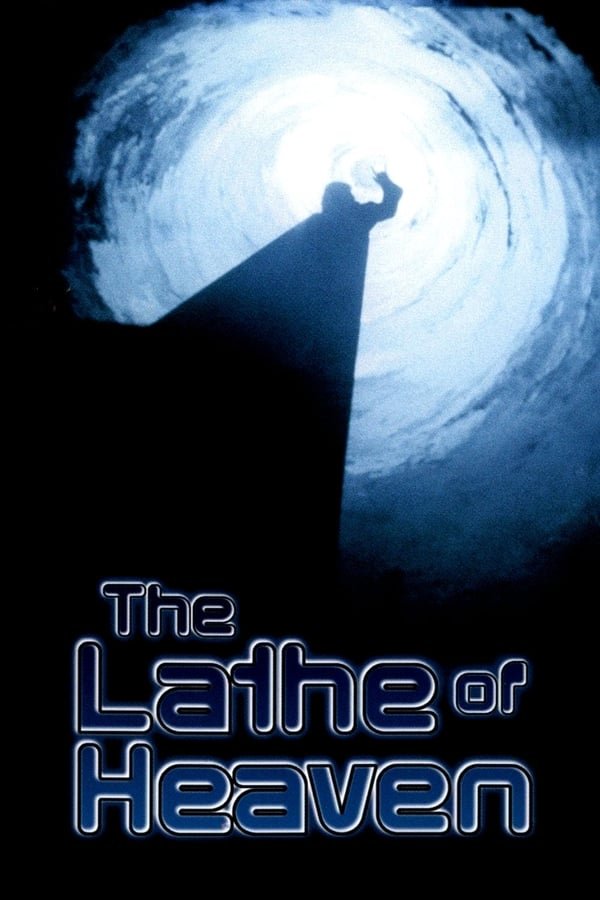
We have our “Viewer’s Choice” selection for the next “Roy’s Tie-Dye Sci-Fi Corner.” Thanks to Jack Dailey for his suggestion of “The Lathe of Heaven” (1980).
Ursula K. Le Guin personally oversaw this no-budget TV adaptation of her mind-bending 1971 novel that somehow succeeds in being one of the most absorbing sci-fi films you will ever see. What’s even more astonishing is that it was remastered from the only available source: a two-inch Quadruplex videotape copy. So this really is an example of some rather flimsy technology conveying some very weighty ideas. Hollywood, take note: it really is all about the story, dammit. The film made a huge impression when it first aired, becoming the second most requested program in PBS history.
“The Lathe of Heaven” supports Shakespeare’s observation that we are such stuff as dreams are made on. Also, we should be careful what we wish for.
Watch it at the link (because the copy on YouTube stinks and I can’t find it streaming legally anywhere else), and for the love of Mike, avoid the James Caan remake!*
Then tune in tomorrow, as we discuss just how weird Portland can get. Bring your hacky sacks to the comments section, for the next Roy’s Tie-Dye Sci-Fi Corner. We’ll risk destruction on “The Lathe of Heaven,” when we livestream on Facebook, this Friday evening at 7:30 EDT!
PLEASE NOTE: I posted this this morning, before I learned of Caan’s death. No disrespect intended. He was a fine actor, who will be remembered for his work during one of the greatest eras in American film. R.I.P.

9 responses