• Per Nørgård at 90 Exploring the Danish Composer

    Per Nørgård at 90 Exploring the Danish Composer

    by 

    in
    6 responses

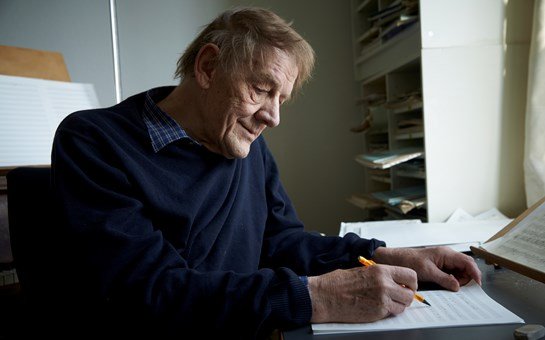
    Not everything Per Nørgård composes is calculated to be a crowd-pleaser, but he did lighten things up a bit for portions of his score to “Babette’s Feast.” The Danish feature attained international popularity and an Academy Award for Best Foreign Language Film in 1988.

    Nørgård has been following his idiosyncratic, often arcane muse in the concert hall for decades, from the Nordic symphonism of Sibelius and Vagn Holmboe (his teacher) to the avant garde experimentation of the 1960s and even feints into proto-minimalism.

    “Voyage into the Golden Screen” (1968) employs an evolving variation technique the composer describes as an “infinity series,” a method of serializing melody, harmony, and rhythm. It’s been compared to fractal geometry. If you want to learn more about it, google “Nørgård infinity series.” Regardless of the technique, the music needs to speak for itself, and I think if you stick with it you might agree that it pays off. But maybe you have to be in the right mood. Just don’t go into it expecting Schubert!

    https://www.youtube.com/watch?v=Ty1fjlN2kuc

    From a later period, here’s his Violin Concerto No. 2 “Borderlines” (2002). Nørgård describes the opening movement as “endlessly questing” – much like the composer himself.

    And in case you think Nørgård lacks the ability to charm, check out “Dream Play” (1975), deceptively simple at the start, but soon wandering into some unexpected places.

    Finally, here’s his Symphony No. 6 “At the End of the Day” (1998-99). The composer declared this would be his last symphony – then went on to write two more!

    Not the stuff to listen to for a pick-me-up, maybe, but it certainly does have its place. Happy birthday, Per Nørgård, 90 years-old today.


  • George Butterworth: More Than a War Casualty

    George Butterworth: More Than a War Casualty

    by 

    in
    2 responses

    As a classical music radio host of many years, it’s easy to fall back on the same biographical details whenever I come to announce a given composer’s works. This is especially true when the composer’s life contains some particularly lurid or poignant detail.

    But is it really fair to define someone by the manner of his or her death? After all, composers lived rounded lives like the rest of us, full of joys and sorrows. There must be some laughter even in a life weighted with misery, and tears in the make-up of any clown.

    So it was with George Butterworth. If we hear anything at all in the minute or two it takes to set up the broadcast of one of his works, it’s that Butterworth was cut down by a sniper during the Battle of the Somme at the age of 31. Of course, it doesn’t help that his compositions make one’s heart ache from their exquisite beauty.

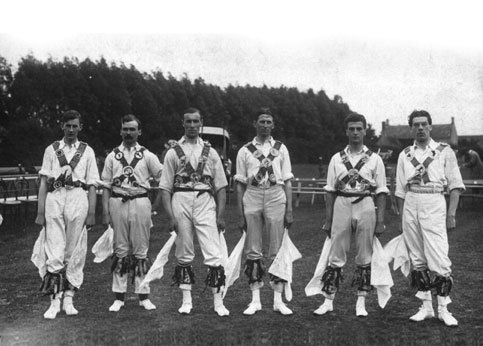
    A few years ago, I was doing some quick research on Butterworth, born on this date in 1885, when I stumbled across this webpage and sat transfixed, as I viewed for the first time rare footage of him folk dancing with Cecil Sharp. It put a human face on this composer every bit as poignant as the recollection of his untimely death. It’s especially amusing to see the two men get tangled up in their choreography and then continue on their merry way.

    https://www.warcomposers.co.uk/butterworthbio

    It’s also worth mentioning, in Vaughan Williams’ sesquicentennial year, that it was Butterworth who first suggested to his friend that he tackle a purely orchestral symphony. (RVW’s first symphony, “A Sea Symphony,” had been scored for chorus and orchestra.) The result was “A London Symphony,” Vaughan Williams’ Second, which he dedicated to Butterworth before his untimely demise.

    Vaughan Williams remembered, “We were talking together one day when he said in his gruff, abrupt manner: ‘You know, you ought to write a symphony.’ I answered… that I’d never written a symphony and never intended to… I suppose Butterworth’s words stung me and, anyhow, I looked out some sketches I had made for… a symphonic poem about London and decided to throw it into symphonic form… From that moment, the idea of a symphony dominated my mind. I showed the sketches to George bit by bit as they were finished, and it was then that I realised that he possessed in common with very few composers a wonderful power of criticism of other men’s work and insight into their ideas and motives. I can never feel too grateful to him for all he did for me over this work and his help did not stop short at criticism.”

    RVW’s “A London Symphony”

    If you’re unfamiliar with Butterworth’s own music, here are a few examples. Those inspired by the poems of A.E. Housman are especially moving.

    “The Banks of Green Willow”

    “A Shropshire Lad” (orchestral rhapsody)

    “A Shropshire Lad” (song cycle):

    https://www.youtube.com/watch?v=e3fgjfi8OCs


    PHOTO: Butterworth the morris dancer (second from left)


  • Hollywood Bowl Celebrates 100 Years

    Hollywood Bowl Celebrates 100 Years

    by 

    in
    5 responses

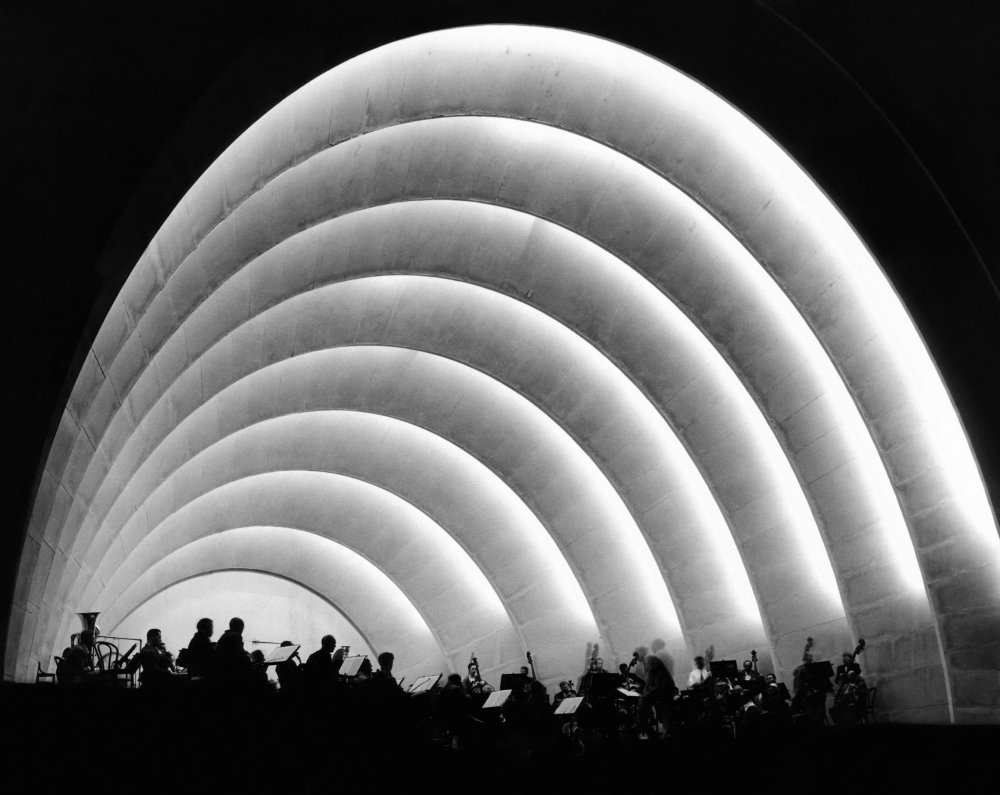
    The Hollywood Bowl formally opened on this date 100 years ago.

    The open-air auditorium, constructed in a natural canyon, is immediately recognizable by its iconic band shell, a proscenium of concentric arches. Controversially, in 2004, the original shell, which over the decades had experienced wear from exposure to the elements and accrued acoustical issues, was demolished and replaced by a larger version.

    The Hollywood Bowl is the largest natural amphitheater in the United States. The shell is set against the backdrop of the Hollywood Hills, with the landmark Hollywood sign to the northeast. The “bowl” refers to the shape of Bolton Canyon, which serves as a natural amplifier.

    Music by Wagner, Tchaikovsky, Grieg, and Rossini opened the venue. But it wasn’t long before the orchestra shared space with actors, orators, dancers, and popular musicians. The Bowl can accommodate an audience of nearly 18,000.

    You can learn more about the venue’s history and the shell’s remarkable architects here:

    https://en.wikipedia.org/wiki/Hollywood_Bowl

    And here:

    https://www.hollywoodbowl.com/about/the-bowl/hollywood-bowl-history

    Many of us in other parts of the country got to know this West Coast landmark through its use in dozens of films and television shows, especially cartoons. This is where Bugs Bunny was venerated as “Leopold!” and Tom and Jerry attempted to one-up each other while conducting a feline orchestra.

    Glimpse the real deal, in its heyday, in historic footage of some of the greatest classical musicians active in the 1930s. Consult the index below the videos to see Igor Stravinsky, Arnold Schoenberg, Albert Einstein with Artur Rodzinski, Leopold Stokowski, William Grant Still, and Béla Bartók, among others.

    Part 1:

    Part 2:

    Here’s a Hollywood Bowl cartoon from 1938, produced by Walter Lantz (of Woody Woodpecker fame), chockful of caricatures of classic movie actors. I love this sort of thing. The score is by Frank Churchill, indebted to Liszt, Johann Strauss, Mendelssohn, Weber, Beethoven, Schubert and others. Churchill composed many songs and scores for Walt Disney, including “Who’s Afraid of the Big Bad Wolf” and those for “Snow White and the Seven Dwarfs” and “Dumbo.” Stokowski gets a fair amount of screen time. Definitely check out his introduction, as he charges his fingers at 1:36! Once bandleader Ben Bernie takes over, Fats Waller, Rudy Vallee, Cab Calloway, Benny Goodman, Fred Astaire, and Martha Raye get their moments to shine.

    https://vimeo.com/126713908

    Leopold!


  • Bond Theme Fight Who Really Wrote It?

    Bond Theme Fight Who Really Wrote It?

    by 

    in
    2 responses

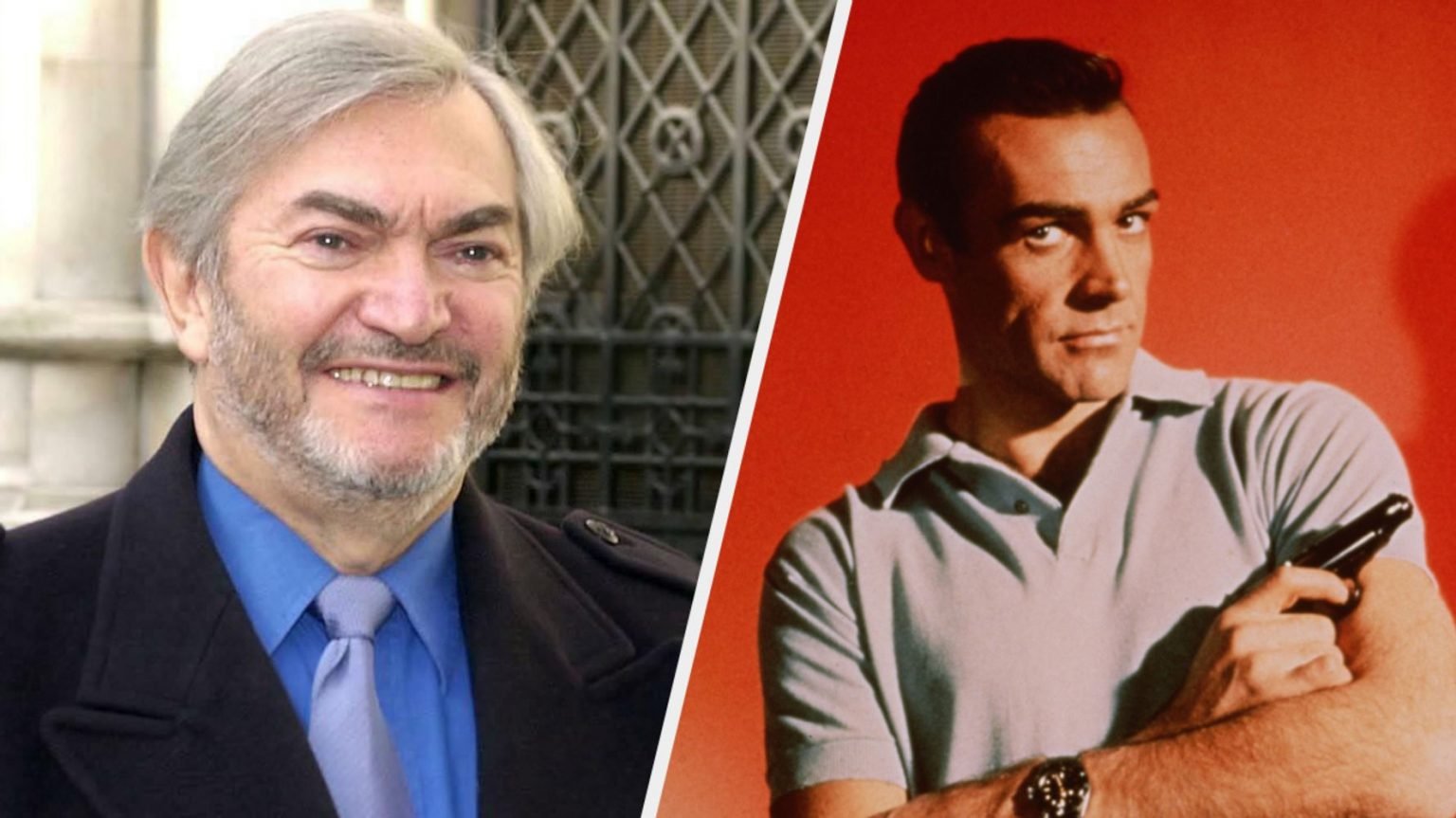
    I wonder if Monty Norman and John Barry are fist fighting in heaven? The surf guitar and swinging brass of the James Bond theme repeatedly landed composer Norman and arranger Barry in court, as they grappled for the rights to this exceptionally lucrative tune. The courts found for Norman, but Barry, who died in 2011 at the age of 77, did okay for himself, as five-time Academy Award winning composer of “Born Free” (song and score), “The Lion in Winter,” “Out of Africa,” and “Dances with Wolves.”

    Admittedly, Bond has one of the coolest, catchiest themes in the history of cinema. In a bizarre twist, Norman revealed he had actually come up with the tune for an earlier project, an abandoned musical based on V.S. Naipaul’s “A House for Mr. Biswas.” See if you can imagine this as the theme for the world’s greatest superspy, or if it comes across as some sort of practical joke.

    Whatever alchemy these two musicians shared, we can all be thankful. R.I.P. Monty Norman, dead at 94.

    https://www.bbc.com/news/entertainment-arts-62122982


  • French Seascapes Music From the Water

    French Seascapes Music From the Water

    by 

    in
    6 responses

    Claude Debussy wasn’t the only French composer to write music inspired by the sea. This Sunday night on “The Lost Chord,” we’ll find refreshment in an hour of “musique de l’eau.”

    Jacques Ibert served as a naval officer during World War I. One of his most frequently performed pieces, “Escales” (“Ports of Call”), conjures impressions of three Mediterranean locales: Palermo, Tunis-Nefti, and Valencia. Considerably less well known is his “Symphonie marine,” composed nine years later, in 1931. Ibert refused to allow the work to be performed in his lifetime, though exactly why is unclear.

    The music actually derives from a film score (for a short film titled “S.O.S. Foch”). Ibert was the first European composer to write music for a talking picture. He certainly wasn’t ashamed of his output for the cinema. In all, he wrote some 30 film scores.

    For whatever reason, the “Symphonie marine” was given its belated premiere shortly after the composer’s death, in 1963, with Charles Munch conducting. We’ll hear the City of Birmingham Symphony Orchestra conducted by Louis Frémaux.

    Joseph-Guy Ropartz (1864-1955) was a student of Théodore Dubois, Jules Massenet, and César Franck. He composed five symphonies, chamber music, and a number of choral works. When his friend, Albéric Magnard, was killed defending his home from German soldiers during the First World War – in retribution Magnard’s house was burned to the ground and his unpublished manuscripts destroyed – Ropartz was able to reconstruct the orchestration of Magnard’s opera, “Guercœur,” from memory, since he had conducted a performance of its third act.

    Ropartz was associated with the Breton Cultural Renaissance and an ardent supporter of Breton regional autonomy. He joined the Breton Regionalist Union in 1898.

    The central movement of his “Prélude, marine et chansons,” composed in 1928 – actually a quintet for flute, violin, viola, cello and harp – is clearly a seascape. The finale is based on an old Breton folk song, “What noise there is upon the earth.” We’ll hear a performance by the Linos Ensemble.

    Another composer with a connection to Brittany was Jean Cras (1879-1932). Cras, who was born and died in Brest, wrote a ravishing opera, “Polyphème” (“Polyphemus”), about a forlorn cyclops, unlucky in love, who wanders off into the sea. Not only was he a productive composer of meltingly lovely music, he was also a career naval officer. And one of distinction. He commanded a torpedo boat in the Adriatic, during the First World War. On one occasion, he sank an enemy submarine, then rescued one of his sailors who had fallen overboard. Clearly he would have written a lot more music if not for the demands of his day job.

    Cras’ “Journal de bord” (“Ship’s Log”) was composed in 1927. Like Debussy’s “La mer,” composed in 1903-05, the work suggests the sea at different times of the day and under various conditions.

    First: Eight to midnight quarter – swell on the open sea, the sky is overcast, clearing at sunset, nothing in sight.

    Second: Midnight to four quarter – beautiful weather, beautiful sea, nothing unusual, moonlight.

    Third: Four to midnight quarter: Land ahoy!

    We’ll hear the Luxembourg Philharmonic Orchestra, conducted by Jean-Francois Antonioli.

    I hope you’ll get yourself a crusty bread, then join me for “Fruits de mer,” a nourishing repast of French music for the sea, this Sunday night at 10:00 EDT, on WWFM – The Classical Network and wwfm.org.
Tag Cloud

Aaron Copland (93) Beethoven (95) Composer (114) Film Music (145) Film Score (143) Film Scores (255) Halloween (94) John Williams (195) KWAX (229) Leonard Bernstein (104) Marlboro Music Festival (125) Movie Music (160) Mozart (91) Opera (213) Philadelphia Orchestra (89) Picture Perfect (174) Princeton Symphony Orchestra (109) Radio (88) Ross Amico (244) Roy's Tie-Dye Sci-Fi Corner (290) The Classical Network (101) The Lost Chord (269) Vaughan Williams (105) WPRB (397) WWFM (881)

DON’T MISS A BEAT

Receive a weekly digest every Sunday at noon by signing up here


RECENT POSTS