• Déodat de Séverac Summer Music

    Déodat de Séverac Summer Music

    by 

    in
    3 responses

    150 summers have passed since the birth of Déodat de Séverac. I suppose it’s only appropriate that the composer best known for “En vacances” be born in the season of vacations.

    Musically speaking, there are two types of getaways: (1) actual travel music, inspired by a journey to a particular locale; and (2) the flight of fancy, a vacation of the creative mind. Either lends itself to compiling collections of miniatures, after the fashion, perhaps, of some of the great keyboard works of Robert Schumann.

    Séverac studied in Paris with Vincent d’Indy and Albéric Magnard. He also acted as an assistant to Isaac Albéniz, whose character pieces certainly influenced some of his own evocative regionalisms for the keyboard.

    Séverac himself composed two sets of piano pieces, which he collected under the title “En vacances” (“On Vacation”). The second of these, sadly, was left incomplete at the time of his death at the age of 48.

    These sketches suggest the experiences of his children, Mimi and Toto, in particular, with individual movements titled “Invocation to Schumann,” “Grandmother’s caresses,” “Visit from the little girls next door,” “Toto pretends to be a verger,” “Mimi dresses up as a Marquise,” “In the park,” “On listening to a musical box,” and “Romantic Waltz.”

    Enjoy both sets, performed here by Aldo Ciccolini:

    Happy birthday, Déodat de Séverac, born 150 years ago!


    PHOTO: For Déodat de Séverac, a good smoke is like a vacation

  • Fernande Decruck Rediscovered Harp Concerto

    Fernande Decruck Rediscovered Harp Concerto

    by 

    in
    6 responses

    I heard this on the radio yesterday, and I think it’s terrific.

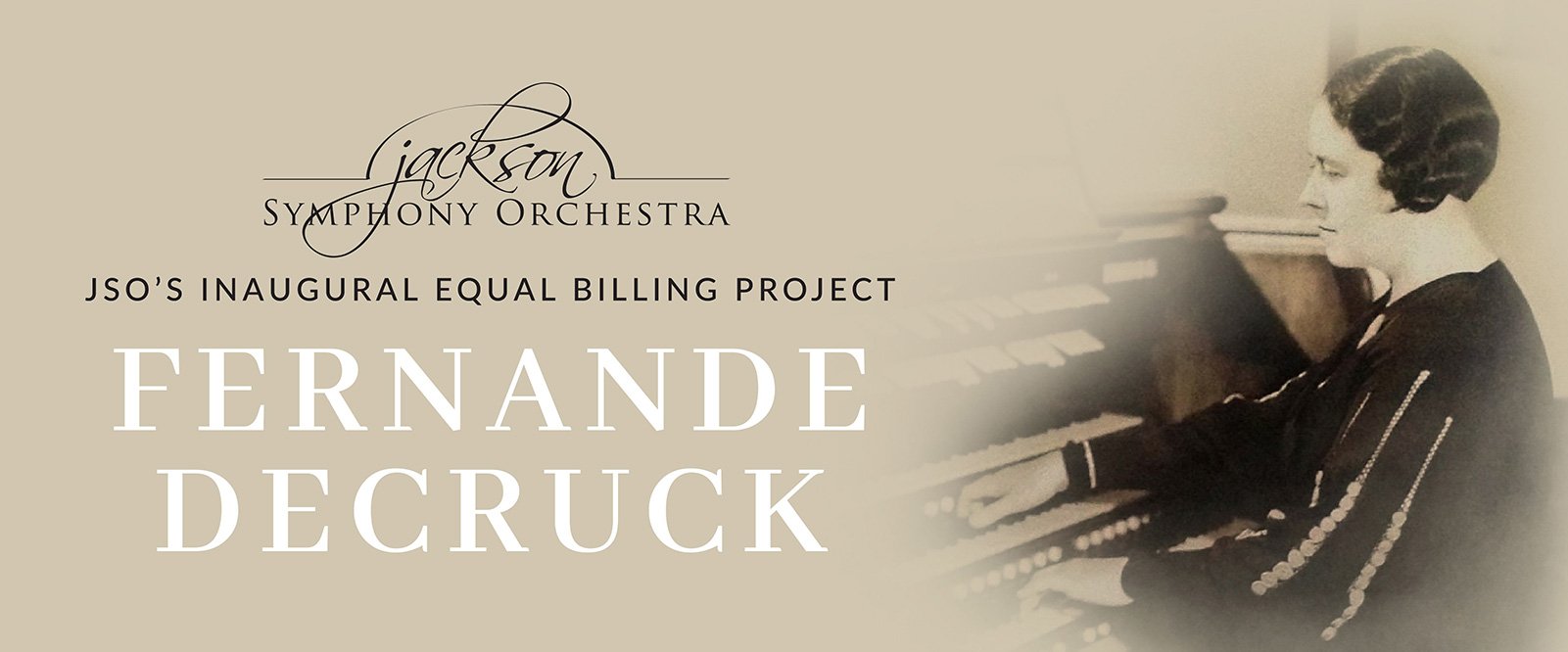
    Fernande Decruck, born on Christmas Day, 1896, is best-known, if at all, for her works for the saxophone. She composed over 40 pieces for the instrument. Playing piano from the age of 8, she attended the Toulouse Conservatory. She was then accepted into the Paris Conservatory, beginning in 1918. There, she studied organ and composition. Her mastery of the instrument led to a concert tour of the U.S.

    In 1928, Decruck and her husband, Maurice, moved to the United States with their young family. Maurice played clarinet and saxophone and was appointed principal bassist with the New York Philharmonic. He would return to France in 1932 to become a music publisher. At home, he established Les Editions de Paris. Fernande rejoined him there in 1933. She then found work as a professor at the Toulouse Conservatory. She lived in Toulouse with her three children, while Maurice remained in Paris.

    In 1942, she returned to the capital, where many of her works were performed. After years of separation, the Decrucks finally divorced in 1950. Fernande died of a stroke in 1954. She was 57 years-old.

    Her Harp Concerto was given its first performance on a program of the Concerts Colonne in 1946. Pierre Jamet was the soloist (and its dedicatee), and the orchestra was conducted by Paul Paray. Also on the program was Schumann’s “Manfred Overture” and Berlioz’s “Symphonie Fantastique.”

    The concerto received favorable notices, then promptly faded into obscurity. It was recorded this year and released on Claves Records, thanks to the Jackson Symphony Orchestra, of Jackson, Michigan, as part of the organization’s Equal Billing Project. The project supports and records works by composers who weren’t equally billed or adequately recognized in their lifetimes. A laudable endeavor. You can learn more about it here:

    Equal Billing Project

    I’ll be placing my order for Fernande Decruck’s concertante works today!

    Enjoy the first movement of the Harp Concerto at the link:


  • Julius Fučík The Circus Music You Know

    Julius Fučík The Circus Music You Know

    by 

    in
    4 responses

    Ladies and gentlemen, boys and girls, children of all ages!

    Julius Fučík was born in Prague 150 years ago!

    Fučík was one of the finest bandmasters in the Austro-Hungarian Empire. In fact, comparisons were often drawn to his American counterpart, John Philip Sousa. In all, Fučík composed some 400 marches, polkas, and waltzes. You may not know him by name, but you most certainly know his music, especially if you’ve ever been under the Big Top.

    Interestingly, Fučík’s original title for his most famous march, composed in 1897, was “Grande Marche Chromatique” – not exactly calculated to sell sheet music. But his interest in Roman history (thanks to a reading of Henryk Sienkiewicz’s novel “Quo Vadis”) led him to retitle the piece “Entry of the Gladiators.”

    It turns out it wasn’t all that great a leap from gladiators to clowns, as the music soon became inextricably linked with American circuses. As opposed to Roman ones.

    Let’s hope Fučík saw a few royalty checks (doubtful).

    Happy 150th, Julius Fučík!


  • Oskar Sala Google Doodle Celebrates Electronic Music Pioneer

    Oskar Sala Google Doodle Celebrates Electronic Music Pioneer

    by 

    in
    5 responses

    Oh my! This is a surprise. Oskar Sala gets a Google Doodle for his 112th birthday!

    Sala was a physicist and electronic music pioneer, who promoted and developed an instrument called the Trautonium (later the Mixtur-Trautonium), a precursor to the synthesizer. He also worked with composer Bernard Herrmann to create the unsettling sound design for Alfred Hitchcock’s “The Birds,” a film without a musical score. Note the inclusion of two birds (ravens?) in the doodle.

    Sala died in 2002 at the age of 91. Keep an eye out for him, should you wind up doing a Google search today!


    Sala plays his Mixtur-Trautonium

    https://www.youtube.com/watch?v=-tQQEChMq1A

    As soloist in Harald Genzmer’s Trautonium Concerto

    More about this unusual instrument

    https://120years.net/wordpress/the-mixturtrautonium-oskar-sala-germany-1936/

    Sala’s sound design enhances “The Birds”


  • Larsson’s Lost Radio Suites Premiere

    Larsson’s Lost Radio Suites Premiere

    by 

    in
    4 responses

    During his time with the Swedish Broadcasting Corporation (1937-1944), Lars-Erik Larsson provided music for everything from cantatas to radio plays to brief vignettes to accompany the recitation of poetry.

    Material from these projects would frequently find its way into the composer’s concert works. Most notably, three of the six movements of “Hours the Day,” from 1938, were organized into what went on to become the composer’s most famous piece, the “Pastoral Suite.”

    This Sunday night on “The Lost Chord,” we’ll hear the world premiere recording, from 1994, of the complete, original, six-movement work, alongside another one of Larsson’s poetic suites for radio, “God in Disguise,” from 1940.

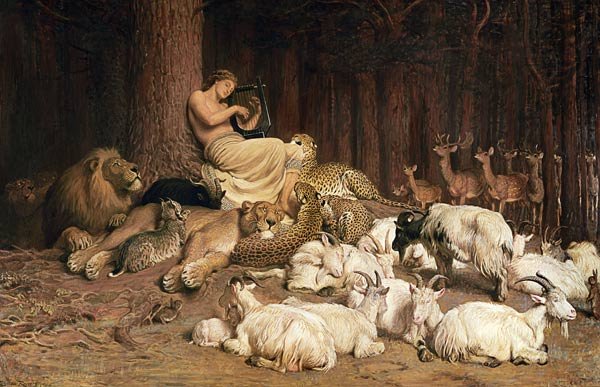
    Larsson had been asked as early as 1930 if he would be interested in setting to music Hjalmar Gullberg’s cycle of poems. Gullberg, then the head of Swedish Radio’s drama division, took as his starting point Euripides’ “Alcestis,” in which the god Apollo, temporarily exiled from Olympus, acts as servant and shepherd to King Admetus of Thessaly.

    It would be a full decade before the project was realized, in part due to the scale of the undertaking. By then, neighboring Denmark and Norway were under Nazi occupation. Gullberg wrote additional text to mold the work into a protest against violence in the world. In spite – or perhaps because – of the harsh reality of the times, “God in Disguise” retains an optimistic and indeed a determinedly pastoral outlook.

    This too will be heard in a world premiere recording, from 1956, featuring speaker Lars Ekborg, soprano Elisabeth Soderstrom, and the orchestra and chorus conducted by Stig Westerberg.

    Brush up on your Swedish, as we celebrate all that is worthy and simple. I hope you’ll join me for “Best at Verse” – Lars-Erik Larsson’s poetic suites for radio – this Sunday night at 10:00 EDT, on WWFM – The Classical Network and wwfm.org.


Tag Cloud

Aaron Copland (93) Beethoven (95) Composer (114) Film Music (145) Film Score (143) Film Scores (255) Halloween (94) John Williams (195) KWAX (229) Leonard Bernstein (104) Marlboro Music Festival (125) Movie Music (160) Mozart (91) Opera (213) Philadelphia Orchestra (89) Picture Perfect (174) Princeton Symphony Orchestra (109) Radio (88) Ross Amico (244) Roy's Tie-Dye Sci-Fi Corner (290) The Classical Network (101) The Lost Chord (269) Vaughan Williams (105) WPRB (397) WWFM (881)

DON’T MISS A BEAT

Receive a weekly digest every Sunday at noon by signing up here


RECENT POSTS