
• Caribbean Classical Music Cordero & Sierra

    Caribbean Classical Music Cordero & Sierra

    by 

    in
    4 responses

    This Sunday night on “The Lost Chord,” we pack our bags and strike out for the Caribbean.

    We’ll have music by two composers with Puerto Rican connections: Ernesto Cordero (b. 1946), though born in New York, was raised there; Roberto Sierra (b. 1953) was born there and now teaches at Cornell.

    Cordero studied at the Conservatory of Music in Puerto Rico and the Royal Conservatory of Music in Madrid. He did post graduate work in composition in Rome and New York (with Julián Orbón). He also studied guitar under the legendary Regino Sáinz de la Maza (who gave the premiere of Rodrigo’s “Concierto de Aranjuez”) and Alirio Díaz.

    Cordero’s music is distinguished by its Caribbean flavor. He has written at least eight concertos to date. We’ll be listening to his “Concierto Festivo” (2003), dedicated to Pepe Romero.

    Sierra studied composition in Hamburg with György Ligeti. In 1986, his opera, “El mensajero de plata” (“The Silver Messenger”), was given its premiere at the Interamerican Festival in San Juan. In 1985, Zdenek Macal conducted the first performance of Sierra’s first major orchestral composition, “Jubilo,” with the Puerto Rico Symphony Orchestra. Macal took the work to Carnegie Hall in 1987, with the Milwaukee Symphony Orchestra, effectively kickstarting Sierra’s international career.

    Sierra spent three seasons as Milwaukee’s composer-in-residence, from 1989 to 1992. The culmination of his residency was the world premiere of “Tropicalia” (1991). The work falls into three movements: “Foliage” is evocative of a rainforest; “Nocturne” conjures childhood memories of fireflies and “coqui,” Puerto Rican tree frogs; and “Celebration” is full of upbeat, indigenous rhythms.

    Cultivate a taste for rum and plantains with “Port of Riches,” this Sunday night at 10:00 EDT, on WWFM – The Classical Network and wwfm.org.

  • Australian Outback Film Scores on Picture Perfect

    Australian Outback Film Scores on Picture Perfect

    by 

    in
    7 responses

    G’day! This week on “Picture Perfect,” we’re off to the antipodes for an hour of music from films set in the Australian bush.

    Ealing Studios shot several movies there – three independently, and then two in collaboration with MGM. The first was “The Overlanders” (1946), told in semi-documentary style, about a wartime push to evacuate Australia’s Northern Territory, with its 5000 settlers and a million head of cattle, before an anticipated Japanese invasion. The music is by John Ireland. Despite its excellence, it would prove to be Ireland’s only film score.

    Ealing’s final independent Australian venture was “Bitter Springs” (1950). The film tells the tale of an Australian pioneer family, which encounters problems with the local Aboriginal people when its headstrong patriarch denies access to a watering hole.

    The thematic material was by Ralph Vaughan Williams, who left it to composer and conductor Ernest Irving to arrange and orchestrate what he felt needed for the various cues. Vaughan Williams wrote his friend and colleague to express his pleasure with the finished product. Irving would soon receive the dedication of Vaughan Williams’ Symphony No. 7, the “Sinfonia Antartica” (itself derived from RVW’s film score to Ealing’s “Scott of the Antarctic”).

    Both of these films, “The Overlanders” and “Bitter Springs,” are essentially westerns set in the Australian outback. From a little closer to our own time, we’ll hear music from another film that’s unapologetic in its use of American western motifs, “Quigley Down Under” (1990).

    The film stars Tom Selleck as an American cowboy, hired by an Australian rancher, played by Alan Rickman, allegedly to shoot dingoes; however, he soon finds that the rancher’s real purpose is to rid the land of Aborigines – a proposition Quigley naturally rejects, setting up the film’s conflict.

    The score is by Basil Poledouris, a composer who achieved cult status for his work on films like “Robocop” and especially “Conan the Barbarian,” though he never really seemed to receive the recognition the deserved. He did, however, win an Emmy for his score to “Lonesome Dove.”

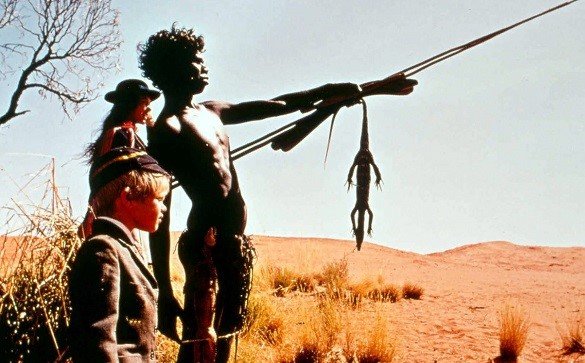
    Finally, we’ll have just a bit from John Barry’s haunting score to Nicholas Roeg’s “Walkabout” (1971), in which two British children find themselves stranded in the bush and survive only through the aid of a young Aborigine.

    We’re heading down under and out back this week, on “Picture Perfect,” music for the movies, this Saturday evening at 6:00 EDT, on WWFM – The Classical Network and wwfm.org


  • Ethel Smyth: Beyond Labels, Rediscovering Her Music

    by 

    in
    3 responses

    I’ve written about Dame Ethel here before. I always liked her music and was a champion of her stuff before it was cool. I’ve said it before and I’ll say it again: I find her Serenade in D, a symphony in all but name, more rewarding than anything written in the form by either of her near-contemporaries, Parry or Stanford. What’s even more remarkable is the range of her development, that the same composer who wrote the Serenade in 1890 (when she was already 32), a big-hearted, Brahmsian creation full of great tunes, arrived at her last, meditative symphony, “The Prison,” as much an oratorio or cantata for vocal soloists and orchestra, in the ruminative manner of Mahler, in 1930.

    This is not a bad article, even if the slant makes her out to be more of a battle-axe than she really was. Yes, she was determined (as she had to be), and yes, she busted out some windows, but in between she was just trying to live a happy, fulfilling life like the rest of us. Unquestionably Smyth had lesbian inclinations (most of her lovers were women), but there’s no way in hell she would have described herself as “defiantly queer.” One of the things I find so annoying these days is how everyone, whether specialist or person on the street, seems hellbent on interpreting the past through the lens of the present. Hence, we get the front-loaded insinuation about Smyth’s allegedly bigoted views, as an English citizen whose consciousness was formed during the height of the Victorian era. I just read her memoirs a month or two ago, and trust me, she was not a repugnant, malicious person in any respect.

    Ironically, this preoccupation with snap judgments and pigeonholing is the very thing that limited Smyth during her career as a “lady composer.” It’s as misguided as the now seemingly ensconced practice of updating with lurid productions operas composed generations ago, in an attempt to make them seem more “relevant” to the present. If the music and the story and the overall effect truly are timeless, is it really necessary to make everything look like a New Jersey rest stop? If you wonder what I’m ranting about, see the stills from the recent Glyndebourne production of Smyth’s “The Wreckers” at the link (by clicking on the BBC photo below).

    I’m grateful that Dame Ethel is getting so much attention now after decades of comparative neglect. I suppose there is a pendulum effect in any revolution, and there is usually a period of overcompensation before things start to swing back, but I long for the day that artists of all backgrounds are finally accepted for their inherent worth, without having to over-politicize everything. I love Smyth for the beauty of her music, not because she was “defiantly queer” or “problematically bigoted.” Hopefully in a few decades, none of this will mean anything. We’ll have learned from history and evolved, and finally we can get back to experiencing the music.


    Serenade in D

    “The Prison”

    “The Wreckers Overture” (conducted by Smyth)


  • Terje Isungset Ice Music Cool Sounds of Norway

    Terje Isungset Ice Music Cool Sounds of Norway

    by 

    in
    10 responses

    It’s going to be another scorcher today. Think cool thoughts with the icy inspirations of Terje Isungset.

    Ice Music Festival, Geilo, Norway

    Ice Music 2018 (Växjö Concert Hall in Växjö, Sweden)

    Website with embedded video of world’s most northerly concert

    https://www.terjeisungset.no/


  • Isaac Stern a Centennial Celebration

    Isaac Stern a Centennial Celebration

    by 

    in
    4 responses

    A not-so-stern birthday observance for Isaac Stern, born 102 years ago today. The great violinist’s hands can be seen in the film “Humoresque” (1947), whenever John Garfield’s character “plays.”

    Franz Waxman’s “Carmen Fantasie,” written for the film, took on a life of its own. Not surprisingly, Stern remained a champion of the piece.

    He also appeared on the soundtrack of the film version of “Fiddler on the Roof” (1971), playing John Williams’ arrangements. No doubt his contributions helped Williams earn his first Oscar.

    A decade later, a documentary about his trip to China, “From Mao to Mozart” (1979), won an Academy Award for Best Documentary Feature.

    https://www.youtube.com/watch?v=SlDJ2aE7iGs

    Of course, Stern’s impact ranged far beyond the silver screen. He was a prolific recording artist and kingmaker who held an enormous influence over other concert artist’s careers – many for the better, some for the worse.

    Most famously, he is credited with having saved Carnegie Hall from the wrecking ball in 1960. Sure, it cost New York a parking lot, but the city seems to have done all right without it.

    Happy birthday, Isaac Stern.


    The Istomin-Stern-Rose Trio in music by Franz Schubert

    Stern plays Bach

    Stern plays Barber

    Stern on “The Jack Benny Program”


    Stern in a photo inscribed to Carnegie Hall, ten years before he rescued it from demolition


Tag Cloud

Aaron Copland (93) Beethoven (95) Composer (114) Film Music (145) Film Score (143) Film Scores (255) Halloween (94) John Williams (195) KWAX (229) Leonard Bernstein (104) Marlboro Music Festival (125) Movie Music (160) Mozart (91) Opera (213) Philadelphia Orchestra (89) Picture Perfect (174) Princeton Symphony Orchestra (109) Radio (88) Ross Amico (244) Roy's Tie-Dye Sci-Fi Corner (290) The Classical Network (101) The Lost Chord (269) Vaughan Williams (105) WPRB (397) WWFM (881)

DON’T MISS A BEAT

Receive a weekly digest every Sunday at noon by signing up here


RECENT POSTS