• Jerome Moross Frankie and Johnny Rediscovered

    Jerome Moross Frankie and Johnny Rediscovered

    by 

    in
    5 responses

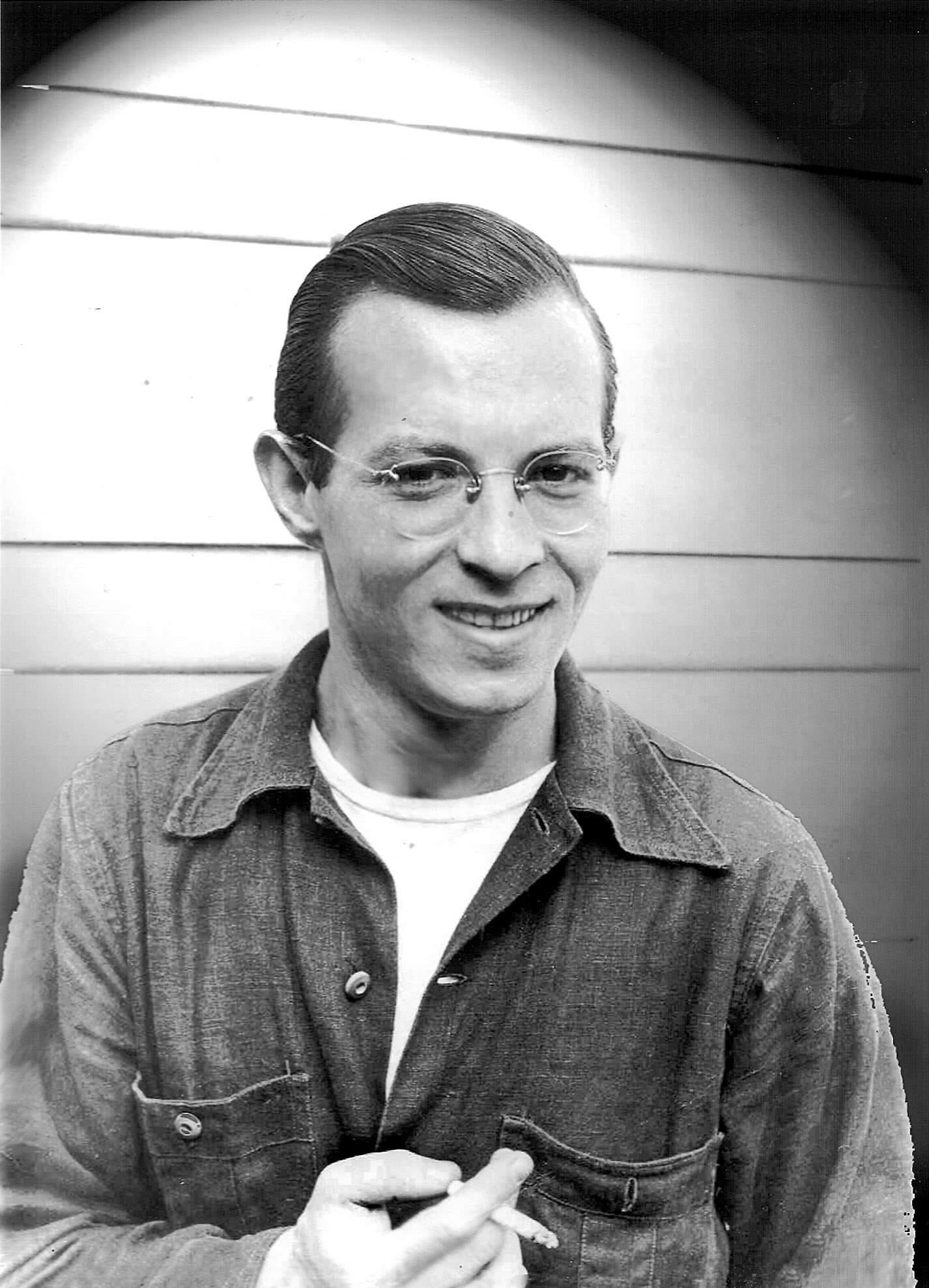
    Wow! Here’s a neat discovery. An actual performance of Jerome Moross’ ballet, “Frankie and Johnny.”

    You probably know the bluesy song, inspired by one or more sensational crimes of passion, in which a betrayed woman shoots her lover. (“He was her man, but he done her wrong.”) There are now so many variants that it’s taken on the quality of a folk song. Elvis sang it. Johnny Cash sang it. It’s been covered by innumerable jazz artists.

    Moross uses it as a kind of Greek chorus (sung by a trio Salvation Army sisters) in his brash and jazzy dance piece, which created a sensation at its premiere in 1938. The work predated Leonard Bernstein’s “Fancy Free” by six years and sent the censors into a moral panic.

    Though Moross was adept at writing music in many forms – including concert pieces (a symphony for Beecham), musical theater (the cult classic “The Golden Apple,” including the evergreen “Lazy Afternoon”), and opera (“Sorry, Wrong Number”) – he is best known for his classic film scores. He spent much of his career ping-ponging back and forth between New York and Hollywood.

    When “Porgy and Bess” concluded its New York run in 1935, George Gershwin invited Moross to join the show, on tour, as a pianist. It was while on a bus trip to Los Angeles to participate in “Porgy’s” west coast premiere that the 23 year-old made a stop in Albuquerque.

    “[A]s we hit the Plains I got so excited,” Moross recollected. “. . . [T]he next day I got to the edge of town and then walked out onto the flat land with a marvelous feeling of being alone in the vastness, with the mountains cutting off the horizon. The whole thing was just too much for me . . . it was marvelous, and I just fell in love with it.”

    The experience served him well. Moross drew on the memory of that trip in the writing of some of his most famous music, the Academy Award-nominated score for “The Big Country,” with its sense of wide-open excitement in the face of sweeping vistas. Western high-spirits and American jazz color most of Moross’ output.

    Happy birthday, Jerome Moross. You tackled everything with exuberance and vitality.


    One of the most thrilling credits sequences of all time?

    Surely one of the greatest film scores ever written

    Rare historic radio broadcast of the Symphony No. 1, with Moross himself at the piano

    “Lazy Afternoon” from “The Golden Apple,” sung by Kaye Ballard from the 1954 original cast recording

    Theme to “Wagon Train”

    Sonata in G major for Piano Duet and String Quartet


  • Suk’s Summer’s Tale Healing Through Nature

    Suk’s Summer’s Tale Healing Through Nature

    by 

    in
    11 responses

    Josef Suk’s 30th year was a tragic one, marked by the deaths of both his young wife, Otilie, and her father, his former teacher, Antonín Dvořák. Not surprisingly, a sense of morbidity colors much of his mature output. The double-loss directly inspired Suk’s “Asrael Symphony,” named for the Angel of Death.

    This Sunday night on “The Lost Chord,” we’ll take a look at “A Summer’s Tale,” the next step in Suk’s emotional rehabilitation. The work is a five-movement symphonic poem, the second of a four-part cycle that contemplates death and the meaning of life. More affirmative than the grim “Asrael,” which is full of pain, loss, and grief, “A Summer’s Tale” explores the healing powers of nature, in a score that at times reflects the epic romanticism of Gustav Mahler and at others the impressionism of Claude Debussy. It was composed over the course of just six weeks in the summer of 1907. Further tinkering took place over the next year-and-a-half. The work received its premiere in January of 1909.

    Suk later described the theme of the piece as “finding a soothing balm in nature.” I hope you’ll join me as we clear a path to “Healing by Nature” – Josef Suk’s “A Summer’s Tale” – this Sunday night at 10:00 EDT, on WWFM – The Classical Network and wwfm.org.


  • Jason Argonauts Medea Outer Limits Discussion

    Jason Argonauts Medea Outer Limits Discussion

    by 

    in
    2 responses

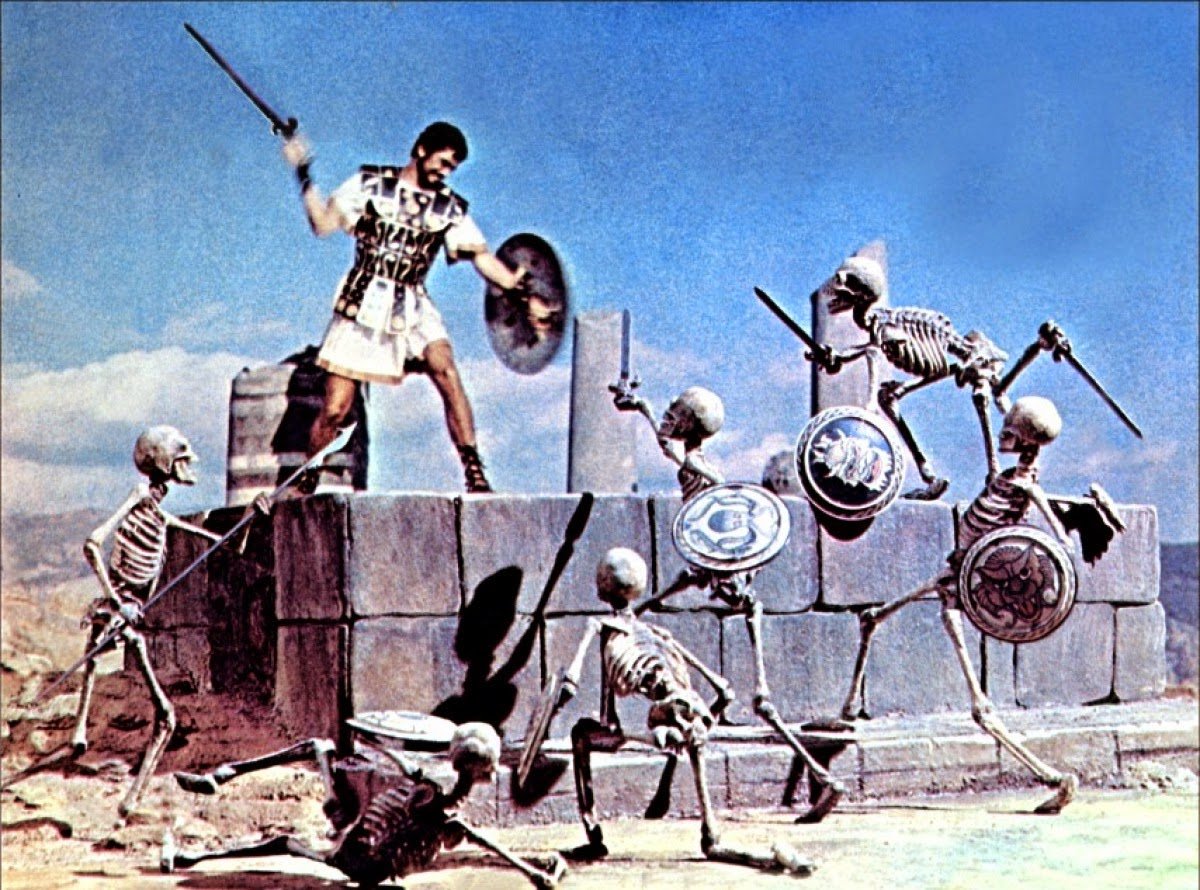
    Ever wonder why “Jason and the Argonauts” (1963) ends where it does? Because Medea gets the final cut!

    Seriously, how can you possibly top a duel with seven meticulously-animated skeletons? The three-minute sequence took stop-motion virtuoso Ray Harryhausen 4 ½ months to complete.

    But nobody seems to care that Jason never does get around to retaking the kingdom of his father. Learn more about Medea’s grisly solution to seemingly everything during last night’s discussion about this beloved classic.

    We’ll be off next Friday, but next Sunday Roy will be joined by a very interesting panel, as the topic with be a new book about the seminal sci-fi-horror-dark fantasy television series “The Outer Limits,” focused specifically on the unforgettable episode “Nightmare” (1963).

    Zooming in to talk about it will be Dave Rash (who put together the book), Dominick Stefano (son of scriptwriter and series creator Joseph Stefano), David Frankham (who has a substantial role in the actual episode), and Michael L. Schuman (whose critical assessment of the episode is included in the book).

    The conversation is guaranteed to be “out there.” Join Roy and company for a chat about “The Outer Limits,” on the next Roy’s Tie-Dye Sci-Fi Corner, livestreamed on Facebook, next Sunday evening, August 7, at 7:30 pm EDT!

    https://www.facebook.com/roystiedyescificorner


    BONUS! For anyone who loves Bernard Herrmann’s music for “Jason and the Argonauts,” I’ll be featuring a substantial selection from it on “Picture Perfect,” music for the movies, this Saturday evening at 6:00 EDT, on WWFM – The Classical Network and wwfm.org!


  • Myths & Movie Music Clash of the Titans

    Myths & Movie Music Clash of the Titans

    by 

    in
    2 responses

    Release the Kraken!

    This week on “Picture Perfect,” it’s a mythological mash-up, with music from four films inspired by classical myths.

    “Helen of Troy” (1956) is based on events recounted in Homer’s “The Iliad.” Like the more recent film “Troy,” this version glosses over any participation by the gods. Could it be their wrath that caused this Robert Wise-directed spectacle to be plagued with difficulties?

    Reportedly three people were killed during the making of the film, extras were injured by a runaway chariot, and 80 percent of the two-acre recreation of Troy was burned to the ground by a cigarette. On the bright side, it was Bridgette Bardot’s first film made outside of France, and Rossana Podestà played Helen. A spectacle indeed! Max Steiner provided the lush, romantic score.

    “Clash of the Titans” (1981) is not to be confused with the 2010 CGI-fest. This is the real deal, with special effects by legendary stop-motion maestro Ray Harryhausen.

    Just as special is its luxury casting of supporting roles, including Sir Laurence Olivier as Zeus, and Claire Bloom, Maggie Smith, Sian Phillips, and Ursula Andress as fellow Olympians. Burgess Meredith is among the mortals, Flora Robson turns up in one scene as a witch, and Perseus is played by newcomer Harry Hamlin, soon to find fame on television’s “L.A. Law.”

    The composer, Laurence Rosenthal, studied at the Eastman School and in Paris with Nadia Boulanger. He also wrote the music for “Raisin in the Sun,” “The Miracle Worker,” “Becket,” and the 1977 version of “The Island of Dr. Moreau.”

    “Clash of the Titans” would be Harryhausen’s final film. Despite flashes of his inimitable brilliance, in sequences like the one involving Medusa, and the creation of something of a cultural icon in the Kraken, the effects came to seem a little too retro in the wake of “Star Wars” and “Superman.” Though a sequel, “Force of the Trojans,” was pitched to M-G-M, it was not to materialize. Harryhausen died in 2013, after a lengthy retirement, at the age of 92.

    It would be a crime against peplum to put together a program of this sort without at least a nod to Hercules. The peplum genre originated in Italy with Maciste, a supporting character in the 1914 classic “Cabiria.” So powerful did this strongman prove that he became an industry unto himself. The Maciste craze reached its muscular peak in the late ‘50s and early ‘60s. When the films arrived in the United States, in hilariously dubbed versions, the character was invariably renamed Hercules, Samson, Atlas, Goliath, or any other mythological, Biblical, or historical bodybuilder you can think of.

    A peplum revival sprang up around “Conan the Barbarian” in the early 1980s. We’ll hear a selection from “Hercules” (1983), starring Lou Ferrigno, television’s Incredible Hulk. The music is by Pino Donaggio.

    Finally, we’ll make things right again with an extensive suite from the ultimate Ray Harryhausen mythological playground, “Jason and the Argonauts” (1963). This is the one that features the climactic battle with the skeleton army. The music, by Bernard Herrmann, brilliantly suits the visuals. We’ll hear a superb re-recording of the score on the Intrada label, with the Sinfonia of London conducted by Bruce Broughton.

    You won’t want to myth it, no bones about it! It’s a quest for classical mythology this week, on “Picture Perfect,” music for the movies, this Saturday evening at 6:00 EDT, on WWFM – The Classical Network and wwfm.org!


  • Vaughan Williams Champion Andrew Manze

    Vaughan Williams Champion Andrew Manze

    by 

    in
    7 responses

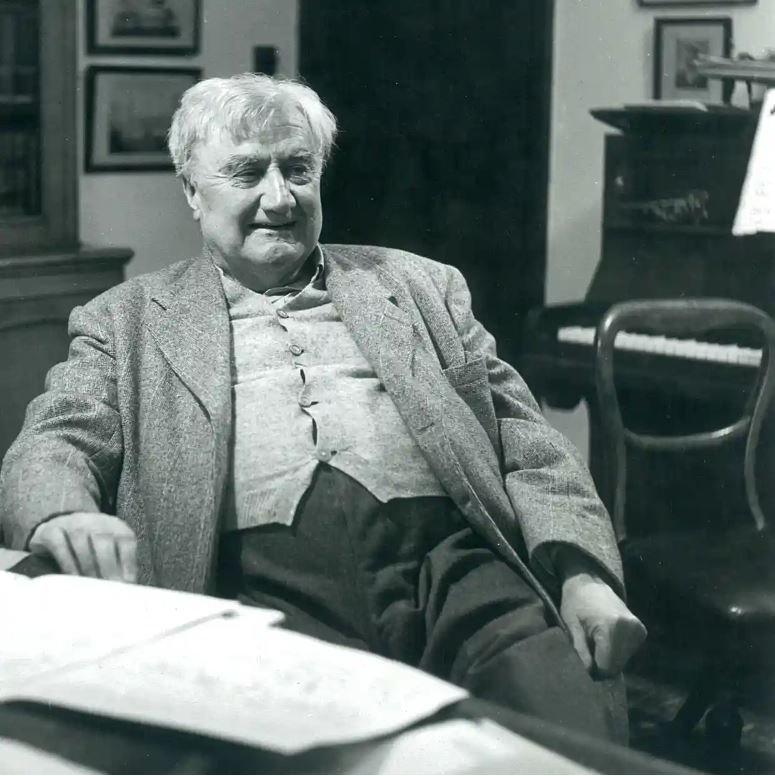
    Having broadcast his recordings with The English Concert for all these years, I’d always regarded Andrew Manze as a Baroque specialist. In fact, he studied violin with Ton Koopman and Simon Standage. How pleased I am, then, to see him blossom into such an ardent champion of the music of Ralph Vaughan Williams, whose symphonies he’s recorded with the Royal Liverpool Philharmonic Orchestra for the Onyx label (though I confess I have yet to hear his interpretations).

    Here’s an appreciation of RVW he wrote this week for The Guardian. So shameful that Vaughan Williams is receiving so little love in the U.S. during his sesquicentennial year.

    “I have been lucky enough to perform his music outside the UK and see how it touches and speaks to musicians and audiences who know nothing of its cultural roots. The most common reaction to hearing one of the symphonies is a sort of bemused appetite for more: how many of these ARE there? Why didn’t we know them already?”

    https://www.theguardian.com/music/2022/jul/26/ralph-vaughan-williams-visionary-genius-lark-ascending?fbclid=IwAR0b5z_5K1z46uImIwyfd7z7qaxY81cXDjc37s2BGSpkSjwoxfeRSKXyeQA


Tag Cloud

Aaron Copland (93) Beethoven (95) Composer (114) Film Music (145) Film Score (143) Film Scores (255) Halloween (94) John Williams (195) KWAX (229) Leonard Bernstein (104) Marlboro Music Festival (125) Movie Music (160) Mozart (91) Opera (213) Philadelphia Orchestra (89) Picture Perfect (174) Princeton Symphony Orchestra (109) Radio (88) Ross Amico (244) Roy's Tie-Dye Sci-Fi Corner (290) The Classical Network (101) The Lost Chord (269) Vaughan Williams (105) WPRB (397) WWFM (881)

DON’T MISS A BEAT

Receive a weekly digest every Sunday at noon by signing up here


RECENT POSTS