• Reynaldo Hahn Bon Vivant Birthday Hit

    Reynaldo Hahn Bon Vivant Birthday Hit

    by 

    in
    3 responses

    August 9. Get a hit of bon vivant Reynaldo Hahn.

    Hahn was born in Caracas, Venezuela, on this date in 1874. He was the youngest of twelve children of a German-Jewish businessman, a convert to Catholicism, who arrived in Venezuela in 1845 at the age of 22 and married a Venezuelan woman of Basque origin. Political instability drove the family to resettle in Paris, where young Reynaldo was given a cosmopolitan education.

    He studied composition at the Paris Conservatory (which he entered at the age of 11) with Charles Gounod and Jules Massenet, among others. He also took private lessons with Camille Saint-Saëns.

    Hahn met Marcel Proust at the age of 19, and the two essentially combusted. Their affair lasted for two years and is thought to have been Proust’s only real relationship. The romance may have fizzled, but the friendship was lifelong. Hahn’s influence permeates Proust’s “Remembrance of Things Past” (now frequently translated as “In Search of Lost Time”), often cited as one of the greatest novels of the 20th century. It’s certainly one of the longest.

    Hahn composed operas, tone poems, concertos, chamber music, a successful operetta (“Ciboulette”), and a musical comedy (“Mozart”). But far and away he is best remembered for his art songs – or mélodies – of which he composed over 100.

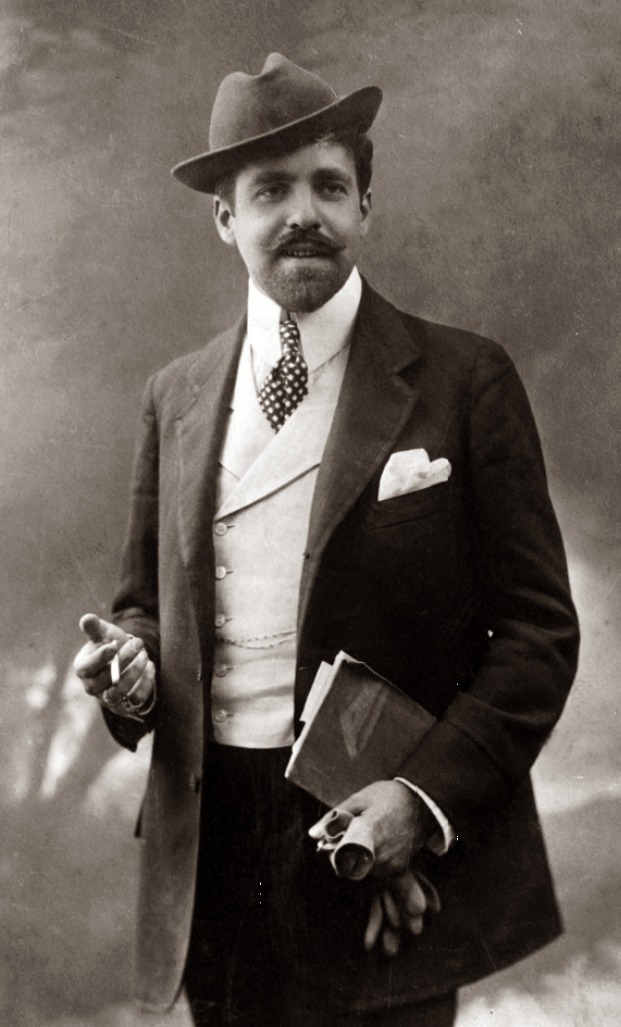
    He certainly enjoyed the good life, nattily attired, living in a lavishly appointed flat, and always with fine cigarettes at hand. He also gained a considerable reputation as a most charming performer. His delightfully informal presentations at musical evenings of the Belle Epoque would involve him leaning far back at the piano, cigarette dangling from a corner of his mouth, and casting languid glances at the audience through long lashes. Sample his artistry below.

    Happy birthday, Reynaldo Hahn!


    Hahn conducts one of his most frequently heard works, “Le bal de Béatrice d’Este” for winds, percussion, two harps, and piano

    One of his most famous songs, “À Cloris”

    Another, “L’heure exquise” (“The Exquisite Moment”)

    https://www.youtube.com/watch?v=aRnE7EYnp1A

    Hahn sings in 1909. (Great photos too!)

    Always fond of this one

    Hahn’s Piano Concerto

  • Cécile Chaminade Rediscovered

    Cécile Chaminade Rediscovered

    by 

    in
    7 responses

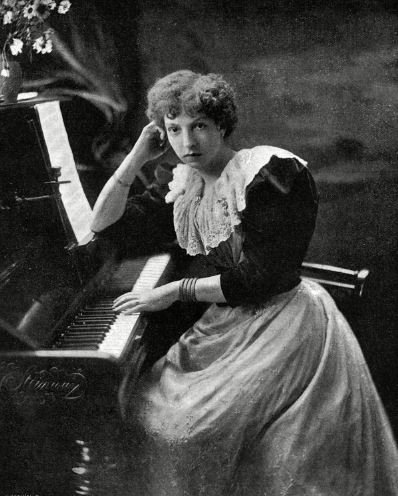
    Cécile Chaminade, who shares her given name with the patron saint of music, was born on this date in 1857. Though assessed and recommended for study at the Paris Conservatory at the age of 10, her father forbade it, because he thought it beneath her class. He did, however, allow her to study privately. It was in this fashion that she continued with her piano lessons (her mother taught her when she was young), took up the violin, and studied composition with Benjamin Godard.

    Georges Bizet, who heard her perform some of her own works before she was teenager, was among those who were impressed by her talents. Later, her pieces were championed by Isidor Philipp, head of the piano department at the Paris Conservatory.

    In her early 20s, Chaminade began playing in a salon setting. This would be the prototype for her future appearances, at which she presented programs consisting solely of her own music.

    She married a much older man, a music publisher, on the condition that they maintain separate residences. Due to her husband’s advanced age, it was rumored to have been a “marriage of convenience.” After he died, only six years later, Chaminade never remarried.

    Her concerts in England were received with enthusiasm. If anything, she proved even more popular during a tour of the United States.

    In 1901, she made gramophone recordings of seven of her compositions. She also made some piano rolls before and after World War I. She died in Monte Carlo in 1944.

    For decades, then, she fell into obscurity, with the exceptions perhaps of her Concertino for Flute and Orchestra and whatever sheet music happened to turn up in Grandma’s piano bench.

    Her reputation was revived largely through recordings, a trickle at first, but now appearing with more frequency.

    Ambroise Thomas once commented, “This is not a composer who is a woman, but a woman who composes.” Chaminade said, “There is no sex in art. Genius is an independent quality. The woman of the future, with her broader outlook, her greater opportunities, will go far, I believe, in creative work of every description.”

    In 1913, Chaminade was elected a Chevalier of the Légion d’honneur, a first for a female composer. Here’s some rare footage from the ceremony.

    Happy birthday, Cécile Chaminade!


    Concertino for Flute and Orchestra

    Concertstück for Piano and Orchestra

    Chanson, “Te souviens-tu?” (text by Benjamin Godard)

    Piano works (linked individually in the information below the video)

    Chaminade plays Chaminade


  • Olivia Newton-John A Stake Through My Childhood

    Olivia Newton-John A Stake Through My Childhood

    by 

    in
    One response

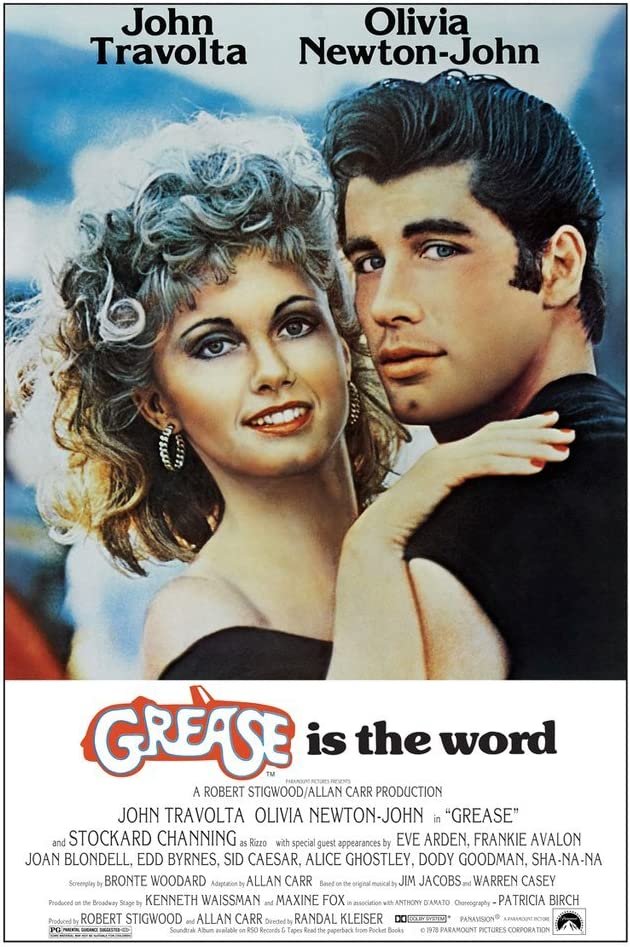
    Yeah, I know. Reading about Olivia Newton-John here is probably about the last thing you would expect. But her passing hits really close. Not because I was such a fan of her music, necessarily, but because her songs were everywhere during my happiest years, and “Grease” was such a cultural touchstone. The summer of ’78 was all about “Grease.” In my memory, it seems like every song from the musical became a hit, and the film’s soundtrack was all that was played at the public pool. Her death is like a stake through my childhood.

    I can’t believe she was 73. I thought she had beat the cancer. R.I.P.

    https://www.youtube.com/watch?v=i52mlmJtyJQ


  • Outer Limits Nightmare Special

    Outer Limits Nightmare Special

    by 

    in
    4 responses

    There is nothing wrong with your television set. So you may as well put it out of your mind for a couple of hours, as Roy will be joined by a very interesting panel for a discussion about the seminal sci-fi-horror-dark fantasy television series “The Outer Limits.” The focus specifically will be on a new book about the classic TOL episode “Nightmare” (1963), in which a group of space soldiers representing Unified Earth are captured and psychologically tortured by Ebonites.

    Zooming in to talk about it will be Dave Rash (who put together the book), Dominick Stefano (son of scriptwriter and series creator Joseph Stefano), David Frankham (who has a substantial role in the actual episode), and Michael L. Schuman (whose critical assessment of the episode is included in the book).

    I’ll be joining you in the comments section for this one. Roy and I will reunite on Friday for a belated salute to Nichelle Nichols, Star Trek’s Lt. Uhura.

    In the meantime, the conversation will be out of limits tonight, for a special edition of Roy’s Tie-Dye Sci-Fi Corner. The comments section will be a nightmare, when the show livestreams on Facebook, This Sunday evening at 7:30 pm EDT!

    https://www.facebook.com/roystiedyescificorner


    PHOTO: David Frankham (left) with Ebonite


  • Hungarian Night Music Rozsa Dorati Kodaly

    Hungarian Night Music Rozsa Dorati Kodaly

    by 

    in
    4 responses

    “Children of the night – what beautiful music they make!” So says Hungarian superstar Bela Lugosi in his signature role of Dracula. The observation (spoken in response to the howling of wolves) might equally be applied, under less chilling circumstances, to three of Lugosi’s composer-compatriots, whose nocturnal meditations we’ll enjoy this Sunday night on “The Lost Chord.”

    Miklós Rózsa, himself a figure with cinematic associations, wrote nearly 100 film scores and won three Academy Awards – for “Spellbound” (1945), “A Double Life” (1947), and “Ben-Hur” (1959). He was also an active concert composer, writing concertos for Jascha Heifetz, Leonard Pennario, Gregor Piatigorsky, and Pinchas Zukerman.

    In the summer of 1962, Rózsa composed “Hungarian Nocturne” on a commission from Edward B. Benjamin, a New Orleans millionaire with a fondness for quiet music. However, in order to maintain interest, the composer realized, there was no way he could remain quiet for the entire span of the piece. So the nocturne eventually builds to a climax before returning to the serene mood of its opening. His patron wasn’t entirely pleased, though he did draw enjoyment from the quieter parts. The piece was an attempt by the composer to recapture the rare beauty of nights on his estate in rural Hungary.

    Though Antal Doráti would ultimately become world famous as a conductor, he studied composition at the Franz Liszt Academy under Zoltán Kodály and Leó Weiner. He also studied piano with Béla Bartók. A fine Bartok interpreter, Doráti would later conduct the world premiere of his teacher’s Viola Concerto.

    Doráti’s own music has always been regarded as something of a sidelight. His “Night Music,” from 1970, is a collection of evocative miniatures for flute and orchestra. We’ll hear it performed by Alison Young, now a host for Minnesota Public Radio.

    Unlike Rózsa and Doráti, who were both natives of Budapest, Zoltán Kodály was born in a small town in Southern Hungary. He claimed that his first exposure to folk music was through the singing of servant girls in his own home. He went on to become one of the most important figures in Hungarian musical life, as composer, ethnomusicologist, and educator.

    Kodály will be represented by his orchestral idyll, “Summer Evening,” music originally composed in 1906, then revised in 1929, to fulfill a commission from Arturo Toscanini. Kodály himself will conduct, on a gorgeous recording with the Budapest Philharmonic.

    I hope you’ll join me for “Children of the Night” – Hungarian composers take wing – this Sunday night at 10:00 EDT, on WWFM – The Classical Network and wwfm.org.


    IMAGE: “New Moon,” by Mihály Zeller


Tag Cloud

Aaron Copland (93) Beethoven (95) Composer (114) Film Music (145) Film Score (143) Film Scores (255) Halloween (94) John Williams (195) KWAX (229) Leonard Bernstein (104) Marlboro Music Festival (125) Movie Music (160) Mozart (91) Opera (213) Philadelphia Orchestra (89) Picture Perfect (174) Princeton Symphony Orchestra (109) Radio (88) Ross Amico (244) Roy's Tie-Dye Sci-Fi Corner (290) The Classical Network (101) The Lost Chord (269) Vaughan Williams (105) WPRB (397) WWFM (881)

DON’T MISS A BEAT

Receive a weekly digest every Sunday at noon by signing up here


RECENT POSTS