• Summer Film Music from Europe

    Summer Film Music from Europe

    by 

    in
    6 responses

    With several weeks left in August, there’s still time for a quick European vacation. This week on “Picture Perfect,” we glance across the pond for an hour of music from foreign films with summer settings.

    “A Summer Story” (1988), based on a tale by John Galsworthy, tells of a young London lawyer and a farm girl who fall profoundly in love at the turn of last century. Georges Delerue provides the poignant score.

    The juxtaposition of “Igmar Bergman” and “comedy” may seem like something of an oxymoron, but the dour Swede’s “Smiles of a Summer Night” (1955) proves to be a witty examination of the folly of the human heart. Frequent Bergman collaborator Erik Nordgren wrote the music.

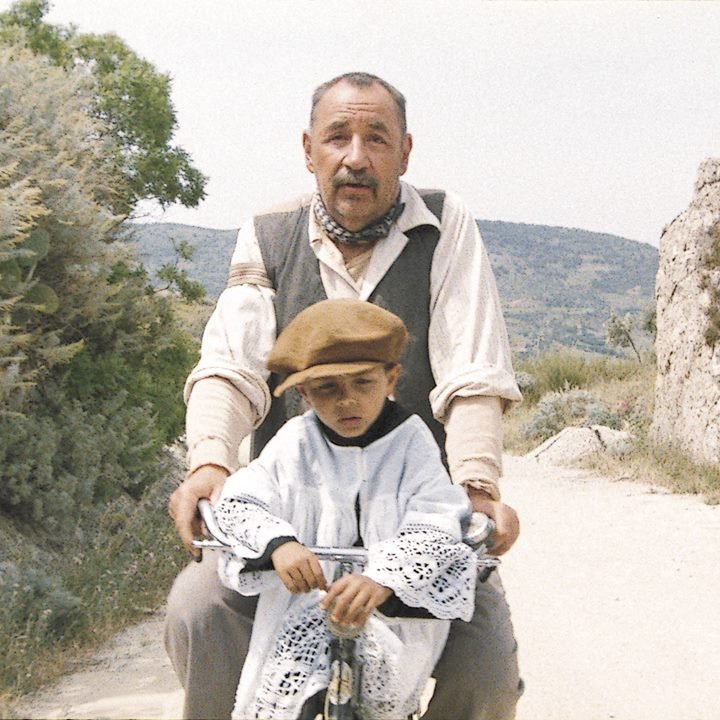
    Director Yves Robert adapted the memoirs of Marcel Pagnol, who spent his childhood summers in the south of France, into two lovely films, “My Father’s Glory” and “My Mother’s Castle” (1990). We’ll hear music composed for both by Vladimir Cosma. Pagnol’s experiences in Provence marked him for life, informing the films and writings of his maturity, including “The Baker’s Wife,” and “Jean de Florette.”

    Finally, we’ll have a generous sampling from one of Ennio Morricone’s most beloved scores, that for “Cinema Paradiso” (1988). “Cinema Paradiso,” set in a post-war Sicily where it seems always to be summer, is a nostalgic paean to the shared experience of film and the significance it holds in our lives. It won a special jury prize at the Cannes Film Festival and was honored with an Academy Award for Best Foreign Film.

    Music is the universal language. I hope you’ll join me for summer overseas on “Picture Perfect,” music for the movies, this Saturday evening at 6:00 EDT, on WWFM – The Classical Network and wwfm.org.

  • NY Philharmonic’s First Radio Broadcast 1923

    NY Philharmonic’s First Radio Broadcast 1923

    by 

    in
    2 responses

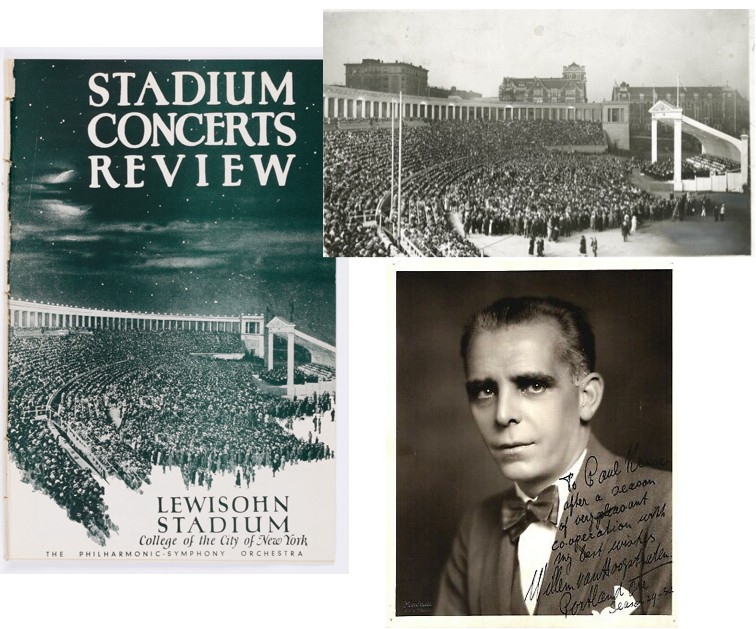
    100 years ago today, the New York Philharmonic gave its first live radio broadcast from Lewisohn Stadium over WJZ. The concert, part of the orchestra’s summer season, included works by Dvořák, Saint-Saëns, Mendelssohn, Rimsky-Korsakov, Brahms, and Gluck. The Philharmonic’s regular summer event director, Willem van Hoogstraten, was the conductor. While I have been unable to locate any audio from this particular historic broadcast, here is Hoogstraten conducting the NYP in Beethoven, from 1923.

    Hoogstraten was a Dutch violinist and conductor, who was married for 16 years to the pianist Elly Ney. The couple formed a piano trio with cellist Fritz Reitz and together recorded Beethoven’s Piano Concertos Nos. 3, 4 & 5. Some of their concert broadcasts are also available on YouTube.

    Hoogstraten led the New York Philharmonic’s summer series from 1922 to 1939. In 1925, he was appointed music director of the Oregon Symphony, where he served for 13 seasons. From 1939 to 1945, he was conductor of the Mozarteum Salzburg.

    Here’s another Willem – Willem Mengelberg – conducting the orchestra in Liszt’s most famous symphonic poem, “Les Preludes.” The recording was made a few months earlier, April 18-20, 1922. Note the swooning portamento and generous rubato. It was a different age.

    Sobering to contemplate that Mengelberg was 15 at the time of Liszt’s death!

    Mengelberg was music director of the Philharmonic from 1922 to 1928. Beginning in 1926, he shared the podium with Arturo Toscanini. Naturally, the two men came to loathe one another (an orchestra can have only one dictator), which precipitated Mengelberg’s departure. Fortunately, he had a decent back-up band in the Concertgebouw Orchestra of Amsterdam.

    The New York Philharmonic began its regular weekly series of Sunday afternoon broadcasts over the Columbia Broadcasting System on October 5, 1930.


    PHOTOS: 1931 program for concerts at Lewisohn Stadium, with inscribed photo of Willem van Hoogstraten from 1930


  • Funny Crab Perspiration Humor

    by 

    in
    4 responses

    Something about that perspiring crab amuses me.


  • Nichelle Nichols Star Trek Legend Dies at 89

    Nichelle Nichols Star Trek Legend Dies at 89

    by 

    in
    3 responses

    Nichelle Nichols died on July 30th at the age of 89. As Star Trek’s communications officer Lieutenant Uhura, Nichols became one of the first African American women to be featured in a non-menial role on television.

    Nichols played Uhura on the original “Star Trek” series (1966-68), voiced her on Filmation’s Saturday morning animated show (1973-74), and reprised the role in six “Star Trek” movies (1979-91). In “Star Trek: The Motion Picture,” she was promoted to lieutenant commander, and in “Star Trek II: The Wrath of Khan,” she was simply commander. She was also a crack translator, who could sing and play the Vulcan lyre.

    In real life, Nichols was a singer and dancer who worked with Duke Ellington and Lionel Hampton, a longtime supporter of NASA, and the first African American woman to have her handprints immortalized in cement at Grauman’s Chinese Theater.

    We’ll pay tribute to Nichols tomorrow night on Roy’s Tie-Dye Sci-Fi Corner. Viewers are invited to join us in sharing their memories and observations. Hailing frequencies will be open, both in the comments section and on-camera, when we livestream on Facebook, this Friday evening at 7:30 EDT.

    https://www.facebook.com/roystiedyescificorner


  • P.T. Barnum & American Composers

    P.T. Barnum & American Composers

    by 

    in
    3 responses

    I wrote this on August 10th last year, but I hope you’ll indulge me, as I don’t think it can be improved upon!


    P.T. Barnum is in the center ring today, with two works by American composers born on this date.

    William Henry Fry was born in Philadelphia in 1813. Credited with being the first U.S.-born composer to write music on a large scale, he composed orchestral works and the first opera by an American to be performed publicly in his lifetime (“Leonora,” in 1845). He was an outspoken advocate of American music at a time when German imports ruled the roost. It would be decades before music by our native composers would gain a toehold in the concert halls, which makes Fry an even more remarkable figure.

    Fry studied music with a former bandleader in Napoleon Bonaparte’s army, who went on to become the head of Philadelphia’s Musical Fund Society. Fry himself would become the society’s secretary.

    He was also a journalist, a writer on music, and the first music critic to write for a major American newspaper. He was a foreign correspondent for the Philadelphia Public Ledger and acted as music critic for the New York Herald Tribune.

    He composed seven symphonies, all of them of a descriptive nature. One of his most audacious works was commissioned by Barnum. The “Niagara Symphony” (1854) was conceived for enormous forces, augmented by a mind-blowing eleven timpani. Someone should consider putting this on the same program with Berlioz’s Requiem. Though it is possible all that percussion really would turn out to be too much of a good thing!

    Barnum once tried to buy Niagara Falls, but New York State wasn’t selling. So he constructed a replica, in miniature, “with real water,” for his American Museum (ironically, destroyed by fire in 1865), then located at the corner of Broadway, Park Row, and Ann Street, in Lower Manhattan. Among the other featured attractions was the notorious “Feejee Mermaid.”

    80 years after Fry’s birth, Douglas Moore was born into an established Long Island family. (The family had lived there since the island’s settling in the 17th century.) He attended, among other institutions, Yale University, where he earned two degrees; then he was off to Paris to study with Vincent d’Indy, Ernest Bloch, and Nadia Boulanger.

    Moore went on to serve as president of the National Institute and American Academy of Arts and Letters and director of music at the Cleveland Museum of Art. In 1926, he joined the faculty of Columbia University, where he remained until his retirement in 1962. With Otto Luening and Oliver Daniel, he cofounded the CRI (Composers Recordings, Inc.) label.

    Moore was the recipient of the Pulitzer Prize for Music in 1951 for his opera “Giants in the Earth.” But he is probably best-known for the opera “The Ballad of Baby Doe,” which became such a memorable vehicle for Beverly Sills.

    Moore’s Barnum connection is by way of a concert suite, composed in 1924. “The Pageant of P.T. Barnum” was inspired by the Greatest Showman’s life and outlandish attractions. The work falls into five movements:

    “Boyhood at Bethel”

    “Joice Heth – 161 Year Old Negress” [sic]

    “General and Mrs. Tom Thumb”

    “Jenny Lind”

    “Circus Parade”

    Barnum’s circus may have folded in 2017 (after 146 years in existence), but there’s still a sucker born every minute.


    CLOCKWISE FROM LEFT: Barnum & Tom Thumb, William Henry Fry, and Douglas Moore


Tag Cloud

Aaron Copland (93) Beethoven (95) Composer (114) Film Music (145) Film Score (143) Film Scores (255) Halloween (94) John Williams (195) KWAX (229) Leonard Bernstein (104) Marlboro Music Festival (125) Movie Music (160) Mozart (91) Opera (213) Philadelphia Orchestra (89) Picture Perfect (174) Princeton Symphony Orchestra (109) Radio (88) Ross Amico (244) Roy's Tie-Dye Sci-Fi Corner (290) The Classical Network (101) The Lost Chord (269) Vaughan Williams (105) WPRB (397) WWFM (881)

DON’T MISS A BEAT

Receive a weekly digest every Sunday at noon by signing up here


RECENT POSTS