The term “chivalry” conjures images of knights in armor, of courtly behavior, of bravery, honor, courtesy, moral virtue, and willingness to defend the weak. For the average filmmaker and moviegoer, that likely translates into spectacle and adventure.
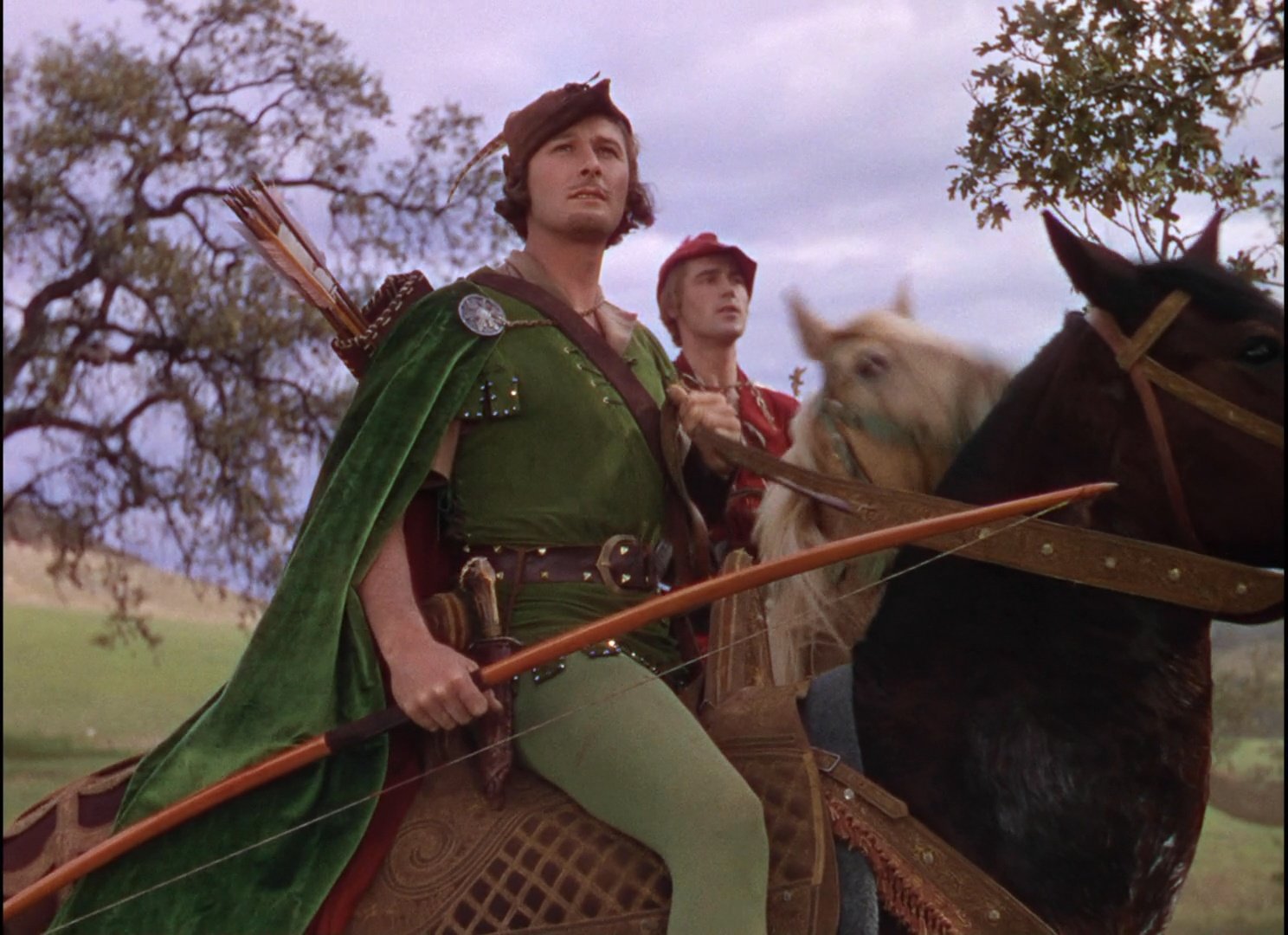
This week on “Picture Perfect,” we’ll sample scores from movies that celebrate or circumvent the code and listen to selections from “The Warlord” (Jerome Moross), “El Cid” (Miklós Rózsa), “Lionheart” (Jerry Goldsmith), and “The Adventures of Robin Hood” (Erich Wolfgang Korngold).
Chivalry is not dead! We embark on another crusade for worthy film music, on “Picture Perfect,” music for the movies, this Saturday evening at 6:00 EDT, on WWFM – The Classical Network and wwfm.org!
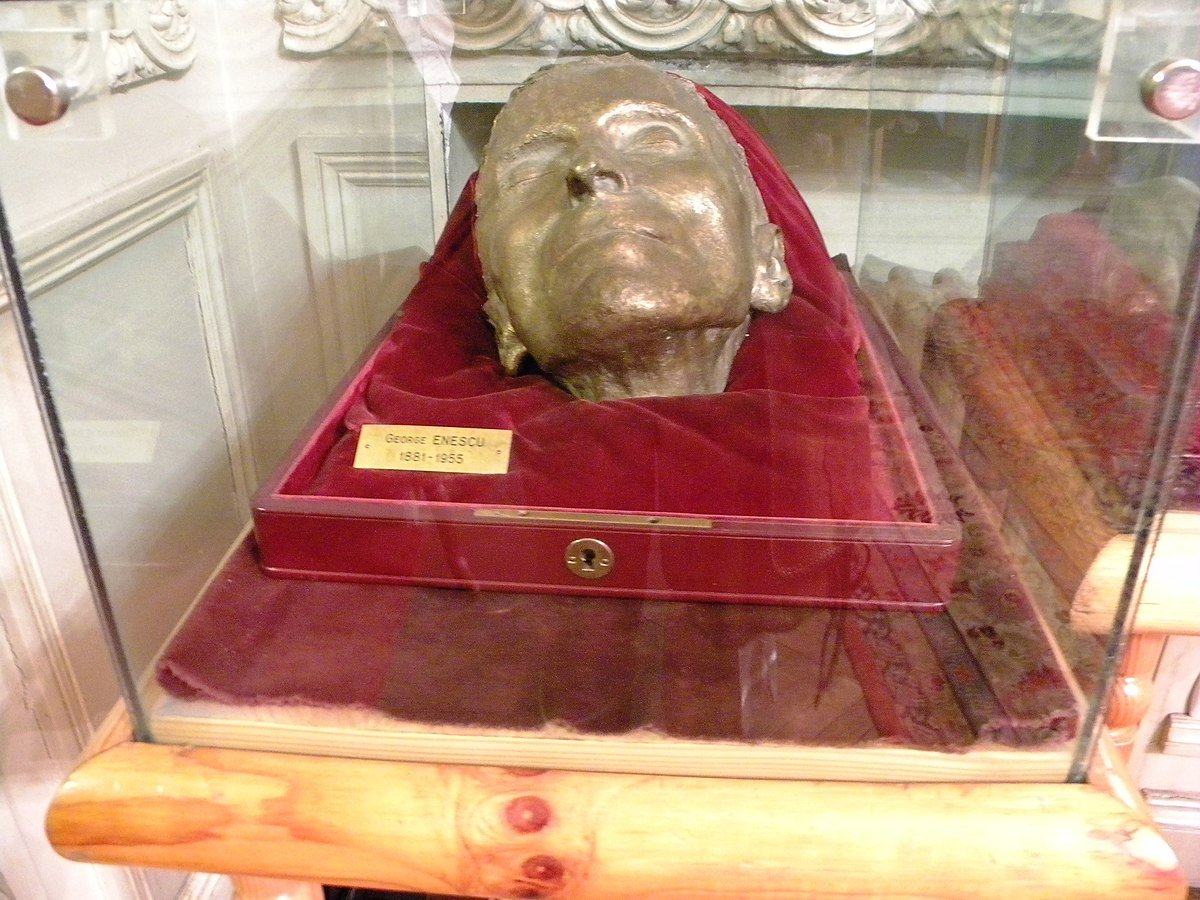
There’s always something a little morbid about these casts of famous musicians’ hands. Aren’t the death masks enough?
Oh, wait a minute. They’ve got one of those, too…
These are the hands of George Enescu, on display at the George Enescu National Museum in Bucharest.
Granted, while they were alive, the appendages that served as models were extraordinary, as were the synapses that fired inside the head that yielded the mask. Enescu was Romania’s most celebrated musician – as violinist, pianist, conductor, and composer a quadruple threat – a child prodigy who would also one day excel as a teacher.
At the age of seven, Enescu became the youngest student ever to be admitted to the Vienna Conservatory. He graduated before his 13th birthday. From there, he went to Paris and embarked on a charmed career with too many highlights to detail here. Pablo Casals, described him as “the greatest musical phenomenon since Mozart.”
He composed his biggest hit, the Romanian Rhapsody No. 1 (1901), at the age of 19. So popular did it prove that it became a kind of millstone to Enescu. People didn’t want to hear anything else. They still don’t!
On Enescu’s birthday, I hope you’ll find these links “handy,” and that you’ll take a few minutes to sample some of his other music.
A lovely piece for a summer’s day, the Decet for Winds (1906)
A live performance of Enescu’s first published piece, the “Romanian Poem” (1898), written when he was only 16:
Concert Overture on Popular Romanian Themes (1948)
Enescu plays his own Violin Sonata No. 3 (1926), with legendary Romanian pianist Dinu Lipatti:
Lipatti plays Enescu’s Piano Sonata No. 3 (1933-35)
Symphonie Concertante for Cello and Orchestra (1901)
The visionary Symphony No. 3, with choral finale (1916-18; rev. 1921-51)
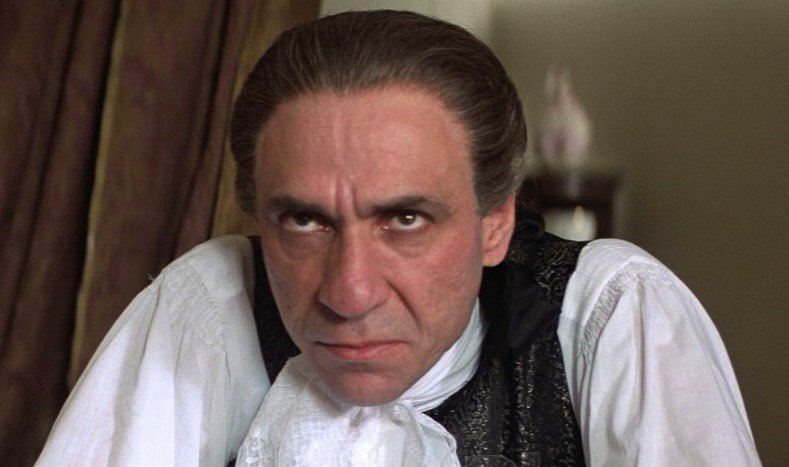
Happy birthday, Antonio Salieri! Patron saint of mediocrities everywhere. Or so “Amadeus” would have us believe.
I first encountered this article in The New Yorker back in 1985. The piece takes the form of a letter to Milos Forman, director of the Oscar-winning adaptation of Peter Shaffer’s stage play.
Is it the funniest thing ever? No, but, much like Salieri himself, it has its moments, and somehow I’ve never forgotten it. (For the record, Franz Schubert’s middle name is Peter.)
Salieri composed 37 operas, in addition to orchestral works, concertos, chamber music, and sacred pieces. And what do you know? A lot of his music is quite good! He was no Mozart, maybe – but who was?
Beethoven’s Variations on “La stessa, la stessissima,” cited in the article
The theme, from Salieri’s “Falstaff”
Overture to “Les Horaces”
Concerto for Flute, Oboe and Orchestra
“Das Lob der Musik” (“The Praise of Music”)
A Mozart and Salieri collaborative effort, the cantata “Per la ricuperata salute di Ofelia”
Very few get rich in the arts. But every once in a while, you can score a nice pay day.
On this date in 1928, Swedish composer Kurt Atterberg entered his Symphony No. 6 into a contest held by the Columbia Record Company in honor of the 100th anniversary of the death of Franz Schubert. For his effort, he was awarded the first prize of $10,000. (Not bad for 1928!) The work became known as Atterberg’s “Dollar Symphony.” It remains the composer’s most-recorded piece, starting all the way back with Sir Thomas Beecham and a recorded broadcast with Arturo Toscanini.
Though Atterberg was the winner of the international competition, divisional winners (by “zone”) included the now-forgotten English composer John St. Anthony Johnson, for his work “Pax Vobiscum,” and the equally-forgotten American, Charles Haubiel, for a piece called “Karma.”
Franz Schmidt was recognized in Austria, for his Symphony No. 3. Havergal Brian won second prize in England, for the first three movements of his “Gothic Symphony.”
For a time at least, Atterberg’s “Dollar Symphony” was one of the darlings of Classical 24, a streaming service out of Minnesota used by classical music radio stations around the country to save on the cost of maintaining local announcers. However, characteristically, C24 only ever plays a single movement.
Whether it’s 1928 or 2022, money makes the world go ‘round. Ka-ching!
Atterberg, Symphony No. 6 – the whole thing – on YouTube
On the 40th anniversary of the compact disc, here is an interesting discussion – to which, naturally, I’ve contributed. To paraphrase Mark Twain, reports of the format’s death, so far, have been greatly exaggerated.

5 responses