• NASA Black Hole Sound Is Out of This World

    by 

    in
    One response

    It turns out that there CAN be sound in space. Who knew?

    For the first time, NASA has extracted and made audible sound waves from a black hole. But is it really something you’d want to hear? Up close and personal, I mean.

    One scientist compares it to “a beautiful Hans Zimmer score” – an oxymoron if ever there was one.

    Granted, it’s not something you would be able to hear with the naked ear as you were hurtling toward the event horizon.

    Let me know what you’d prefer to be listening to on your earbuds in the final moments before you’re violently spaghettified.

    https://www.washingtonpost.com/technology/2022/08/23/nasa-black-hole-sound/


  • The Dig, Nightingales & a Faked Duet?

    The Dig, Nightingales & a Faked Duet?

    by 

    in
    4 responses

    I was watching a film on Netflix the other night called “The Dig” (2021), starring Carey Mulligan and Ralph Fiennes, about the archaeological excavation at Sutton Hoo, Suffolk, in 1939 that uncovered an Anglo-Saxon ship burial. The film is based on a novel of the same name by John Preston, inspired by true events.

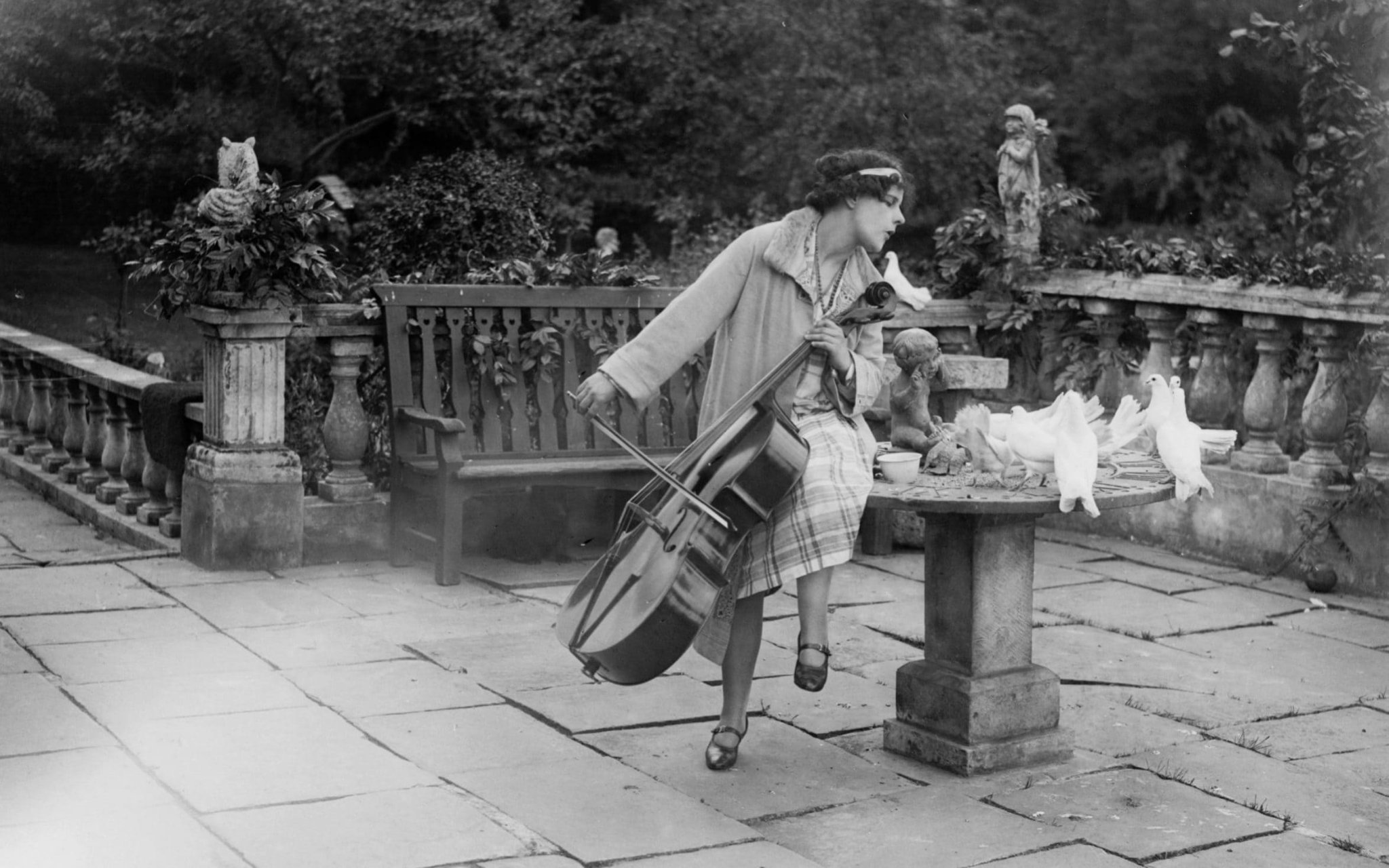
    Interestingly, at a point one of the characters (a fictionalized version of real-life archaeologist Peggy Piggot, played by Lily James) relates an anecdote about the cellist Beatrice Harrison, who used to rehearse in her garden, to the delight of the resident nightingales, who would allegedly join in. A live radio broadcast of Harrison playing “Londonderry Air” (a.k.a. “Danny Boy”) in a kind of avian duet is said to have entranced over a million listeners.

    I did a search on YouTube, and lo and behold! Recordings of these unusual collaborations exist! Apparently the original 10-inch shellac gramophone discs, issued by HMV in 1927, proved extremely popular.

    Nightingales alone

    “Londonderry” duet

    “Songs My Mother Taught Me”

    But was it all, in fact, faked?

    https://www.theguardian.com/media/2022/apr/08/the-cello-and-the-nightingale-1924-duet-was-faked-bbc-admits

    Whether it was faked or not, it’s a lovely illusion. I for one wish to hang on to it.

    Harrison is best-known to collectors for having made the first recording of the Elgar Cello Concerto, with the composer conducting. She also gave first performances of a number of works by Frederick Delius, including his Double Concerto (with her sister, May Harrison, as the violin soloist).

    In addition, she wrote an autobiography, “The Cello and the Nightingales.”

    Harrison plays Elgar’s Cello Concerto

    Delius without nightingales, but a nice picture of Harrison with a terrier (she was also a great dog lover)


  • Ken Russell’s Wild Ride Through Music & Film

    Ken Russell’s Wild Ride Through Music & Film

    by 

    in
    4 responses

    Throughout his career, Ken Russell alternately tickled and tried the patience of audiences and critics alike with his excesses in films like “The Devils” (1971), “Tommy” (1975), “Gothic” (1986), and “Salome’s Last Dance” (1988). (The latter was memorably reviewed in the Philadelphia Inquirer and given a rating of three question marks.)

    But he had a parallel fascination with the great composers and also directed features or short subjects about Bartók, Bax, Bruckner, Delius, Elgar, Mahler, Martinu, Richard Strauss, Tchaikovsky, Vaughan Williams, and perhaps most notorious of all, Franz Liszt.

    In “Lisztomania” (1975), The Who’s Roger Daltrey plays Liszt and Wagner is portrayed as a kind of zombie-Nosferatu-Frankenstein’s monster-Hitler, whose electric guitar doubles as a machine gun. (I’m not kidding.)

    Occasionally, Russell also directed staged opera, including a production of Boito’s “Mefistofele,” with Faust reimagined as an aging hippie.

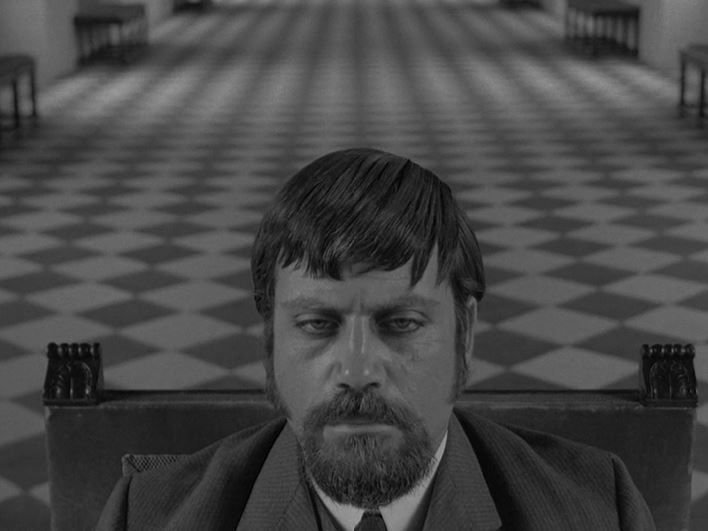
    On Claude Debussy’s birthday, would you buy Oliver Reed as the great French composer? Why not?

    You can watch “The Debussy Film” (1965) here:


  • French Orchestral Masters Rediscovered

    French Orchestral Masters Rediscovered

    by 

    in
    5 responses

    Vive les orchestrateurs de musique classique français!

    This Sunday night on “The Lost Chord,” we’ll hear original works by musicians who employed their skills as orchestrators in the service of more celebrated French composers.

    Henri Rabaud (1873-1949) was, variously, conductor at the Paris Opéra Comique, director of the Paris Opera, and director of the Paris Conservatory. For a season, he ever led the Boston Symphony Orchestra. Though he wrote several operas and two symphonies, as well as choral, chamber and instrumental music, Rabaud’s own original output is very seldom heard. However, his orchestration of Gabriel Fauré’s charming “Dolly Suite,” originally for piano four-hands, endures. We’ll hear Rabaud’s symphonic poem “La Procession nocturne,” inspired by Nicolas Lenau’s “Faust.”

    André Caplet (1878-1925) directed the Boston Opera from 1910 to 1914. He was gassed while serving in the First World War, which resulted in the pleurisy that plagued him for the remainder of his short life. Caplet died at the age of 44. His harp quintet, “Conte fantastique,” after Edgar Allan Poe’s “The Masque of the Red Death,” is occasionally heard. But his tenuous grip on fame is really through his association with another composer, Claude Debussy, for whom he orchestrated “Children’s Corner,” “Clair de lune,” “Le Martyrdom de saint Sébastien” and “La boîte à joujoux.” Tonight we’ll have the opportunity to enjoy Caplet’s lovely Septet for Voices and String Quartet.

    Henri Büsser (1872-1973) acted as secretary to Charles Gounod. He also became a protégé and friend of Jules Massenet. At Debussy’s request, Büsser conducted the fourth performance of “Pélleas and Mélisande” and numerous performances thereafter. He died in Paris less than three weeks shy of his 102nd birthday! Büsser’s own output includes much music for the stage, including 14 operas, a ballet, and incidental music. Yet his name is kept alive principally as the orchestrator of Debussy’s “Petite Suite” and “Printemps.” He’ll be represented tonight by “Andalucia,” an original work for flute, on Spanish themes.

    Charles Koechlin (1867-1950) had many enthusiasms: medieval music, Bach, travel, stereoscopic photography, communism, pantheism, sports. He was especially interested in early film stars (he wrote works in tribute to Ginger Rogers, Douglas Fairbanks, Charles Chaplin, and Lillian Harvey) and the “Jungle Books” of Rudyard Kipling. Despite having enjoyed an astonishingly prolific career as a composer himself, Koechlin is associated in most people’s minds with his orchestration of Fauré’s “Pélleas and Mélisande.” He also worked as an orchestrator on Debussy’s “Khamma.”

    Koechlin’s series of orchestral works inspired by Kipling span most of his creative life. These were composed in a broad array of styles, encompassing impressionism, neo-classicism, polytonality, and even quasi-serialism. We’ll hear the last of his Kipling cycle, “Les Bandar-Log,” ostensibly about a barrel of chattering monkeys, but the term has also come to be used to describe anyone who irresponsibly prattles.

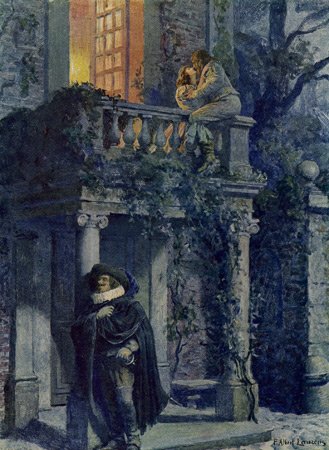
    I hope you’ll join me as these musical Cyranos emerge from the shadow of Roxane’s balcony, on “French Connections,” this Sunday night at 10:00 EDT, on WWFM – The Classical Network and wwfm.org.
  • Ligeti Morricone Arcane Opera and Spaghetti Westerns

    by 

    in
    3 responses

    Beautifully arcane, and it plays to my enthusiasm for Ligeti and spaghetti westerns!

    Here’s Barbara Hannigan in “Mysteries of the Macabre,” a distillation of three coloratura arias from “Le Grand Macabre,” sung by the character of Gepopo, the chief of secret police. In case you’re curious, the text is semi-nonsense.

    In London

    In Berlin

    In New York in a semi-staged production of the complete opera

    Trailer for the New York Philharmonic performances

    BONUSES:

    Act I car horn prelude

    Act II doorbell prelude

    Equally operatic and absurd, “The Good, the Bad and the Ugly”


    “I am in a prison: one wall is the avant-garde, the other wall is the past, and I want to escape.”

    György Ligeti


Tag Cloud

Aaron Copland (93) Beethoven (95) Composer (114) Film Music (145) Film Score (143) Film Scores (255) Halloween (94) John Williams (195) KWAX (229) Leonard Bernstein (104) Marlboro Music Festival (125) Movie Music (160) Mozart (91) Opera (213) Philadelphia Orchestra (89) Picture Perfect (174) Princeton Symphony Orchestra (109) Radio (88) Ross Amico (244) Roy's Tie-Dye Sci-Fi Corner (290) The Classical Network (101) The Lost Chord (269) Vaughan Williams (105) WPRB (397) WWFM (881)

DON’T MISS A BEAT

Receive a weekly digest every Sunday at noon by signing up here


RECENT POSTS