• Ponchielli Dance of the Hours & Allan Sherman

    Ponchielli Dance of the Hours & Allan Sherman

    by 

    in
    3 responses

    Hello Muddah, Hello Fadduh…

    Today is the birthday of Amilcare Ponchielli. It’s possible you may not know his name, but you certainly know his music, thanks to Allan Sherman and Walt Disney.

    Of his ten operas, only “La Gioconda” (1876) maintains a toehold in the repertoire. It’s certainly not for want of trying. Ponchielli swung for the fences, with a large orchestra in the pit and impeccable orchestration. He influenced composers of the rising generation, including Giacomo Puccini, Pietro Mascagni, and Umberto Giordano. But nothing outside of “Gioconda” has really stuck.

    Fortunately, the opera has its share of memorable moments, including the contralto aria “Voce de donna o d’angelo” (a.k.a. the Rosary song), the tenor romanza “Cielo e mar,” a duet for tenor and baritone, “Enzo Grimaldo, Principe di Santafior,” and the soprano aria “Suicidio!”

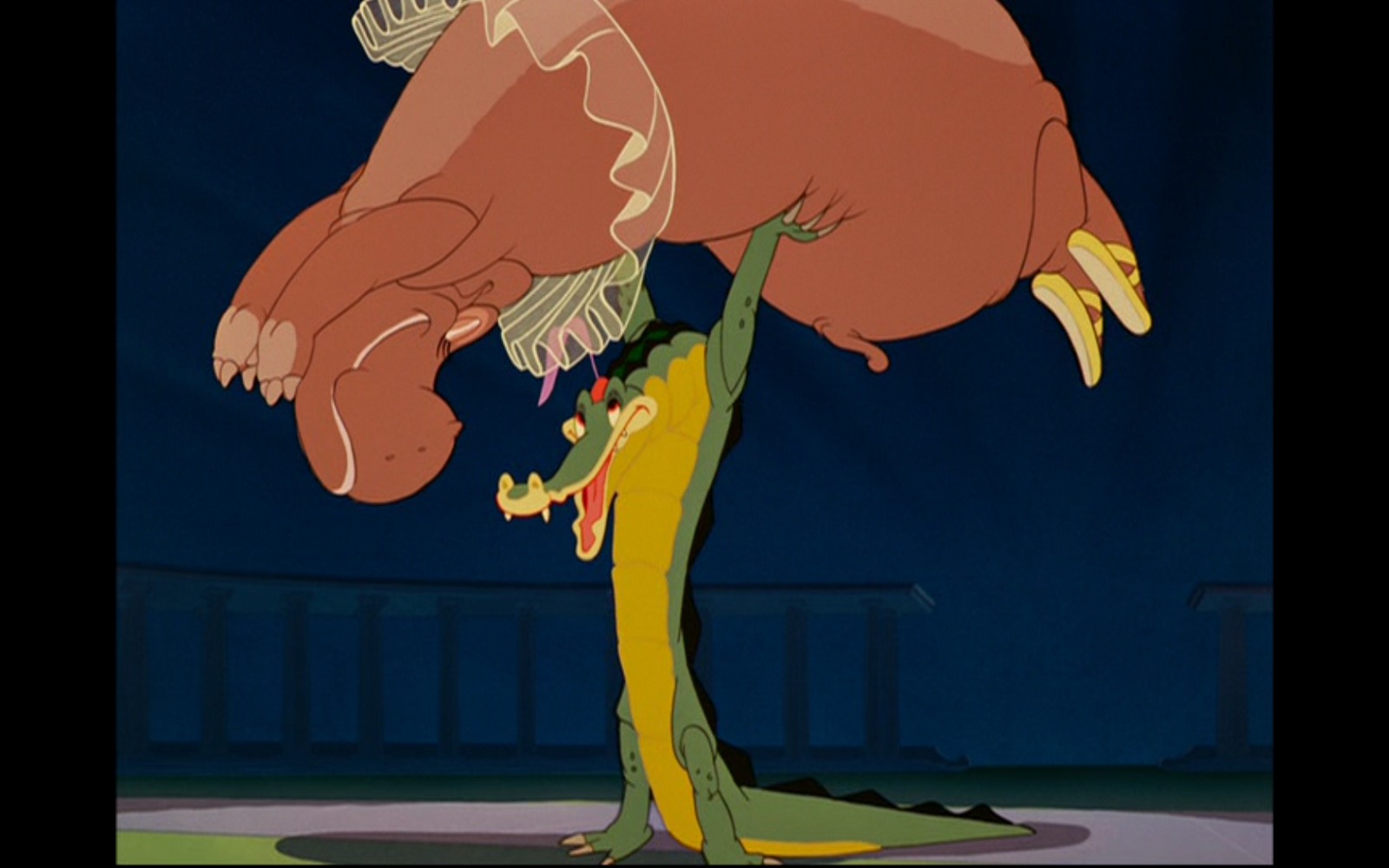
    However, far and way the most famous music is the ballet from Act III, known as “Dance of the Hours.” The opera is a tragedy (drawn from Victor Hugo), but it’s impossible now to take any of it seriously, since one can’t help but think of ostriches, elephants, alligators, and hippopotami.

    Hey, there’s no such thing as bad publicity. Happy birthday, Amilcare Ponchielli!


    Dance of the Hours

    Pavarotti sings “Cielo e mar”

    Callas sings “Suicidio!”

    The charming Quartet for Winds with Piano Accompaniment

    Muti conducts an orchestral work, “Elegia”

    “Hello Muddah, Hello Fadduh”

    Disney’s “Fantasia” (excerpt)


  • Lost Chord Mediterranean Muse Webcast

    by 

    in
    5 responses

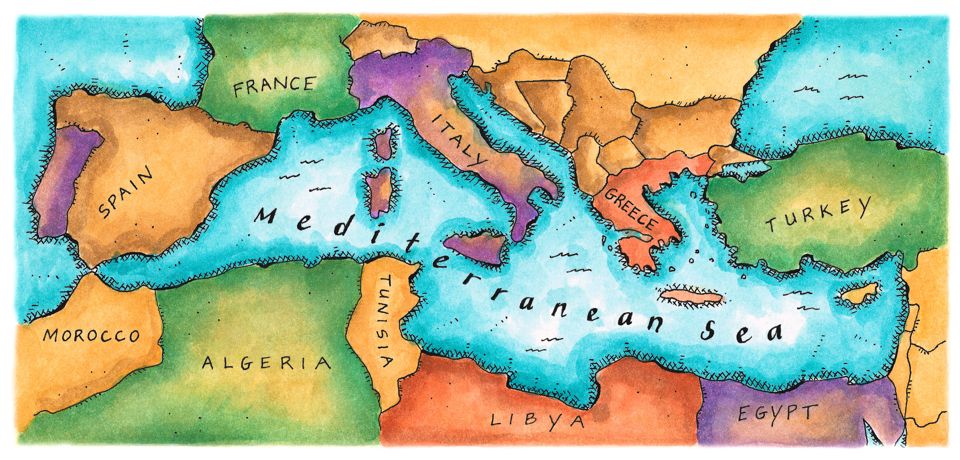
    Since “The Lost Chord” aired one hour later than usual this week, due to the length of the WWFM “Sunday Opera” (Handel’s “Almira”), I figured I’d share a link to the webcast, just in case you were asleep by 11 pm. The subject matter, “Mediterranean Muse,” and the featured work, John McLaughlin’s “Mediterranean Concerto,” seem like they would sit well on a day like today. I don’t know about you, but my Mediterranean diet starts now!


  • Musicians Beat the Heat

    Musicians Beat the Heat

    by 

    in
    6 responses

    It’s another heavy one out there. Notable musicians do what they can to beat the heat. (Subjects identified when you click through the gallery.)


  • Find Meaning in Silence The Legacy of Cage’s 433

    Find Meaning in Silence The Legacy of Cage’s 433

    by 

    in
    2 responses

    You don’t always have to make a racket to get noticed.

    One of the most notorious pieces ever “composed,” John Cage’s “4:33,” was given its debut at Maverick Concert Hall in Woodstock, NY, on this date 70 years ago.

    You probably know it, even if you think you don’t. Somebody walks out to a piano, closes the lid, produces a stop watch, and sits absolutely still for 4 minutes and 33 seconds. At the end of the allotted time, the musician stands up and takes a bow.

    At the first performance, some snickered, others scoffed, but Cage’s piece is now world famous. It turns out “4:33” is more than just the wacky stunt it appeared to be. Any perceptive listen who joins the musician in his or her silence soon realizes the passing time is not silent at all, but full of sounds. People coughing, chairs creaking, the central air kicking on, extraneous noise from the street or lobby. It really does force you to be aware of your surroundings. In its way, 70 years later, in our crazy digitized, wireless world of constant distraction, “4:33” is more necessary than ever.

    It’s interesting that this experimental work, which some would regard as not for every day, is in its truest sense “every day music.” Cage has taken a lot of guff over the years (I had a colleague at the radio who refused to acknowledge his centenary), but he was one of the most influential musical thinkers of the 20th century.

    Ironically, it took a composer by the name of Cage to get us thinking outside the box. Me, I’ll have “4:33” on infinite repeat all day.


    Original version for piano

    Transcribed for orchestra – and performed by the Berlin Philharmonic


  • Mediterranean Music Cruise on WWFM

    Mediterranean Music Cruise on WWFM

    by 

    in
    6 responses

    This Sunday night on “The Lost Chord,” leave all your troubles behind for a musical cruise to the Mediterranean.

    We’ll have a work by Charles Camilleri, Malta’s national composer – his “Mediterranean Dances” of 1961. Also, John McLaughlin’s “Mediterranean Concerto” of 1985. McLaughlin, who’s made his home in Monaco for the past 40 years, is better known as a jazz or jazz fusion artist. His infectious concerto is ambitious in scope, about twice the length of those ordinarily devoted to the guitar.

    Pack your suntan lotion. We’re headed to the Mediterranean basin for “Mediterranean Muse” – one hour later than usual, due to the length of this week’s opera (Handel’s “Almira,” beginning at 3 pm) – this Sunday night at 11:00 EDT, on WWFM – The Classical Network and wwfm.org.


Tag Cloud

Aaron Copland (93) Beethoven (95) Composer (114) Film Music (145) Film Score (143) Film Scores (255) Halloween (94) John Williams (195) KWAX (229) Leonard Bernstein (104) Marlboro Music Festival (125) Movie Music (160) Mozart (91) Opera (213) Philadelphia Orchestra (89) Picture Perfect (174) Princeton Symphony Orchestra (109) Radio (88) Ross Amico (244) Roy's Tie-Dye Sci-Fi Corner (290) The Classical Network (101) The Lost Chord (269) Vaughan Williams (105) WPRB (397) WWFM (881)

DON’T MISS A BEAT

Receive a weekly digest every Sunday at noon by signing up here


RECENT POSTS