• George Walker Pulitzer Winner Centennial

    George Walker Pulitzer Winner Centennial

    by 

    in
    4 responses

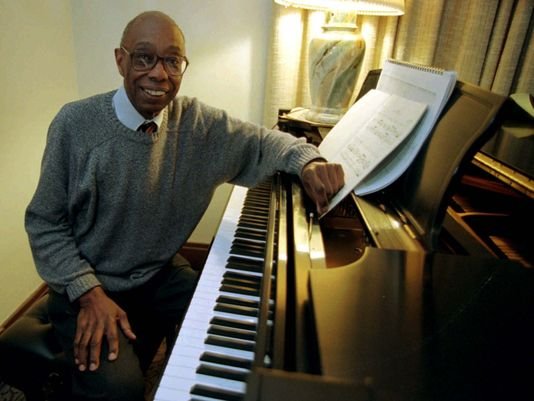
    The first African American recipient of the Pulitzer Prize for Music was born 100 years ago today.

    George Walker was awarded the prize for “Lilacs for Voice and Orchestra.” “The unanimous choice of the Music Jury, this passionate, and very American, musical composition… has a beautiful and evocative lyrical quality using words of Walt Whitman,” stated the committee. That was as recent as 1996.

    Born in Washington, D.C. in 1922, Walker was a longtime resident of Montclair, NJ. His father emigrated from Kingston, Jamaica, to study at Temple University School of Medicine; Walker’s mother supervised his first piano lessons. He was accepted into the Oberlin School of Music at the age of 14. He was then admitted to the Curtis Institute in Philadelphia, and later attended the Eastman School. For two years, he studied in Paris with Robert Casadesus and Nadia Boulanger.

    Walker’s own academic career included posts with Dillard University in New Orleans, the Dalcroze School of Music, the New School for Social Research, Smith College, the University of Colorado Boulder, Rutgers University (where he served as chairman of the music department), the Peabody Institute of John Hopkins University, and the University of Delaware.

    He was the father of two sons, violinist and composer Gregory T.S. Walker and playwright Ian Walker. His sister was the pianist Frances Walker-Slocum. George Walker died in 2018, at the age of 96.

    As a composer, he produced an impressive body of work, in a career that spanned some 80 years. By his own assessment, as an artist, he was more interested in building “elegant structures” than in “creating beauty.” Depending on one’s sensibility, it could be argued that he achieved both.

    I saw him in person only once, in 2009, when the Philadelphia Orchestra gave the world premiere of his Violin Concerto, with his son, Gregory, as soloist, and Neeme Järvi conducting. On a separate series of concerts that season, the orchestra also performed “Lilacs.”

    However, it is for a piece Walker composed while still a student at Curtis that he is probably best-known. The “Lyric for Strings,” dedicated to the memory of his grandmother, is touching in its simplicity. It deserves to be as widely played as Barber’s “Adagio,” although Walker’s is quite a different piece. The tender recollection manages to be moving without spilling over into anguish.

    I often wonder if Walker ever got tired of hearing about his resume of firsts. In relation to his skin color, I mean. It was always the first thing you ever read or heard about him (and this post is no different). In addition to his landmark Pulitzer win, Walker was the first black pianist to present a solo recital at New York’s Town Hall (in 1945). He was the first black performer to appear as soloist with the Philadelphia Orchestra (playing Rachmaninoff’s Piano Concerto No. 3). He was the first black musician to graduate from the Curtis Institute of Music (where he studied with Rudolf Serkin, Mieczyslaw Horszowski, and Rosario Scalero).

    All important achievements. But he was also so much more than a statistic. In an interview given in 2012, Walker commented, “I’ve always thought in universal terms, not just what is black or what is American, but simply what has quality.”

    Happy birthday, George Walker.


    “Lyric,” in its original version for string quartet:

    “Lilacs,” with Faye Robinson (the movements are posted separately, so allow it to play through)

    Walker plays his Piano Sonata No. 1

    Brief 2012 documentary on Walker, in which he is interviewed, for the occasion of his 90th birthday:

    A fascinating interview conducted by Frank J. Oteri. Also includes some great photos!

    https://nmbx.newmusicusa.org/george-walker-concise-and-precise/?fbclid=IwAR16RYQ-Gjml1pmcnr3sxnRH–d2u51w574R8X9sQx9b_0sAqPzd79E13_4


  • Elvis Isasi Shared Song Secret

    Elvis Isasi Shared Song Secret

    by 

    in
    3 responses

    What do Elvis Presley’s “Wooden Heart” and Andrés Isasi’s Symphony No. 2 have in common? They both employ the same German folk melody. Bask in the music of this neglected Basque composer on “Assaying Isasi,” on “The Lost Chord,” this Sunday night at 10:00 EDT, on WWFM – The Classical Network and wwfm.org.


    PHOTOS: The King and Isasi (with friends)


  • Horse Racing Movie Soundtracks on the Air

    Horse Racing Movie Soundtracks on the Air

    by 

    in
    6 responses

    It’s a rare horse race where everyone comes out a winner. This week on “Picture Perfect, it’s bound to be a photo finish, with four beautiful and rousing scores from films about horses and horse racing.

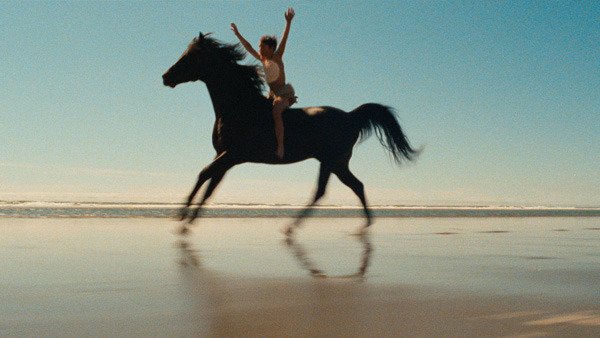
    “The Black Stallion” (1979), based on the classic novel by Walter Farley, depicts the bonding of a shipwrecked boy and an Arabian stallion, whose shared destiny takes them to the race track. Mickey Rooney’s uncharacteristically subdued performance as the former trainer who finds a new lease on life earned him an Academy Award nomination for Best Supporting Actor.

    Francis Ford Coppola executive produced the film, and his father, Carmine Coppola, wrote the music. Reportedly the unsung Shirley Walker, who had been hired as an orchestrator, wound up contributing a fair amount to it, when the composer was put off by requests from director Carroll Ballard that portions of the music be rewritten.

    “The Reivers” (1969), after William Faulkner’s Pulitzer Prize winning novel, is a coming-of-age story about a boy swept into automobile theft and illicit horse racing in the American South. Mark Rydell directed, and Steve McQueen stars as the rakish Boon Hogganbeck. The narration is by Burgess Meredith, who reprises his role in the recording we’ll hear, with John Williams conducting his own music.

    For the film, Williams provided an alternately wistful and carefree Americana score. It’s said that the music for “The Reivers” is what moved Steven Spielberg to hire him to write the music for his first theatrical feature, “The Sugarland Express.” The Spielberg association brought Williams to “Jaws,” the first of his truly iconic film scores. He also worked with Mark Rydell on “The Cowboys” (1972), “Cinderella Liberty” (1973), and “The River” (1984).

    It was inevitable that the nonfiction bestseller “Seabiscuit: An American Legend” would be given the big Hollywood treatment. The miraculous ascent of the real-life dark horse who became a symbol of hope during the Great Depression seemed tailor-made for dramatization.

    Though it presses all the right buttons, “Seabiscuit” (2003) is not to be confused with a superior documentary that was shown on PBS around the same time. Nonetheless, the film, which stars Tobey McGuire, Jeff Bridges, and Chris Cooper, was nominated for seven Academy Awards, including Best Picture. Randy Newman wrote the music.

    Finally, we’ll turn to “Hidalgo” (2004), also allegedly based on a true story, though the source material – the memoir of distance rider Frank T. Hopkins – has also inspired a fair degree of skepticism. In 1890, Hopkins became the first American invited to compete in a centuries-old 3000-mile survival race across the Arabian Desert.

    Viggo Mortensen plays Hopkins, and Omar Sharif is the sheik who asks him to put up or shut up, over the claim made by Buffalo Bill’s Wild West Show that he and his horse are the greatest distance runners in the world. The music is by James Newton Howard.

    It will be a dead heat in June, with the wind in our hair. Enjoy an hour of equine film scores, on “Picture Perfect,” music for the movies, this Saturday evening at 6:00 EDT, on WWFM The Classical Network and wwfm.org.


  • Christopher Lee Centenary on Roy’s Sci-Fi Corner

    Christopher Lee Centenary on Roy’s Sci-Fi Corner

    by 

    in
    6 responses

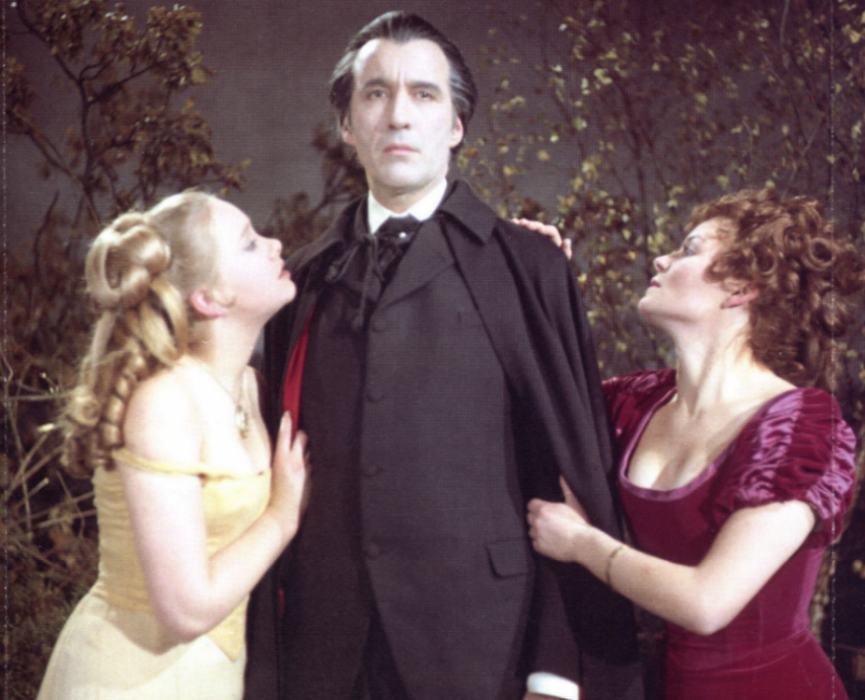
    There were 93 years’ worth of excellence, adventure, and happy coincidences crammed into last night’s conversation about Christopher Lee, as we celebrated the centenary of one of the movies’ most prolific malefactors, on “Roy’s Tie-Dye Sci-Fi Corner.” Of course, he was great when he was the good guy, too!

    Hear all about his impressive lineage, his favorite roles, and his professional and personal interactions with frequent co-star Peter Cushing. The “Tie-Dye” salute is now archived here:

    Next week: before Steve Zissou… before Buckaroo Banzai… before Jonny Quest… there was Doc Savage and his Fabulous Five!

    Join us as we kick off Independence Day Weekend with this pulp icon, played with tongue firmly in cheek by Ron Ely. It will be wall-to-wall Sousa marches, as Roy and I talk about George Pal’s “Doc Savage: The Man of Bronze” (1975).

    Bring your firecrackers to the comments section. We’ll be pumping iron on the 86th floor as we livestream on Facebook, next Friday evening at 7:30 EDT!

    https://www.facebook.com/roystiedyescificorner


  • Facebook Tagging Issues & Annoying Auto-Replies

    Facebook Tagging Issues & Annoying Auto-Replies

    by 

    in
    7 responses

    Has anyone else had difficulty tagging other pages in their posts? For the past week or so, I have been unable to tag associates, either in a personal or professional capacity. What gives, Facebook?

    Also, whenever anybody sends me a private message, Facebook sends out the following, annoying, automated response: “Hi, thanks for contacting us. We’ve received your message and appreciate you reaching out.”

    Am I not capable of crafting my own responses? Is this really better than someone having to wait five minutes or an hour or an evening until I get back to them? Personally, I think it’s kind of condescending, to both the recipient and the writer. What, no hold music?

    So now, as has so often been the case with Facebook, I have to spend time googling and searching all the functions to see if I can learn how I can “fix” these things.

    Facebook… always working hard to make you work harder.


    IMAGE: Borrowed from “Idiots of FB” page (which I cannot tag)


Tag Cloud

Aaron Copland (93) Beethoven (95) Composer (114) Film Music (145) Film Score (143) Film Scores (255) Halloween (94) John Williams (195) KWAX (229) Leonard Bernstein (104) Marlboro Music Festival (125) Movie Music (160) Mozart (91) Opera (213) Philadelphia Orchestra (89) Picture Perfect (174) Princeton Symphony Orchestra (109) Radio (88) Ross Amico (244) Roy's Tie-Dye Sci-Fi Corner (290) The Classical Network (101) The Lost Chord (269) Vaughan Williams (105) WPRB (397) WWFM (881)

DON’T MISS A BEAT

Receive a weekly digest every Sunday at noon by signing up here


RECENT POSTS