• Romero’s Zombies & Offenbach’s Opera

    Romero’s Zombies & Offenbach’s Opera

    by 

    in
    4 responses

    I just love the fact that the father of the modern zombie movie was inspired at the age 11 or 12 by Jacques Offenbach’s “The Tales of Hoffmann!”

    George A. Romero, the animating force behind “Night of the Living Dead,” pays tribute to Powell-Pressburger’s bizarre masterpiece at the link. This is the same team that refined nightmare fuel with “The Red Shoes.”

    Offenbach was a cello virtuoso who made his fortune as a hugely-successful composer of operetta. He wrote something like 100 of them, including “Orpheus in the Underworld,” which gave us this leggy earworm:

    His only opera, “The Tales of Hoffmann,” is his magnum opus. Unfortunately, by the time it was accepted for performance at Paris’ Opéra-Comique, the composer was already in his grave. In fact, he died with the manuscript in his hand, only four months before the work’s premiere.

    Debussy noted that the musical establishment of the day had difficulty coping with Offenbach’s sense of irony. Offenbach would no doubt have appreciated the fact that, like one of Romero’s zombies, he was, in a sense, reanimated after death. “The Tales of Hoffmann” has not been out of the repertoire since its premiere in 1881.

    Happy birthday, Jacques Offenbach!


  • Father’s Day Loss & Remembrance in Music

    Father’s Day Loss & Remembrance in Music

    by 

    in
    3 responses

    It’s Father’s Day. Both my folks are gone, and I had a rather complex relationship with my biological father, who died of cancer in 2018. Still, toward the end, I visited him a lot, and we kind of became friends. At least I developed a better, or more rounded, understanding of him, though we still had a few adventures that reminded me of why it was probably a good thing that my mother herded us out of the nest when she did.

    My old man could be an amusing personality if he were a work of fiction, or if he could be taken in at a safe remove. Also, in his way, he had a kind heart. His circle included a remarkable number of outsiders and societal cast-offs, and he managed to take care of many of them, after his fashion. But he was not one to be bound by rules or, more strictly speaking, the law. At best, he could be considered a bit of a scapegrace; at worst, he was an ardent hellraiser, especially in his prime.

    But spending time with him later in life, it was fascinating to discover that, whether he knew it or not, he did live by a kind of code. Also, given his nature, I learned that a lot of what the rest of us had resented all these years was probably not entirely his fault. He just wasn’t cut out to raise a family. You can’t really fault a striped hyena for not being able to fly.

    I could tell you stories about my dad that would make you howl with laughter or make your blood curdle, but instead I’ll just tie this in with my program tonight on “The Lost Chord,” which will consist of two pieces by American composers, written in loving memory of their fathers – with perhaps just a transitional bit of advice to get to know your parents, for better or worse, while there’s still time.

    In 1999, composer Eric Ewazen was commissioned by an oboist-friend, Linda Strommen, who had recently lost her father, to write a new work as a kind of memorial tribute. Having recently experienced the death of his own father, the composer embarked on the project with a special sense of poignancy. He recollected that the day his father passed – Christmas Day, 1997 – an essay had appeared in the Cleveland Plain Dealer, by Richard Feagler. It consisted of funny, heartfelt stories of relatives and parents, long since departed. Near the end of the essay, titled “Christmas Past Comes Alive at Aunt Ida’s,” Feagler describes those beloved souls, “moving, though they can’t feel the current, down a river of time.”

    Ewazen borrowed this image for the title of his concerto, “Down a River of Time,” a contemplation of that inexorable, rushing river – the first movement influenced by its ebbs and flows, hopes and dreams; the second attempting to convey emotions felt during times of loss, sorrow, resignation, tenderness, and peace in remembrance of happier, distant times. In the final movement, happier memories prevail, and feelings of strength and determination dominate.

    Ewazen studied at, among other places, the Eastman School of Music. Howard Hanson had been director there for some 40 years. Along with the opera “Merry Mount,” Hanson came to regard his Symphony No. 4 as a personal favorite, a purely orchestral requiem, dedicated to the memory of his father. It falls into four movements, each bearing a Latin subtitle – “Kyrie,” “Requiescat,” “Dies Irae,” and “Lux Aeterna.” The work was given its first performance in 1943, with the composer conducting the Boston Symphony. It was awarded the Pulitzer Prize for Music in 1944.

    It sure as hell beats another necktie. Spare a thought for the Old Man, and then join me for “Day of the Dad,” this Sunday night at 10:00 EDT, on WWFM – The Classical Network and wwfm.org.


  • E.T. Deep Dive & Christopher Lee Tribute

    E.T. Deep Dive & Christopher Lee Tribute

    by 

    in
    4 responses

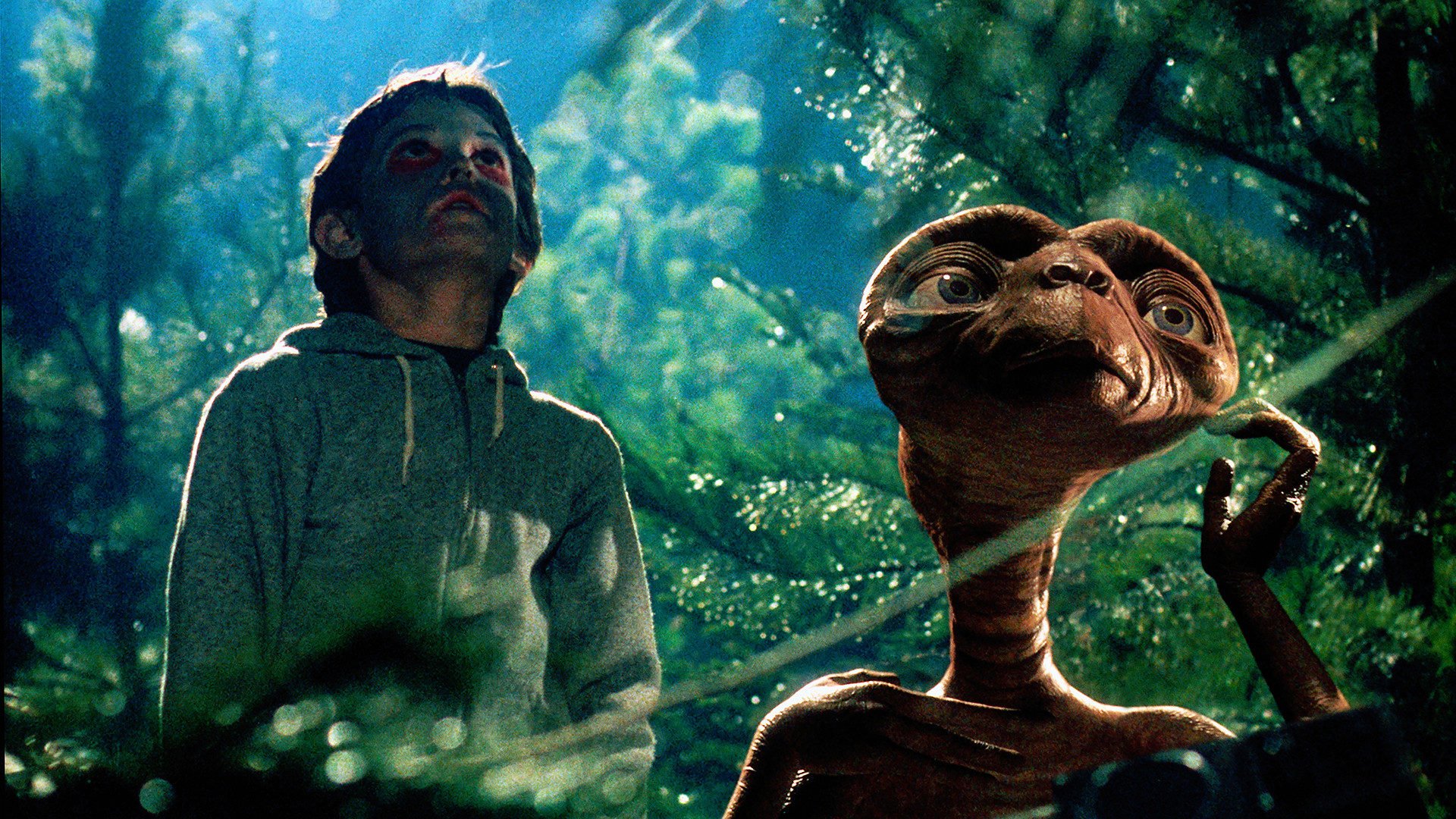
    Is it a religious parable? An environmental allegory? A paean to friendship? A critique of institutions? A story about a boy and his dog? A yearning for family? A fable about letting go and growing up?

    Maybe all of these things.

    A lot of ideas circulating during last night’s discussion of “E.T.” But it’s always a struggle to articulate. A different kind of movie and sometimes a difficult one to talk about. Watch the struggle here.

    Next week, it’s a 100th birthday tribute to Christopher Lee (who was born May 22, 1922). Over the course of a very long and fortunate life, Lee enjoyed some unusual connections (he was a cousin of Ian Fleming and claimed to be a descendent of Charlemagne), exhibited some unexpected talents (Jussi Björling overheard him singing in a pub in Stockholm and wanted to take him on as a student) and partook in some extraordinary real-life adventures (what exactly he did during World War II remains shrouded in mystery, but it was not to the Nazis’ benefit). And of course, he churned out hundreds of movies.

    Count Dracula. Lord Summerisle. Duke de Richleau. Comte de Rochefort. Count Dooku. Scaramanga. Rasputin. Saruman the White.

    It will be a free-form chat around the wicker man on the next “Roy’s Tie-Dye Sci-Fi Corner.” Bring a stake and some garlic to the comments section… and don’t look at the eyes, Rex! Hammer aficionado and lifelong chum Paul Miller will join us, when we livestream on Facebook, next Friday evening at 7:30 EDT!

    https://www.facebook.com/roystiedyescificorner


  • Paul McCartney at 80 & Brouwer’s Beatles

    Paul McCartney at 80 & Brouwer’s Beatles

    by 

    in
    5 responses

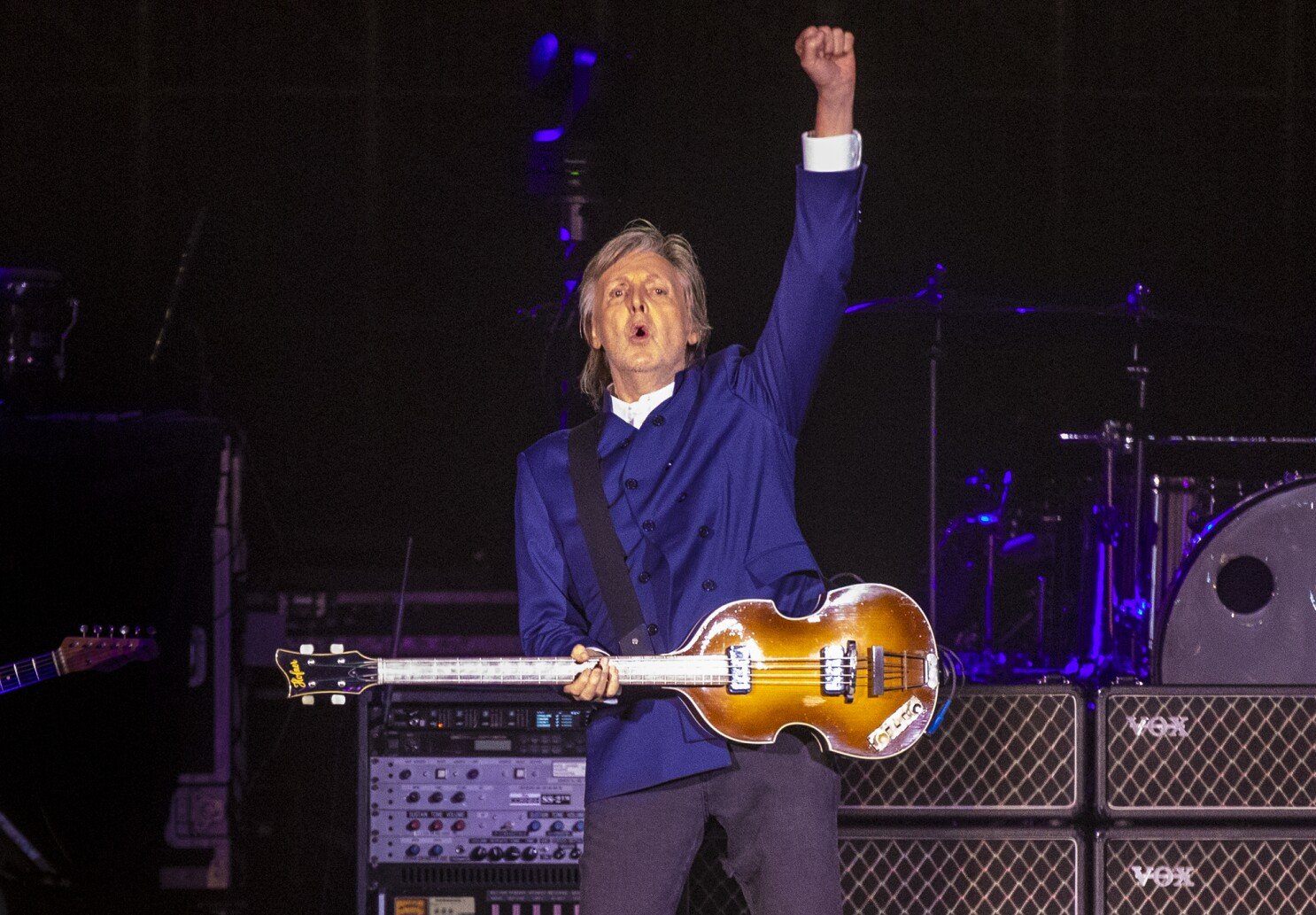
    80 is the new 64. Happy birthday, Sir Paul McCartney.

    Leo Brouwer’s suite for guitar and string orchestra after Lennon & McCartney classics, “From Yesterday to Penny Lane”

    From Brouwer’s “Beatlerianas” for guitar duo: “Fool on the Hill”


  • Lalo Schifrin’s Bullitt & Movie Car Chases

    Lalo Schifrin’s Bullitt & Movie Car Chases

    by 

    in
    7 responses

    June 21 marks the 90th birthday of Lalo Schifrin. This week on “Picture Perfect,” we put the pedal to the metal with his iconic score for “Bullitt” (1968).

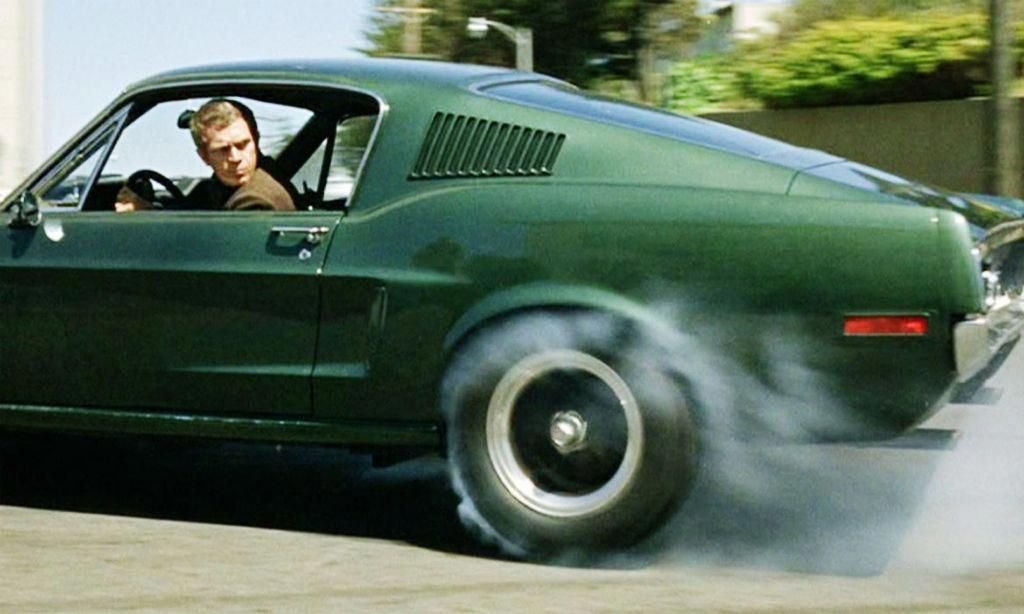
    When we remember Steve McQueen, chances are, if he’s not jumping barbed wire on a motorcycle, he’s behind the wheel of his Ford Mustang GT 390 Fastback, tearing up and down the streets of San Francisco. The high-octane action sequence became the gauge against which all other big screen car chases were measured (in tandem with “The French Connection”). We’ll hear selections from Schifrin’s jazzy, influential, King of Cool cop score.

    We’ll also have music from the second of the “Mad Max” movies, “The Road Warrior” (1981), which cleverly changed the course of the series by turning it into a kind of post-apocalyptic Western. Australian composer Brian May wrote the music, as he did for the original. The director, George Miller, specified that he was looking for a gothic, Bernard Herrmann-type mood to underscore his dystopian vision of the Australian Outback.

    Maurice Jarre took over to write the music for the third installment, “Mad Max Beyond Thunderdome.” It’s purely by coincidence that we’ll hear selections from another Jarre score that’s built for speed, “Grand Prix” (1966). The film’s international cast featured James Garner, Eva Marie Saint, Yves Montand, and Toshiro Mifune, but the plot’s assorted relationship and business conflicts take a back seat to driver’s-eye views of lapping the track.

    Finally, Marty McFly and Doc Brown’s time-travelling DeLoreon needs to hit 88 miles per hour in order to get “Back to the Future” (1985). Director Robert Zemeckis had already worked with composer Alan Silvestri on “Romancing the Stone,” but the producer of “Back to the Future,” Steven Spielberg, didn’t care for the music in that film. Zemeckis’ advice to his colleague: go grand and epic, since Spielberg had a marked preference for the music of John Williams. It was a very good choice.

    We shift into high gear for an hour of chases and races, with Lalo Schifrin and friends, on “Picture Perfect,” music for the movies, this Saturday evening at 6:00 EDT, on WWFM – The Classical Network and wwfm.org!


Tag Cloud

Aaron Copland (93) Beethoven (95) Composer (114) Film Music (145) Film Score (143) Film Scores (255) Halloween (94) John Williams (195) KWAX (229) Leonard Bernstein (104) Marlboro Music Festival (125) Movie Music (160) Mozart (91) Opera (213) Philadelphia Orchestra (89) Picture Perfect (174) Princeton Symphony Orchestra (109) Radio (88) Ross Amico (244) Roy's Tie-Dye Sci-Fi Corner (290) The Classical Network (101) The Lost Chord (269) Vaughan Williams (105) WPRB (397) WWFM (881)

DON’T MISS A BEAT

Receive a weekly digest every Sunday at noon by signing up here


RECENT POSTS