• Santa Claus vs Devil Ruining Christmas on Sci-Fi

    Santa Claus vs Devil Ruining Christmas on Sci-Fi

    by 

    in
    2 responses

    Tomorrow night, it’s our last chance to ruin Christmas with “Roy’s Tie-Dye Sci-Fi Corner.”

    Viewers are still slack-jawed and aghast over last year’s discussion of “Santa Claus Conquers the Martians.” An 11-year-old Pia Zadora in green face paint, a supporting cast of down-on-their-luck Broadway actors, and a fly-by-night production valued at a dollar-ninety-eight (with every penny onscreen). Where do we go from there?

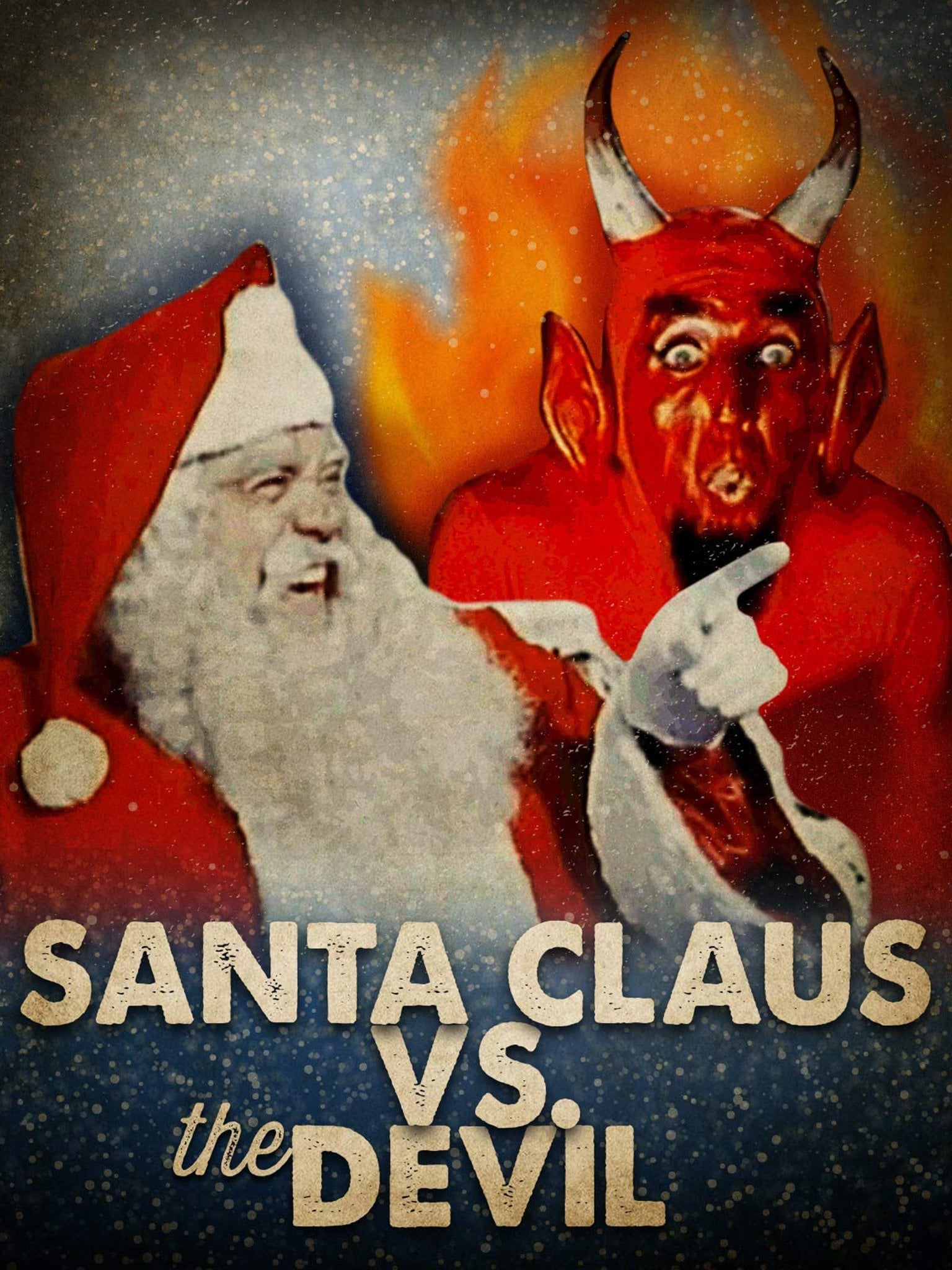
    All downhill, of course. WAY downhill, as it happens. Following in the footsteps of the “Rocky” franchise, we’ll up the ante, even as we go to Hell: our focus this week will be on the Mexican underground classic “Santa Claus Versus the Devil” (1959).

    What begins almost as an inversion of Goethe’s “Faust,” with Lucifer dispatching his goateed lieutenant, Pitch, to earth, to turn the children of the world against Santa, builds to a “Spy vs. Spy” type showdown of the kind Blake Edwards would have loved. If only Jack Lemmon had played Pitch.

    In the interim, Santa laughs it up with Merlin, a hirsute blacksmith, a multinational consortium of half-pint singing helpers, and a team of wind-up reindeer that will turn to dust with the rising sun, all while keeping tabs on the naughty and nice from his gold-and-crystal toyshop in space, high above the North Pole.

    This being Mexico, somehow the Baby Jesus is never far away from the surreal, slapstick shenanigans.

    It’s a literal war on Christmas, as Roy and I get hot under the collar. We’ll exchange views – maybe even blows – over “Santa Claus Versus the Devil,” on the next Roy’s Tie-Dye Sci-Fi Corner. Leave your eerie life-sized dolls in the comments section, as we livestream on Facebook, this week at a special time, THURSDAY, DECEMBER 23, AT 7:30 PM EST!

    https://www.facebook.com/roystiedyescificorner


  • Puccini’s Birthday: La Bohème & Bohemian Life

    Puccini’s Birthday: La Bohème & Bohemian Life

    by 

    in
    7 responses

    Happy birthday, Giacomo Puccini!

    The first two acts of “La bohème,” of course, are set on Christmas Eve – Act I in a chilly but cheery artists’ garret, and Act II on the festive streets of Paris’ Latin Quarter.

    The world premiere of Puccini’s opera took place at the Teatro Regio in Turin on February 1, 1896. On the podium was a 28-year-old Arturo Toscanini.

    Allegedly, the opening night reaction was a subdued one, and critics were divided. But it wasn’t long before Rodolfo’s kindling gave rise to a flame that would engulf all of Europe and the New World.

    Though audiences quickly grew to love it, “Bohème” and its composer have always been regarded with a degree of suspicion – condescension even – by critics and Puccini’s envious colleagues. The music lacks sophistication, we are told, and the opera’s lyricism and pathos are calculating – emotional pandering. Whether or not that’s the case, music lovers can’t get enough of it and Puccini cried all the way to the bank.

    Prior to his years of success, Puccini and his friends, mostly writers and artists, would gather at a roadside shed in Torre del Lago to drink and play cards. They referred to the structure as “Capanna di Giovanni delle Bande Nere” (“Cabin of Giovanni of the Black Stripes”), after its owner, a local cobbler. When the cobbler struck out to seek his fortune in America, the artists bought the shack and continued to meet under the banner “La Bohème Club” (as stated on a sign they painted on the roof).

    Further signs were posted on the walls inside, in faulty Latin and ungrammatical Italian. Its members pledged themselves under oath to be well and eat butter.

    The following were the club’s by-laws:

    1. Poker faces, pedants, weak stomachs, blockheads, puritans and other wretches of the species are not admitted and will be chased away.

    2. The President acts as conciliator but undertakes to hinder the Treasurer in the collection of the subscription money.

    3. The Treasurer is empowered to abscond with the money.

    4. The lighting of the locale is provided by a petrol lamp. Failing the fuel, the “moccoli” of the members are to be used [a pun on “moccolo,” meaning either “candle stump” or “blockhead”].

    5. All games permitted by law are forbidden.

    6. Silence is prohibited.

    7. Wisdom is not permitted, except in special cases.

    One can imagine the carefree bohemians, Rodolfo’s companions, rollicking in their garret. After the triumph of “Bohème,” the opera, no one was having to burn their plays for fuel, or hock their coats for medicine.

    There’s nothing like a little success to take the worry out of “bohemian life.”


    André Kostelanetz (also born on this date) conducting a purely orchestral suite of highlights from “La bohème”

    The bohemians in their garret

    Mimi’s hands are cold, so Rodolfo goes to work (the old smoothie)


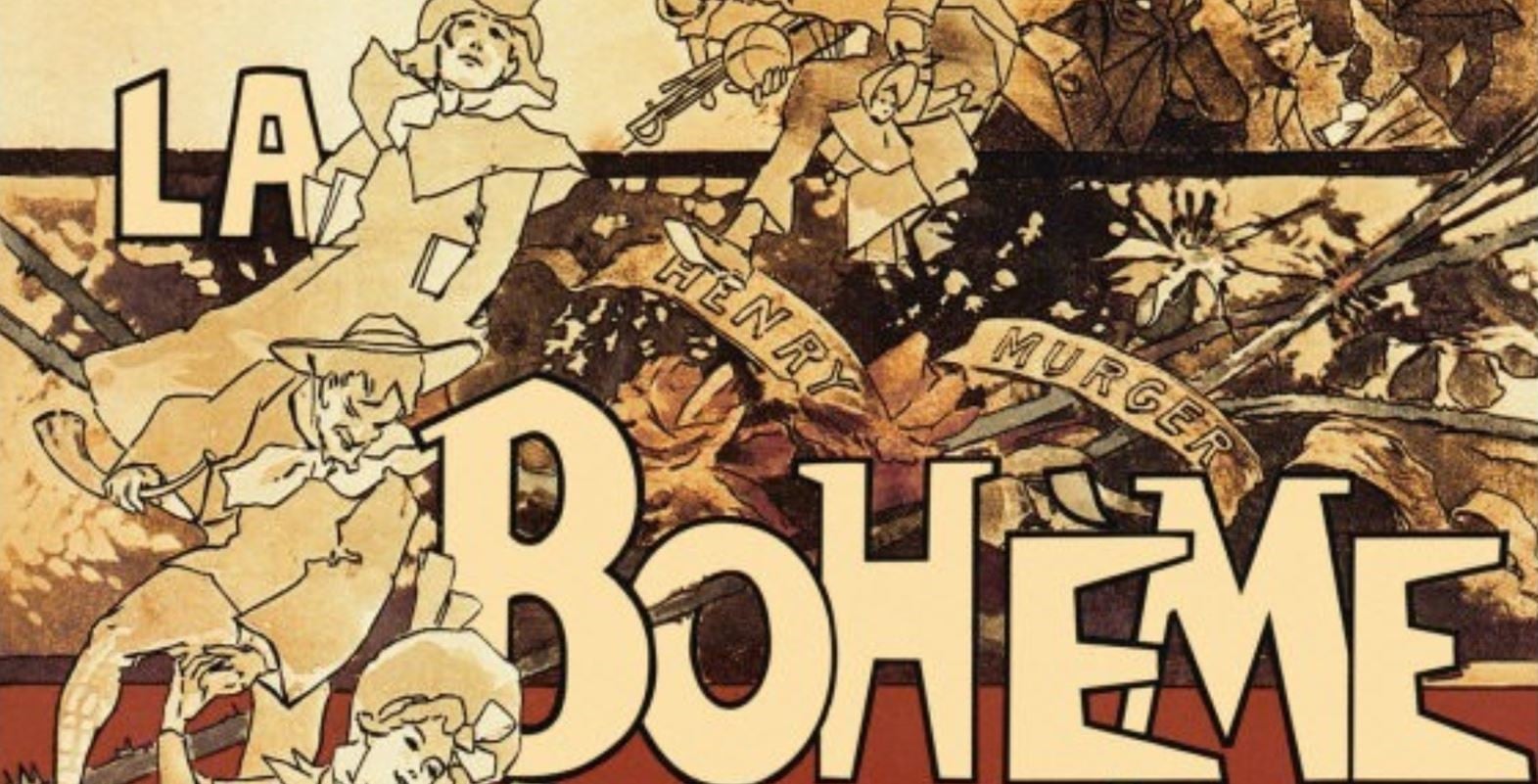
    IMAGES: From an 1896 poster of the opera, and an 1897 photo of the club


  • Welcome Yule Celebrate the Winter Solstice

    Welcome Yule Celebrate the Winter Solstice

    by 

    in
    3 responses

    On this shortest day, as the warg Sköll, descendent of unruly Fenrir, chases down the sun, let us boldly feast, game, share stories, and quaff mead.

    Most of all, let there be bonfires – lots of bonfires.

    Cut the mistletoe! Deck the halls! Fill the air with festive and reflective music for the solstice!

    However it is you choose to express the primordial desire to welcome light back into the world, I raise my cup to you. Embrace life, family, and community. Embrace love. Look to the New Year with courage, optimism, and appreciation. And drive the cold winter away!

    Welcome, Yule!


    Still one of my favorites, and the very thing for the Winter Solstice. To enjoy the complete album, click “play all” once you follow the link.


  • It’s a Wonderful Life Turns 75!

    It’s a Wonderful Life Turns 75!

    by 

    in
    6 responses

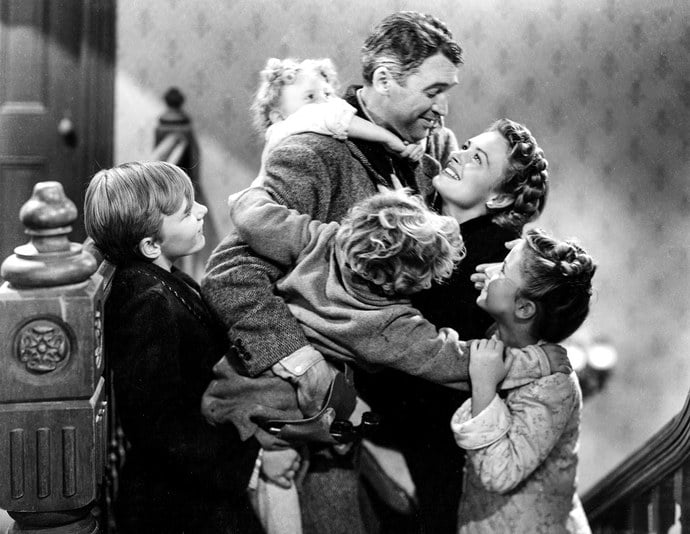
    75 years ago today, “It’s a Wonderful Life” opened at the Globe Theatre in New York. It had been slated for a January premiere, but was bumped up to qualify for Academy Awards consideration. The film would be nominated in five categories, including those for Best Picture, Best Director (Frank Capra), and Best Actor (James Stewart).

    It’s amazing that nobody involved in the making or distribution of the film seemed to regard it, from the start, as a Christmas movie. “It’s a Wonderful Life” received mixed reviews and was something of a box office disappointment. However, decades later, it attained classic status through incessant television broadcasts around the holidays, back when the film was still in the public domain.

    When Republic Pictures finally realized the value of what it had lost, after having allowed the copyright to lapse in 1974 (opening the floodgates for anyone to exhibit the film without having to pay them a fee), the studio was determined to regain control of the property, which it did in 1993. It accomplished this by pushing its ownership of both the original story, upon which the film was based, and the film’s music score, by Dimitri Tiomkin. Now, legally, no one is allowed to show “It’s a Wonderful Life” without the studio’s express permission, as long as those components are intact. Republic wasted no time in signing a long-term agreement with NBC, which holds onto its broadcast rights like grim death.

    Capra himself thought the film his finest achievement. Interestingly, while many would be inclined to agree with him, “It’s a Wonderful Life” has also generated its share of backlash, with some finding it too dark, and others put off by its sentimentality. Too bad for them. It’s a fascinating movie, full of heartwarming snapshots of a world that probably never was. But damn it, I’m in love with the vision (and also with Donna Reed).

    It was a novel approach, to turn “A Christmas Carol” on its head and have the idealistic hero (as opposed to Old Man Potter) be the one who winds up desperately in need of redemption. The explosion of joy at the film’s climax would leave Alastair Sim winded.

    Tiomkin’s original score, which even alludes to Beethoven’s “Ode to Joy” (not heard in the final film), was issued only last month on La-La Land Records. The restoration is fabulous, considering the source material, like the film, is now 75 years-old. The album contains Tiomkin’s original thoughts, which were butchered in the editing and looping of the film. The release also contains a number of bonus tracks, including alternate takes, source music, music for the film’s trailer, and a “single,” with vocals, of the movie’s love theme, proposed for broadcast. A missed opportunity, for sure, as it was only six years later that Tiomkin would kick off the mania for main title songs with his Academy Award winning “The Ballad of High Noon.”

    “It’s a Wonderful Life” is not my favorite Tiomkin score, by a long shot. I much prefer the music he wrote for Capra’s “Lost Horizon,” which didn’t have all the shotgun, cartoony allusions to classical, pop, patriotic, and folk melodies that were the stock-in-trade for Capra’s populist fantasies (like “You Can’t Take It with You,” “Mr. Smith Goes to Washington,” and “Meet John Doe”). Only Tiomkin would juxtapose “Ave Maria” with “Twinkle, Twinkle, Little Star.”

    Even so, the score works great on record. There are many differences from what we’ve become familiar with from the film, since entire sequences of Tiomkin’s original conception were jettisoned as the movie was repositioned for a Christmas release. Heartbreakingly for the composer, the film’s music editor began to draw heavily on pre-existing cues from the RKO music library, in spackling together the soundtrack for certain key sequences.

    Tiomkin called the finished project “an all-around scissors job.” Though he and Capra would remain friends, they kept their distance for a year and a half, and then they never worked together again.

    There’s no question this release of the film’s original score is evocative. It’s at its most interesting when it plunges into the dark side, and then swings back hard to the light. You really get a sense of the scope of Tiomkin’s vision as he brings the love theme to its apotheosis. As an unapologetic fan of the film, La-La Land’s soundtrack release is one I wouldn’t want to be without.

    https://lalalandrecords.com/its-a-wonderful-life-75th-anniversary-remastered-limited-edition/

    Believe it or not, I once owned one of the 200 original copies of “The Greatest Gift,” the 4,100-word story upon which “It’s a Wonderful Life” is based. It was self-published by Philip Van Doren Stern in 1943 to be distributed to his friends as a kind of Christmas card. For years, I was living hand-to-mouth as a young book dealer in Philadelphia, and regrettably I wound up having to sell it in order to pay the rent. It’s now listed, if you can find a copy, for thousands. Not that I’d ever sell it now. It’s one of my life’s great regrets – of those that don’t involve other people – to have had to part with it. I sold it to a real creep, too. But at least he paid cash.
  • Christmas Roses Distler and Waldteufel

    Christmas Roses Distler and Waldteufel

    by 

    in
    5 responses

    This Sunday night on “The Lost Chord,” we present a Christmas bouquet of sorts.

    Hugo Distler’s “Die Weihnachtsgeschichte” (“The Christmas Story”), from 1933, is an otherworldly, a cappella masterpiece, punctuated by seven variations on the carol “Es ist ein Ros entsprungen” (“Lo, how a Rose e’er blooming”). Over the course of some 40 minutes, the work reinvents the Baroque Christmas cantata, after the manner of Heinrich Schütz, and does so quite beautifully, conjuring the calm and quiet of a bygone era. The composer described the piece as “an oratorio with chamber music character.”

    Unfortunately, Distler’s life proved anything but calm. A man of conscience, he yet remained in Nazi Germany. He joined the Party with reluctance, when he realized his employment at the Lübeck Conservatory hinged on his doing so. Nevertheless, it did not smooth his path. The war separated him from his family, robbed him of many of his friends, and battered his psyche with nerve-wracking aerial assaults. Job pressures and fear of being conscripted into the German army further contributed to his anxiety.

    Furthermore, his devotion to sacred music put him at odds with the authorities, who were intent on twisting the Lutheran Church to its own ends. The Nazis wound up branding Distler’s works “entartete,” or “degenerate.” Unable to reconcile the irreconcilable – serving both God and the Nazis – one day he pushed his bed into the kitchen and turned on the gas, committing suicide in 1942. He was 34 years-old.

    Emil Waldteufel, by contrast, enjoyed much success and happiness. Although he was nearly 40 by the time he achieved international fame, his waltzes had long been a mainstay of Paris society during the Second Empire. It was the Prince of Wales – the future King Edward VII – who introduced him to London, where his music came to dominate Queen Victoria’s state balls at Buckingham Palace. One of his best-known works, “Les Patineurs” (“The Skaters’ Waltz”) was introduced there in 1882.

    For our purposes, we’ll round out the hour with one of Waldteufel’s most successful waltzes from the other end of the decade, “Roses de Noël.”

    The holidays are in bloom this week. I hope you’ll join me for “Christmas Roses,” this Sunday night at 10:00 EST, on WWFM – The Classical Network and wwfm.org.


Tag Cloud

Aaron Copland (93) Beethoven (95) Composer (114) Film Music (145) Film Score (143) Film Scores (255) Halloween (94) John Williams (195) KWAX (229) Leonard Bernstein (104) Marlboro Music Festival (125) Movie Music (160) Mozart (91) Opera (213) Philadelphia Orchestra (89) Picture Perfect (174) Princeton Symphony Orchestra (109) Radio (88) Ross Amico (244) Roy's Tie-Dye Sci-Fi Corner (290) The Classical Network (101) The Lost Chord (269) Vaughan Williams (105) WPRB (397) WWFM (881)

DON’T MISS A BEAT

Receive a weekly digest every Sunday at noon by signing up here


RECENT POSTS