Think you’re played-out on Charles Dickens’ “A Christmas Carol?” Consider giving this one a shot.
“The Passion of Scrooge” is not just a filmed performance of a work by composer Jon Deak (who, from 1973 to 2009, was also a bassist with the New York Philharmonic); it is a collaborative documentary in which the film direction is every bit as expressive and essential to the overall experience as anything that happens musically or onstage.
The award-winning filmmaker, H. Paul Moon, has received perhaps his widest exposure through the nationwide television broadcast, on PBS, of his documentary “Samuel Barber: Absolute Beauty.” Moon traveled from D.C. to the studios of WWFM – The Classical Network to talk with me about Barber – who was born in West Chester, PA, and attended Philadelphia’s Curtis Institute of Music – in 2017.
We met up again, a couple of years ago, to chat about his work on “Scrooge.” I’m delighted to find that he posted the audio file of our conversation.
Contemporary, challenging, and thought-provoking, “The Passion of Scrooge” strips away the accrued nostalgia for a well-worn holiday tradition to get at the heart of Dickens’ message.
Moon’s film is on BluRay and DVD and is also available for online streaming. To learn more about it, listen to our conversation – with selections from Deak’s opera – or visit scroogeopera.com.
At Paul’s suggestion, the balance of the hour during his visit to WWFM was devoted to a recording of Ralph Vaughan Williams’ “On Christmas Night,” a rarely-heard masque also inspired by “A Christmas Carol.” Here’s a link to the music if you’d like to reconstruct the full experience.
All during the Christmas season, I follow the Gävle Goat’s Twitter feed, half dreading, half hoping for disaster.
Now, for the first time since 2016, tragedy has struck. In the wee hours of the morning yesterday, the Natural Science Goat – the Big Goat’s “little brother” – was burned.
The Gävle Goat, basically a 40-foot version of those miniature tree ornaments you sometimes see, made of straw and bound by red ribbon, is erected annually in Castle Square, Gävle, Sweden. The Goat is constructed over a period of two days, just in time for Advent.
Then begins an unsanctioned game of cat-and-mouse, with the authorities attempting to guard the Goat, while everyone else attempts to light it off. If the Goat is burned to the ground before December 13 (today, St. Lucia’s Day), it is rebuilt. Whether that courtesy will be extended to the Little Goat is unclear.
This is all highly illegal, by the way. Neither the police nor the local businesses that rely on the Goat to draw tourists are terribly happy when there’s been an immolation.
Nevertheless, over the years, the Goat has been damaged by fireworks, rammed by a Volvo, stomped to pieces, fired upon with flaming arrows (launched by vandals dressed as Santa and gingerbread men), and torched by a hapless American, who was egged-on by Swedes who convinced him that doing so was an accepted holiday tradition. (It’s not; he was fined $14,700 and spent a month in jail.) In 2010, there was even a failed attempt to abduct the Goat by helicopter.
2016 was the last year the Big Goat went up in flames, set ablaze within hours of its construction. The catastrophe was timed to coincide with a security guard’s bathroom break. At five years, this is the longest the larger Goat has survived.
The Gävle Goat has been a Christmas staple since 1966, but its origins reach back into the shadowy past of Northern Europe, when wacky pagan traditions enlivened midwinter celebrations. The Yule Goat may have derived from the worship of Thor. The God of Thunder’s chariot was drawn by two goats. The Christmas version of the goat was led about by Saint Nicholas, possibly as a symbol of the subjugation of evil.
Whatever the goat’s function, it’s been around for hundreds of years. A time there was when rowdy young men in costumes would travel door to door to enact plays and demand gifts. One of these assumed the role of the ornery Yule Goat. For this reason, Scandinavians sometimes refer to the practice of wassailing as “going Yule Goat.”
In the 19th century, the Goat’s role was transformed into a giver of gifts. Though the Goat has since been replaced by a humanoid Father Christmas, in Finland he is still referred to by the name Joulupukki (literally Yule Goat).
A second, smaller goat appeared in Gävle in 1986. Well, it’s not always smaller. There were a couple of dust-ups early on as it attempted to usurp the Guinness title for “Largest Yule Goat.” But usually it’s smaller, at around 7-feet. The larger Goat is sponsored by the Southern Merchants. The little goat was added by the Natural Science Club of the School of Vasa. For the most part, the goats coexist peacefully in Castle Square.
2019 was the last time the “kid” was singed, but not destroyed.
Personally, I always wanted to see the Big Goat get it. Now that his little brother’s been torched, I’m not so sure. Maybe I’m selling out.
Sending a prayer to St. Lucy to watch over Gävle.
You’ll find more information and a complete history of the Gävle Goat’s destruction here:
Gävle, Sweden, has already constructed its 40-foot Yule Goat. Krampus has hurled all the wicked children into hellfire. Black Peter has stirred the ire of Dutch protesters. The holidays are just flying by.
But, no time to be wistful. It’s December the 12th! Here come the Yule Lads!
Not the modern-day mob of affable, ersatz-Santas, mind you – the ones who reward the good with gifts and penalize the naughty with rotten potatoes – but rather the amoral pranksters and homicidal trolls who devour children.
Mostly the Lads bedevil and steal from Icelandic farmers. They descend from the mountains, staggering their arrivals and departures, beginning thirteen nights before Christmas.
Each has his own exasperating speciality, whether it be harassing sheep, stealing milk, eating crust out of pans, licking spoons, stealing leftovers, licking bowls, slamming doors, eating skyr (a kind of Icelandic yogurt), stealing sausages, peeping through windows, sniffing for bread, stealing meat with a hook, or eating candles.
For Tolkien fans, surely the Lads are the basis for the thirteen Dwarves [sic] who visit Bilbo Baggins, in the process eating him out of house and home and imperiling his dishes.
Their mother is the ogress Grýla, who seeks children to boil in her cauldron. If you happen to find yourself in her gnarled claws, remember, she has to release you if you repent!
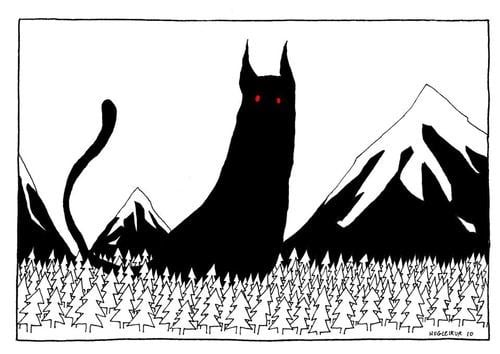
The Yule Lads are frequently accompanied by the Yule Cat. The cat eats those who don’t receive new clothes before Christmas. This is tied in to the Icelandic work ethic. In the old days, if farm hands processed their autumn wool in a timely fashion, they were rewarded with new garments. If not, they received nothing, thereby leaving them vulnerable to the Yule Cat. Better sheer them sheep!
In 1746, the practice of parents tormenting their children with Christmas monster stories was officially banned. But it lives on here, with Classic Ross Amico!
To my knowledge, there has been no classical music written about the Yule Lads. As with Krampus, some enterprising composer could make a real killing. All you need is one Christmas hit, and then every year, you can just kick back and collect those sweet holiday royalties.
Here is a selection of Yule Lad songs I found on YouTube. You can see that the bar has been set awfully low. How “My Darling Clementine” got over there is anyone’s guess. Maybe Leif Erikson brought it back with him on his longship.
If you’ve ever had a nightmare about a grimacing nutcracker or found yourself profoundly disturbed by a Rankin-Bass Christmas special, then this one’s for you!
This Sunday night on “The Lost Chord,” nothing says Christmas like malevolent puppets, as we present Paul Hindemith’s holiday fairy tale “Tuttifäntchen,” from 1922. A wooden figure carved out of a fir by a master woodcutter springs to life for 24 hours of mayhem. He literally robs a young girl of her good heart, thrashes children with a switch, and sends all of the Christmas trees in the world out onto the marketplace – all en route to a desired reunion with the fir of his origin. (Fortunately, his reign of terror only lasts a day, and everything ends well.)
It may sound like a real horror show, but the music is disarming in its simplicity and warmth. Hindemith’s score incorporates familiar Christmas songs and a contagious foxtrot, “Dance of the Wooden Puppets.” A delightful suite from “Tuttifäntchen” was released on the CPO label back in 1999. In 2013, CPO issued this complete recording, from which I excise most of the spoken dialogue, since it is in German.
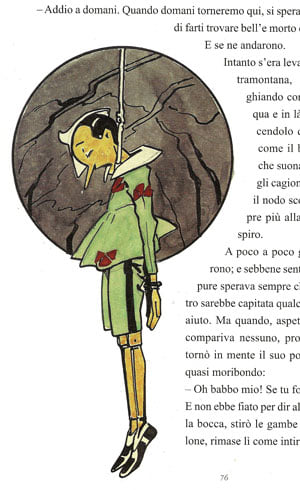
This allows time for two additional pieces. From “Tuttifäntchen,” we’ll turn to Pinocchio. In Carlo Collodi’s original story – published in the 1880s, over a half century before Walt Disney gave him a good scrubbing – the boy-puppet is very rascally indeed. He even kills Jiminy Cricket with a hammer!
His exploits inspired Ernst Toch, a Hindemith contemporary, to compose “Pinocchio: A Merry Overture,” in 1935. Toch would later be awarded the Pulitzer Prize for Music in 1956, for his Symphony No. 3.
The hour will open with the “Punch and Judy Overture,” from 1945, by American composer Leroy Robertson. Punch, of course, is the quintessential murderous puppet, who outsmarts the Devil and even Death himself.
“THAT’S the way to do it,” as he’s always fond of saying. (If you’ll notice, Mr. Punch is invariably self-satisfied – hence the phrase “pleased as Punch.”)
“In my opinion the street Punch is one of those extravagant reliefs from the realities of life which would lose its hold upon the people if it were made moral and instructive. I regard it as quite harmless in its influence, and as an outrageous joke which no one in existence would think of regarding as an incentive to any kind of action or as a model for any kind of conduct. It is possible, I think, that one secret source of pleasure very generally derived from this performance… is the satisfaction the spectator feels in the circumstance that likenesses of men and women can be so knocked about, without any pain or suffering.”
– Charles Dickens (Mr. Christmas, himself), in a letter from 1849
I hope these malevolent puppets fill you with all the warmth and joy of the season. Join me for “Hindemith Branches Out” – celebrating the holidays with Tuttifäntchen and friends – this Sunday night at 10:00 EST, on WWFM – The Classical Network and wwfm.org.
For a teaser, here’s Hindemith’s “Dance of the Wooden Dolls,” in a version for solo piano:
In Collodi’s original, Pinocchio kills Jiminy Cricket, eats the Cat’s paw, and pays the ultimate price. The publisher thought the ending too depressing and made Collodi change it. (The puppet still commits pesticide and maims the cat, though.)
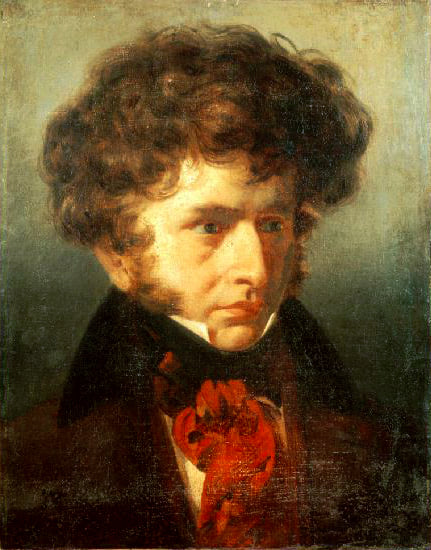
Hector Berlioz was a man governed by his passions.
When rejected by the object of his desire, the Shakespearean actress Harriet Smithson, he frenziedly dashed off his “Symphonie fantastique,” an opium-induced fever dream that envisions his own execution for murdering her. In the last movement, her spirit reappears in the midst of a witches’ sabbath, to jeer at his headless corpse. Perhaps counterintuitively, Smithson went for this in a big way, and the two were married, though, perhaps unsurprisingly, not at all happily.
Berlioz’s biography is full of crazed, seething adventures. Whether in regard to his affairs of the heart, his musical education, or his notorious compositions, always he was driven by mercurial passion and excess.
He lived large, and he dreamed big music. One need only think of his Requiem, with its massive choir, antiphonal brass ensembles, and 16 timpani. The composer even suggested the orchestration could be doubled or tripled, depending on the size of the space. (However, in an uncharacteristic show of restraint, he recommended the chorus be limited to 400 singers, except in some of the larger numbers.)
Today is Berlioz’s birthday. It also happens to be the Christmas season, so naturally my thoughts gravitate to “L’enfance du Christ” – which, I must say, is not my favorite Berlioz work. Fortunately, he also composed a “Messe solennelle” in 1824, on virtually the same subject – the commemoration of the Feast of the Slaughter of the Holy Innocents by King Herod, in his attempt to the snare the baby Jesus.
Berlioz was only 20 years-old at the time, but already he was driven by his creative demons. If you are a fan of the composer, you must hear this piece, which teems with presentiments of many of his major works, including the “Symphonie fantastique,” “The Damnation of Faust,” “Benvenuto Cellini” (with its “Roman Carnival Overture”), and of course the Requiem.
Berlioz himself played the tam-tam at the work’s premiere, and in his excitement gave the instrument such a blow that it knocked everyone back in their pews. The “Messe” was favorably received (unusual for this composer), but Berlioz decided he hated the piece and wound up burning the score.
The work was believed lost for nearly 170 years, until it was rediscovered by a Belgian schoolteacher, in an organ gallery in Antwerp, in 1991. Sir John Eliot Gardiner conducted the first modern performance two years later.
Who knows how Berlioz would have reacted? This is the guy, after all, who once responded to a Dear John letter by racing back from Italy in full drag, bearing two pistols and vial of poison.
No one partied like Hector Berlioz. Happy birthday, my misguided friend.
John Eliot Gardiner conducts the rediscovered “Messe solennelle”
A knock-out recording of the “Symphonie fantastique,” conducted by Argentinean powder keg Carlos Païta – with an interesting choice of imagery: 48 minutes of fetishizing an antique Chinese vase! An exercise in misguided passion, perhaps worthy of Berlioz himself.


3 responses