• Humperdinck’s Name Fame Opera Pop

    Humperdinck’s Name Fame Opera Pop

    by 

    in
    6 responses

    I imagine that if you were looking to break into show business, and you were born Arnold George Dorsey, you could do a lot worse than to change your name. But the choice of “Engelbert Humperdinck” would seem astonishingly counterintuitive. Even so, the pop singer who did just that managed to achieve international fame and sell more than 140 million records.

    Dorsey struggled for several years, trying to establish a toehold in the music industry under his own name, until a former roommate, Gordon Mills, suggested he appropriate that of a certain 19th century German composer. Mills turned out to have a certain genius for this kind of thing, since he also advised singer Tom Woodward to take the name of a roistering 1963 comedy, starring Albert Finney, that was adapted from Henry Fielding’s picaresque novel “Tom Jones.”

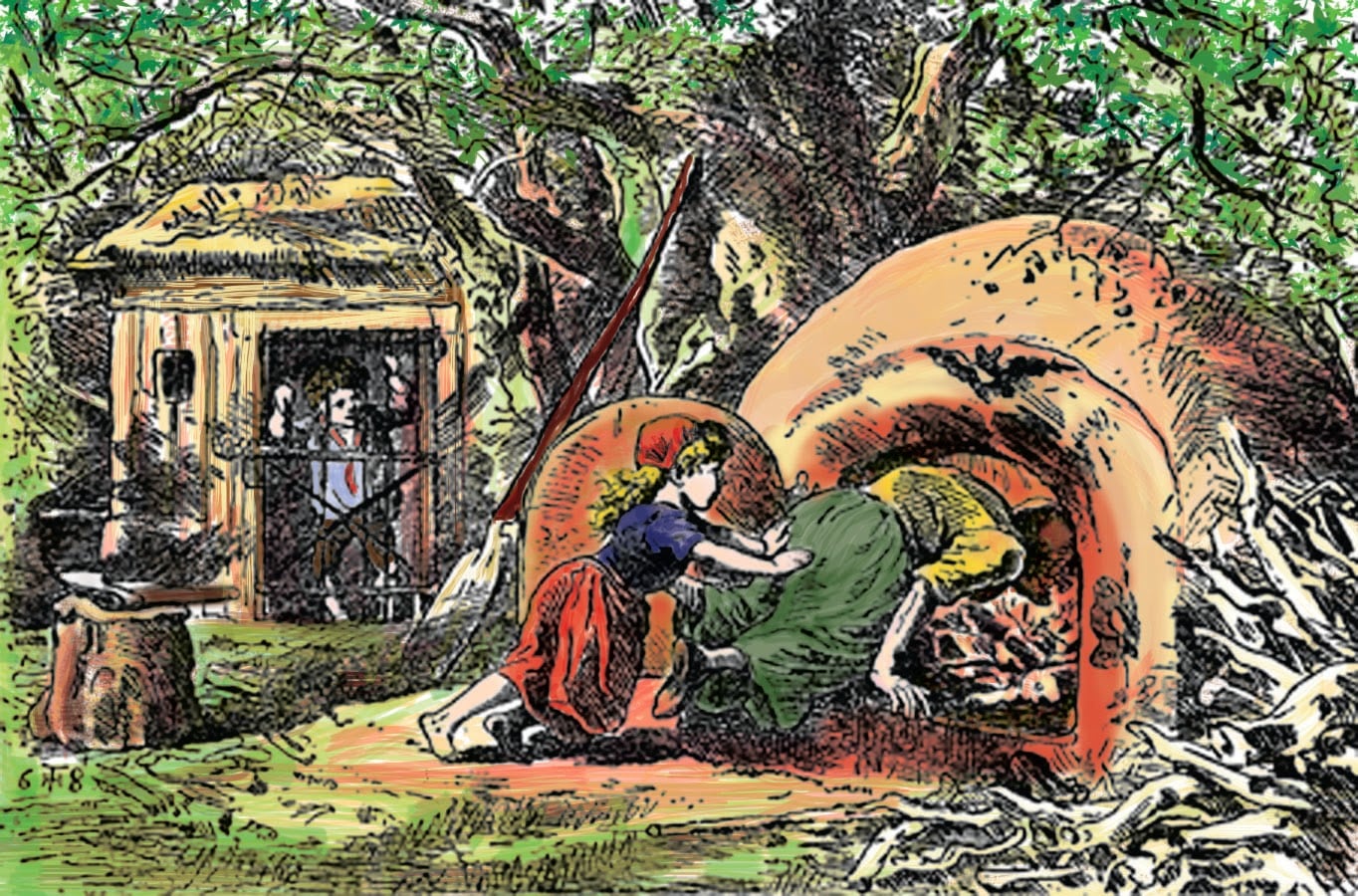
    Humperdinck the composer’s greatest hit was the opera “Hansel and Gretel,” which was given its first performance on December 23, 1893, with Richard Strauss conducting. Humperdinck’s magnum opus – which features a Sandman, a Dew Fairy, a Witch, and the imminent threat of cannibalism – has been associated with the Christmas season ever since.

    The Brothers Grimm inspiration is the best known in a wave of “märchenopern” (fairy tale operas) that swept Germany in the 19th century. To this genre, Humperdinck also contributed “Königskinder” (“Royal Children”) and “Dornröschen” (“The Sleeping Beauty”), along with a handful of other fantasies for the stage.

    Humperdinck died 100 years ago today.

    His name was borrowed yet again for the unscrupulous prince, played by Chris Sarandon, in the cult classic “The Princess Bride” – again, adapted from a novel, this time by William Golding.

    Actually, “The Princess Bride” would probably have suited composer Humperdinck just fine – although there is a notable lack of irony in his existing operas, a fact that seems to be lost on the Metropolitan Opera, judging from its current nightmare production of “Hansel and Gretel.” Sample it, shorn of all sentiment and spirituality, here:

    I mean, it looks cool, in an uncanny sort of way, but it’s also the furthest thing from an “Evening Prayer” I can possibly imagine. And that’s before the Holocaust allusions kick in.

    Director Richard Jones has suggested that, because the children’s experiences have hardened them, rather than strengthened them, it’s a valid creative decision to portray them as “incipient Hitler Youth.” Granted, this is a Grimm fairy tale, but it should be remembered that “Hansel and Gretel” has been a family Christmas attraction for generations, and the Met continues to market it as such. This particular banquet leaves a very bad taste.

    “Hansel and Gretel” was the first live opera broadcast on the radio from the Met in 1931.

    Here’s a lovely, classic staging from the Met, before the rage for Regietheater:

    My favorite recording of the “Dream Pantomime,” with Otto Klemperer:

    Elisabeth Schwarzkopf and Irmgard Seefried, with Josef Krips conducting, from 1947:

    A suite from “The Sleeping Beauty”


    Hansel and Gretel and the three Humperdincks

  • Fall of the House of Atreus: Music & Myth

    Fall of the House of Atreus: Music & Myth

    by 

    in
    3 responses

    For some of us living here in the Northeast, autumn brings with it the pleasures of baked goods, homemade soups, colored leaves, moody skies, carved pumpkins, black-and-white horror movies, used book shopping, sweaters, Brahms, and cozy cups of tea. But for the House of Atreus, “fall” meant something completely different.

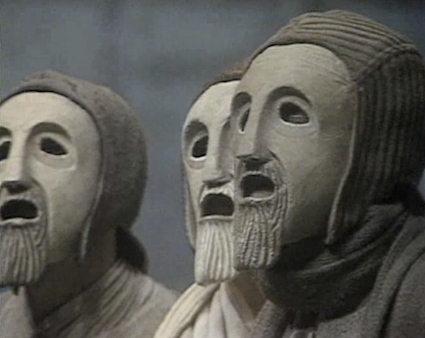
    This Sunday night on “The Lost Chord,” we’ll hear music inspired by “The Oresteia,” a trilogy of surviving plays by Aeschylus that relates the impact of a curse on the House of Atreus. Dating from the 5th century B.C., the overall story arc reflects the shift from perpetual vengeance to the formation of a rational social justice system – the thinking being that man cannot hope to build a progressive civilization if he is engaged in unremitting bloodshed.

    However, along the way to that all-important message, the audience gets to have its cake and eat it, too, as it is treated to such lurid incidentals as human sacrifice, incest, adultery, filicide, fratricide, mariticide, matricide, and cannibalism. The name of the cycle derives from Orestes, who avenges the murder of his father, Agamemnon, who in turn was killed by his wife, Clytemnestra, and her lover, Aegisthus.

    The subject was a popular one with the playwrights of antiquity – it was also treated by Sophocles and Euripides – and it continues to have resonance in the present day. It is certainly very well represented in the classical music world.

    Darius Milhaud treated all three surviving plays in the Aeschylus cycle, as “The Oresteia of Aeschylus,” which he composed over a ten year span. Combined, the cycle runs to three hours and involves over 300 singers and players. Allegedly, Milhaud considered it his greatest work.

    The second part is titled “Les Choéphores,” or “The Libation-Bearers,” referring to the women who offer up ritual sacrifices at Agamemnon’s grave. The story, the familiar one, concerns the victorious Agamemnon returning from the Trojan War, only to be murdered in his bathtub by Clytemnestra and Aegisthus.

    They go on to rule a resentful populace, with Agamemnon’s daughter, Electra, consumed by her thirst for vengeance, which is delivered eventually, upon the secret return of her brother, Agamemnon’s son, Orestes. In the meantime, Clytemnestra, racked by guilt and haunted by nightmares, attempts to appease her husband’s ghost and avert her fate by sending an offering of libations to his tomb.

    Milhaud worked with poet, playwright and frequent collaborator Paul Claudel to structure Aeschylus’ play, the second of the trilogy, into seven scenes, beginning with a threnody and concluding with a plea for justice.

    We’ll round out the hour with incidental music written by Dutch composer Alphons Diepenbrock, inspired by Sophocles’ “Electra.”

    Comedy tomorrow, tragedy tonight! Join me for “Fall at the House of Atreus.” That first step’s a doozy, this Sunday night at 10:00 EDT, on WWFM – The Classical Network and wwfm.org.


    PHOTO: The fall has seldom been so grim


  • Movies About Music Fellini Corigliano Korngold

    Movies About Music Fellini Corigliano Korngold

    by 

    in
    3 responses

    This week on “Picture Perfect,” get ready for an exercise in postmodern self-reflexivity, as we enjoy music from movies about music and musicians.

    Federico Fellini’s “Orchestra Rehearsal” (1978) is a mock-documentary that presents the symphony orchestra as a metaphor for the human condition. Full of political overtones, the film explores the joys, sorrows, frustrations and triumphs of the musicians, who struggle with the concepts of individual liberty, tyranny and the collective good. The project would mark the final collaboration between Fellini and Nino Rota. The two artists first came together in 1952 on Fellini’s “The White Sheik.” They would go on to create such classics as “La Strada,” “Nights of Cabiria,” “La dolce vita” and “8 ½.”

    We’ll also hear music from the Canadian art house hit “The Red Violin” (1998). The film traces the history of the fictional title instrument from its creation in 17th century Cremona to the present day. The violin passes through the hands of a child prodigy, into those of a romantic virtuoso in the Paganini mold; then to China during the Cultural Revolution; and finally to a Canadian auction house. John Corigliano wrote the Academy Award-winning music, which is performed on the soundtrack by violinist Joshua Bell.

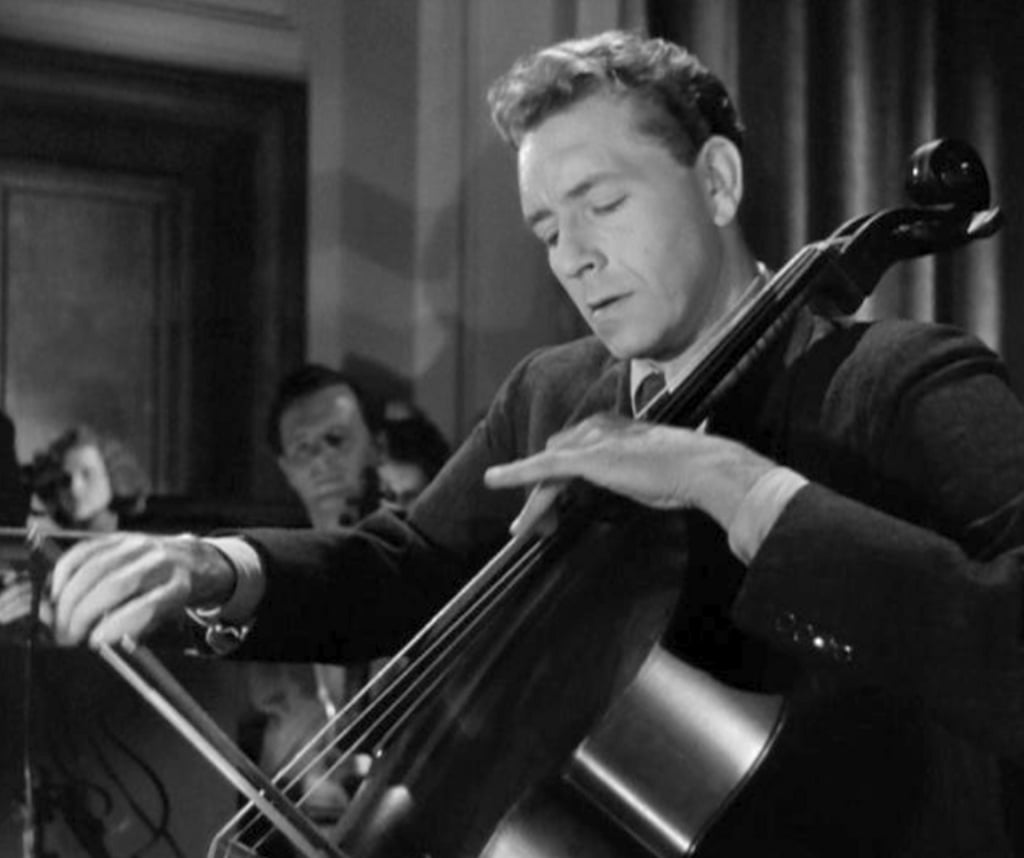
    Finally, we’ll turn to a classical music film noir from Hollywood’s Golden Age. “Deception” (1946) tells the tale of a dangerous love triangle between Bette Davis, Paul Henreid and Claude Rains. Much of the plot hinges on the premiere of a new cello concerto by a celebrated – though fictional – composer, played by Rains, who puts a fragile cellist, his rival in love, played by Henreid, through the psychological ringer. The music, which serves as both underscore and crux of the story, is by Erich Wolfgang Korngold. The composer subsequently published the on-screen concerto as his Op. 37.

    All aboard the musical ouroboros! Join me for music from movies about music and musicians, this Saturday evening at 6:00 EDT, on WWFM – The Classical Network and wwfm.org.


    The overheated trailer for “Deception”

    PHOTO: Henreid wore a special jacket to accommodate the arms of two professional cellists who stood behind him as he emoted. On the film’s soundtrack the concerto was performed by Eleanor Aller Slatkin, mother of Leonard Slatkin.


  • Sergiu Celibidache Documentary & The Yellow Tie Film

    Sergiu Celibidache Documentary & The Yellow Tie Film

    by 

    in
    10 responses

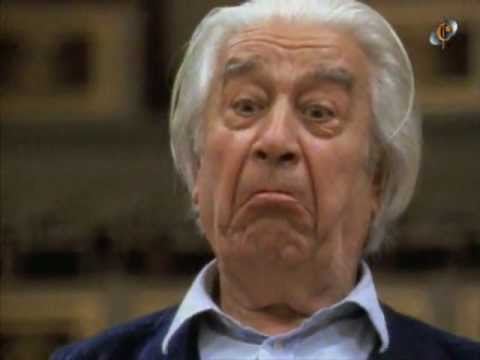
    For those of you without the slightest interest in our activities at Trekonderoga this weekend (running our tests now), here’s a documentary about the far-out conductor Sergiu Celibidache. In “The Garden of Celibidache” (1996), Celi conducts, mentors young talent, and, well, putters around in his garden.

    As I mentioned earlier in the week, Celibidache will be portrayed by John Malkovich in the upcoming film “The Yellow Tie,” which will be shot next year in the maestro’s native Romania.

    That gives you plenty of time to learn how to pronounce his name. Repeat after me: Cheh-lee-bee-DAH-keh.


  • Trekonderoga Star Trek & Leatherstocking Tales

    Trekonderoga Star Trek & Leatherstocking Tales

    by 

    in
    2 responses

    One of my life’s missions is to read all of the Leatherstocking tales of James Fenimore Cooper. So far, I’ve managed to slog through one every 15 years. At this rate, by my calculation, I’ll be up to the final volume when I’m 85!

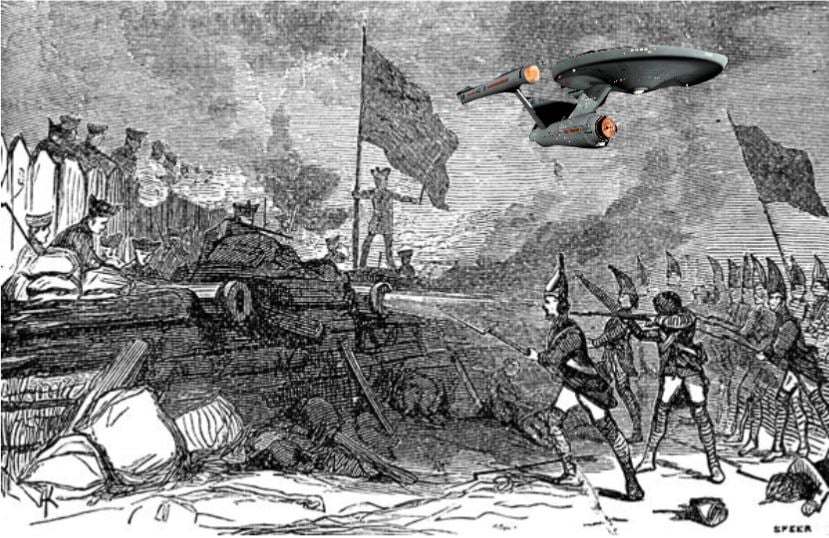
    I’m off to Leatherstocking country for a visit to Fort Ticonderoga, and then a surreal weekend at Trekonderoga, the sci-fi bonanza hosted by the Star Trek Original Series Set Tour.

    There, Roy and I will take part in two “Trek” presentations. These will be livestreamed on Facebook, the tech gods willing, on Saturday at 4 pm and Sunday at 1:30 pm EDT. Actor David Frankham will join us on Sunday. Frankham appeared in the original series episode “Is There in Truth No Beauty?” He’s also accrued a lifetime of experience in classic television and film.

    In addition, I’ll be sitting on some kind of music panel on Saturday at 1 pm. Some sort of Name That Tune feature, hosted by Captain Phil of WUSB. You’ll actually have to be there for that one, as it will not be livestreamed.

    The rest of the weekend will be filled with tours, presentations, memorabilia, cosplayers, screenings of classic “Star Trek” episodes, and no doubt plenty of heavy drinking. The star attraction is Mr. Sulu himself, George Takei.

    Set phasers for stunned! There will be no show this Friday evening, but you can catch us, like a couple of Gorns in the headlights, on Roy’s Tie-Dye Sci-Fi Corner – on the road at Trekonderoga, this Saturday at 4 pm and Sunday at 1:30 pm EDT, with special guest David Frankham. We’ll be watching for your comments, in the original Klingon, when we livestream on Facebook!

    https://www.facebook.com/roystiedyescificorner

    For more information about Trekonderoga, visit startrektour.com.


Tag Cloud

Aaron Copland (93) Beethoven (95) Composer (114) Film Music (145) Film Score (143) Film Scores (255) Halloween (94) John Williams (195) KWAX (229) Leonard Bernstein (104) Marlboro Music Festival (125) Movie Music (160) Mozart (91) Opera (213) Philadelphia Orchestra (89) Picture Perfect (174) Princeton Symphony Orchestra (109) Radio (88) Ross Amico (244) Roy's Tie-Dye Sci-Fi Corner (290) The Classical Network (101) The Lost Chord (269) Vaughan Williams (105) WPRB (397) WWFM (881)

DON’T MISS A BEAT

Receive a weekly digest every Sunday at noon by signing up here


RECENT POSTS