• Casals and His Composer Friends

    Casals and His Composer Friends

    by 

    in
    2 responses

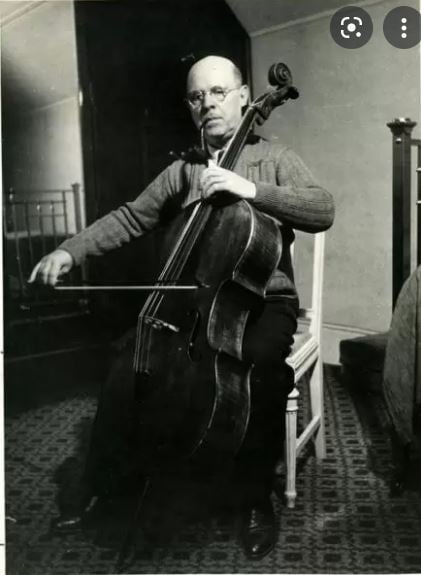
    He put his career on hold to stand up to Franco. He rediscovered the Bach cello suites. He played for Queen Victoria and John F. Kennedy. He founded the Prades Festival. He established the Puerto Rico Symphony and Conservatory. He gave master classes, conducted and recorded at Marlboro. He was even a talented composer.

    Pablo Casals was a giant of an artist and of a man. Is it any wonder so many of his colleagues were moved to write music for him?

    This Sunday night on “The Lost Chord,” we’ll hear works dedicated to Casals by three of his composer friends and colleagues.

    Ralph Vaughan Williams wrote his seldom-heard “Fantasia on Sussex Folk Tunes” around the time he was at work on his Piano Concerto and “Job: A Masque for Dancing.” Casals performed the piece in 1930. It was not heard again until 1983, the year of its world-premiere recording (featuring Julian Lloyd Webber). The composer later undertook a full-scale concerto for Casals. It was never completed, but the sketches for its slow movement were realized for a 2010 performance at the BBC Proms, under the title “Dark Pastoral.”

    Donald Francis Tovey, who would achieve fame as a musicologist, composed quite a lot of music himself, most of it now forgotten. In 1935, he wrote a concerto for Casals. At nearly an hour in length, the work may be the longest cello concerto ever written.

    In 1912, Tovey was a houseguest of Casals and cellist Guilhermina Suggia, at their summer home at Playa San Salvador on the Mediterranean coast. There, he played tennis, swam, and performed chamber music with the likes of Enrique Granados and Mieczyslaw Horszowski. He also made great strides on his opera, “The Bride of Dionysus.” As a show of thanks, he composed for his hosts a Sonata for Two Cellos in G major, which became part of the evenings’ entertainments. The work’s second movement is a set of variations on a Catalan folk song. We’ll hear it performed by Marcy Rosen and Frances Rowell, from a Bridge Records, Inc. release.

    Finally, Arnold Schoenberg, himself an amateur cellist, had done editorial work on three pieces by the 18th century composer Georg Matthias Monn, for inclusion in the publication “Monuments of Music in Austria.” When Casals invited Schoenberg to conduct his orchestra in Barcelona, the composer set about arranging a “new” concerto, based upon a harpsichord work by Monn, written in 1746. We’ll hear Schoenberg’s transformation of the piece performed by Yo-Yo Ma.

    Pau takes a bow! I hope you’ll join me for “Casals’ Pals” – music written for Pablo Casals by notable composer friends and colleagues – this Sunday night at 10:00 EDT, on WWFM – The Classical Network and wwfm.org.

  • Victorian Movie Music on WWFM

    Victorian Movie Music on WWFM

    by 

    in
    3 responses

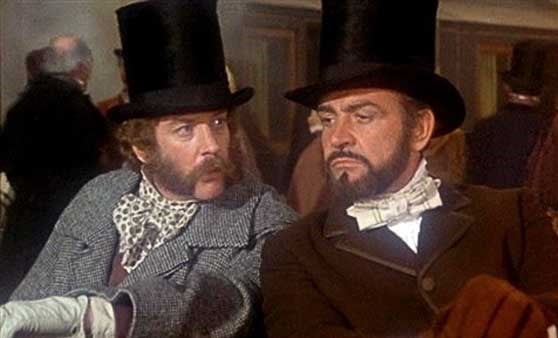
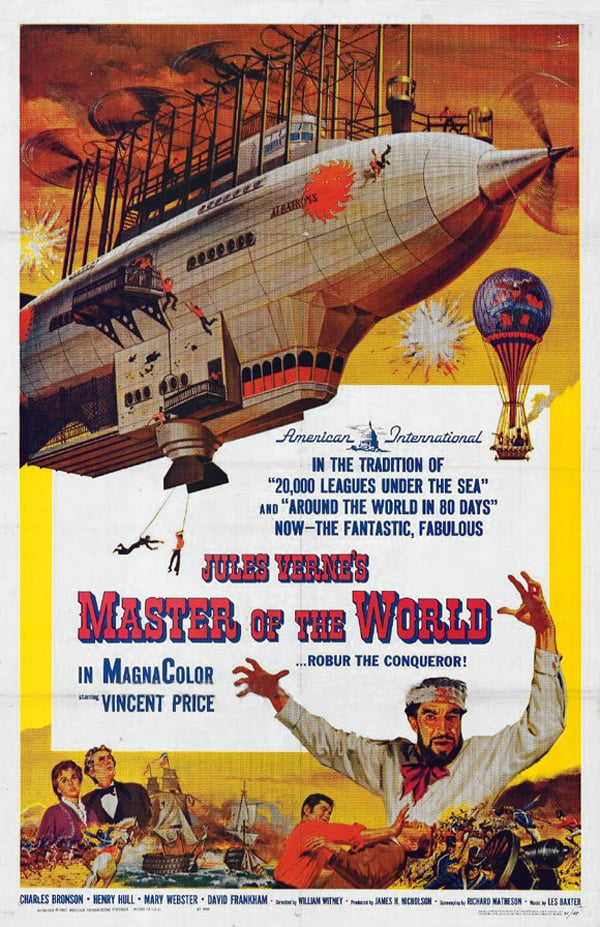
    This week on “Picture Perfect,” it’s an hour of top hats and crinoline, with music from movies set during the Victorian Era. Enjoy selections from “The Importance of Being Earnest” (Benjamin Frankel), “Oliver Twist” (Arnold Bax), “Champagne Charlie” (Lord Berners), and “The Great Train Robbery” (Jerry Goldsmith). Even the pianos wear skirts, this Saturday evening at 6:00 EDT, on WWFM – The Classical Network and wwfm.org.

  • Robur Roy’s Tie-Dye Sci-Fi Corner Master of the World

    Robur Roy’s Tie-Dye Sci-Fi Corner Master of the World

    by 

    in
    One response

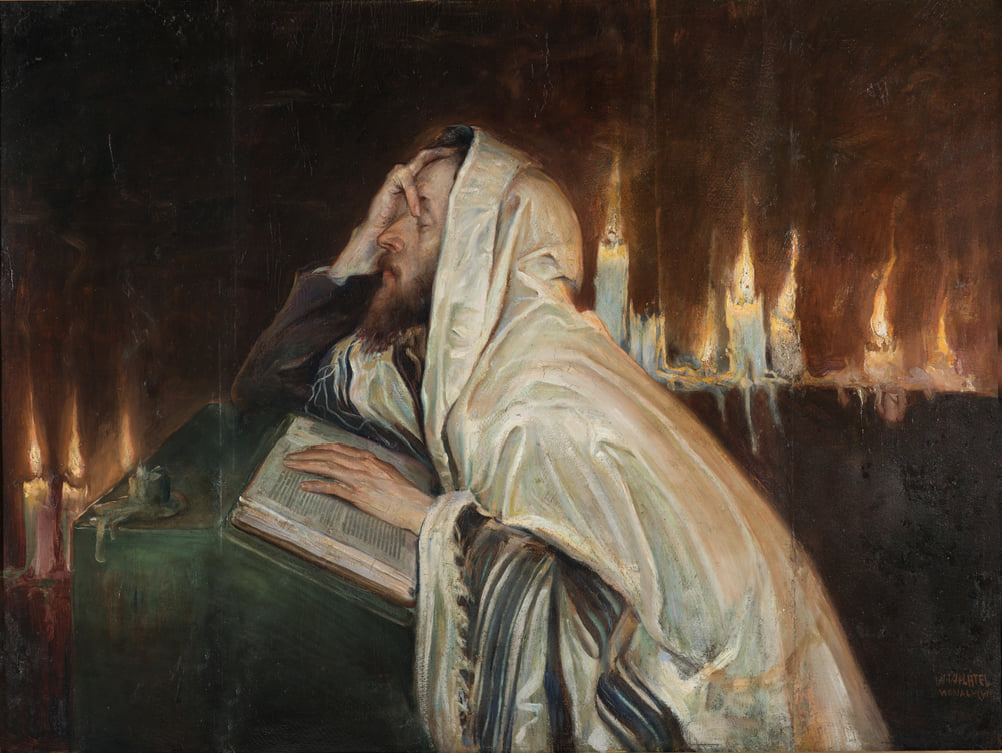
    Robur the Conqueror believes he must destroy the world in order to save it. But why does he have to pick on Roy’s Tie-Dye Sci-Fi Corner?

    Because of Roy’s continuing tree issues, we’re postponing our discussion about “Master of the World” (1961). That will give you the weekend to watch the movie.

    Then bring your cranes and chainsaws as we livestream on Facebook, from our Appalachian lair, this Sunday evening at 7:00 EDT.

    https://www.facebook.com/roystiedyescificorner

    “Master of the World”

    https://www.youtube.com/watch?v=1SgCHVhFzCE


  • Master of the World Vincent Price Takes Flight

    Master of the World Vincent Price Takes Flight

    by 

    in
    5 responses

    A sense of déjà vu hangs like a propeller-driven baguette over “Master of the World” (1961).

    Like Jules Verne’s other revolutionary “pacificist,” Captain Nemo, Robur the Conqueror understands that in order to make an omelette, you’ve got to break some oeufs. He spouts Bible passages while hammering everyone else’s swords into plowshares, dropping bombs from his heavier-than-air craft, forged in an apparent “volcano” outside a small Appalachian town in Pennsylvania. (We meet several of the principal characters in Philadelphia.)

    At least, that’s the spin we get from American International Pictures, for whom Verne’s miraculous conquest of the skies is not enough, so Robur’s motives are twisted and the “Albatross” is reimagined as a “Nautilus” of the air. And while they’re at it, why not attempt to emulate the breezy romance of Michael Todd’s “Around the World in 80 Days,” so popular and acclaimed (the recipient of five Academy Awards, including that for Best Picture) when it was released only five years earlier? Trouble is, AIP had neither the budget to replicate that film’s scope nor it’s star-studded cameos.

    “Master of the World” has everything you would expect from an American International Picture – Vincent Price, abundant stock footage, and a nowhere music score by Les Baxter. Even so, this was AIP’s most expensive film produced up until that time.

    Of added interest is the fact that the screenplay is by sci-fi and horror legend, Richard Matheson, whose stories formed the basis of innumerable classic movies and television shows. Matheson also provided the screenplays for AIP’s Edgar Allan Poe cycle, also starring Price.

    Je ne sais quoi teeters into WTF, as the film’s schizophrenic tone careens from suspenseful adventure to slapstick comedy (what’s the deal with the beleaguered French chef?) to out-of-left field romance (a title song trying too hard to recall the success of Victor Young’s “Around the World”). Phileas Fogg may have traversed the globe in 80 days, but Robur boasts he can make the trip in three weeks! Mon Dieu! What he would have made of the Concorde is anyone’s guess…

    I hope you’ll join Roy and me as we discuss the family-friendly (?) “Master of the World,” co-starring Charles Bronson, in his first leading role, and David Frankham.

    Incidentally, Frankham will be our guest for a livestreamed interview from Trekonderoga, in Ticonderoga, New York, on Sunday, September 26, at 1:30 pm EDT! For more information about this three-day event, visit https://www.startrektour.com/

    What Price peace? Why, Vincent Price, of course! Drop your bombs in the comments section, as we discuss “Master of the World.” We’ll be donning our propeller hats, on the next Roy’s Tie-Dye Sci-Fi Corner, when we livestream on Facebook, this Friday evening at 7:00 EDT!

    https://www.facebook.com/roystiedyescificorner


  • Ferdinand Hiller

    Ferdinand Hiller

    by 

    in
    5 responses

    Who was Ferdinand Hiller, and what does he have to do with the most famous setting of “Kol Nidre” in all of classical music?

    Hiller, born to Jewish parents in 1811 (his father changed his name from Hildesheim), was a child prodigy. By 10, he was playing Mozart piano concertos in public, and by 12, he completed his first original composition. As a child, he met Felix Mendelssohn, who was two years his senior. Their friendship deepened in their teens and endured for over 20 years. Eventually, Hiller succeeded Mendelssohn as director of the Leipzig Gewandhaus Orchestra, which likely precipitated a rapid cooling between them. Within four years, Mendelssohn was dead at the age of 38.

    Hiller, who nearly doubled his friend’s lifespan (he died in 1885), composed in all forms – opera, symphony, concerto, chamber and instrumental works, and choral music, including an oratorio, “The Destruction of Jerusalem.” An outstanding pianist, he became the dedicatee of Robert Schumann’s Piano Concerto. Chopin also dedicated his three Nocturnes, Op. 15, to him.

    Hiller was a forceful writer on music and an influential teacher. His star pupil was Max Bruch, who was not Jewish. Bruch became acquainted with the cantorial chant “Kol Nidre” after being introduced by Hiller to the Berlin hazzan, Abraham Lichtenstein. In 1880, the same year that Bruch composed his “Scottish Fantasy” for the violinist Pablo de Sarasate, he embarked on his famous cello elegy.

    “Even though I am a Protestant, as an artist I deeply felt the outstanding beauty of these melodies,” Bruch wrote in 1889. He uses the plural because the second section of the work is a treatment of a setting by Isaac Nathan of Lord Byron’s “Oh! Weep for those that wept by Babel’s stream.”

    “Kol Nidre” – the traditional prayer, not the cello work – opens the evening service on Yom Kippur. The Day of Atonement, the holiest day on the Jewish calendar, begins tonight at sunset.


    Bruch, “Kol Nidrei”

    Nathan’s setting of Byron, which supplies the work’s B-section.

    Selections from Hiller’s neglected oratorio, “The Destruction of Jerusalem”

    His once popular Piano Concerto No. 2

    An absorbing article on the power, influence, and universality of “Kol Nidre”

    https://www.timesofisrael.com/how-the-haunting-kol-nidre-melody-harnessed-the-power-to-convert/


    IMAGES (counterclockwise from top): “Kol Nidre” by Wilhelm Wachtel; Ferdinand Hiller; Janos Starker’s classic recording of “Kol Nidrei;” and its composer, Max Bruch


Tag Cloud

Aaron Copland (93) Beethoven (95) Composer (114) Film Music (145) Film Score (143) Film Scores (255) Halloween (94) John Williams (195) KWAX (229) Leonard Bernstein (104) Marlboro Music Festival (125) Movie Music (160) Mozart (91) Opera (213) Philadelphia Orchestra (89) Picture Perfect (174) Princeton Symphony Orchestra (109) Radio (88) Ross Amico (244) Roy's Tie-Dye Sci-Fi Corner (290) The Classical Network (101) The Lost Chord (269) Vaughan Williams (105) WPRB (397) WWFM (881)

DON’T MISS A BEAT

Receive a weekly digest every Sunday at noon by signing up here


RECENT POSTS