• Ernest Gold: Exodus Oscar Winner

    Ernest Gold: Exodus Oscar Winner

    by 

    in
    10 responses

    While Ernest Gold embarked on his career as a composer of symphonies, his heart was always in the world of Max Steiner. Gold was born Ernst Sigmund Goldner, in Vienna, 100 years ago today.

    If you missed my tribute to Gold Sunday night on “The Lost Chord,” on WWFM – The Classical Network, the show is now posted as a webcast. On the program is his String Quartet No. 1, his song cycle “Songs of Love and Parting,” and two of his most famous film themes – those for “Exodus” and “It’s a Mad, Mad, Mad, Mad World.” The songs are performed by Gold’s wife of 19 years, Marni Nixon, the soprano who “ghost voiced” for a number of the musicals’ leading ladies, in films like “The King and I,” “My Fair Lady,” and “West Side Story.”

    https://www.wwfm.org/post/lost-chord-july-11-unalloyed-gold

    As an addendum, it’s only within the last year or so that I discovered Gold’s Piano Concerto, written when he was 17 years-old. The recording appeared on a CD with George Antheil’s music for the film “Dementia.” Gold worked as an orchestrator on a number of Antheil’s films. When Antheil fell ill and was unable to follow through on a commitment to score “On the Beach,” Gold stepped up. The music earned Gold an Academy Award nomination and a Golden Globe.

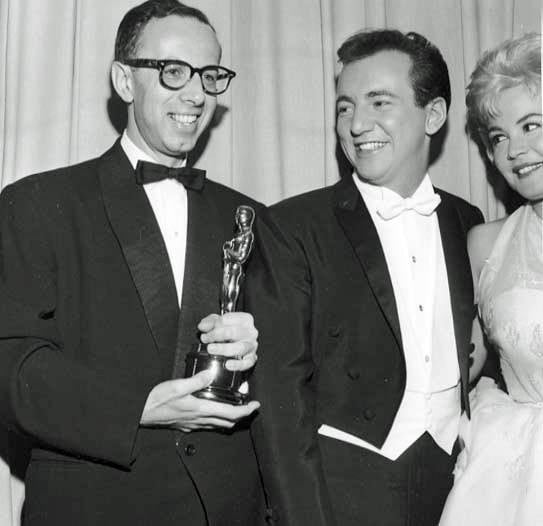
    In all, Gold would be nominated by the Academy four times. He was recognized with an Oscar for his powerful contribution to “Exodus” in 1960. Here’s another nice Gold tribute:

    Eddie Harris riffs on “Exodus”:

    Not really my cup of tea, but “Fight for Survival” from “Exodus” was sampled (a string passage, reversed) by Moby, great-great-great nephew of Herman Melville (!), for his song “Porcelain.”

    All that glitters is Gold. Happy birthday, Ernest Gold!


    PHOTO: With Bobby Darin, Sandra Dee, and his “Exodus” Oscar

  • Percy Grainger Free Music Pioneer

    Percy Grainger Free Music Pioneer

    by 

    in
    10 responses

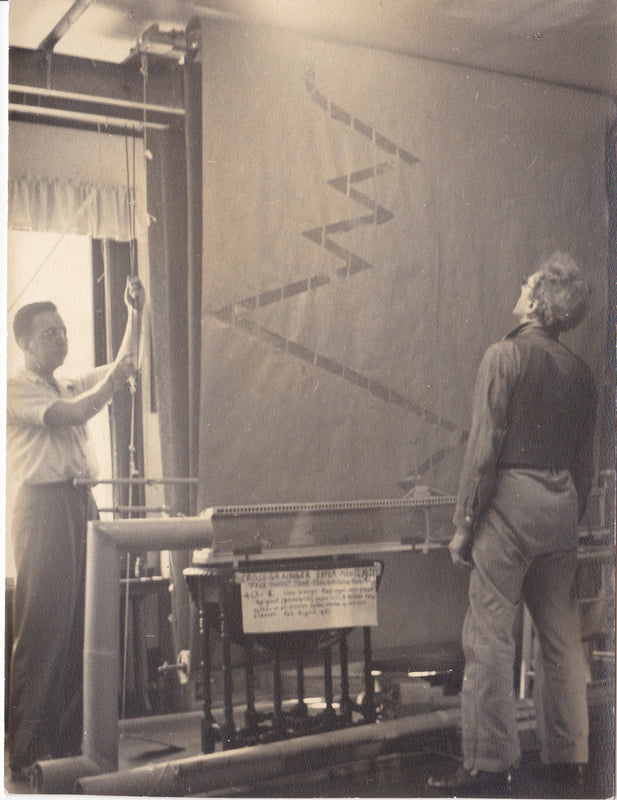
    Percy Grainger, composer of beloved, albeit quirky arrangements of familiar English folk songs and Morris dance tunes, was also a pioneer of “free music.” Here’s a fascinating look at the experimental machines he worked on at his home in White Plains, NY. The sounds they generate anticipated the electronic sound synthesizer.

    “In 1938, Grainger wrote that he first heard ‘free music’ in his head when, as a boy in Melbourne [Australia], he watched the sea at Brighton and Albert Park. He could never see why, in a scientific age, music shouldn’t be as free and as infinitely variable as the waves.”

    Percy Grainger’s Synthesizers

    The first programmable electronic sound synthesizer, the RCA Mark II (nicknamed Victor), an instrument of heroic dimensions, was developed by American acoustical engineers Harry Olson and Herbert Belar in 1955, at the Radio Corporation of America (RCA) laboratories in Princeton, NJ. It was installed at the legendary Columbia-Princeton Electronic Music Center at Columbia University in 1957. Controlled by punch cards and employing hundreds of vacuum tubes, the interconnected components filled an entire room.

    Gain a greater appreciation for the amount of sweat that went into synthesized composition prior to the invention of the Moog!


    PHOTO: Grainger (right) with Burnett Cross, standing before one of his “free music” machines, in 1951


  • Ernest Gold Hollywood’s Viennese Master

    Ernest Gold Hollywood’s Viennese Master

    by 

    in
    2 responses

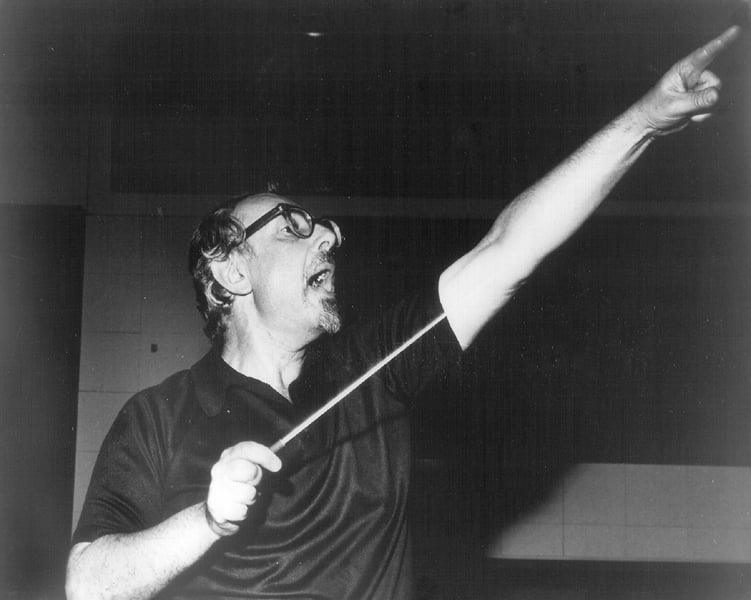
    This Sunday night on “The Lost Chord,” we’re on the quest for Gold – Ernest Gold, that is.

    July 13 marks the composer’s centenary. Gold, who won an Academy Award for his work on “Exodus” in 1960, wrote nearly 100 film scores, including those for “The Defiant Ones,” “Inherit the Wind,” and “It’s a Mad, Mad, Mad, Mad World.” He was perhaps Hollywood’s last major musical link with Old Vienna.

    Though from the start his ambition was to write for film like his hero, Max Steiner, for a time he eked out a livelihood in New York, where he had settled following the Anschluss in 1938. There, he found work as a piano accompanist and a writer of popular songs. He used the income to formally study harmony and orchestration. He wrote a symphony in 1941. It was never performed in his lifetime, though his Piano Concerto made it to Carnegie Hall. It was damned by the critics for sounding like movie music, but Gold embraced the endorsement, packed his bags, and struck out for the West Coast. Eventually he would secure a foothold at Columbia Studios, where he worked with directors like Stanley Kramer and Otto Preminger.

    Despite his love of film, he never lost his enthusiasm for composing absolute music. The result was a piano sonata, a Symphony for Five Instruments, and one of the works I’ll be featuring this evening, his String Quartet No. 1 from 1948. It had been Gold’s intention that it would be a very serious piece, of an uncompromising, modernist bent. But he soon struck up against a mental block and realized that the only way to go was to write from the heart.

    For 19 years, Gold was married to Marni Nixon, the second of his three wives. If you’re a fan of screen musicals of the 1950s and ‘60s, you probably know that Nixon dubbed the singing voices of lead actresses in films like “The King and I,” “West Side Story,” and “My Fair Lady.”

    Gold wrote his “Songs of Love and Parting” expressly for Nixon in 1963. The texts were drawn from a variety of sources, the better to convey the universality of love and the heartache of separation, including poetry by James Thomson, William Shakespeare, Robert Burns, Emily Dickinson, Edna St. Vincent Millay, and Percy Bysshe Shelley.

    In the few minutes remaining at the end of the hour, we’ll also have time for a couple of Gold’s classic film themes. I hope you’ll join me for “Unalloyed Gold,” a remembrance of Ernest Gold in advance of his centenary, this Sunday night at 10:00 EDT, on WWFM – The Classical Network and wwfm.org.


  • Tudor Movie Music on Picture Perfect

    Tudor Movie Music on Picture Perfect

    by 

    in
    6 responses

    This week on “Picture Perfect,” it’s an hour of tunes for the Tudors.

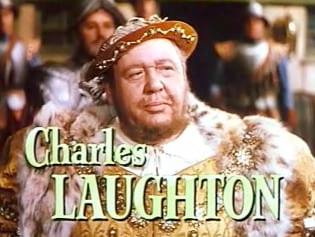
    We’ll hear selections from “Young Bess” (1953), with Jean Simmons as the future Elizabeth I. The colorful and entertaining cast also includes Stewart Granger, Deborah Kerr, and most notably Charles Laughton, who reprises his memorable characterization of Henry VIII. Laughton was honored with an Academy Award for Best Actor for playing Henry in the 1933 film, “The Private Life of Henry VIII.” Miklós Rózsa’s score conjures the era of the great MGM Technicolor spectacles.

    By the time of the events portrayed in “Mary, Queen of Scots” (1971), Elizabeth already wears the crown, albeit uneasily, due to the perceived threat of her first cousin once removed. Vanessa Redgrave is Mary and Glenda Jackson is Elizabeth, with a supporting cast that includes Timothy Dalton, Nigel Davenport, Patrick McGoohan, Trevor Howard, and Ian Holm. As seems to be the custom in dramatic interpretations of the historical events, the film features several fictitious encounters between the queens, even though in reality the two never met. The poignant score is by John Barry.

    “Anne of the Thousand Days” (1969) tells the story of Henry’s doomed second wife, Anne Boleyn. This time Richard Burton plays the king. Anne is played by Genevieve Bujold. Despite mixed reviews, the film was nominated for ten Academy Awards and recognized for its exceptional costumes. Among the other nominees was Georges Delerue for his period-flavored music.

    Finally, in a lighthearted change of pace from all the intrigue and execution, we turn to a big screen adaptation of Mark Twain’s “The Prince and the Pauper” (1937). Set in the time of Prince Edward (later Edward VI), Twain’s novel plays on the conceit that the heir apparent, at some point, becomes confused with a commoner, who happens to bear an uncanny resemblance to him.

    Top-billed Errol Flynn is really a supporting player as the devil-may-care Miles Hendon, who throws in his lot with the scraggly-looking prince, though he hardly believes his claims. Though it would still be a year until the release of “The Adventures of Robin Hood,” Flynn was already well on his way to becoming the screen’s quintessential swashbuckler, thanks to his turn in “Captain Blood” (1935). He easily dominates the film, and it’s a treat to see him duel with his old pal Alan Hale.

    Montagu Love plays Henry VIII, though he’s upstaged by a scheming Claude Rains as Edward Seymour, the Earl of Hertford. Composer Erich Wolfgang Korngold follows Flynn all the way, his music full of swagger and fun.

    Help yourself to a joint of mutton, and hang on to your heads! It’s time for the Tudors, on “Picture Perfect,” music for the movies, this Saturday evening at 6:00 EDT, on WWFM – The Classical Network and wwfm.org.


  • Respighi: Modesty, Bikinis & Roman Spectacle

    Respighi: Modesty, Bikinis & Roman Spectacle

    by 

    in
    7 responses

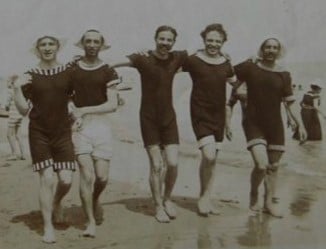
    In a week that saw the 75th anniversary of the bikini (unveiled on July 5. 1946), Ottorino Respighi hangs on to his modesty by rocking a one-piece bathing suit with four of his amici.

    You won’t detect much of that modesty in his rafter-rattling tone poems, “Fountains of Rome” (1916), “Pines of Rome” (1924), and “Roman Festivals” (1928). But he also had his softer side, as evidenced by the time-tripping Renaissance lute recreations, the “Ancient Airs and Dances” (composed in 1917, 1923 & 1932).

    I’m reminded that Respighi died in 1936 at the age of 55. Mortality is staring me in the face!

    Incredibly, his wife, Elsa, outlived him by some 60 years. A singer and composer herself, she died in 1996, one week shy of her 102nd birthday! She remained her husband’s biggest cheerleader, tirelessly promoting his music. She even completed his final opera, “Lucrezia,” given its debut in 1937.

    As a soundtrack to the photo: In 1929, when conductor Serge Koussevitzky formulated the idea that Respighi should orchestrate some of Rachmaninoff’s keyboard pieces, Rachmaninoff was nothing if not enthusiastic. He supplied Respighi with hidden programs behind the works to lend additional insights into their creation. Koussevitzky was impressed with the results, which he debuted with the Boston Symphony Orchestra in 1931. More importantly, Rachmaninoff found the orchestrations to be faithful to the spirit of the originals.

    Here is “The Sea and the Seagulls,” from “Cinq Études-Tableaux” by Respighi, after Rachmaninoff.

    Also, footage of Arturo Toscanini conducting “Pines of Rome” in 1952, with the NBC Symphony. Toscanini conducted the work’s U.S. premiere, with the New York Philharmonic, in 1926. The bird calls begin at 14:43.

    A mesmerizing performance, from 1949, of the “Arie de corte” from the “Ancient Airs and Dances Suite No. 3,” with Eugene Ormandy conducting the Philadelphia Orchestra (part of Sony’s recently-released “Eugene Ormandy: The Columbia Legacy” boxed set):

    Finally, a guilty pleasure that’s so over-the-top, it would have made Cecil B. DeMille blush: a suite from the ballet “Belkis, Queen of Sheba,” a quasi-Biblical spectacle set at the court of King Solomon. The work was given its first performance at La Scala Milan in 1932. The finale featured over a thousand performers, which likely accounts for its subsequent neglect. Grandiose even by Respighi standards, the concluding orgiastic dance whipped the opening night audience into a frenzy.

    Romantic, Classicist, Impressionist, AND supermodel – Happy birthday, Ottorino Respighi!


    PHOTO: Respighi (second from right) and friends horsing around, like an outtake from Fellini’s “I Vitelloni”


Tag Cloud

Aaron Copland (93) Beethoven (95) Composer (114) Film Music (145) Film Score (143) Film Scores (255) Halloween (94) John Williams (195) KWAX (229) Leonard Bernstein (104) Marlboro Music Festival (125) Movie Music (160) Mozart (91) Opera (213) Philadelphia Orchestra (89) Picture Perfect (174) Princeton Symphony Orchestra (109) Radio (88) Ross Amico (244) Roy's Tie-Dye Sci-Fi Corner (290) The Classical Network (101) The Lost Chord (269) Vaughan Williams (105) WPRB (397) WWFM (881)

DON’T MISS A BEAT

Receive a weekly digest every Sunday at noon by signing up here


RECENT POSTS