
• Respighi: Modesty, Bikinis & Roman Spectacle

    Respighi: Modesty, Bikinis & Roman Spectacle

    by 

    in
    7 responses

    In a week that saw the 75th anniversary of the bikini (unveiled on July 5. 1946), Ottorino Respighi hangs on to his modesty by rocking a one-piece bathing suit with four of his amici.

    You won’t detect much of that modesty in his rafter-rattling tone poems, “Fountains of Rome” (1916), “Pines of Rome” (1924), and “Roman Festivals” (1928). But he also had his softer side, as evidenced by the time-tripping Renaissance lute recreations, the “Ancient Airs and Dances” (composed in 1917, 1923 & 1932).

    I’m reminded that Respighi died in 1936 at the age of 55. Mortality is staring me in the face!

    Incredibly, his wife, Elsa, outlived him by some 60 years. A singer and composer herself, she died in 1996, one week shy of her 102nd birthday! She remained her husband’s biggest cheerleader, tirelessly promoting his music. She even completed his final opera, “Lucrezia,” given its debut in 1937.

    As a soundtrack to the photo: In 1929, when conductor Serge Koussevitzky formulated the idea that Respighi should orchestrate some of Rachmaninoff’s keyboard pieces, Rachmaninoff was nothing if not enthusiastic. He supplied Respighi with hidden programs behind the works to lend additional insights into their creation. Koussevitzky was impressed with the results, which he debuted with the Boston Symphony Orchestra in 1931. More importantly, Rachmaninoff found the orchestrations to be faithful to the spirit of the originals.

    Here is “The Sea and the Seagulls,” from “Cinq Études-Tableaux” by Respighi, after Rachmaninoff.

    Also, footage of Arturo Toscanini conducting “Pines of Rome” in 1952, with the NBC Symphony. Toscanini conducted the work’s U.S. premiere, with the New York Philharmonic, in 1926. The bird calls begin at 14:43.

    A mesmerizing performance, from 1949, of the “Arie de corte” from the “Ancient Airs and Dances Suite No. 3,” with Eugene Ormandy conducting the Philadelphia Orchestra (part of Sony’s recently-released “Eugene Ormandy: The Columbia Legacy” boxed set):

    Finally, a guilty pleasure that’s so over-the-top, it would have made Cecil B. DeMille blush: a suite from the ballet “Belkis, Queen of Sheba,” a quasi-Biblical spectacle set at the court of King Solomon. The work was given its first performance at La Scala Milan in 1932. The finale featured over a thousand performers, which likely accounts for its subsequent neglect. Grandiose even by Respighi standards, the concluding orgiastic dance whipped the opening night audience into a frenzy.

    Romantic, Classicist, Impressionist, AND supermodel – Happy birthday, Ottorino Respighi!


    PHOTO: Respighi (second from right) and friends horsing around, like an outtake from Fellini’s “I Vitelloni”
  • Wacky Classical Music Geniuses Celebrate Birthdays

    Wacky Classical Music Geniuses Celebrate Birthdays

    by 

    in
    7 responses

    When they were handing out looney, they must have found themselves with an overabundance when it came to July 8.

    Today marks the birthday anniversaries of two of music’s wackiest pianist-composers.

    George Antheil, self-proclaimed “Bad Boy of Music,” was born in Trenton, NJ, on this date in 1900. His “Ballet Mécanique,” scored for synchronized player pianos, airplane propellers, siren and electric bells, inspired one of the great classical music riots at its Paris premiere in 1926.

    Antheil would practice the piano with such ferocity that he would have to pause, periodically, to thrust his hands into two fish bowls filled with ice water. Before the start of a recital, he would remove a pistol from a silk holster sewn into his jacket and place it atop the piano, to telegraph the message that he would brook no nonsense.

    Later, he became a Hollywood film composer, a war correspondent, the author of a column of advice to the lovelorn, an expert in endocrinology, and co-inventor, with actress Hedy Lamarr, of a frequency-hopping system for the guidance of Allied torpedoes that would become the basis for modern spread-spectrum communications technology. Neither Antheil nor Lamarr would ever see a dime for their invention.

    In 1944, he scored a notable success with his Symphony No. 4, after it was taken up by Leopold Stokowski and later Sir Eugene Goossens, who recorded it. Antheil was also the author of a bestselling autobiography, “Bad Boy of Music.” He died of a heart attack at the age of 59. A third recorded cycle of his symphonies is currently underway, on the Chandos label. Not bad for a boy from Trenton.

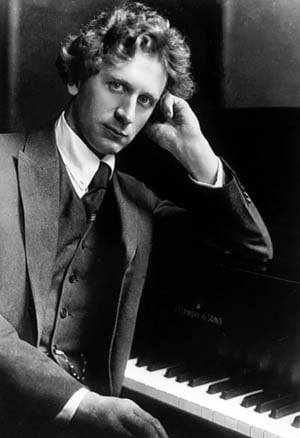
    Wouldn’t you know, Percy Aldridge Grainger was also born on this date, outside Melbourne, Australia, in 1882. Another one of classical music’s great eccentrics, Grainger was obsessed with physical fitness. Rather than drive or take the train between towns and recitals, it was his preference to jog. He was also known to throw a ball over one side of a house, and then race around to the other side to catch it.

    Enamored with Nordic culture, he went out of his way to use only Anglo-Saxon words, avoiding in his letters anything of Norman or Latin origin. This extended to his scores, in which he eschewed Italian musical terms in favor of their English equivalents. In 1928, he married Ella Ström, from Sweden, during a concert at the Hollywood Bowl. On the program was his new work, “To a Nordic Princess.”

    Lest his cultural quirks be misconstrued in an increasingly black-and-white world, Grainger’s embrace of “blue-eyed English” was as idiosyncratic as everything else in his character. He bristled against the dominance of German music, he served in the U.S. Army against Germany in WWI, he embraced music from a wide diversity of cultures, all the way to Bali, he championed works by African-Canadian-American composer R. Nathaniel Dett, and he adored Duke Ellington and George Gershwin.

    Grainger was unusually close to his mother and exhibited sadomasochistic tendencies. He donated whips and blood-stained clothes to the Grainger Museum, which he founded in 1932. His request to have his skeleton displayed – posthumously, of course – was denied.

    Later, while living in White Plains, NY, he experimented with electronics and “machine music,” in a sense paralleling an obsession of Antheil, who besides “Ballet Mécanique,” wrote such works as “Airplane Sonata” and “Death of Machines.”

    Sadly, only the tiniest portion of Grainger’s output is known by the general public, and he is celebrated as the composer of such folksy trifles as “Country Gardens,” “Molly on the Shore,” and “Shepherd’s Hey.” But Grainger’s treatment of harmony and rhythm could be highly original. He was a brilliant musician, and wholly unconventional in more ways than one.

    Grainger died in White Plains in 1961 at the age of 78. His remains, including his skeleton, rest in Adelaide.

    Happy birthday, you wacky, wacky boys.


    Grainger, “Scotch Strathspey and Reel”

    Grainger orchestration of Debussy’s “Pagodes”

    His imaginary ballet, “The Warriors”

    Grainger plays “Molly on the Shore”

    Antheil, “Ballet Mécanique” – presumably in its revision, because of the use of live pianists – with the annoying Fernand Léger film

    Antheil, “Jazz Symphony”

    Antheil, Symphony No. 4 “1942”

    Antheil, “Specter of the Rose” (from the film score, 1946)


    PHOTOS: Bad boys, whatcha gonna do? Percy Grainger (left) and Trenton’s own George Antheil.


  • Mahler’s Huts: Solitude & Symphony

    Mahler’s Huts: Solitude & Symphony

    by 

    in
    7 responses

    One of my most popular posts, written in 2014, was about composers’ huts – creative spaces that sit apart from a principal house so that an artist can work in solitude, free from distraction.

    Because of his busy schedule as a conductor, Gustav Mahler composed mostly in the summers. Here’s an amusing but also disheartening video, made in 2011, about Mahler’s composing hut in Altschluderbach, near Toblach, in South Tyrol, Italy. Here, during the summers of 1908 through 1910, he created the song-symphony “Das Lied von der Erde” (“Songs of the Earth”), the Symphony No. 9, and what he was able to complete of the Symphony No. 10. Allegedly, he kept three pianos in this hut, but I don’t see how that would be possible. Maybe they were uprights!

    A music festival is held in his honor every summer in Toblach, yet somehow this hut wound up in a wildpark (!), where it has been allowed to fall into ruin. So we have the chicken house… the pig house… and the house of Gustav Mahler. See if you can tell them apart. The videographer makes some pointed allusions to “world cultural heritage.”

    Mahler loved nature, but come on!

    Happily, there are two other composing huts, which have been treated with a little more respect. Mahler spent the summers of 1893 through 1896 in Steinbach, at Lake Attersee, in Upper Austria. Here he worked at his song settings “Des Knaben Wunderhorn” (“The Youth’s Magic Horn”), as well as on the Symphonies Nos. 2 and 3.

    Even so, restoration and preservation were not considered until 1985. In the meantime, it had been used variously as a washing house, a sanitary facility, and a slaughterhouse!

    https://en.wikipedia.org/wiki/Composing_hut_of_Gustav_Mahler_(Attersee)

    From 1900 through 1907, Mahler’s summers were spent in Maiernigg, near Maria Wörth, in Carinthia, Austria. Here too his hut is much better tended. Mahler composed his Symphonies Nos. 4 through 7 on the premises, as well as portions of the Symphony No. 8.

    Again, the composing hut was declared a cultural heritage only in 1981. It was renovated in 1985 and opened to the public in 1986.

    1901-1907 House Gustav Mahler Maiernigg – Villa Mahler No. 31 (Composing cottage)

    The world continues to do its damnedest to promote mediocrity, as too often reminders of our greatest achievements are allowed to collapse. But for now, anyway, provided orchestras have enough money in their budgets, Gustav Mahler’s symphonies endure.

    Happy birthday, Gustav Mahler.


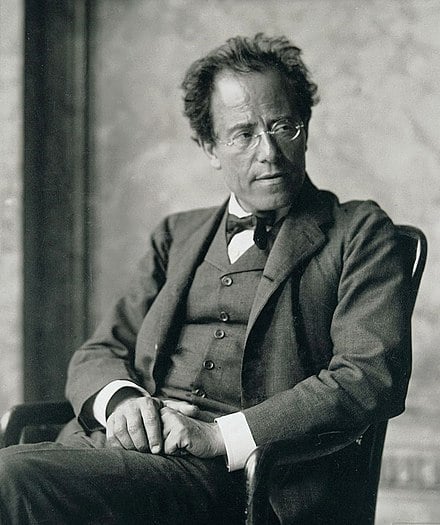
    PHOTOS: Mahler regards his composer cottages in (top to bottom) Altschluderbach, near Toblach (1908-10), Maiernigg, near Maria Wörth (1900-07), and Steinbach, at Lake Attersee (1893-96)


  • Remembering

    Remembering

    by 

    in
    3 responses

    It’s a fairly well-known fact that my birthday is July 4. Or at any rate, once somebody learns it, they’re not likely to forget.

    For years, I thought I shared the date with Louis Armstrong. But it turns out Armstrong had no idea when he was born. It wasn’t until the 1980s that a researcher discovered Armstrong’s baptismal records and confirmed his official birthday was August 4, 1901.

    Oh well, at least I’ve still got Stephen Foster (born July 4, 1826).

    Armstrong, one of the most important figures in American jazz, as well as one of the most beloved musicians of the 20th century, died 50 years ago today.

    That’s right, the world lost Satchmo and Stravinsky in the same year.


    With Velma Middleton, singing (and playing) “All That Meat and No Potatoes”

    With uncanny Danny, namedropping the masters, in “The Five Pennies”

    With the Duke on Ed Sullivan


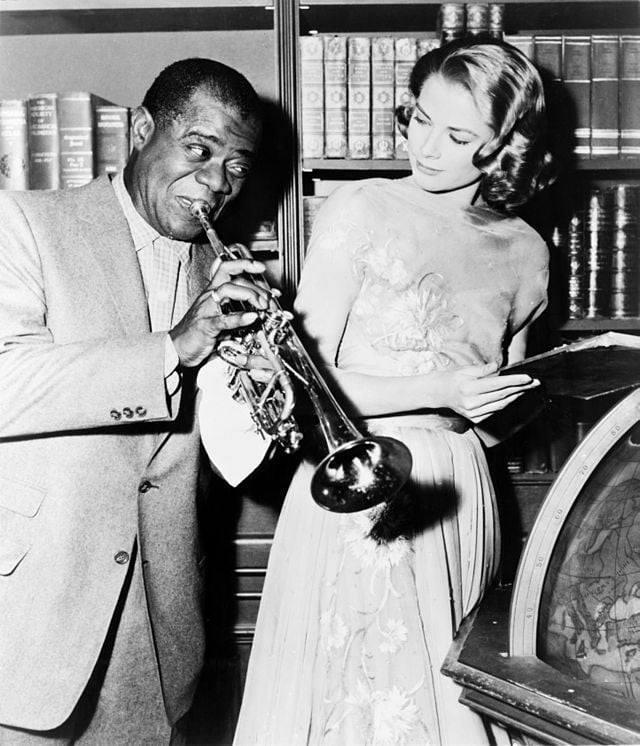
    PHOTO: Playing with Grace, on the set of “High Society”


  • July Saxophone Quartet After Independence Day

    July Saxophone Quartet After Independence Day

    by 

    in
    5 responses

    I don’t know about you, but I’m kind of tapped out after Independence Day. I’ve got an interesting Fourth of July story. Maybe I’ll write some more about it tomorrow. In the meantime, enjoy this saxophone quartet by Michael Torke. It’s titled (appropriately enough) “July.”


Tag Cloud

Aaron Copland (93) Beethoven (95) Composer (114) Film Music (145) Film Score (143) Film Scores (255) Halloween (94) John Williams (195) KWAX (229) Leonard Bernstein (104) Marlboro Music Festival (125) Movie Music (160) Mozart (91) Opera (213) Philadelphia Orchestra (89) Picture Perfect (174) Princeton Symphony Orchestra (109) Radio (88) Ross Amico (244) Roy's Tie-Dye Sci-Fi Corner (290) The Classical Network (101) The Lost Chord (269) Vaughan Williams (105) WPRB (397) WWFM (881)

DON’T MISS A BEAT

Receive a weekly digest every Sunday at noon by signing up here


RECENT POSTS