Spring is a time of hope and renewal. This week on “Picture Perfect,” on the First of May, enjoy music from movies about fresh growth, new beginnings, and second chances.
You can’t get much more spring-like than “The Secret Garden,” after the novel of Frances Hodgson Burnett. A spoiled orphan raised in India returns to England and her aloof uncle’s gloomy mansion on the Yorkshire moors. Gradually, she is drawn outside of herself by a cantankerous gardener, a saucy robin, and a fey lad named Dickon, who has a particular affinity with wild creatures. Her transformation, signified by the titular garden, the maintenance of which teaches her to nurture, improves the lives of all around her.
The story has been adapted numerous times, including a classic version with Margaret O’Brien, in 1949. In 1993, Francis Ford Coppola’s American Zoetrope backed a lovely adaptation directed by Agnieszka Holland. The music was by Zbigniew Preisner.
“The Best Years of Our Lives,” from 1946, is one of the most beautiful films to treat the subject of American soldiers readjusting to civilian life following World War II. A trio of veterans returns from overseas to find their lives irrevocably changed. It isn’t easy, but they rise to meet all challenges with the help of family and friends. The film is all the more moving and inspirational for its characters’ integrity and tenacity.
The cast includes Frederic March, Dana Andrews and real-life veteran Harold Russell. Russell was awarded a special Academy Award for “bringing hope and courage to his fellow veterans through his appearance.” Russell had lost both his hands in an explosion. Honored also with an award for Best Supporting Actor, he is the only figure ever to win two Oscars for the same performance.
The film won nine Oscars in all, among them Best Picture, Best Director (William Wyler), Best Actor (March), Best Screenplay (Robert E. Sherwood), and Best Music (Hugo Friedhofer).
Based on a novel of Anne Tyler, “The Accidental Tourist,” from 1988, stars William Hurt as a travel writer, the loss of whose son leads to emotional sterility and estrangement from his wife, played by Kathleen Turner. He is eventually brought around by a quirky dog-trainer (Geena Davis, in an Academy Award-winning performance). It’s a movie about letting go, and having the courage to move forward. The understated score is by John Williams.
Finally, sports movies have always been a popular genre through which to tell stories of resurrection and redemption. “The Natural,” Barry Levinson’s 1984 adaptation of the novel of Bernard Malamud, tells the tale of a baseball player (played by Robert Redford), who is struck down in his prime, only to be reborn in mythic triumph. The inspiring music is by Randy Newman.
Put some “spring” back into your step, with music from movies about new beginnings and second chances, on “Picture Perfect,” this Saturday evening at 6:00 EDT, on WWFM – The Classical Network and wwfm.org.
Ellen Taaffe Zwilich was born on this date in 1939. Zwilich made history when she became the first female recipient of the Pulitzer Prize for Music, in 1983, for her Symphony No. 1.
Seven years later, she made history for a second time for being perhaps the only living classical music composer – and to my knowledge the only woman – to be referenced in Charles Schulz’s beloved comic strip “Peanuts.”
In the first of three panels, Peppermint Patty and Marcie are shown attending a concert. Marcie, holding a program, says to Patty, half-asleep, that the next piece will be a Concerto for Flute and Orchestra. In the second panel, she notes, “It was composed by Ellen Zwilich who, incidentally, just happens to be a woman!” Patty springs awake, and in the last panel, she’s standing on her chair. As Marcie slumps into her seat in evident embarrassment, Patty cries, “GOOD GOING, ELLEN!” (The original strip is posted in the comments section below.)
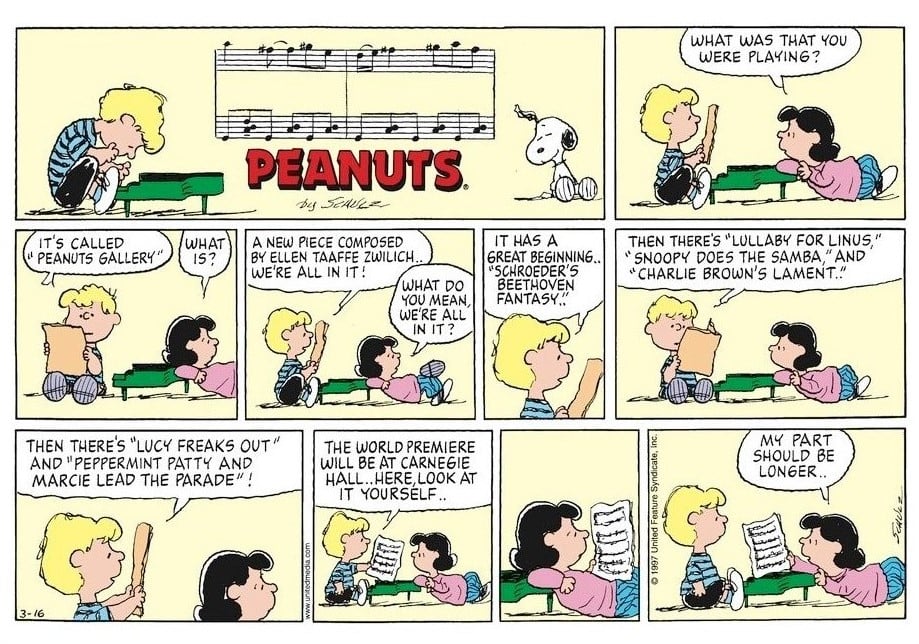
Turnabout is fair play, and in 1996, Zwilich composed a concertino of sorts, for piano and orchestra, titled “Peanuts Gallery.” The work includes movements inspired by Schroeder, Linus, Snoopy, Charlie Brown, Lucy, and Peppermint Patty and Marcie. It was given its premiere on a Carnegie Hall children’s concert, by the pianist Albert Kim and the Orpheus Chamber Orchestra.
The piece was recorded for the Naxos label, with pianist Jeffrey Biegel and the Florida State University Symphony Orchestra. The movements are posted individually on YouTube. I have it cued up so that you can let them all play through, continuously, here:
As an alternative, here’s the entire work, performed without break, with actors and dancers, in a reduction for two pianos:
“Peanuts Gallery” became the subject of a prize-winning PBS documentary. A second Zwilich documentary was produced to trace the development of her “Gardens” Symphony:
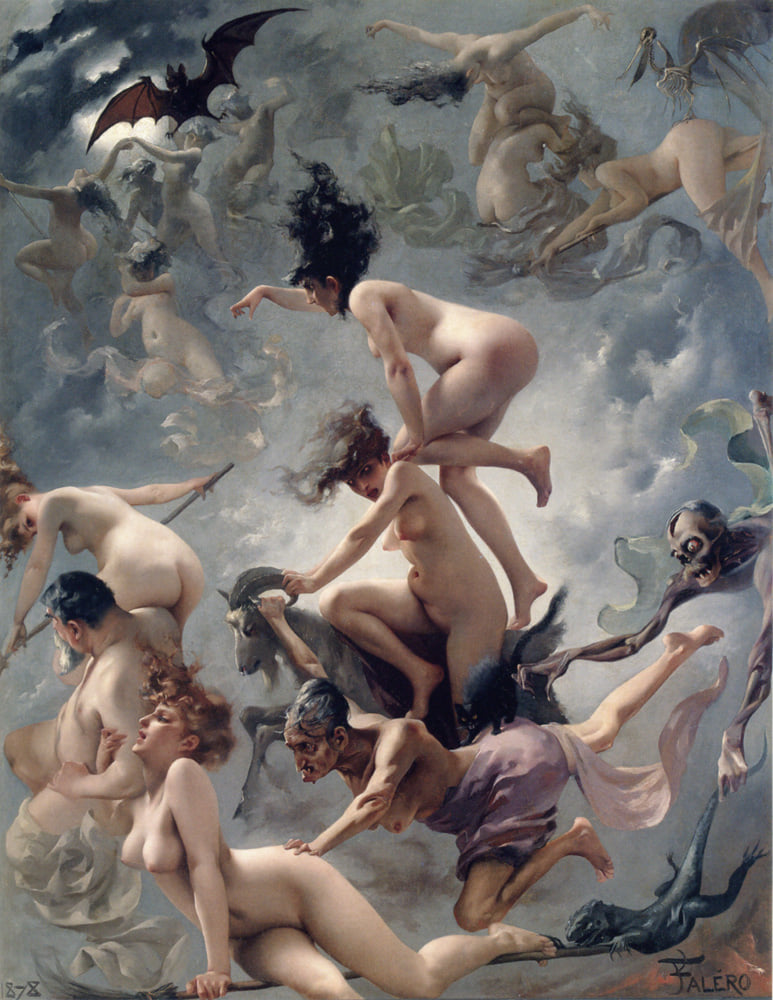
Walpurgis Night, the eve of the feast day of Saint Walpurga, is a time when evil spirits are believed to roam the earth. Tradition holds that a witches’ sabbath and orgy of the damned are held atop the Brocken, the highest peak of the Harz Mountains in Central Germany. It’s the last blast of diablerie before May Day. In Goethe’s “Faust,” Mephistopheles guides his imperiled charge into a swirling cauldron of witches and demons so as to complete his moral degradation.
Of course, “Faust” has inspired innumerable pieces of music – operas, symphonies, cantatas, piano works, and songs. Here, Samuel Ramey sings “Ecco il mondo” from the Walpurgis Night scene (Act II, Scene 2) of Arrigo Boito’s “Mefistofele.” Sadly, the clip doesn’t run to the end of the act.
Another Goethe poem provides the basis for Felix Mendelssohn’s cantata “Die erste Walpurigisnacht” (“The First Walpurgis Night”), about a band of prankish Druids playing mind games with some superstitious Christians.
Johannes Brahms wrote a song, “Walpurgisnacht,” on a text of Alexis Willibald (nom de plum of Wilhelm Häring), about a mother freaking out her daughter, telling her a thunderstorm is actually the sound of witches celebrating on the Brocken. As if that isn’t enough, she adds that she herself is a witch! Ha ha! So German.
Walpurgis Night is an occasion for leaping over bonfires, vandalizing neighbors’ property, and rioting, all in the name of welcoming spring. It is not to be confused with St. John’s Eve (June 23), the night the demon Chernobog emerges from the Bald Mountain. More on that later, I’m sure.
Don’t forget to keep Walpurga in Walpurgisnacht, everybody! Enjoy a socially-distanced sabbath and remember to cavort safely – in masks!
“The Goat of Mendes! The Devil himself.”
Luis Ricardo Falero, “Departure of the Witches” (a.k.a. “Witches Going to their Sabbath,”1878)
It’s funny how perceptions change. All those years of slight regard during his time at the New York Philharmonic and eyeball rolling for his association with The Three Tenors – and here it turns out, the whole while, a genuine world-class maestro was living among us!
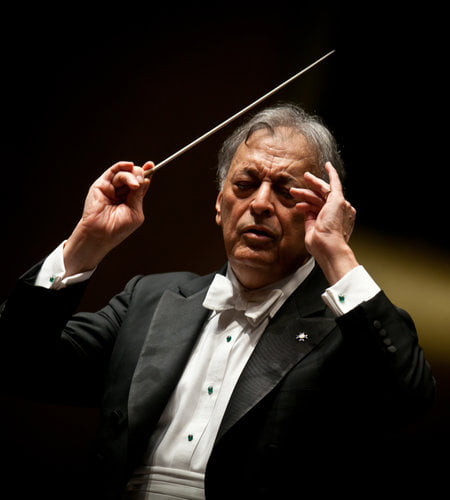
Zubin Mehta is 85. In many ways underrated in his prime – handily eclipsed in an era when so many of his colleagues championed the very repertoire that existed within his wheelhouse – Mehta is ripe for reassessment. In particular, he excelled in late Romantic/early 20th century music. It’s only now, when we’re up to our ears in mediocre performances of the “same old, same old,” that perhaps we can truly appreciate just how good we had it.
Of course, it didn’t help his cause that he was tied to so many media events. He became linked in many people’s minds to the New Year’s Concerts from Vienna. He conducted “Turandot” at the Forbidden City. He played stooge to the Tenors. Eventually, it seemed like every time Mehta was up to something, it was a publicity stunt. But how are these any worse than the excesses of Bernstein or Stokowski? Money is money, and you can’t blame a conductor for trying to generate interest.
His immediate predecessors in New York were Boulez and Bernstein. And before Bernstein, Mitropoulos. He would have been mincemeat even without New York politics and personality clashes. New York didn’t even like Barbirolli or Mahler! But Mehta flourished in Los Angeles and he made beautiful music with the Israel Philharmonic for five decades.
Furthermore, generations of instrumental soloists have wanted him as their accompanist. There is something to be said for that level of trust. In the words of Jacqueline Du Pre, “He provides a magic carpet for you to float on.” Du Pre was part of a staggeringly talented circle of musicians – including Mehta, Daniel Barenboim, Itzhak Perlman, and Pinchas Zukerman – who met on their way up and remained lifelong friends.
Born in Bombay in 1936, Mehta grew up surrounded by Western music. His father was a violinist who had studied in New York, then returned home to establish the Bombay Symphony. He taught his son violin and piano and allowed him opportunities to conduct during rehearsals of the orchestra. To appease his mother, the younger Mehta began to study medicine, but two years in, he dropped all pretense and was off to pursue music in Vienna. His teacher there, conductor Hans Swarowsky, described his talent as “demoniac.” And he meant it as a compliment.
When Mehta was hired by the Montreal Symphony Orchestra in 1961, he became the youngest music director ever to lead a major orchestra in North America. In 1962, he added the Los Angeles Philharmonic, which he led concurrently. In 1969, he became music advisor to the Israel Philharmonic. In 1981, he was named its music director for life. He was in New York from 1978 to 1991. Since 1985, he’s been chief conductor of the Maggio Musicale Florentino, in Florence, Italy.
When Mehta was appointed assistant conductor in L.A., Sir Georg Solti, the orchestra’s music director, resigned in protest over not having been consulted. Ironically, after Mehta’s promotion to the top spot, he might very well have been the philharmonic’s most consistently satisfying music director in modern times – sorry, Gustavo – at least on the merits of his recordings. It’s clear that he had the measure of the orchestra’s temperament and knew the secret to harnessing its dynamic potential.
Mehta’s position in the pantheon could be – and undoubtedly is – argued among passionate music lovers. The competition was stiff, especially in his early days. It’s hard to shine next to Bernstein, Karajan, or Stokowski. But when the alchemy was right, he certainly knew how to get what he wanted out of an orchestra.
Happy birthday, Zubin Mehta. Better to be recognized late than never. Thank you for a lifetime devoted to great music.
Listen to any of the following and see if the work doesn’t speak for itself:
Liszt symphonic poems (Battle of the Huns, Orpheus, Mazeppa)
Also sprach Zarathustra
Schoenberg, Chamber Symphony No. 1
Franz Schmidt, Symphony No. 4
“Star Wars” and “Close Encounters”
“The Rite of Spring” (live performance with video)
“I feel that as a musician, I am one of the few that is blessed that every morning, when I wake up, I touch genius. I never let myself forget this. I’m not the genius. It’s the people’s music that I perform – whether it’s Bach, whether it’s Mozart, whether it’s Richard Strauss, Stravinsky, Arnold Schoenberg. We are constantly in the presence of greatness. I tell my musicians that, in the orchestra. I say don’t take this for granted. Look around you. How many people have this fortune of being surrounded by this greatness?”

3 responses