• Arbor Day Silent Running Sci-Fi Grief & Catharsis

    Arbor Day Silent Running Sci-Fi Grief & Catharsis

    by 

    in
    3 responses

    Friday is Arbor Day.

    Coming at the end of a week in which way too many trees have been hacked down in my neighborhood by a bunch of butchers enlisted by the idiot property association, it’s perhaps ironic that our topic on the next “Roy’s Tie-Dye Sci-Fi Corner” – formulated by Roy and me on Earth Day – will be the environmental cult classic “Silent Running” (1972).

    This was one of only two movies directed by special effects legend Douglas Trumbull (of “2001: A Space Odyssey” and “Close Encounters of the Third Kind” fame).

    Space botanist Bruce Dern – a little borderline even under the best of circumstances – is driven to employ desperate measures to ensure that he and his robot sidekicks, Huey, Dewey, and Louie, can continue to carry-out their reforestation mission in a floating geodesic greenhouse near the rings of Saturn.

    None other than Peter Schickele wrote the music. Folk icon Joan Baez generates a queasy air of counterculture flower-powerlessness.

    “Fields of children running wild
    In the sun
    Like a forest is your child, growing wild
    In the sun
    Doomed in his innocence
    In the sun

    Gather your children to your side
    In the sun
    Tell them all they love will die
    Tell them why
    In the sun

    Tell them it’s not too late
    Cultivate, one by one
    Tell them to harvest and rejoice
    In the sun.”

    In short, you’re doomed, everything you care about will die, but it’s not too late to cultivate… Sounds pretty hopeful to me.

    It would be cathartic to hack off a few arms to avenge every tree limb right about now. Dern doesn’t quite deliver on that scale, but “Silent Running” can still put a lump in the throat of anyone who cares at all about wildlife and the environment. It conveys the essential truth that no matter what century you live in, the majority of humankind is at best clueless.

    “Tears of sorrow running deep
    running silent in my sleep
    running silent in my sleep…”

    Join us as I preach a gospel of despair on Roy’s Tie-Dye Sci-Fi Corner. The only plant will be my fist in the face of all butchers, as we livestream on Facebook. Fill the comments section with your lamentations, this Friday evening at a special time – one half-hour later than usual – 7:30 EDT.
    https://www.facebook.com/roystiedyescificorner


  • James Primosch Philadelphia Composer Dies

    James Primosch Philadelphia Composer Dies

    by 

    in
    One response

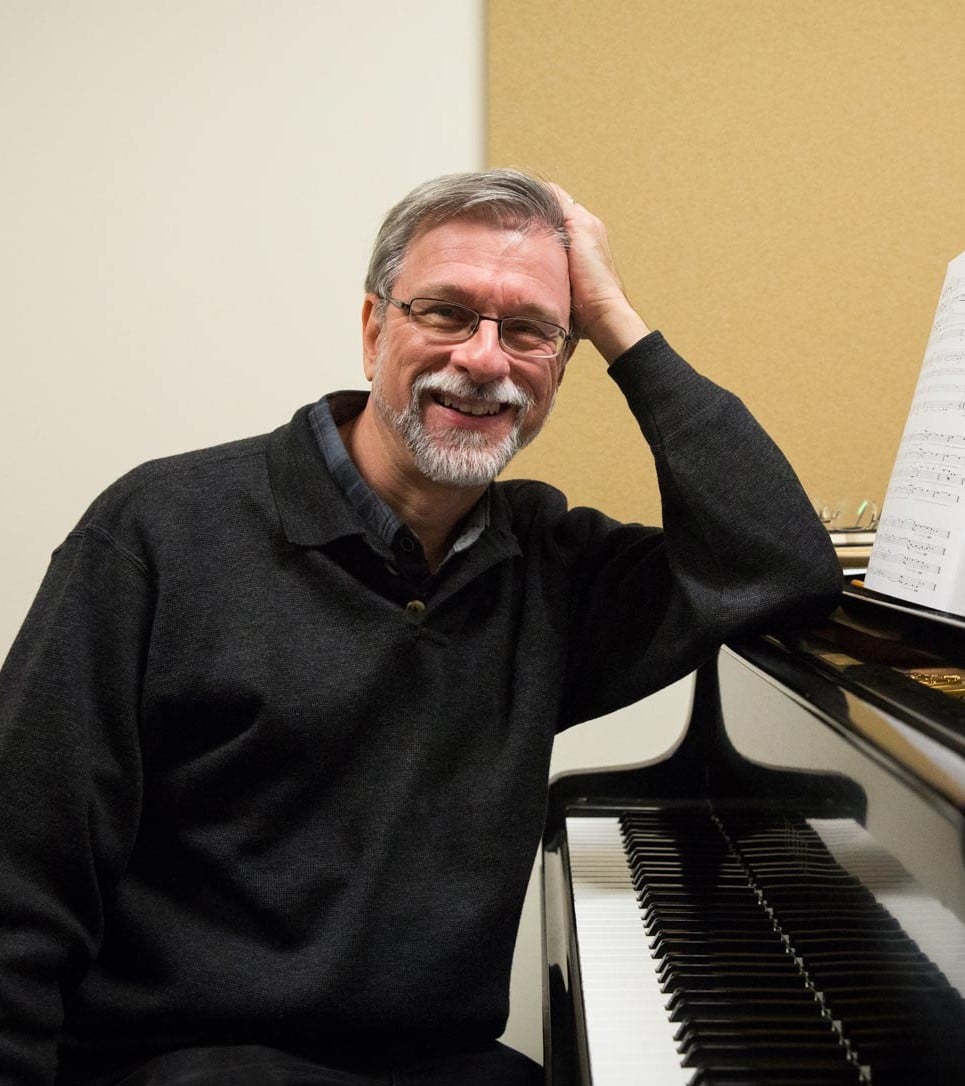
    The composer James Primosch has died.

    A Philadelphia presence for many years, Primosch earned his master’s degree at the University of Pennsylvania, where he was a student of George Crumb and Richard Wernick.

    He went on to obtain his doctorate from Columbia, where he studied with Mario Davidovsky. He also served as a teaching assistant at the Columbia Electronic Music Center.

    He returned to Philadelphia to join the faculty of U of P in 1988. There he became director of the Presser Electronic Music Studio.

    Earlier, he studied at Cleveland State University. Primosch was born in Cleveland in 1956.

    Acclaimed for his word-setting and poetic nuance, he composed quite a bit of music for voice. His Catholic faith informed his sacred works. He was also a jazz enthusiast. His compositional language could be angular or unabashedly lyrical. His music has been much performed, much recorded, and much honored.

    Among the organizations and ensembles to have programmed his pieces are the Chicago Symphony, the Los Angeles Philharmonic, the New York Philharmonic New Music Ensemble, and the St. Paul Chamber Orchestra.

    Locally, his music has been performed by The Crossing, Dolce Suono, Mendelssohn Club, Network for New Music, Orchestra 2001, the PRISM Saxophone Quartet, and Westminster Choir College.

    In 1994, he served as artist-in-residence at the Marlboro Music Festival.

    Primosch was diagnosed with pancreatic cancer in September 2020.

    R.I.P.


    Meditation on “Motherless Child,” from the Piano Quintet

    From his “Mass for the Day of St. Didymus,” performed by The Crossing

    Here it is complete

    Oboe Quartet

    “Our Revels Now Are Ended” from “Songs and Dances from ‘The Tempest’”

    “One with the Darkness, One with the Light”


  • Harold Boatrite Philadelphia Composer Dies

    Harold Boatrite Philadelphia Composer Dies

    by 

    in
    One response

    Following the sad news this morning of the death of James Primosch, I have only just learned of the passing of another Philadelphia composer. Harold Boatrite died on Monday at the age of 89.

    Boatrite studied with Stanley Hollingsworth (himself a pupil of Darius Milhaud and Gian Carlo Menotti). On a scholarship, he attended Tanglewood for further lessons with Lukas Foss and Aaron Copland. In 1961, he was invited by Rudolf Serkin to serve as composer-in-residence at the Marlboro Music Festival.

    Six years later, Boatrite received an honorary doctorate from Combs College of Music. He taught theory and composition at Haverford College until 1980. From 1974 to 1977, he also served on the Pennsylvania Council on the Arts.

    Boatrite’s output spanned chamber and solo instrumental music to large-scale choral and orchestral works. His compositions have been performed throughout the United States and Europe, most notably at the Prague Autumn International Music Festival. A ballet, “Childermas,” was nationally broadcast on CBS television in 1969.

    Boatrite served for many years as a new music consultant to the Chamber Orchestra of Philadelphia. His chamber works were recorded for the Capstone label, and his orchestral scores are housed in the Edwin A. Fleisher Collection at the Free Library of Philadelphia.

    For the second time today, R.I.P.


    “Serenade for Oboe and Strings”

    “Ave Maria”

    Piano Concerto

    “Adagio for Strings”


  • Irving Penn’s Corner: Portraits of Tracy & Stravinsky

    Irving Penn’s Corner: Portraits of Tracy & Stravinsky

    by 

    in
    6 responses

    Nobody puts Baby in a corner! But Irving Penn did, seemingly, just about everyone else.

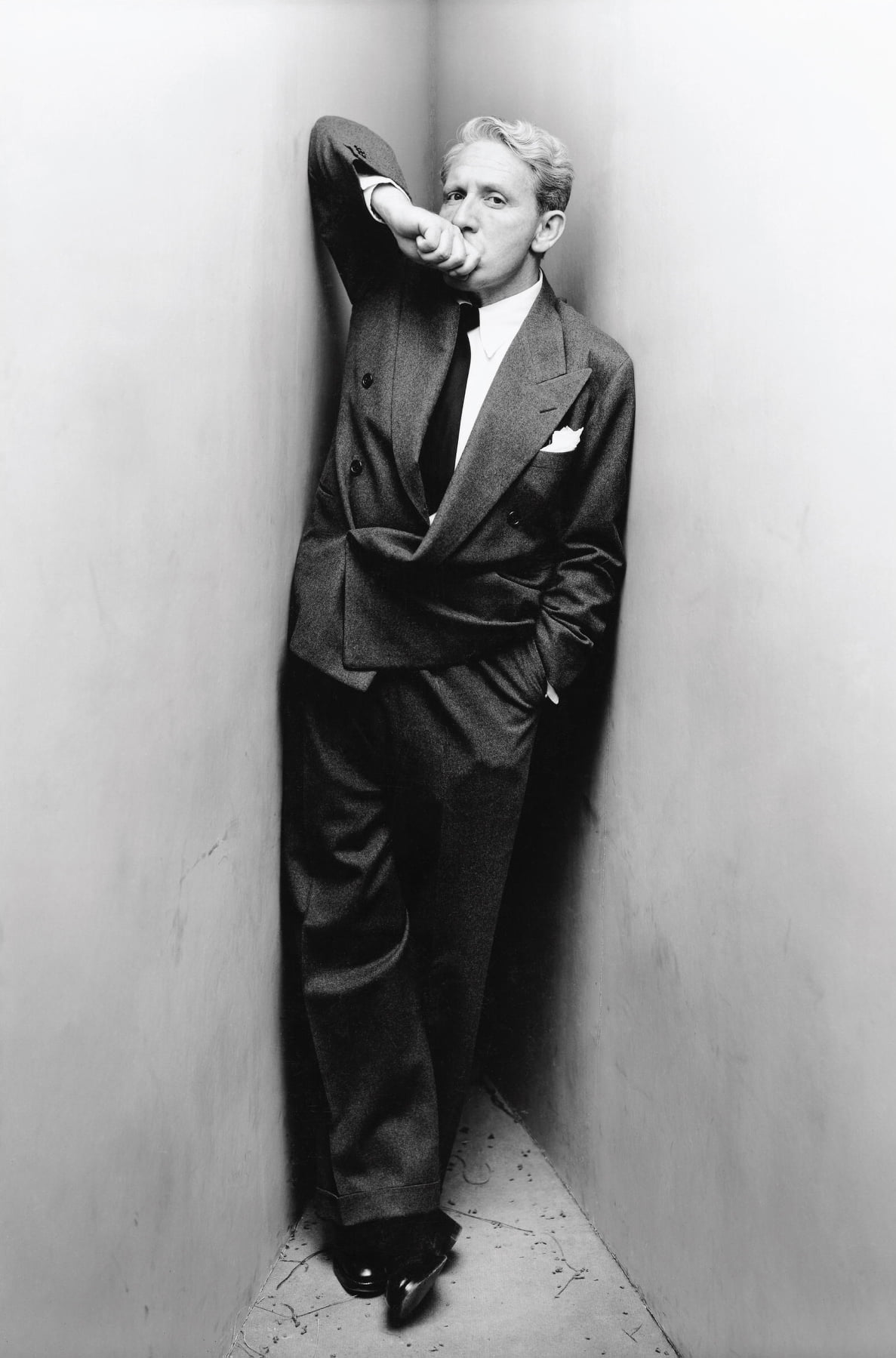
    I stumbled across a Spencer Tracy biography the other day. On its cover is a photograph of Spence, left hand in his pocket and the right in front of his mouth, elbow held high, as he leans into an unusually severe corner. Right away, I was struck by its similarity to a famous portrait of Igor Stravinsky.

    A brief search yielded Stravinsky, with legs crossed casually, hand held to a cocked ear. It wasn’t necessary to examine the two side by side. Unmistakably, it was the work of same photographer. The discovery spurred me to find out more about Irving Penn.

    Penn, born in Plainfield, NJ, in 1917, attended the Philadelphia Museum and School of Industrial Art – now the University of the Arts – from 1934 to 1938. There he studied drawing, painting, graphics, and industrial arts under Alexey Brodovitch. Brodovitch was art director at Harper’s Bazaar. He proved to be a good contact. Harper’s was publishing Penn’s work before he even graduated.

    Penn worked for a time as a freelancer, then succeeded Brodovitch as art director at Saks Fifth Avenue. Then he took off for a year to paint and take photographs in Mexico and across the U.S. When he returned to New York, he received an offer to join the art department of Vogue magazine. Before long, his photographs began to appear on the cover.

    During World War II, he was courted by the Office of War Information in London, but decided to volunteer for the American Field Service instead. His assignments took him to Italy and India. He drove an ambulance, and he took more photos.

    Throughout his career, he continued to contribute covers, portraits, still lifes, fashion photography, and photographic essays to Vogue. He also founded his own studio.

    In 1948, he began to invite famous subjects to that studio, where they would be photographed in an acute corner formed of two flats. He made portraits of writers, artists, athletes, dancers, actors, political figures, and socialites. Of course, what I find most interesting are the musicians.

    In addition to Stravinsky, there was Duke Ellington, Jascha Heifetz, Arthur Rubinstein, Yehudi Menuhin, Vittorio Rieti (with George Balanchine), Louis Armstrong, Noel Coward, Kay Thompson and the Williams Brothers (including Andy), and Maurice Chevalier.

    Irving photographed more than just these, of course. But these are the ones he put in a corner, Baby.


    Penn portraits: Speak-no-evil (Tracy) and Hear-no-evil (Stravinsky)


  • Christa Ludwig Obituary: A Light Heart and Light Hands

    Christa Ludwig Obituary: A Light Heart and Light Hands

    by 

    in
    6 responses

    In the words of Strauss’ Marschallin, “With a light heart and light hands, hold and take, hold and let.”

    The great mezzo-soprano Christa Ludwig has died.

    In a career that spanned four decades, Ludwig was a fixture in the world’s major opera houses.

    She was a principal artist at the Vienna State Opera during a golden age at mid-century. With the company, she sang 769 performances in 42 roles. She made her Metropolitan Opera debut in 1959. There she sang 119 performances in 15 roles.

    She was a versatile and remarkably consistent performer. Her repertoire embraced Amneris (“Aida”), Brangäne (“Tristan und Isolde”), “Carmen,” Charlotte (“Werther”), Dido (“Les Troyens”), Dorabella (“Così fan Tutte”), Eboli (“Don Carlo”), Klytämnestra (“Elektra”), Kundry (“Parsifal”), Ortrud (“Lohengrin”), Ulrica (“Un ballo in maschera”), and Waltraute (“Götterdämmerung”), to name a few.

    Her technique and upper register were such that she was able to tackle the Marschallin in “Der Rosenkavalier” and the Dyer’s Wife in “Die Frau ohne Schatten,” parts almost exclusively sung by sopranos. Among the roles she created was that of Claire in Gottfried von Einem’s “Besuch der alten Dame” (“The Visit of the Old Lady”).

    Her voice graced dozens of treasurable recordings. She sang Fidelio for Klemperer, Fricka in Solti’s landmark “Ring,” and Octavian in Karajan’s “Der Rosenkavalier,” with Elisabeth Schwarzkopf. She was Adalgisa opposite Maria Callas in “Norma.”

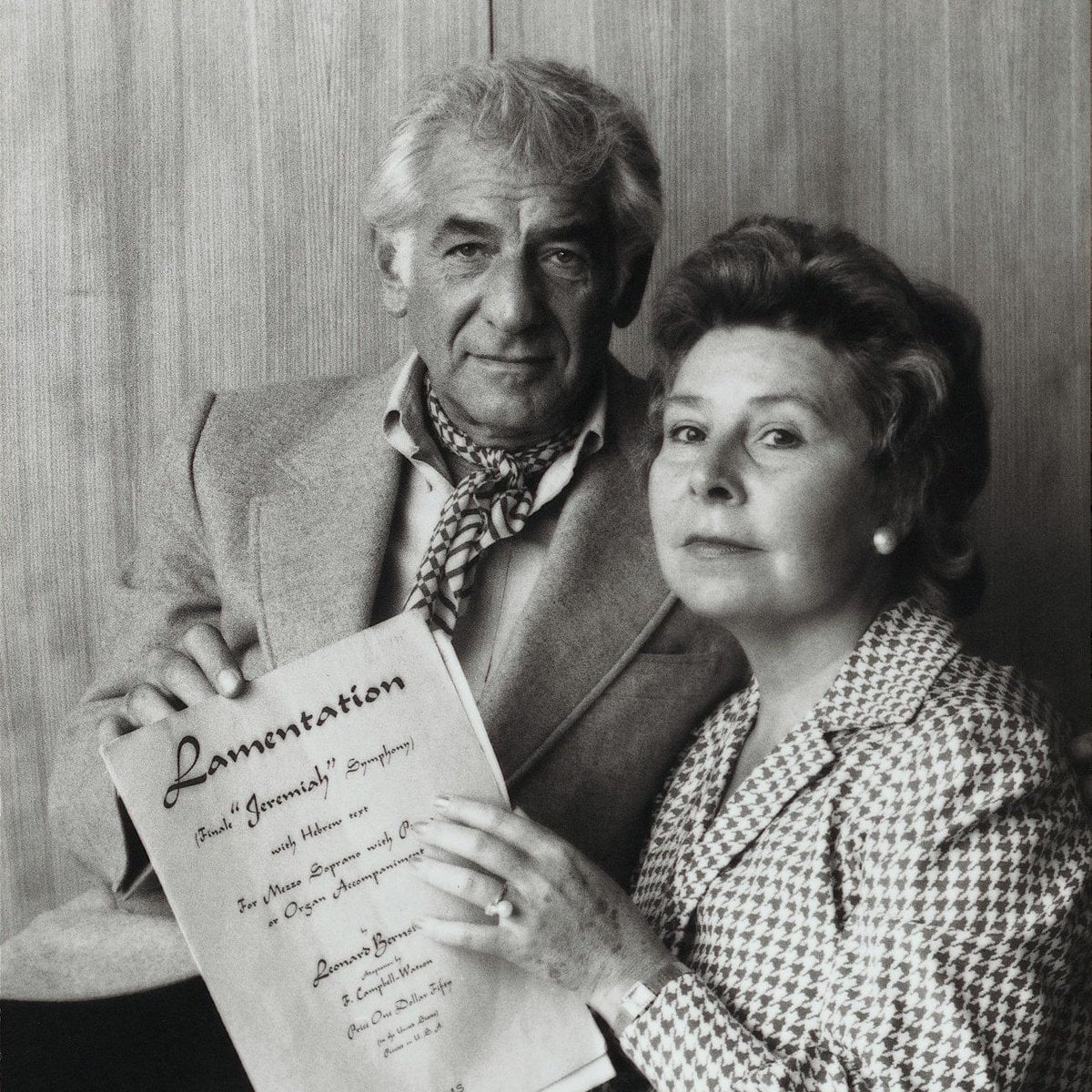
    She was a frequent collaborator of Leonard Bernstein. Together, they recorded much Mahler. On a lighter note, she also sang “I Am Easily Assimilated,” as the Old Lady in Bernstein’s “Candide,” in what the composer considered to be the work’s definitive recording.

    I only saw her live once, at Carnegie Hall, but it was a memorable occasion. She sang the lamentations in Bernstein’s “Jeremiah” Symphony, under the composer’s direction. (The two recorded the work for Deutsche Grammophon.) Also on the program was Mozart’s Symphony No. 29 and Sibelius’ Symphony No. 5.

    Ludwig died on Saturday at her home in Klosterneuburg, Austria. She was 93 years-old.


    “Das Abschied” (“The Farewell”) from Mahler’s “Das Lied von der Erde”

    Complete, with René Kollo – and subtitles

    https://www.youtube.com/watch?v=Npy4gjZ81F0

    As Fidelio

    The Recognition Scene from Strauss’ “Elektra”

    Rossini, of all things – in German!

    With her husband, Walter Berry, in “Des Knaben Wunderhorn”

    Brahms, with Bernstein at the piano (and André Previn as page-turner!)

    A bone to pick with Bernstein’s tempo in Mahler

    “I Am Easily Assimilated”


Tag Cloud

Aaron Copland (93) Beethoven (95) Composer (114) Film Music (145) Film Score (143) Film Scores (255) Halloween (94) John Williams (195) KWAX (229) Leonard Bernstein (104) Marlboro Music Festival (125) Movie Music (160) Mozart (91) Opera (213) Philadelphia Orchestra (89) Picture Perfect (174) Princeton Symphony Orchestra (109) Radio (88) Ross Amico (244) Roy's Tie-Dye Sci-Fi Corner (290) The Classical Network (101) The Lost Chord (269) Vaughan Williams (105) WPRB (397) WWFM (881)

DON’T MISS A BEAT

Receive a weekly digest every Sunday at noon by signing up here


RECENT POSTS