• Hawks’ Thing Trek’s Motion Picture Discussion

    by 

    in
    4 responses

    Roy and I talk about a few “Things” last night, during our unscientific analysis of Howard Hawks’ “The Thing from Another World” (1951). Definitely make it a point to watch this movie; then watch the show. Most important: KEEP WATCHING THE SKIES!

    Then if you’ve got anything left, on Sunday join us for a chat about “Star Trek: The Motion Picture” (1979). I haven’t seen Robert Wise’s director’s cut yet, but it’s supposed to be a vast improvement over the theatrical release. At any rate, it couldn’t hurt!

    Roy’s Tie-Dye Sci-Fi Corner live-streams on Facebook, Friday and Sunday evenings at 7:00 EST.

    https://www.facebook.com/roystiedyescificorner/timeline


  • Krampus, White Reindeer & Early Winter Visions

    Krampus, White Reindeer & Early Winter Visions

    by 

    in
    One response

    I thought for a minute that Krampus had come a little early this year, but then I realized it was only a four-point buck outside my kitchen window.

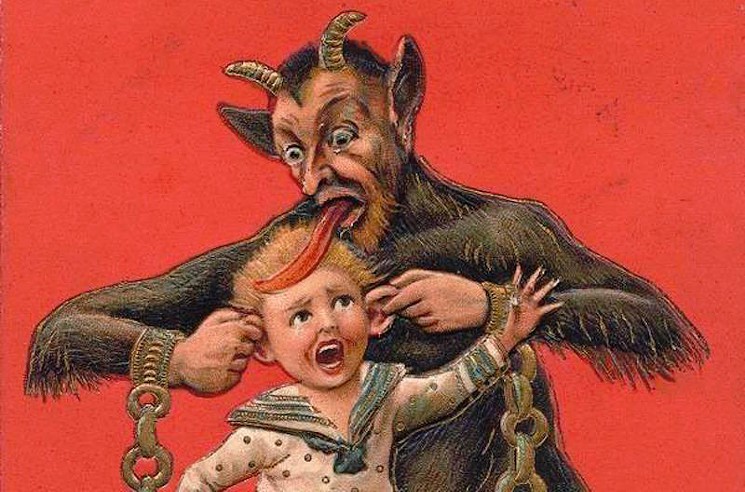
    December 5th, the eve of Saint Nicholas Day, is the night Krampus gets to flex his muscle. Egregiously-horned and whiplash-tongued, this Alpine demon scampers down from his mountain lair, festooned with chains and cowbells, to accompany St. Nick on his rounds. In an Old World display of good cop/bad cop, the Patron Saint of Children bestows small gifts on all the good girls and boys. And the bad? Well, the bad are turned over to Krampus.

    At best, garden-variety naughtiness is repaid by the sting of a switch. But the especially ill-behaved are clapped in chains, taken for a short ride in a wicker basket, and then hurled into a stream or immolated by hellfire. With mounting anxiety a thousand times worse than the dread of a bad report card, a wee sinner pulls the sweat-soaked blankets over his or her head and prays vociferously for a stocking full of coal.

    Krampus’ momentum continues to build in the U.S., with Krampuslaufer (Krampus runs) springing up all over, most recently in Williamsport, PA. I’m not sure how I feel about that. I kind of liked it when my advocacy of an arcane Alpine Christmas demon still got looks of befuddlement, then disgust.

    The old ways are best! Stay dry, Krampus-runners! Gruß vom Krampus!


    If there is any classical music written for Krampus, I have yet to hear it. Therefore, as kind of a place-holder for this Krampusnacht, I offer a suite by Finnish composer Einar Englund from a film inspired by another bizarre legend, that of “The White Reindeer.” Don’t go into it expecting any Rankin-Bass Rudolph. This is Lapland, after all, the land of shapeshifting, vampiric livestock. This Rudolph sports teeth like The Abominable.

    I’ve got the music all cued-up and ready to go, starting at the 34-minute mark of this particular album. The suite runs about 14 minutes, through 47:45:

    Here’s the trailer for a recent reissue of the movie, a 1952 Cannes and Golden Globe Award winner:

    https://www.youtube.com/watch?v=ECyp3fJBI20

    Maybe that “buck” wasn’t a buck after all…


    Spare the Krampus, spoil the child!


  • Sibelius Day 5 Wicks & Porra Concertos

    Sibelius Day 5 Wicks & Porra Concertos

    by 

    in
    One response

    EIGHT DAYS OF SIBELIUS – DAY 5

    Two concertos today.

    The first is Sibelius’ lone violin concerto. As a young man, it had been the composer’s ambition to become a virtuoso violinist. Fate – and limited ability – had other plans. Fortunately, he was able to channel that creative impulse into amassing an impressive body of original music.

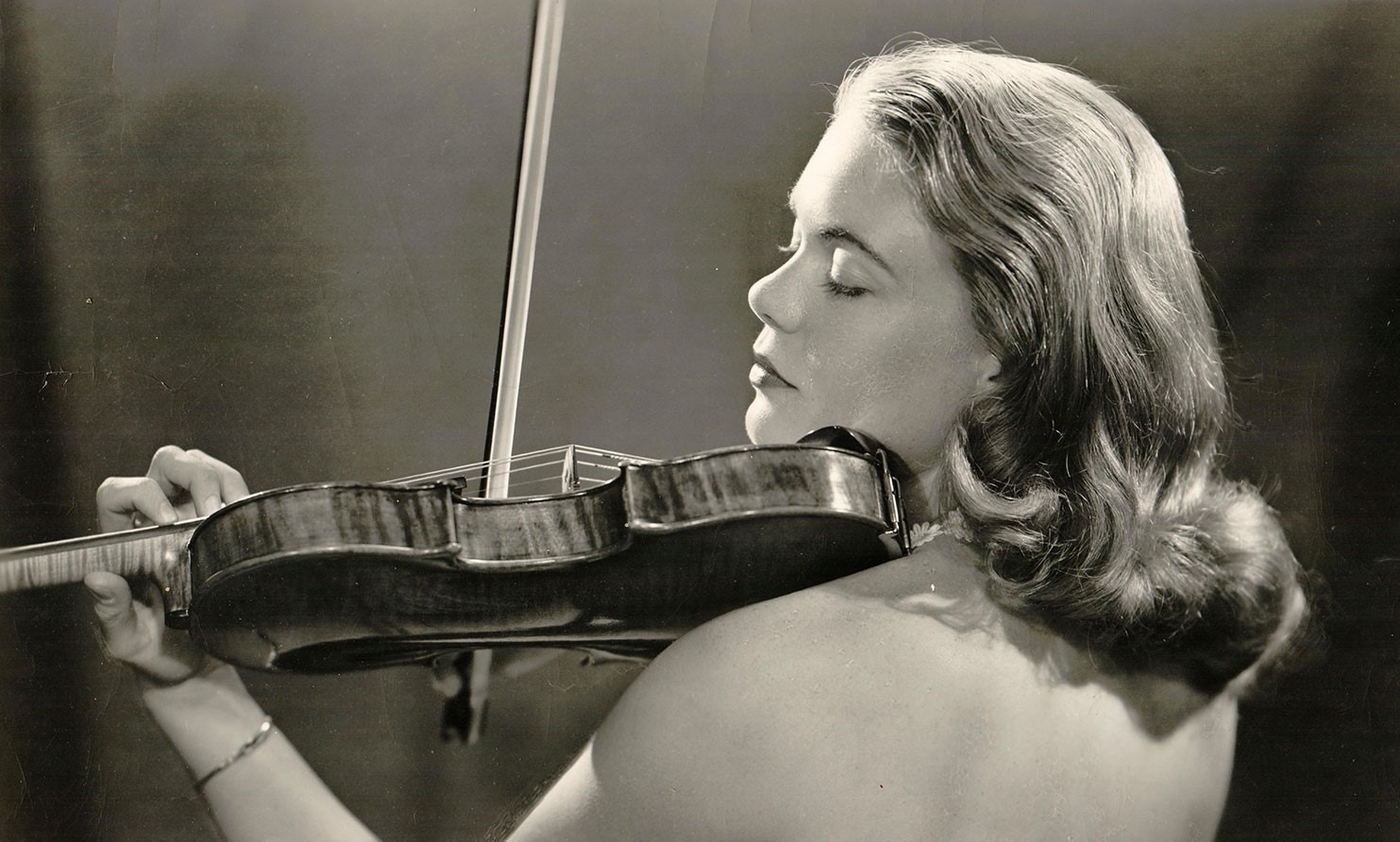
    This recording is by the American violinist Camilla Wicks. Wicks, who was of Norwegian descent, mastered a broad range of repertoire. She enjoyed particular popularity in the Scandinavian countries for championing works by lesser-known Nordic composers.

    She was one of the first female violinists to establish a major international career. Isaac Stern called her “the greatest violinist.” When questioned if he meant the greatest female violinist, he clarified, “No. The greatest.”

    She also drew particular praise from Sibelius, who singled her out as his favorite interpreter of his concerto.

    Wicks died on November 25, at the age of 92.

    https://www.youtube.com/watch?v=cgr6zgZYviU

    The second concerto is by Sibelius’ great-grandson, Lauri Porra. Porra, who trained as a cellist, plays bass guitar with the Finnish metal band Stratovarius. Get a load of this awesome electric guitar concerto.

    http://www.classiclive.com/porra-entropia-full-video


  • Johnny Williams Before the Blockbusters

    Johnny Williams Before the Blockbusters

    by 

    in
    10 responses

    Before “Harry Potter.” Before “Jurassic Park.” Before “E.T.” Before “Raiders of the Lost Ark.” Before “Superman.” Before “Close Encounters of the Third Kind.” Before “Star Wars.” Before “Jaws.” Before even John Williams… there was Johnny Williams.

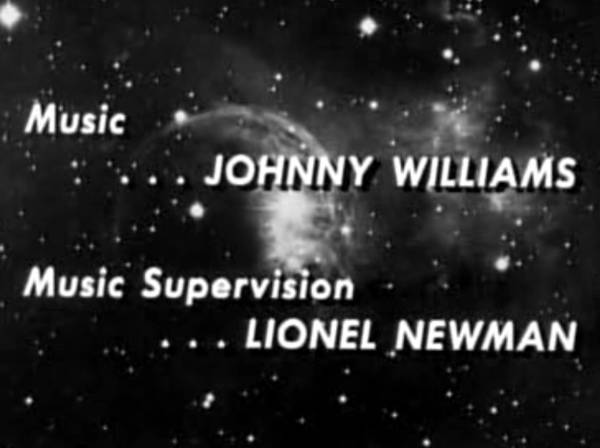
    Well before Williams became America’s most famous living composer, he was busy honing his craft as an orchestrator, an arranger, a session pianist, and a composer in the bush league of television. This week on “Picture Perfect,” we’ll hear some of “Johnny” Williams’ music for “Lost in Space.”

    Also on the program will be selections from “The Alfred Hitchcock Hour” by Bernard Herrmann, the theme from “Wagon Train” by Jerome Moross, and a medley of well-known television music by Jerry Goldsmith.

    Movie composers think inside the box, on “Picture Perfect,” this Saturday evening at 6:00 EST, on WWFM – The Classical Network and wwfm.org.
  • Film Composers on TV Picture Perfect

    Film Composers on TV Picture Perfect

    by 

    in
    7 responses

    The music is big… it’s the PICTURES that got small.

    This week on “Picture Perfect,” it’s an hour of music from television scores by composers better known for their work in film.

    Bernard Herrmann began his film career right at the top, with “Citizen Kane” in 1941. He is perhaps best recognized for his scores for the films of Alfred Hitchcock, many of which have gone on to become classics, including those for “Vertigo,” “North by Northwest,” and especially “Psycho.”

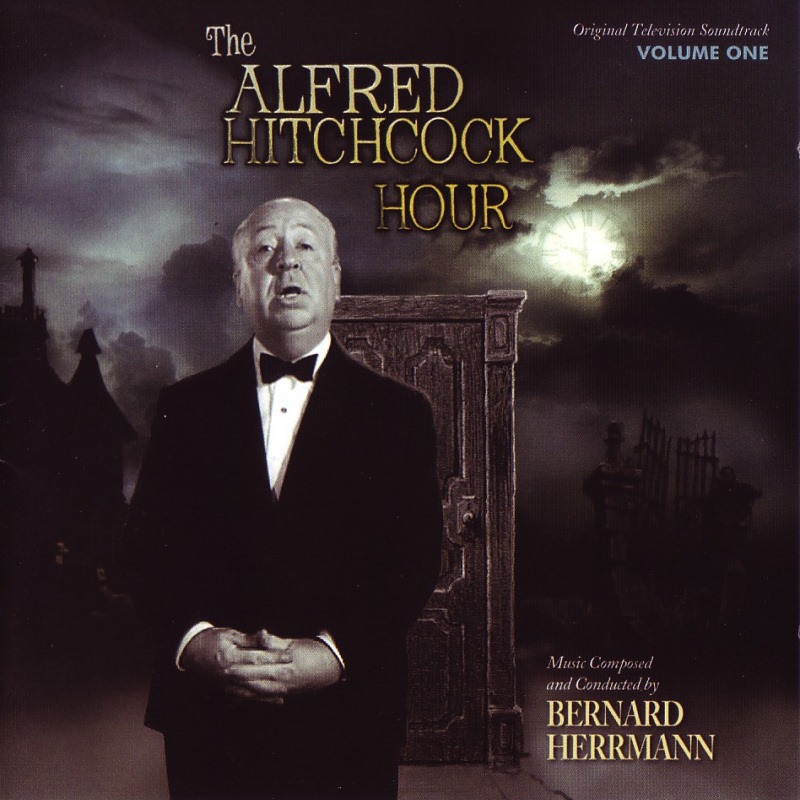
    Less well known is his work on the television series “The Alfred Hitchcock Hour,” which ran from 1963 to 1965. Herrmann composed music for 17 of the episodes. He was also responsible for suggesting Hitchcock’s signature tune, Charles Gounod’s “Funeral March of a Marionette,” which appears throughout the series in Herrmann’s own arrangement.

    Jerome Moross, Herrmann’s friend since childhood, had also enjoyed his share of success on the silver screen. Moross is best-remembered for having written the score for “The Big Country.” Nobody wrote western music quite like Moross. So it’s hardly surprising he would be asked to contribute to twelve episodes of “Wagon Train.”

    When someone noticed that the “Wagon Train” theme bore a striking resemblance to some of Moross’ music written for the film “The Jayhawkers,” two competing studios were kind enough to look the other way.

    Unlike Moross and Herrmann, who were both well-known by the time they ventured into television, John Williams was still very much on his way up. Williams, then billed as “Johnny,” was active in the movies throughout the 1960s, but his film projects at the beginning were mostly undistinguished, with titles like “Daddy-O,” “Gidget Goes to Rome,” and “John Goldfarb, Please Come Home.”

    Of course, he worked as a musician on more reputable projects, appearing as pianist on the soundtracks of “The Big Country,” “To Kill a Mockingbird” and “Charade.” He also worked as an orchestrator on “The Guns of Navarone.”

    But what provided much of Williams’ bread-and-butter throughout the ‘60s was his work on television series like “Checkmate,” “Gilligan’s Island,” and – for our purposes this week – “Lost in Space.” Happily, that “Williams sound,” so beloved by fans of “Stars Wars,” “Raiders of the Lost Ark,” and “E.T.,” was already in place.

    Finally, Jerry Goldsmith may have been a little bit ahead of Williams in the ‘60s, in terms of being offered more substantial films, but he too worked in television, providing scores for “Have Gun, Will Travel,” “The Twilight Zone,” and “Dr. Kildare.” We’ll conclude the hour with a medley of familiar Goldsmith television themes, with the composer conducting the London Symphony Orchestra.

    You’re invited to think inside the box, as film composers write for television this week, on “Picture Perfect,” this Saturday evening at 6:00 EST, on WWFM – The Classical Network and wwfm.org.

Tag Cloud

Aaron Copland (93) Beethoven (95) Composer (114) Film Music (145) Film Score (143) Film Scores (255) Halloween (94) John Williams (195) KWAX (229) Leonard Bernstein (104) Marlboro Music Festival (125) Movie Music (160) Mozart (91) Opera (213) Philadelphia Orchestra (89) Picture Perfect (174) Princeton Symphony Orchestra (109) Radio (88) Ross Amico (244) Roy's Tie-Dye Sci-Fi Corner (290) The Classical Network (101) The Lost Chord (269) Vaughan Williams (105) WPRB (397) WWFM (881)

DON’T MISS A BEAT

Receive a weekly digest every Sunday at noon by signing up here


RECENT POSTS