• Malcolm Williamson Master of Music

    Malcolm Williamson Master of Music

    by 

    in
    2 responses

    One of the things I love about foreign countries is that, historically, their composers haven’t been blackballed for writing film music. In fact, some of the most esteemed have made significant contributions to the form: Prokofiev, Shostakovich, Honegger, Milhaud, Vaughan Williams, and Walton, to name a few. In America, Aaron Copland or John Corigliano aside, there has been a sharp, critical divide between “serious” composer and “film composer,” as if the latter somehow automatically implies hack work. And depending on a musician’s ability and artistic freedom, I suppose it all-too-frequently does.

    I’m sure there are plenty of foreigners that only wish they could make the kind of money writing film music they could here in the U.S. It’s easy to romanticize when you’re not the one breaking your back for a modest pay day! Composers don’t come any more esteemed, in England anyway, than the Master of the Queen’s Music. Yet, in having to earn a living, even a Master’s candidate may sometimes find it necessary to get his hands dirty.

    Since the 17th century, Masters have assumed their post with the expectation that they would write music for important milestones in the lives of the Royal Family and for ceremonial occasions. Past Masters of the Queen’s (or King’s) Music have included John Eccles (who served four monarchs), William Boyce, John Stanley, Sir Edward Elgar, Sir Arnold Bax, and Sir Arthur Bliss. The appointment is an honor, to be sure, but the responsibility brings with it a certain amount of pressure.

    When Malcolm Williamson, Australian by birth, was appointed as the successor to Bliss in 1975, there was grumbling among his colleagues. Sir William Walton attributed the choice to a utilitarian need for “cementing the cracks in the Commonwealth.” He confided to Sir Malcolm Arnold (who most certainly would have brought his own set of problems) that “they had got the wrong Malcolm.” Arnold, a sporadically brilliant composer, was also a manic depressive (and possibly bipolar), who survived alcoholism and multiple suicide attempts.

    Williamson’s great sin was that he was very bad with deadlines (and for that, he certainly has my sympathy). Most particularly, he failed to complete a symphony in time for the Queen’s Golden Jubilee in 1977. His ambitious “Mass for Christ the King,” also intended for the occasion, was also delivered late. Significantly, he was the first Master of the Queen’s (or King’s) Music in over a century not to be knighted.

    Following the Jubilee debacle, his output slowed, though he was seldom unproductive. In all, he wrote seven symphonies, concertos for piano, violin, organ, harp and saxophone, and numerous other orchestral, choral, chamber and instrumental works.

    Williamson suffered from ill health in his later years. He too turned to the bottle, and it can only be speculated if depression and the stress of trying to hold his head high as a colonial outsider at the Royal court contributed to his decline. Those close to him assert that toward the end of his life, Williamson never drank, but rather struggled with aphasia, the result of a series of strokes.

    What’s certain is that he was the first non-Briton to be named Master. Following his death in 2003, the parameters of the appointment were revised. The position is no longer one for life, but rather a fixed, ten-year term. Sir Peter Maxwell Davies was the first to serve under the new guidelines. He was succeeded in 2015 by Judith Weir, the first woman to hold the post (and yes, she is still referred to as “Master”).

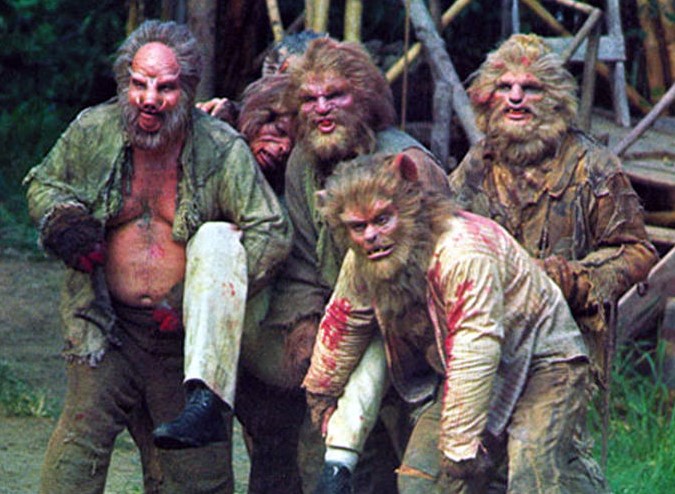
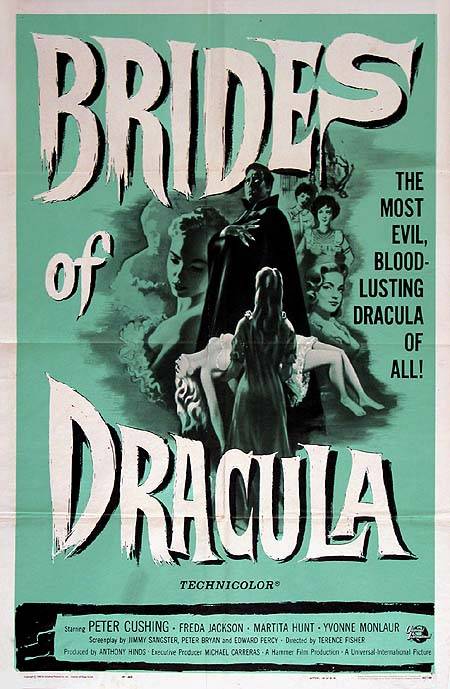
    Like many of his colleagues (Bliss and Bax did it too), Williamson wrote a fair amount of music for the cinema, admittedly for films of varying quality. It’s always amusing to discover his name in the opening credits of Hammer productions like “The Brides of Dracula” and “The Horror of Frankenstein.” But, as the prehistoric appliances on “The Flintstones” often remarked… it’s a living.

    Happy birthday, Malcolm Williamson!


    Malcolm Williamson in conversation with Bruce Duffie:
    http://www.kcstudio.com/williamson2.html

    Williamson performs his attractive Piano Concerto No. 2:

    A rare recording of his Symphony No. 6:

    Theme music for “The Brides of Dracula”

    End credits for “The Horror of Frankenstein”

    “Nothing But the Night,” starring Christopher Lee and Peter Cushing:

  • Thanksgiving Music WWFM

    Thanksgiving Music WWFM

    by 

    in
    4 responses

    This week on “Picture Perfect,” it will be a much-needed reality check, as we pause to give thanks for the blessings of family, community, and country. Join me for selections from “The Cummington Story” (Aaron Copland), “Field of Dreams” (James Horner), “The Best Years of Our Lives” (Hugo Friedhofer), and “Lincoln” (John Williams). We’ll tune out the noise and focus on what’s really important for Thanksgiving, on “Picture Perfect,” music for the movies, this Saturday evening at 6:00 EST, on WWFM – The Classical Network and wwfm.org.


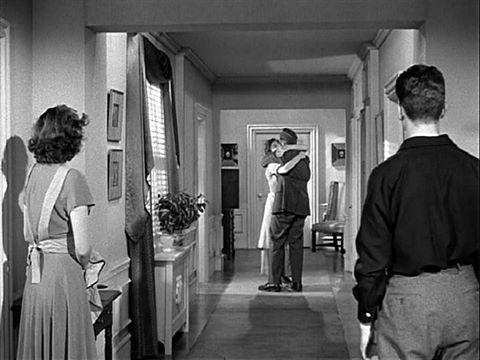
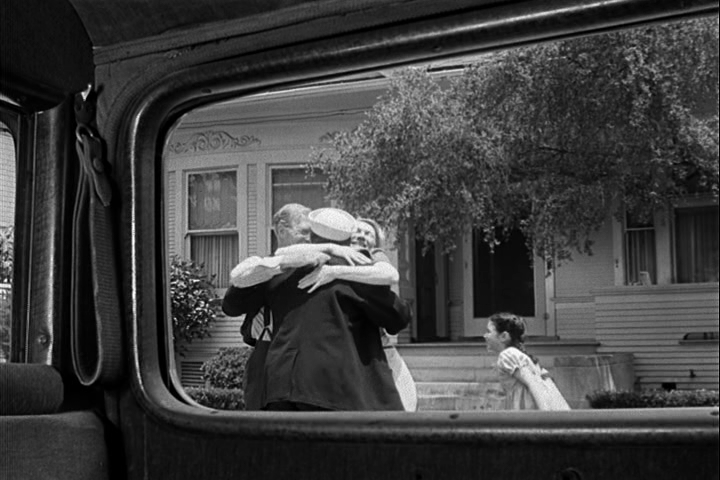
    PHOTO: Homer’s homecoming in “The Best Years of Our Lives”


  • Thanksgiving Movie Music Americana & Gratitude

    Thanksgiving Movie Music Americana & Gratitude

    by 

    in
    3 responses

    There’s more to Thanksgiving than just turkey and football. This week on “Picture Perfect,” we count our blessings and aspire to do better, with music from movies reflective of what’s best in human nature and most admirable in the American character.

    Aaron Copland’s work on “The Cummington Story” (1945), a semi-documentary produced by the Office of War Information, underscores the gradual acceptance of European war refugees into a cautious but fundamentally decent New England community. The music is pure Americana, with some of the material later finding its way into Copland’s Clarinet Concerto and “Down a Country Lane.”

    “Field of Dreams” (1989) is one of those rare films that has the ability to reduce manly men – even those without father issues – to a pool of tears. Phil Alden Robinson’s superior adaptation of W.P. Kinsella’s novel, “Shoeless Joe,” is a male wish-fulfillment fantasy, in which a man finds redemption, and a new understanding of his father, in the enchanted cornfields of America’s heartland. And it’s all brought about courtesy of America’s pastime, baseball. The evocative score, much indebted to Copland, is by James Horner.

    “The Best Years of Our Lives” (1946) is one of the great American classics. This touching film tells the tale of the three WWII veterans struggling to readjust to civilian life. It isn’t easy, but with the support of family and friends, there’s plenty of hope for the future. Hugo Friedhofer wrote the Academy Award-winning score, earning the film one of its seven Oscars. The orchestrations were by Copland protégé (and composer of “The Big Country”) Jerome Moross.

    Finally, Daniel Day-Lewis elevated Steven Spielberg’s “Lincoln” (2012) to greatness with one of the uncanniest performances ever captured on film. Day-Lewis’ gentle but shrewd Man of Destiny would go to any lengths to hold the country together. John Williams tapped into America’s proud musical heritage, clearly influenced by Copland and Ives to create a score of stirring nobility.

    I hope you’ll join me as we give thanks for family, community and country on “Picture Perfect,” music for the movies, this Saturday evening at 6:00 EST, on WWFM – The Classical Network and at wwfm.org.


    And thank you, YouTube, for making “The Cummington Story” available online!

    Watching it again, it’s interesting to reflect on what an influence, for good or ill, media and government have had in shaping the popular consciousness.


  • Island of Dr Moreau Movie Review Mishap

    Island of Dr Moreau Movie Review Mishap

    by 

    in
    4 responses

    Last week, H.G. Wells’ nightmare vision of vivisection and overweening science, “The Island of Dr. Moreau,” came up against a Friday the 13th in the year of our angry Lord 2020. Predictably, computer and connectivity issues ensued. After a torturous hour of clawing through the innards of Facebook and Zoom, without success, Roy and I had no choice but to reschedule our – ahem – dissection of the 1977 film version until this SUNDAY.

    In the interim, I have padded out my knowledge of all things “Moreau,” by rewatching the 1932 version (“Island of Lost Souls” with Charles Laughton), reading Wells’ original novel, and exhuming the Marvel Comics adaptation from my childhood. I’m not sure, however, that even I can bring myself to watch the 1996 version, with Marlon Brando wearing an ice bucket…

    TO THE HOUSE PAIN! Leave your comments as we lay down the LAW on the next Facebook livestream of Roy’s Tie-Dye Sci-Fi Corner, THIS SUNDAY NIGHT AT 7:00 EST.

    There will be no show tonight, because of a scheduling snafu. However, just so you aren’t sent about your weekend with a gigantic hole in your stomach, Roy and I will pop up this evening at 8:00 EST, simply to announce our upcoming HOLIDAY SCHEDULE. Drop by for a hit, and then come back for More(au) on Sunday, if you please.

    HO HO HO!

    https://www.facebook.com/roystiedyescificorner/


  • Lincoln, the Marine Band, and Gettysburg

    Lincoln, the Marine Band, and Gettysburg

    by 

    in
    3 responses

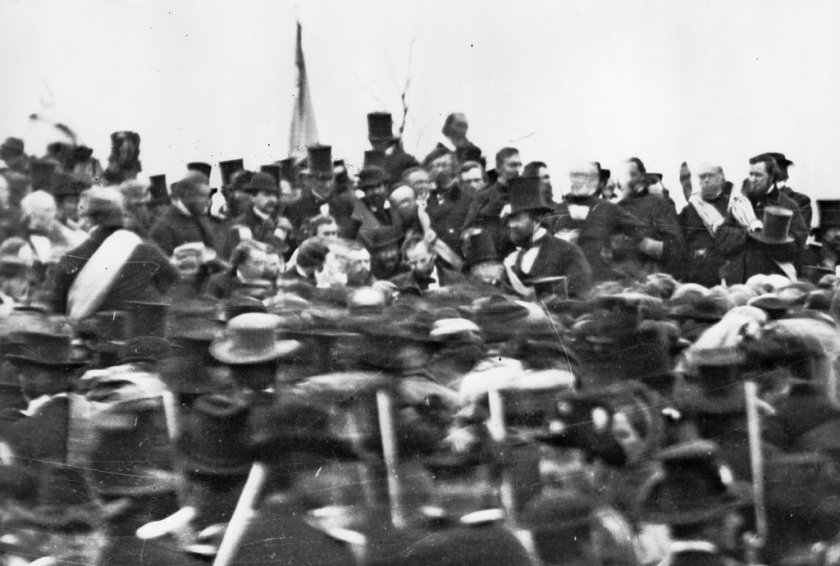
    On November 18, 1863, the United States Marine Band accompanied President Abraham Lincoln to Gettysburg for the dedication of the Soldiers’ National Cemetery there, for which Lincoln was to deliver his celebrated Gettysburg Address.

    Lincoln and the band traveled by train from Washington, by way of Baltimore and Hanover Junction. Directed by Francis M. Scala, the 27-member ensemble, which included trombonist Antonio Sousa, father of John Philip Sousa, serenaded the president on route with a lunchtime concert.

    The next day, November 19th, 157 years ago this afternoon, members of “The President’s Own” performed the “Old Hundred” at the consecration and dedication ceremony, with Lincoln honoring those who fell. According to an article in the Washington Daily Morning Chronicle, the music was played “with great effect, in all its grand and sublime beauty.”

    Lincoln’s Address had a more divided reception – ironic, since this modest, three-minute speech is now ensconced as one of the most hallowed pieces of American oratory. We as Americans have revered Lincoln’s noble sentiments since childhood, for generations, as well we should. It is all the more striking, when viewed through the lens of the present, for not labeling those who laid down their lives as “losers” and for delivering a message of national unity – and respect – at a time of unprecedented national conflict. It doesn’t get more patriotic than that.

    A copy of the Address, signed and dated by President Lincoln, is on display in the Lincoln Room at the White House – a room apparently never visited by the outgoing administration. Here is a reminder of what Lincoln said regarding the sacrifice of those who died.

    “Four score and seven years ago our fathers brought forth on this continent, a new nation, conceived in Liberty, and dedicated to the proposition that all men are created equal.

    “Now we are engaged in a great civil war, testing whether that nation, or any nation so conceived and so dedicated, can long endure. We are met on a great battle-field of that war. We have come to dedicate a portion of that field, as a final resting place for those who here gave their lives that that nation might live. It is altogether fitting and proper that we should do this.

    “But, in a larger sense, we can not dedicate – we can not consecrate – we can not hallow – this ground. The brave men, living and dead, who struggled here, have consecrated it, far above our poor power to add or detract. The world will little note, nor long remember what we say here, but it can never forget what they did here. It is for us the living, rather, to be dedicated here to the unfinished work which they who fought here have thus far so nobly advanced. It is rather for us to be here dedicated to the great task remaining before us – that from these honored dead we take increased devotion to that cause for which they gave the last full measure of devotion – that we here highly resolve that these dead shall not have died in vain – that this nation, under God, shall have a new birth of freedom – and that government of the people, by the people, for the people, shall not perish from the earth.”

    Abraham Lincoln
    November 19, 1863

    https://www.tecom.marines.mil/News/News-Article-Display/Article/527553/the-gettysburg-address-2-minutes-that-changed-a-young-nation-forever/

    The Marine Band at Gettysburg:

    http://tapsbugler.com/wp-content/uploads/2018/11/Lincoln-and-The-Marine-BAnd-at-Gettysburg.pdf

    Copland’s “Lincoln Portrait,” narrated by James Earl Jones:


Tag Cloud

Aaron Copland (93) Beethoven (95) Composer (114) Film Music (145) Film Score (143) Film Scores (255) Halloween (94) John Williams (195) KWAX (229) Leonard Bernstein (104) Marlboro Music Festival (125) Movie Music (160) Mozart (91) Opera (213) Philadelphia Orchestra (89) Picture Perfect (174) Princeton Symphony Orchestra (109) Radio (88) Ross Amico (244) Roy's Tie-Dye Sci-Fi Corner (290) The Classical Network (101) The Lost Chord (269) Vaughan Williams (105) WPRB (397) WWFM (881)

DON’T MISS A BEAT

Receive a weekly digest every Sunday at noon by signing up here


RECENT POSTS