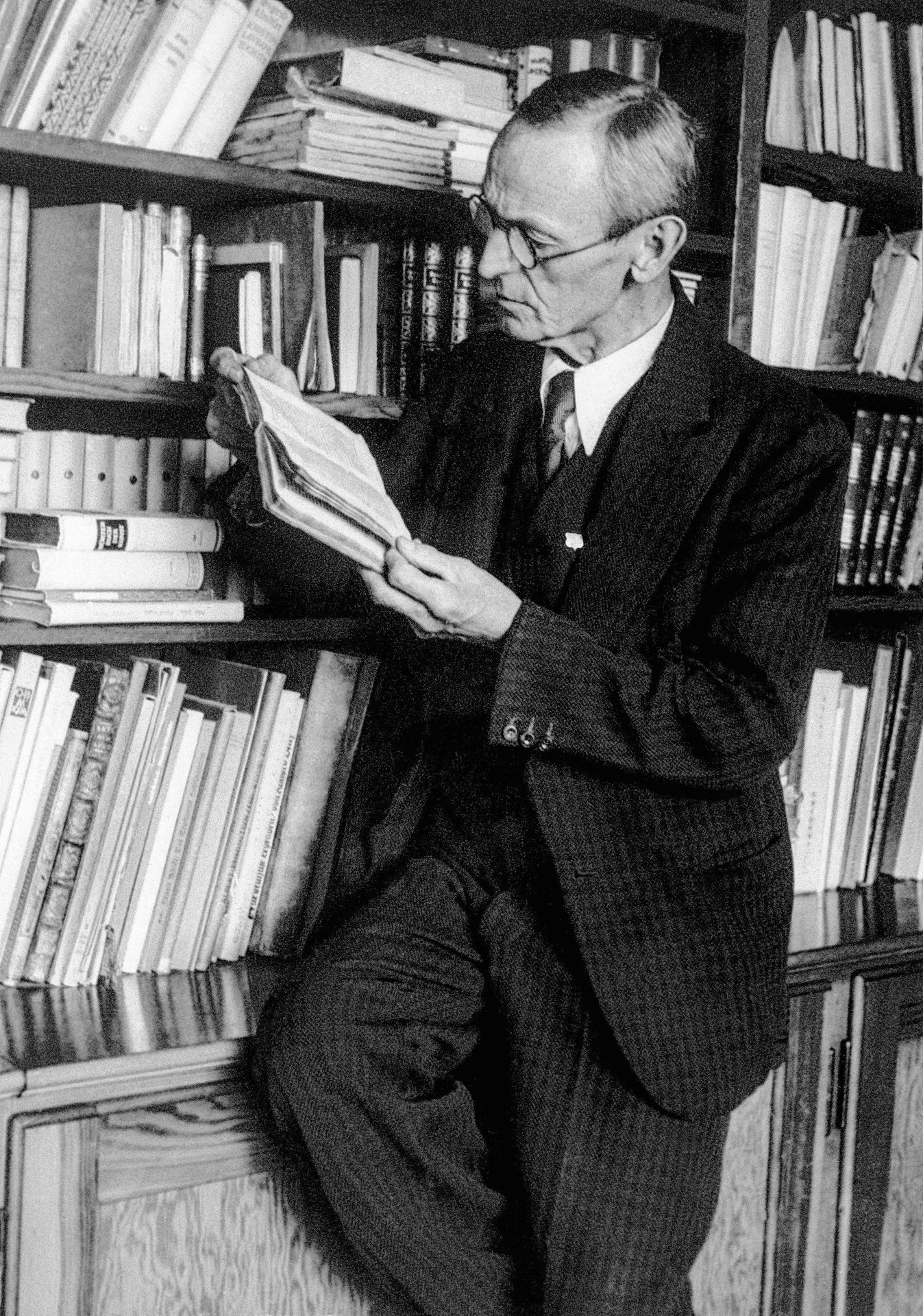
In Hermann Hesse’s “Steppenwolf,” the loner Harry Haller stumbles across a secret door, inscribed “MAGIC THEATER – NOT FOR EVERYBODY – FOR MADMEN ONLY.” In “The Glass Bead Game,” the game itself, in which scholars strive to achieve perfection through a synthesis of the arts and sciences, is also described as a magic theater.
This Sunday night on “The Lost Chord,” explore this common thread in Hesse’s novels, with a concerto for horn and orchestra, “The Glass Bead Game,” by James Beckel, and “Music for the Magic Theater,” by George Rochberg.
Go mad for Hesse. Join me for “Novel Inventions,” this Sunday night at 10:00 EST, on WWFM – The Classical Network and wwfm.org.
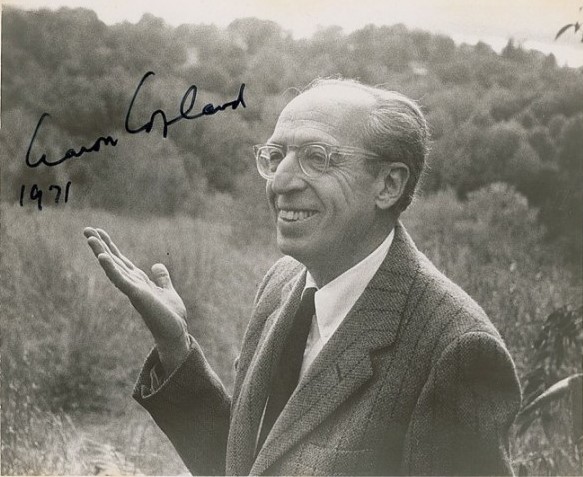
How fortunate that one of our greatest composers lived through an era when so much could be documented on film. With Thanksgiving right around the corner, I’ve assembled a Copland cornucopia, for his birthday.
This week on “Picture Perfect,” as the shadows lengthen, we revisit the world of film noir, a genre notoriously slippery to define, but easy to know when you see it – with its long shadows and moral ambiguities; cock-eyed camera angles and snappy repartee; isolation and innuendo. It’s a genre where a pair of gams is an invitation to the gallows; where a man’s best friend – and sometimes his worst enemy – is his Colt .38; where only cigarettes and bourbon can ease the pain.
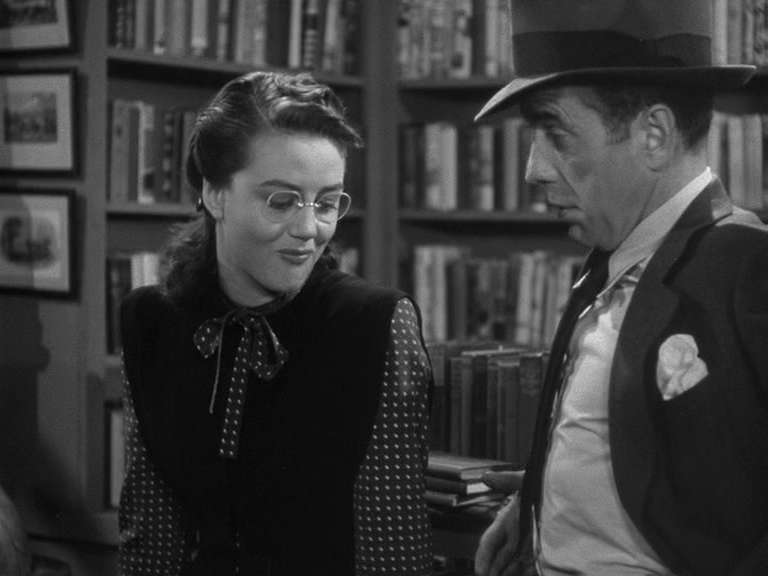
The labyrinthine mystery at the heart of “The Big Sleep” (1946) is so disorienting, even the book’s author, Raymond Chandler, couldn’t tell whodunit. Who cares? Humphrey Bogart and Lauren Bacall get some more steamy dialogue to satisfy fans of “To Have and Have Not,” and there’s plenty of Bogey pounding the pavement and tossing off tart one-liners in pursuit of the truth. But my favorite scene involves Dorothy Malone, who runs the hottest bookstore in town.
Whenever there are gallows to be built or gangsters to be beaten, Warner Brothers could be counted on to assign Max Steiner.
“Chinatown” (1974) is one of the best of the neo-noirs of the 1970s. This time, Jack Nicholson plays private dick J.J. Gittes, who takes on a seemingly routine case that begins to spiral out of control. When producer Robert Evans rejected Philip Lambro’s original score, Jerry Goldsmith stepped in as a last-minute replacement. The composer was hired with the understanding that he had only ten days to write and record new music. For his effort, Goldsmith received an Academy Award nomination.
The Coen Brothers clearly love noir, from their first feature, “Blood Simple,” to their Academy Award winners, “Fargo” and “No Country for Old Men,” to their absurdly entertaining reimagining of “The Big Sleep,” “The Big Lebowski.” “Miller’s Crossing” (1990) was one of the more underappreciated of these. The film follows the well-worn device of an anti-hero playing two sides off of one another, until he is the last one standing – shades of Dashiell Hammett’s “Red Harvest,” with a healthy dose of “The Glass Key” thrown in, for good measure. The Irish-inflected score is by Coen regular Carter Burwell.
Before he became stereotyped as a composer for epic films like “Ben-Hur,” “King of Kings” and “El Cid,” Miklós Rózsa was the king of noir, providing scores for genre classics such as “Double Indemnity” and “The Strange Love of Martha Ivers.” We’ll hear a suite assembled from three such projects: “Brute Force” (1947), a hard-hitting prison drama, starring Burt Lancaster as a desperate inmate and a contemptible Hume Cronyn as a sadistic guard; “The Killers” (1946), also starring Lancaster as a marked boxer; and “The Naked City” (1948), with Barry Fitzgerald leading a police investigation into the murder of a young model. The suite is titled “Background to Violence.”
Put on your rumpled linen suit, draw the Venetian blinds, and play the sap for nobody this week. It’s film noir in the gritty city, on “Picture Perfect,” music for the movies, this Saturday evening at 6:00 EST, on WWFM – The Classical Network and at wwfm.org.
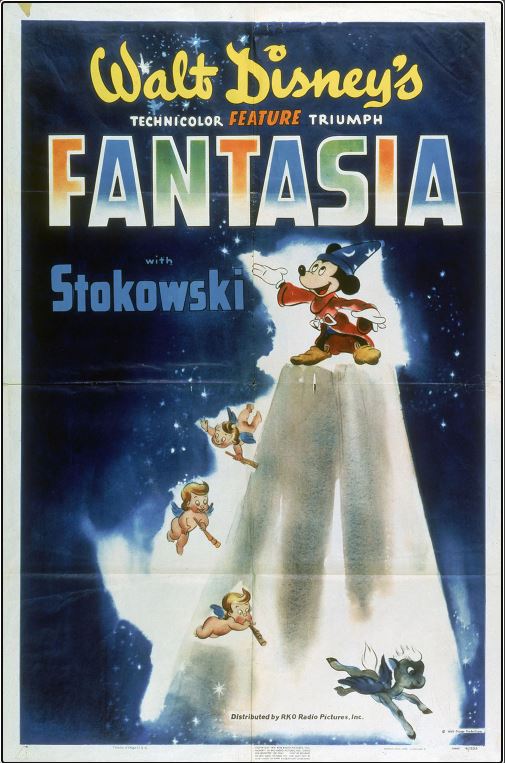
Walt Disney’s “Fantasia” was released into theaters for the first time 80 years ago today.
Giddy with the success of “Snow White and the Seven Dwarfs” (1937), which became a surprise hit – the highest grossing feature up to that time (soon to be supplanted by “Gone with the Wind”) – and hoping to reinvigorate the popularity of house brand Mickey Mouse, Disney spared no expense in the creation of this bold, beautiful, mind-bending, slightly pretentious, occasionally kitschy experimental enterprise, engaging Leopold Stokowski and the Philadelphia Orchestra to record the film’s soundtrack and, on its initial run, displaying it in special road show productions, featuring souped-up, “Fantasound” surround audio. This was the first feature film to be released in stereo. It ran in one venue in New York for a solid year. At a point, Disney even toyed with the idea of pumping different scents into the theater, but he must have realized it was all becoming a little too Scriabinesque.
Eventually reality caught up. “Fantasia” was a money-loser from the start. The war in Europe cut off any possibility of overseas revenue, and it became apparent that the film would have to be reissued, with cuts, in standard format, in regular theaters, if the studio hoped to make any of its money back. As it was, it didn’t turn a profit until 1969. I suspect it was the same crowd that was buzzing to “2001: A Space Odyssey” that finally pushed “Fantasia” into the black. It is now the 24th highest-grossing film in the United States. There aren’t any studios, and very few classical record companies, that would make that kind of investment in the future anymore.
I venture to guess most people who were lucky enough to see “Fantasia” in the cinema, back in the days before home video brought an end to its regular theatrical reissues, were charmed to see Stokowski shake hands with Mickey Mouse. Even so, this is the moment that became seared into many an impressionable memory. And I know I loved it.
Apologies for posting it in two parts, but “Fantasia” was reissued and “restored” a number of times over the years. This one I know sports Stoky’s original audio.
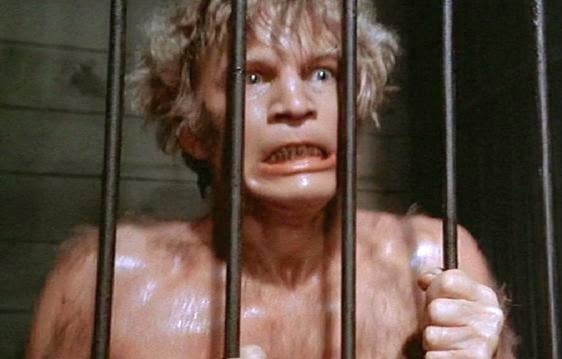
No, wait a minute. That’s something else entirely, though Devo is one of many bands inspired by “The Island of Dr. Moreau.” Roy Bjellquist and I will repeat “the Law,” when we discuss the 1977 film version of the H.G. Wells classic, on the next Roy’s Tie-Dye Sci-Fi Corner. Scream your insights in the House of Pain (i.e. the comments section), as we live-stream on Facebook, this Friday evening at 7:00 EST!
6 responses