• Dvořák’s Spectre’s Bride Too Long? Try This!

    Dvořák’s Spectre’s Bride Too Long? Try This!

    by 

    in
    4 responses

    If, like me, you think Dvořák’s “The Spectre’s Bride” is too long – with not enough puppets! – then this should be the very thing for you.

    At 43, Dvořák was at the peak of his creative powers (he had only just completed the Symphony No. 7) when he composed his dramatic cantata, and its premiere, in London, in 1885, was an astonishing success. In fact, Dvořák claimed it was the greatest success he had enjoyed up to that time. The Victorians always were rather mad for their oratorios.

    I have listened to “The Spectre’s Bride” a number of times on recordings and have found it to be only fitfully interesting. This is especially surprising to me, since the story is so lurid it should grip my inner eight year-old and not let go. The tale may be a familiar one from many European folk tales: a maiden is abducted by the ghost of her fiancé, who gallops off with her, through the air and across a forbidding landscape, with the aim of reaching the phantom’s “castle” – in reality, a graveyard. At the work’s macabre climax, the maiden wrests free and bolts herself inside a cottage, spirits howling at the door. Inside, a corpse, prepared for burial, stirs to do their bidding.

    Admittedly, this is an effective setpiece, but until then, I must say, it’s not just the graves that are yawning. And I offer this as someone who generally admires Dvořák. No doubt there are those who have sung the work who could be of a different opinion, and perhaps hearing it in concert is a more compelling experience than listening to it at home.

    Dvořák’s setting is based on a poem by Karel Jaromir Erben. Erben, who lived from 1811 to 1870, was an important figure in the development of a Czech national identity. He served as a kind of Brothers Grimm to the Czech people, synthesizing works based on traditional and folkloric themes, into gruesome ballads full of witches, goblins and ghosts. So far, so good.

    In my opinion, however, Dvořák was much more inspired when writing his other, more colorful, Erben-influenced pieces, including the comparatively compact symphonic poems “The Water Goblin,” “The Noon Witch,” “The Golden Spinning Wheel,” and “The Wild Dove,” and the enchantingly melancholy, ceaselessly melodic opera “Rusalka.”

    Therefore it is with great relief that I stumble across this lean, 29-minute distillation. From its fragmentary nature, I assume that it was designed to be projected at certain key moments during live performance. Maybe that’s what a guy like me needs. Visual aids. But I don’t think so. I just think it’s not that interesting a piece, to demand an investment of 80 minutes. It seems like a miscalculation by a less experienced composer. And I offer this as someone who is generally captivated by Dvořák’s operas, or at least the ones I have seen and own. Of those, “Rusalka” must be near the top of my list of favorites, by any composer.

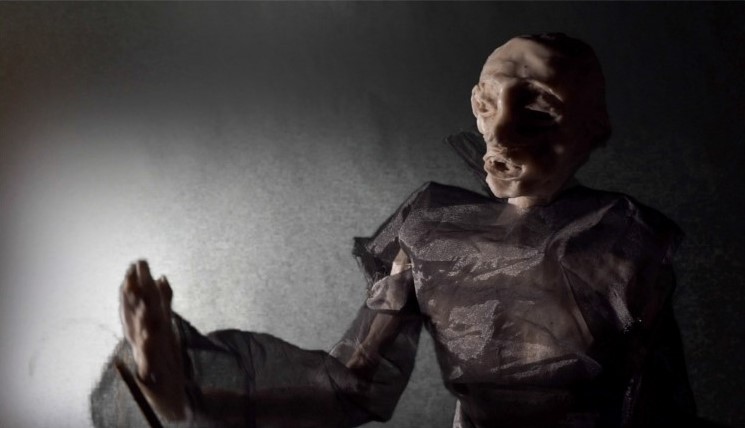
    The puppets are designed by Francesca Borgatta, and they’re all crafted from “recycled objects and materials taken from nature.” Good. If you’re going have them dragged into the gaping maw of Hell, it’s best that they’re biodegradable.

    You can learn more about Borgatta at her website, puppetfigures.com.

  • Sir Malcolm Arnold: Genius & Demons

    Sir Malcolm Arnold: Genius & Demons

    by 

    in
    9 responses

    “…[T]hou was a skellum,
    A blethering, blustering, drunken blellum;
    That frae November till October,
    Ae market-dae thou was na sober.”

    Rabbie Burns wrote those lines of Tam O’Shanter. But they could just as well have applied to Sir Malcolm Arnold. Both men were, more or less, fond of the bottle and also driven by demons.

    Arnold was born on this date in 1921. He started out as a trumpeter with the London Philharmonic Orchestra. He became its principal in 1943.

    During World War II, Arnold registered as a conscientious objector. However, following the death of his brother, a pilot in the RAF, he decided to enlist. At least for a time. Though he never saw action beyond a military band, he quite literally shot himself in the foot in order to get back to civilian life.

    In 1948, he retired from orchestral playing to devote himself exclusively to composition. He had an attractive melodic gift, which served him well in the writing of light music and film scores. He won an Academy Award in 1957 for his work on “The Bridge on the River Kwai.”

    However, Arnold also had his dark side, as can be detected in passages of his symphonies. He was frequently cantankerous, often inebriated, and also highly promiscuous. He tried to kill himself at least twice. He was treated for depression and alcoholism, overcoming both, but then in the early 1980s he was given only a year to live. In the event, he actually lasted another 22, during which he completed his Symphony No. 9, among other works.

    Arnold died in 2006, one month shy of his 85th birthday. He was a brilliant composer, of great facility. After Malcolm Williamson was named Master of the Queen’s Music in 1975, Sir William Walton remarked that they had given the job to the “wrong Malcolm.” For a man with so many personal demons, he wrote reams of perfectly delightful music.

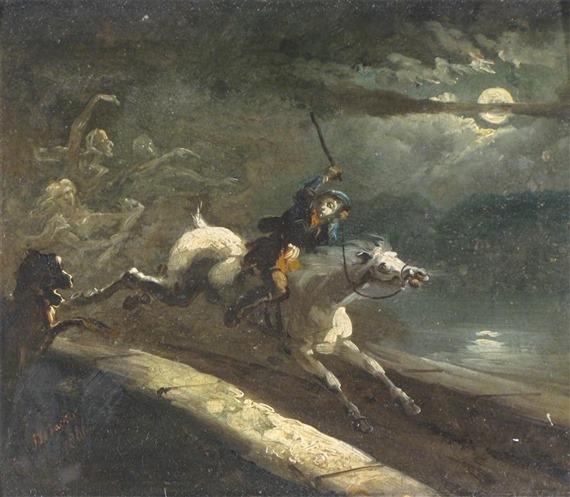
    A good example, and one of my favorite Halloween pieces, is the descriptive overture “Tam O’Shanter” (1955), in which Burns’ antihero tarries at a pub, in defiance of his wife, then staggers out into the night. Under ominous skies, he detects the sound of bagpipes emanating from the ruins of an old church. Pressing his face to chink he espies “Auld Nick,” the Devil himself, “in shape o’ beast,” presiding over a coven of high-stepping witches and warlocks. When a particularly comely witch catches Tam’s eye, he, in his drunkenness, roars, “Weel done, Cutty-sark!” (in reference to her short skirt). This brings the forces of darkness down up him, and there is a hell-for-leather sprint by horseback for a nearby river, since spirits are said not be able to cross running water.

    If you’re interested in the rest, you can read for yourself here:
    http://loki.stockton.edu/~kinsellt/litresources/ayr/tam.html

    Then listen to Arnold’s musical response:

    And for a bonus, enjoy his “Four Scottish Dances” (1957):

    Happy birthday, Sir Malcolm Arnold, you tormented genius.


    “Tam O’Shanter Fleeing the Witches” (1866), by John Joseph Barker


  • Charles Ives: An American Original

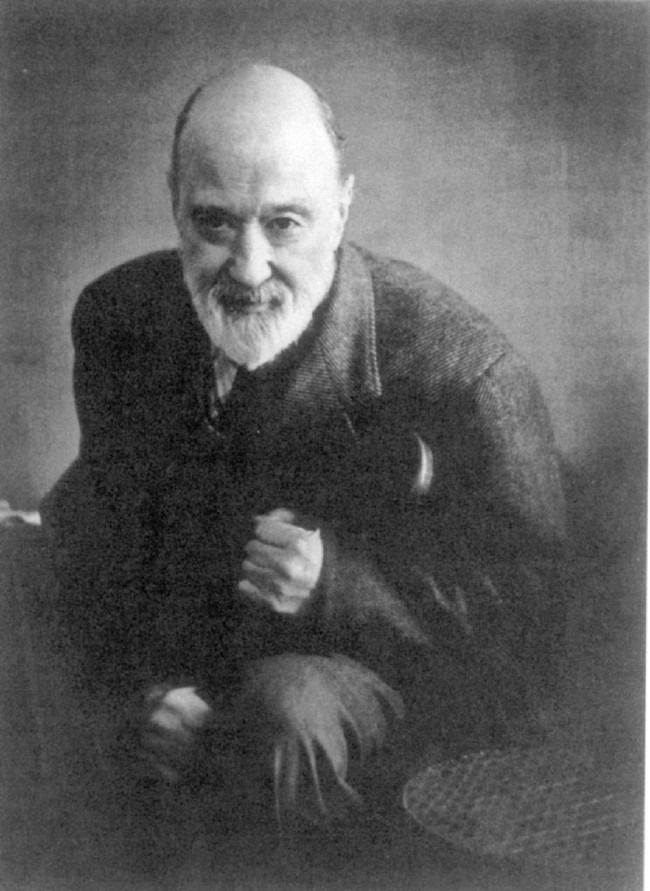
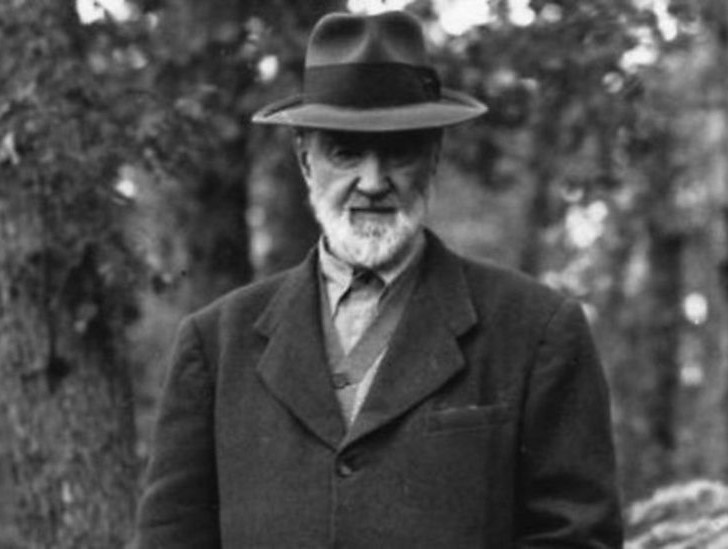
    Charles Ives: An American Original

    by 

    in
    2 responses

    “Are my ears on wrong?” once remarked Charles Ives, marveling at how out of step with musical convention his own compositions could be. Yet he soldiered on, writing works of all stripes, tonalities, and quasi-tonalities, even atonality, navigating with remarkable certainty for some 30 years, with very few performances to affirm his chosen course.

    I’m not saying anything new in stating that Ives was an American original. He wrote the kind of music he wanted to write, stitching together hymns and fiddle tunes of his youth into a brilliant crazy quilt of the American experience.

    His father had been something of an original himself, a bandmaster during the Civil War. He taught Ives to sing in one key while he played in another. This likely contributed to his son’s unique appreciation of a formative experience: while standing on a street corner during a parade, the boy Ives giddily perceived the natural dissonances and rhythmic complexities resulting from a clash of marching bands as they wrapped around the block.

    Thankfully, his quirky musical predilections were tempered by a practical streak. Ives pursued a career in the insurance business, and he became very successful at it. (His work in the field helped lay the groundwork for modern practices in estate planning.) While this would occupy much of his time, it also allowed him the financial security to follow his idiosyncratic muse. Ives composed in the evenings, on weekends, and during holidays. For a few years, in the 1890s, he was also organist and choirmaster at a couple of New York churches.

    Ives retired in 1930, which permitted him to devote himself wholeheartedly to music. Ironically, by then, he found he was no longer able to compose. His wife recalled a day in 1927 when he came downstairs with tears in his eyes and confessed that everything sounded wrong to him. After that, he labored mostly at revision and publication.

    By the time his works finally began to gain recognition, it had already been 20 years since he stopped writing. At the time of his death, in 1954, he was still widely misunderstood and much of his music remained unperformed. Nevertheless, he had some important champions. He was a recipient of the Pulitzer Prize for Music in 1947, for his Symphony No. 3, subtitled “The Camp Meeting,” a work he composed in 1904. The symphony was given its belated premiere, under Lou Harrison’s direction, in 1946.

    Arnold Schoenberg regarded Ives as a paragon of artistic integrity. After Schoenberg’s death, his widow found the following note, scrawled, among his papers: “There is a great Man living in this Country – a composer. He has solved the problem of how to preserve one’s self-esteem and to learn. He responds to negligence by contempt. He is not forced to accept praise or blame. His name is Ives.”

    Here is Ives, in all his patriotic, profane glory, singing “They Are There,” from 1943. Originally written in 1917, for the Great War, the song employs an updated text.

    Ives draws on his memory of the wrap-around marching bands of his youth, in Danbury, Connecticut, for “The Fourth of July.” Note the climactic rocket explosion, fading away into sparks!

    Finally, the work that won him the Pulitzer, the Symphony No. 3, “The Camp Meeting”:

    Ives’ characteristically gruff reaction: “Prizes are for boys. I’m grown up.” In private, though, he proudly hung the certificate on his wall.

    Happy birthday, Charles Ives!


  • Ives Concord Sonata Centennial Livestream Tonight

    Ives Concord Sonata Centennial Livestream Tonight

    by 

    in
    3 responses

    Coinciding with the composer’s birthday, the Charles Ives Society is planning to live-stream a performance of Ives’ “Concord Sonata,” to mark the centenary of the work’s publication. This free recital will be presented by Charles Ives Society president Donald Berman, tonight at 7:30 pm EDT.

    https://www.facebook.com/events/2702424456687059/

    Here’s a listening guide, assembled by society board member Kyle Gann:

    https://charlesives.org/following-concord-sonata?fbclid=IwAR1k1ZcKJywh50E7pXLc-7miuZZntBd7AjkhutGOCPK90MKjpW3FZFhRo_Q


  • Ives Violin Sonatas Jackiw & Denk Princeton

    Ives Violin Sonatas Jackiw & Denk Princeton

    by 

    in
    6 responses

    A lovely memory, on Charles Ives’ birthday: The program to a recital given last year at Princeton University’s Richardson Auditorium of all four Ives Violin Sonatas, played by Stefan Jackiw and Jeremy Denk. I don’t have a recording of the concert, but the performers toured with the program, and the Sonata No. 1 – the most “Romantic” of the four, and the one Ives published last – has been posted to YouTube, with Denk’s spoken introduction. It’s not quite the same as being there, of course, but I hope you will enjoy it even a fraction as much as I did. Thanks, Alex Rainer, for the photo!


Tag Cloud

Aaron Copland (93) Beethoven (95) Composer (114) Film Music (145) Film Score (143) Film Scores (255) Halloween (94) John Williams (195) KWAX (229) Leonard Bernstein (104) Marlboro Music Festival (125) Movie Music (160) Mozart (91) Opera (213) Philadelphia Orchestra (89) Picture Perfect (174) Princeton Symphony Orchestra (109) Radio (88) Ross Amico (244) Roy's Tie-Dye Sci-Fi Corner (290) The Classical Network (101) The Lost Chord (269) Vaughan Williams (105) WPRB (397) WWFM (881)

DON’T MISS A BEAT

Receive a weekly digest every Sunday at noon by signing up here


RECENT POSTS