At a time when mobility has been limited for a great many of us, music is still common ground. It unites us, it comforts us, and it creates a sense of home. We at The Classical Network have persevered during these challenging times in doing our part to maintain an environment of stability and cheer.
WWFM is home to some of your favorite specialty shows: “The Dress Circle,” “The Piano Matters,” “Sounds Choral,” “Between the Keys,” “The Sunday Opera,” “Bach at One,” “The Lyric Stage,” “Half Past,” “Curtis Calls,” “Inside Music,” “Cadenza,” “A Tempo,” and of course “Picture Perfect” and “The Lost Chord.” These are all still produced, more or less, in-house.
For some of us, this home has been a virtual one since the arrival of COVID, but we’ve all worked hard to see to it that classical music programing remains available to you in a 24/7 format. Please help support it. Call us today at 1-888-232-1212, or make a donation online at wwfm.org.
There’s no place like music. From our home to yours, thank you for your support of WWFM – The Classical Network!
We all know the sound. That crazy, trilled electronic whistle that dips into a whoop. Or it starts in a trough and shoots up into the super stratosphere. It’s the sound of UFOs and mad science. It’s the sound of the theremin.
This week on “Picture Perfect,” we anticipate a hands-off Halloween with selections from four films enhanced by Leon Theremin’s visionary instrument.
“The Thing from Another World” was one of two seminal science fiction scores written in 1951. (The other was Bernard Herrmann’s “The Day the Earth Stood Still.”) On the soundtrack, the theremin acts as a musical counterpart to James Arness’ rampaging humanoid carrot. This was unquestionably composer Dimitri Tiomkin’s wildest hour; he never wrote anything like it again.
“The Thing” and “The Day the Earth Stood Still” may have been the most influential, but “Rocketship X-M” was the first. The film was rushed into production to beat George Pal’s “Destination Moon” to theaters in 1950. It was shot in just 18 days! The unlikely plot has the crew of a moon expedition blown off course to Mars. Interestingly, the composer was none other than Ferde Grofé – he of the “Grand Canyon Suite” fame.
Far more reputable, but still not wholly comfortable with its science, is Alfred Hitchcock’s “Spellbound,” from 1945. Gregory Peck plays an amnesiac, who may or may not have committed murder, and Ingrid Bergman is the psychoanalyst who falls in love with him. The film is of greatest interest for its production design, which features dream sequences conceived by Salvador Dali, and for its score, by Miklós Rózsa.
Hitchcock disliked the music – he thought it got in the way of his direction – but Academy voters disagreed, and the score earned Rózsa the first of his three Academy Awards.
Closer to our own time, Howard Shore incorporated the theremin into his Mancini-esque music for “Ed Wood,” released in 1991. The film is Tim Burton’s love letter to the grade-Z director of “Plan 9 from Outer Space.” “Plan 9” is widely regarded as the worst movie ever made (worse even than “Rocketship X-M”).
Make contact with the theremin – its distinctive, extraterrestrial timbre, you’ll recall, conjured without physical touch – on “Picture Perfect,” music for the movies, THIS SATURDAY EVENING AT 6:00 EDT, on WWFM – The Classical Network and wwfm.org.
Children of the night… what music they make! WWFM is in the midst of its fall fundraiser. If you’re a fan of “Picture Perfect,” please support it by making a contribution at 1-888-232-1212, or by donating online at wwfm.org. Thank you for your part in keeping the legacy of classic film music ALIVE!
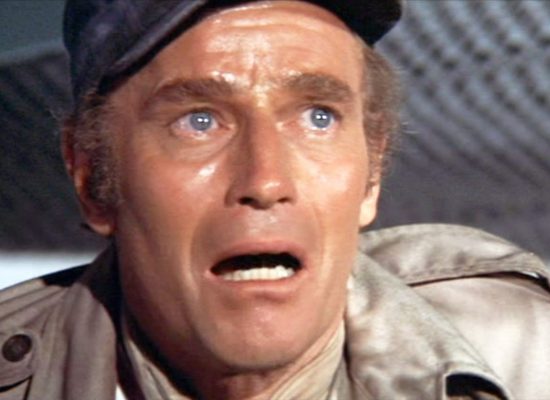
I think I can see what happened here. Charlton Heston, giddy from his sci-fi success with “Planet of the Apes” – a film that features one of the greatest twist-endings of all time – is handed the script for “Soylent Green.” He gets to the last page and says, “Yesssssssssssssss!”
Not that anyone who is half-way paying attention doesn’t see the pay-off coming from 90 minutes away.
Still, far be it from me to spoil it – at least until tonight, when Roy Bjellquist and I will be joined by special guest, “Soylent Green” enthusiast Shari Bethman-Bjellquist, to discuss this 1973 dystopian classic on Roy’s Tie-Dye Sci-Fi Corner.
Chime in with your colorful insights and feedback, as we live-stream on Facebook, this Friday night at 7:00 EDT!
In his years before the public, he was recognized as a pianist of diabolical stamina. Franz Liszt was the inventor of the modern piano recital. While most of his rivals cultivated their reputations on the more intimate salon circuit, Liszt graduated to the larger halls. He was the first to turn the piano sideways, the better to show off his long hair and noble profile, like that of a Hungarian falcon.
He made mincemeat of the delicate instruments of his day, which were unable to withstand his musical onslaughts. In a masterstroke of showmanship, he always kept a spare on stage. On at least one occasion, he went to head-to-head with an orchestra. He mesmerized his audiences with his superhuman transcriptions and paraphrases, whipping them into frenzies. The ladies of Europe forgot their manners and rushed the stage. Skirmishes broke out, as they wrestled for his gloves and cigar butts, carelessly, calculatedly, left behind.
Liszt enjoyed enormous fame. He accumulated staggering wealth. And he enjoyed prodigious love affairs. Then all at once, at the age of 35, he simply walked away. He knew he was more than a vulgar showman, and he was eager to explore other avenues. He may have been a man who savored the privileges of celebrity, but he was also an intellectual and an artist of the spirit. In fact, he was one of the most innovative musical thinkers who ever lived.
Among his innumerable achievements, he pioneered a technique known as thematic transformation, which he employed in his own compositions, as a radical alternative to traditional classical form. He is also credited with the creation of the symphonic poem. Without Liszt, there would have been no Wagner as we know him. In fact, Romantic music would have had to find its own way.
He also happened to be extraordinarily generous. He never took payment from any of his pupils. He programmed the operas of Wagner and Berlioz, when nobody else would touch them. He selflessly promoted the works of Grieg, Smetana, Debussy, Saint-Saëns, Fauré, Borodin, and many others. He was lured back to the concert stage only for charitable purposes – for the relief of victims of fire and flood, in support of political refugees, and to raise money for a Beethoven monument in Bonn.
When Wagner was on the run as a fugitive for his role in the 1849 Dresden uprising, Liszt, then a prominent conductor at the Weimar court, not only gave him the money to flee to Switzerland, he endorsed Wagner’s courtship of his (already married) daughter. Wagner’s “Tristan chord” would send shockwaves throughout Europe, changing music forever, but in actuality it was only one of the many innovations he borrowed from his future father-in-law.
Liszt’s later music at times anticipates the experiments of the 20th century, by composers as diverse as Debussy, Scriabin, and Schoenberg. “My sole ambition as composer,” he once pronounced, “is to hurl my lance into the infinite space of the future.”
For his pains, he was unrelentingly lambasted by his critics and intrigued against by jealous rivals. At various points throughout his career, he was dismissed for pandering to the mob, ridiculed as a charlatan and a hypocrite, and shunned for his long-term relationships with two women who fled troubled marriages.
Yet there is a depth and spirituality in his greatest music that defies all charges. Liszt may have been something of a glamor puss, but he was not a shallow man. He was an intellectual, and he was also devoutly religious, even to the point of taking minor orders and living in a cell in Rome. In all, he was a fascinating amalgam of charlatan and visionary, sinner and saint, peacock and messiah.
Happy birthday, Franz Liszt (1811-1886). One thing you were not was listless!
“Totentanz” (“Dance of Death”), 1849, rev. 1859
“Nuages gris” (“Grey Clouds”), gnomic and existential,1881
“La lugubre gondola,” Liszt’s premonition of Wagner’s funeral procession through the canals of Venice, 1882
Transcription of Saint-Saëns’ “Danse Macabre,” 1874
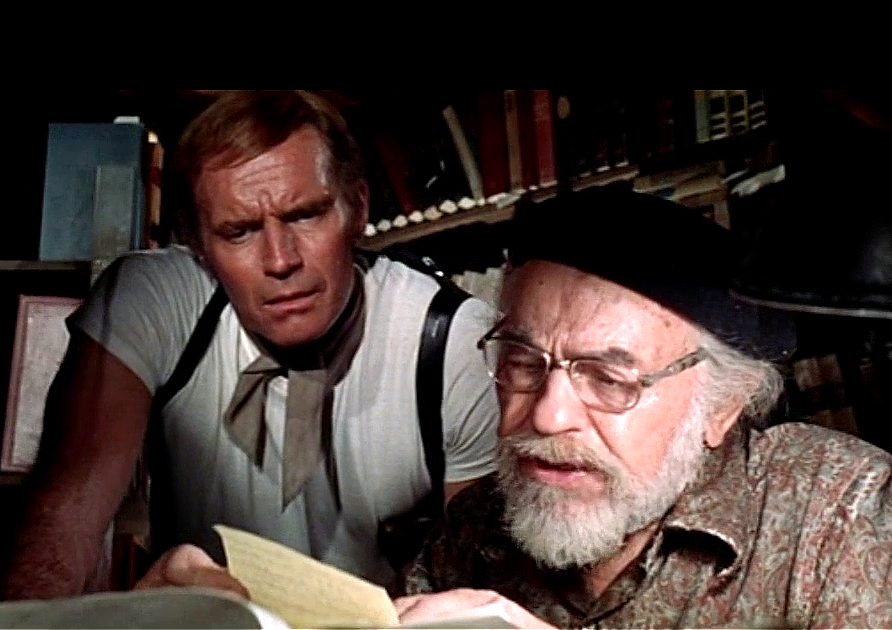
Edward G. Robinson, who was propelled to stardom as Caesar Enrico Bandello in 1931’s “Little Caesar,” made his final screen appearance 42 years later, in “Soylent Green.”
Richard Fleischer’s adaptation of Harry Harryson’s dystopian novel “Make Room! Make Room!” is that rare film that can be spoiled by revealing but a single line. So we’ll save it for tomorrow, when Roy Bjellquist and I will be joined by special guest – and Roy’s wife – Shari Bethman-Bjellquist, for a discussion of this ‘70s sci-fi classic, a horror story set in the year 2022, now getting just a little too close for comfort.
Robinson’s scenes are lent an added poignance, when you realize he was already aware that he was terminally ill. In fact, he died only twelve days after shooting his final scene. His character, Sol, is a cultivated dinosaur, much like the real-life Robinson, an art connoisseur who spoke seven languages. Sol the librarian puts on a recording of Mozart’s “Kegelstatt” Trio as he introduces Charlton Heston’s Frank Thorn to honest-to-goodness vegetables and beef stew. Then, when it’s time to “go home,” he departs to a medley of Tchaikovsky, Beethoven, and Grieg.
Interestingly, a few years earlier, Robinson was cast to play Dr. Zaius, opposite Heston, in “Planet of the Apes,” but already, health concerns caused him to drop out.
Climate change. Greenhouse gases. Dying oceans. Pollution. Poverty. Overpopulation. Depleted resources. Corporatocracy. And gruesome solutions. If anything, this film has become more chilling – and more likely – with the passing of the years, than it ever was in 1973.
All hail plankton! Green is the new black, on Roy’s Tie-Dye Sci-Fi Corner. Join us for this special three-way conversation. We’ll be looking for your comments, when we live-stream on Facebook, this Friday evening at 7:00 EDT.



5 responses