• 70s Movie Signs & Capricorn One Review

    70s Movie Signs & Capricorn One Review

    by 

    in
    4 responses

    10 SIGNS YOU’RE WATCHING A ‘70s MOVIE

    ** Plot driven by conspiracy theory

    ** 100-mile-an-hour car chase

    ** Bona fide aerial stunt work

    ** Memorable film score (by Jerry Goldsmith)

    ** Unfortunate drum kit in love theme on original soundtrack

    ** Everybody’s smoking. Indoors. At the workplace.

    ** Elliot Gould gets top billing

    ** O.J. Simpson is one of the most beloved celebrities in America

    ** Karen Black receives “last” billing

    ** Even when it doesn’t make any sense, the movie is still somehow satisfying


    Take a rocket to Mars, and a time machine to 1978, as Roy Bjellquist and I prepare for lift-off and “Capricorn One.” Peter Hyams’ post-Watergate, Martian hoax mustache-twirler will be our focus on the next Roy’s Tie-Dye Sci-Fi Corner.

    Hal Holbrook is the patron saint of shady government, Brenda Vaccaro’s voice is deeper than Deep Throat’s, and flying ace Telly Savalas thinks we’re all perverts.

    Rattlesnake is on the menu! We’ll be late for our own funerals, if not the Facebook live-stream. Drop by, leave a comment, and join the conversation, this Friday at 7 pm EDT.

    https://www.facebook.com/roystiedyescificorner/


  • Lenape Chamber Ensemble Summer Gala Online

    Lenape Chamber Ensemble Summer Gala Online

    by 

    in
    9 responses

    At a time when gathering for live concerts is still a risky proposition, Lenape Chamber Ensemble is offering archival performances from last year’s Summer Gala series. Listen online for music by Mendelssohn, Saint-Saëns, and Beethoven (recorded 7/13/19), Haydn, Milhaud, and Dvořák (recorded 7/20/19), and Cherubini, Ravel, and Taneyev (recorded 7/27/19).

    The Lenape Chamber Ensemble was founded in 1975 by Mary Eleanor Pitcairn, as Bucks County’s resident chamber music ensemble. A summer season was added in 1986.

    Ordinarily, performances would take place on Friday evenings, at Upper Tinicum Lutheran Church, in Upper Black Eddy, PA, and Sunday afternoons, at Delaware Valley University, in Doylestown. Needless to say, nothing about this year is ordinary.

    Thankfully, the internet is immune to COVID. Enjoy selections from the 33rd annual Summer Gala concerts, and keep up to date with plans for Lenape’s 46th regular season here:

    Celebrate the Brilliance of Autumn with Glowing Chamber Music!


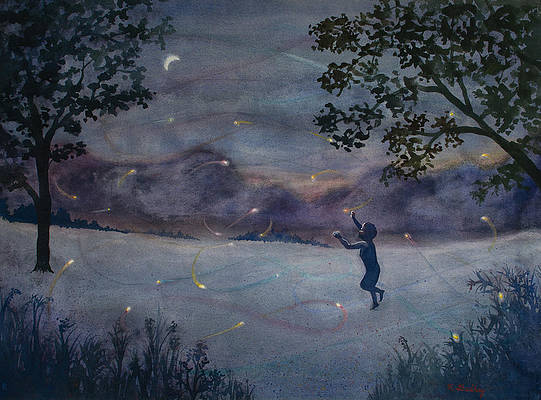
    IMAGE: “Summer Nights Passing,” Ruth Bailey

    I’m delighted to learn this painting actually inspired a lovely piece of music by Frederic Glesser:


  • Capricorn One: Mars, Murder, and Conspiracy

    Capricorn One: Mars, Murder, and Conspiracy

    by 

    in
    6 responses

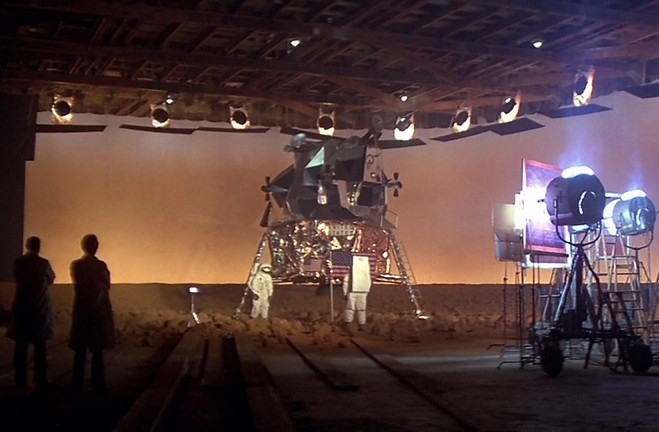
    Once again, greedy corporations and corrupt leadership do the wrong thing, in “Capricorn One,” Peter Hyams’ trust-no-one, mission-to-Mars conspiracy thriller.

    Three wholesome American astronauts find themselves caught between a rock and two helicopters, when something goes horribly wrong during preparations for the first manned expedition to the Red Planet, and only chain-smoking journalist Elliot Gould can save them! But can he save himself? Especially from Karen Black?

    Join Roy Bjellquist and me as we discuss this quintessential ‘70s entertainment. We’ll wallow in post-Watergate paranoia, marvel at Gould’s and Black’s popularity, and heap praise on Jerry Goldsmith’s urgent score.

    The fever-dream cast includes two Barbra Streisand husbands, three of “All the President’s Men,” Law & Order’s Jack McCoy, Brenda Vaccaro, Kojak, the Big Lebowski, Bosley from “Charlie’s Angels,” Lt. Howard Hunter from “Hill Street Blues,” Karen Black, and O.J. Simpson, back in the day when he was still America’s sweetheart.

    Who knows, maybe Stanley Kubrick DID film the moon landing, and maybe rattlesnake DOES taste like chicken. Join the conversation and share your comments. Roy’s Tie-Dye Sci-Fi Corner will be live-streamed on Facebook, this Friday evening at 7:00 EDT.

    https://www.facebook.com/roystiedyescificorner/


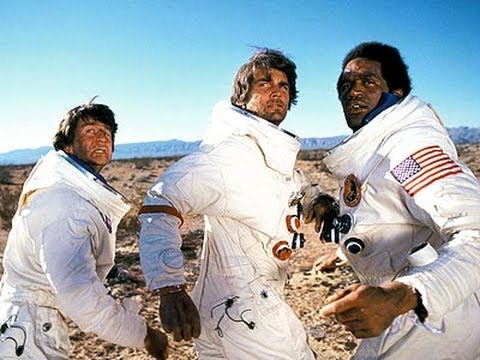
    HEAD FOR THE HILLS: Sam Waterston, James Brolin, and The Juice, marked for death in “Capricorn One”


  • Ureli Corelli Hill Musician’s Hard Life

    Ureli Corelli Hill Musician’s Hard Life

    by 

    in
    2 responses

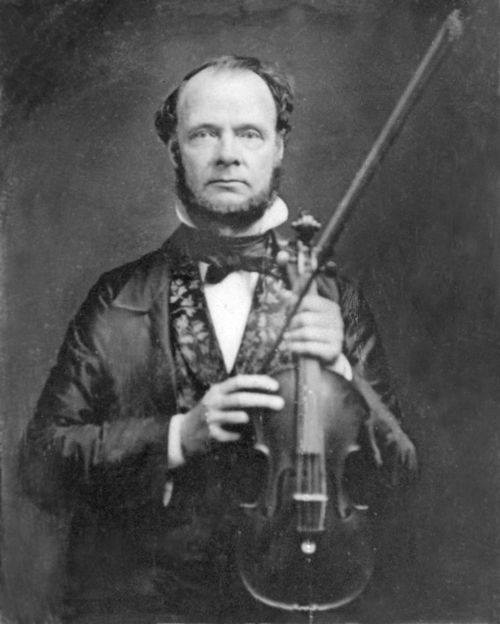
    Historically speaking, most musicians have never had it easy. Consider the case of Ureli Corelli Hill.

    Hill was born into an artistically-inclined family in Hartford, CT, in 1802. His father was a music teacher and composer (an 1810 New York newspaper ad trumpeted him as the “first performer on violin in America”), and his brother, George Handel Hill, a contemporary and colleague of John Wilkes Booth, achieved renown for his portrayal of a stereotypical rustic New Englander, which earned him the nickname “Yankee.”

    One source states that Yankee Hill made his first appearance in character at the Arch Street Theatre in Philadelphia, around 1832. Others claim George had already assumed his persona a few years earlier, as he strode the boards in New York. (He had run away to Manhattan to get his start as an actor in 1826.) Unfortunately, Hill was not a temperate man. Wine, women, and precarious health led to his untimely demise in 1849, less than two weeks before his 40th birthday.

    The other Hill, Ureli, also entered the theater, but on the other side of the footlights. At 19, he played violin in the pit. He was also in the orchestra for the first performances of Italian opera in New York City in 1825.

    In 1831, he led the first complete American performance of Handel’s “Messiah” at New York’s St. Paul’s Chapel. He also introduced to the U.S. Mendelssohn’s oratorio “St. Paul.”

    Hill studied in Germany with Louis Spohr and participated in a performance of Beethoven’s Ninth Symphony under the baton of Felix Mendelssohn, “an affable man,” who also spoke perfect English. Later, as first president of the New York Philharmonic Society, Hill would invite Spohr and Mendelssohn to conduct. Both politely declined, unable to make the trans-Atlantic journey. However, both responded with warm letters of thanks.

    On the Philharmonic’s first concert in 1842 – a varied menu, mixing orchestral, chamber, and vocal selections – Hill conducted Beethoven’s Fifth Symphony and participated as a violinist in Johann Nepomuk Hummel’s Piano Quintet in D minor. Also on the program were orchestral works by Carl Maria von Weber and Johann Wenzel Kalliwoda, and some Italian operatic arias.

    Hill arranged for the first American performance, with the Philharmonic, of Beethoven’s Ninth, in 1846. The symphony was conducted on that occasion by George Loder, Jr. Hill continued to conduct the Philharmonic, in alternation with six others, until he became embroiled in controversy for his advocacy of American composers of the era, including George Bristow and William Henry Fry.

    Hill moved to Cincinnati, where he allowed things to cool down for three years. Then in 1850, he returned to New York and resumed his membership as a violinist in the orchestra. He was really hoping to make his fortune with a piano he invented that used tuning forks in place of strings. Instead, he lost his shirt, since, as fate would have it, Steinway & Sons was only just taking off.

    By 1873, Hill was 71 years-old and unable to play at a standard worthy of the orchestra. In retirement, he moved to Paterson, NJ. There, he had difficulty finding students. Unable to support his family, he died of his own hand, of an opium overdose, on this date in 1875. Hill left a note, in which he stated, “Why should or how can a man exist and be powerless to earn means for his family?”

    It is possible for an artist to achieve much in this life but still have nothing.

  • Othmar Schoeck’s Birthday & “Summer Night”

    Othmar Schoeck’s Birthday & “Summer Night”

    by 

    in
    3 responses

    Today is the birthday of Swiss composer Othmar Schoeck (1886-1957). Schoeck is best known for his many art songs. I’m not sure, but I believe I first learned of him not from any of his music, but from a mention in one of Hermann Hesse’s novels. Schoeck and Hesse were friends and sometime collaborators, who exchanged letters for decades.

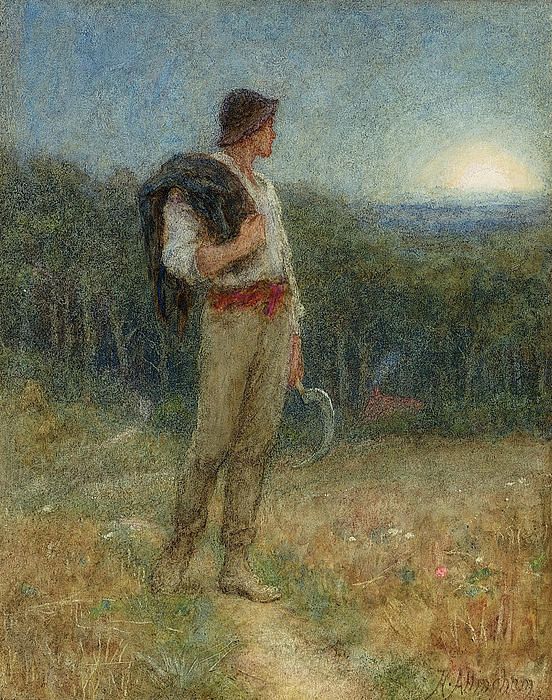
    Here’s a lovely pastoral intermezzo for strings from 1945, called “Summer Night.” The work takes its inspiration from a poem by Gottfried Keller. During a bright summer night, young peasants reap grain for a widow who has no one else to help her. The work proceeds cheerfully through the dawn, when the secret helpers slip away, to begin their own day’s labors.

    Hard to believe Schoeck was just recovering from a heart attack when he wrote this, but it was probably therapeutic in more ways than one. The choice of subject matter, a recollection of simpler times, and its romantic treatment, might be interpreted as a reaction against the hardships and horrors of World War II.


Tag Cloud

Aaron Copland (93) Beethoven (95) Composer (114) Film Music (145) Film Score (143) Film Scores (255) Halloween (94) John Williams (195) KWAX (229) Leonard Bernstein (104) Marlboro Music Festival (125) Movie Music (160) Mozart (91) Opera (213) Philadelphia Orchestra (89) Picture Perfect (174) Princeton Symphony Orchestra (109) Radio (88) Ross Amico (244) Roy's Tie-Dye Sci-Fi Corner (290) The Classical Network (101) The Lost Chord (269) Vaughan Williams (105) WPRB (397) WWFM (881)

DON’T MISS A BEAT

Receive a weekly digest every Sunday at noon by signing up here


RECENT POSTS