• Latin Swords Swashbuckling Film Scores

    Latin Swords Swashbuckling Film Scores

    by 

    in
    6 responses

    Feeling a little out of shape? Boxed in? Blue? This week on “Picture Perfect,” put some swagger back into your step with an hour of audacious music from Latin swashbucklers.

    Alfred Newman gets the blood pumping with his virile soundtrack for “Captain from Castile” (1947), in which Tyrone Power flees persecution at the hands of the Inquisition to join Cortés’ expedition to conquer Mexico. The film was shot on location with one sequence set against the backdrop of an erupting volcano!

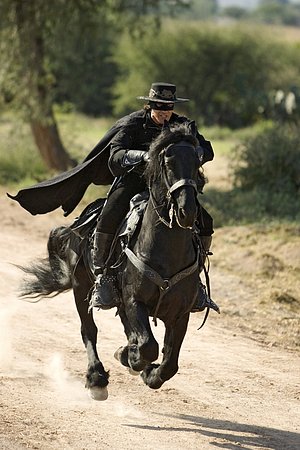
    Power, of course, was one of the screen’s great Zorros. However, with “The Mask of Zorro” (1998), Antonio Banderas becomes the Zorro for our time. He’s aided and abetted by Anthony Hopkins, as the elder Zorro who mentors him. (TWO Zorros in one movie! I could expire of joy.) Catherine Zeta-Jones is radiant, and the music by James Horner literally hits all the right notes.

    This film was already a throw-back upon release, with plenty of real-life, real-time swordplay and stunts galore, with the barest minimum of computer-generated bells and whistles. I wish to God popcorn entertainment could still be like this. “The Mask of Zorro” was like a belated last gasp of the 1980s; easily the best swashbuckler of the ‘90s – though, really, was there much competition?

    Banderas got a chance to send-up his image in the Dreamworks’ computer-animated feature, “Puss in Boots” (2011), a spin-off from the Shrek series that actually turned out to be a better sequel than “The Legend of Zorro” (2005).

    The film sports plenty of Zorro in-jokes, which extend even to Henry Jackman’s entertaining score. How is it that animated movies are just about the only movies these days that seem to keep up the great orchestral tradition of classic film scoring?

    Finally, Errol Flynn has one last swash left in his buckle for “The Adventures of Don Juan” (1948), his last wholly satisfying period adventure. Max Steiner rises to the occasion and provides one of his best scores, just about on the same level as those of the master of the genre, Erich Wolfgang Korngold.

    A cape, a plume, and seven-league boots are guaranteed mood-elevators. Forget your cares! Join me for Latin swords, on “Picture Perfect,” music for the movies. We ride hell-for-leather, this Friday evening at 6:00 EDT, on WWFM – The Classical Network and wwfm.org
  • Don Juan Swashbuckling Film Scores on WWFM

    Don Juan Swashbuckling Film Scores on WWFM

    by 

    in
    6 responses

    “The sword is not for a traitor… YOU’LL DIE BY THE KNIFE!!”

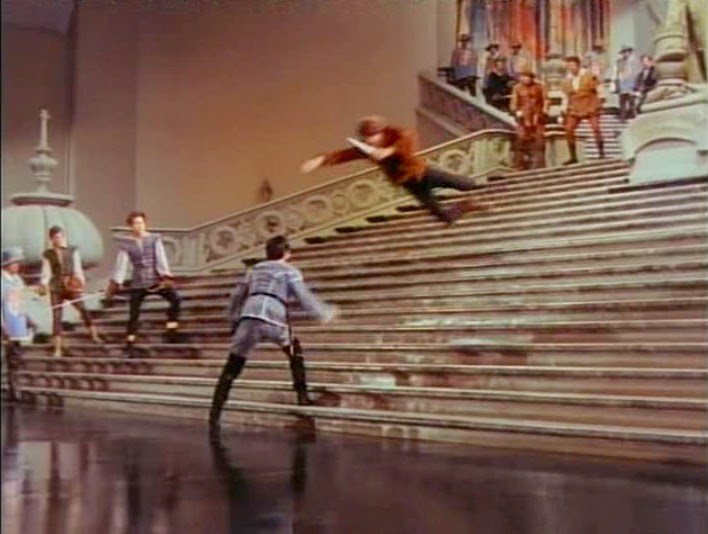
    So declares Errol Flynn, as Don Juan, as he backs up his words – and saves the Spanish throne – by hurling himself down a marble staircase to dispatch the slimy Duke de Lorca.

    “The Adventures of Don Juan” (1948) will be among my featured works this week, on “Picture Perfect.” In terms of audacity and swagger, Max Steiner’s classic film score gives Erich Wolfgang Korngold a run for the money. The music enjoyed a bit of a resurgence in the 1980s, when portions were reused in “Zorro, the Gay Blade” (1981) and “Goonies” (1985).

    Enjoy a rousing suite from the film, on a program of Latin swashbucklers, which will also include selections from “Captain from Castile” (Alfred Newman), “The Mask of Zorro” (James Horner), and “Puss in Boots” (Henry Jackman), on “Picture Perfect” – music for the movies – this Friday evening at 6:00 EDT, on WWFM – The Classical Network and wwfm.org.


    FUN FACT: The actual leap was accomplished by stuntman Jock Mahoney, soon to be Sally Field’s stepfather. Mahoney was paid $350 to execute the stunt.


  • Ennio Morricone Western Scores on WWFM Tonight

    Ennio Morricone Western Scores on WWFM Tonight

    by 

    in
    3 responses

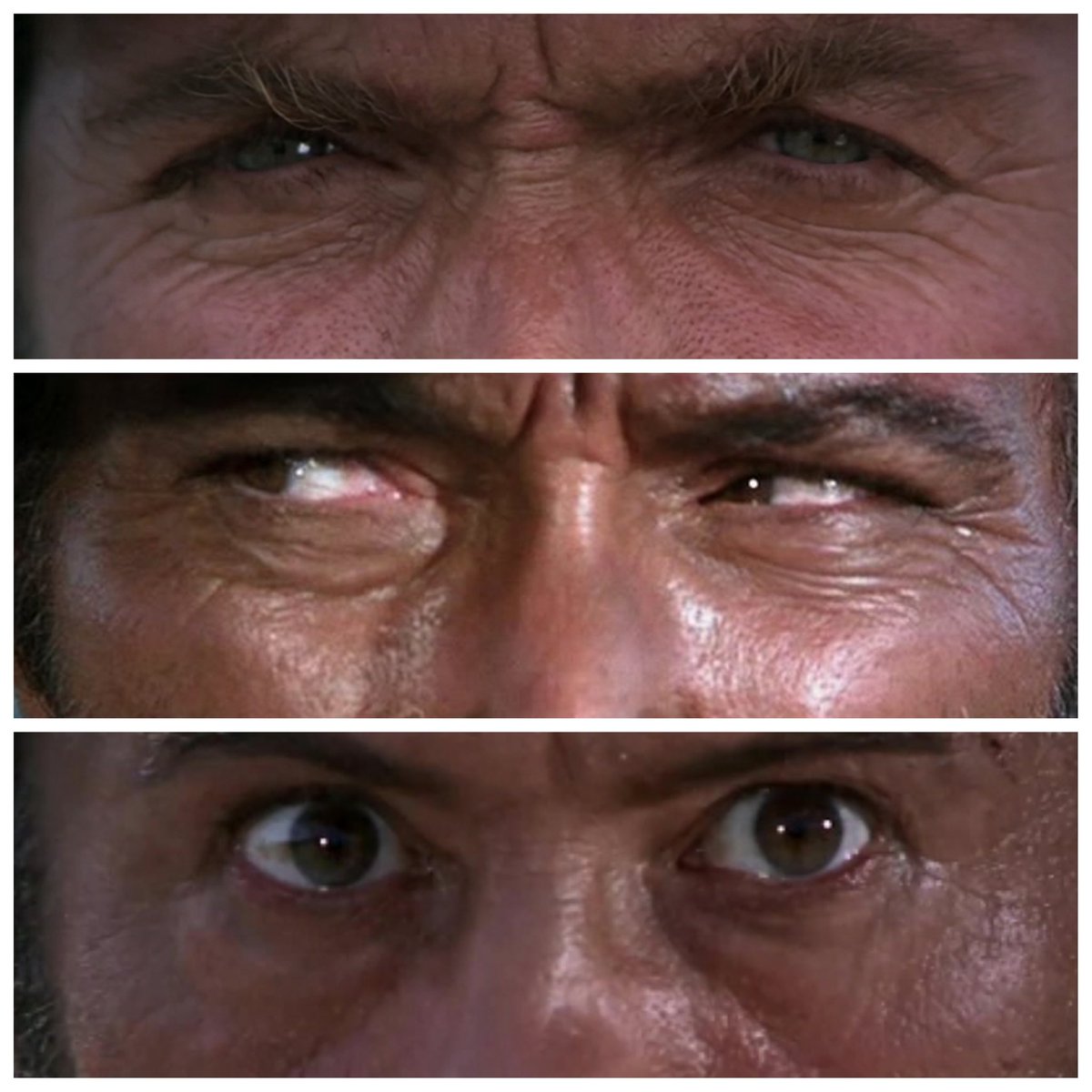
    Well… it appears that signals were crossed. It’s now WESTERN SCORES BY ENNIO MORRICONE, UNTIL 7:00 EDT, ON “PICTURE PERFECT,” music for the movies, on WWFM – The Classical Network and wwfm.org.

    If you miss it, I’m sure it will be posted as a webcast soon. Sorry for the confusion. I would have liked to have promoted the show with a nice write-up on Morricone, who died last month at the age of 91, with an ample side dish on the art of the spaghetti western, but, alas, now there’s no time.

    Tune in for Latin swords, including “The Adventures of Don Juan,” next week!


  • Why Classical Music Gives You Thrills The Science Behind Chills

    Why Classical Music Gives You Thrills The Science Behind Chills

    by 

    in
    6 responses

    Sex, drugs, and classical music.

    Not exactly new (the study was conducted ten years ago), but I’ve been saving this for a slow day. Just in case you ever wondered why you sometimes get chills when you listen to Mahler.

    https://www.mcgill.ca/newsroom/channels/news/musical-chills-why-they-give-us-thrills-170538

    Details of the study, along with a list of the music used, here:

    https://journals.plos.org/plosone/article?id=10.1371/journal.pone.0007487#s5


    PHOTO: The late, lamented “Mozart in the Jungle” – not always the last word in authenticity, but it played “with the blood”


  • Kolchak’s Secret Past Darren McGavin as Chopin Extra

    Kolchak’s Secret Past Darren McGavin as Chopin Extra

    by 

    in
    6 responses

    Does anyone else remember the time Kolchak the Night Stalker met Frederic Chopin?

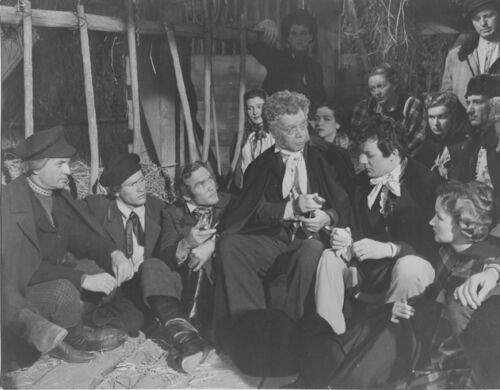
    I always assumed Kolchak was a Slavic name, but here’s photographic evidence that, indeed, he was a student with the famed Polish pianist and composer.

    Darren McGavin was hard at work painting scenery at Columbia Pictures in 1945, when he caught wind of auditions being held for a Chopin biopic, titled “A Song to Remember.” Cornel Wilde would play the immortal pianist-composer, and Paul Muni his teacher. McGavin’s role would be so small, he wouldn’t even receive screen credit, but his very casting was momentous, since it would mark his film debut. Once he rinsed the paint out of his brush that day, he never looked back.

    He had already clocked countless hours on stage, film, and especially television, by the time he donned the rumpled seersucker and crumpled raffia as Kolchak, muckraker of the macabre, in the early 1970s.

    Here, McGavin appears second from the left. Wilde is second from the right, with Muni, center, as Prof. Joseph Elsner.

    The great irony, of course, is that “A Song to Remember” is such a generic title that it is easy to forget – or at least to confuse with “Song of Love” (1947, about the Schumanns) and “Song without End” (1960, about Liszt).

    Follow the link for McGavin. He’s on the left side of the room, wearing a cap, already a scene-stealer, at one point trying to draw attention to himself by scratching his head with a piece of straw, which he then holds in his mouth. The entire scene lasts a mere 90 seconds.


Tag Cloud

Aaron Copland (93) Beethoven (95) Composer (114) Film Music (145) Film Score (143) Film Scores (255) Halloween (94) John Williams (195) KWAX (229) Leonard Bernstein (104) Marlboro Music Festival (125) Movie Music (160) Mozart (91) Opera (213) Philadelphia Orchestra (89) Picture Perfect (174) Princeton Symphony Orchestra (109) Radio (88) Ross Amico (244) Roy's Tie-Dye Sci-Fi Corner (290) The Classical Network (101) The Lost Chord (269) Vaughan Williams (105) WPRB (397) WWFM (881)

DON’T MISS A BEAT

Receive a weekly digest every Sunday at noon by signing up here


RECENT POSTS