• Citizen Kane Hearst & Opera

    Citizen Kane Hearst & Opera

    by 

    in
    6 responses

    Remember that sequence in “Citizen Kane,” when newspaper magnate Charles Foster Kane forces his second wife, Susan Alexander – who has a modest singing voice at best – into the title role of a grand opera, with disastrous results?

    In the original script, the opera was to have been Jules Massenet’s “Thaïs.” If I hadn’t read that in Steven C. Smith’s biography of Bernard Herrmann, “A Heart at Fire’s Center,” I may never have learned of the interesting connection between Massenet and William Randolph Hearst. Hearst, of course – as was well-known even at the time – was the model for Orson Welles’ Kane. Much of what I share below is not in the Herrmann biography. I was spurred to search for it myself. It is certainly worth noting.

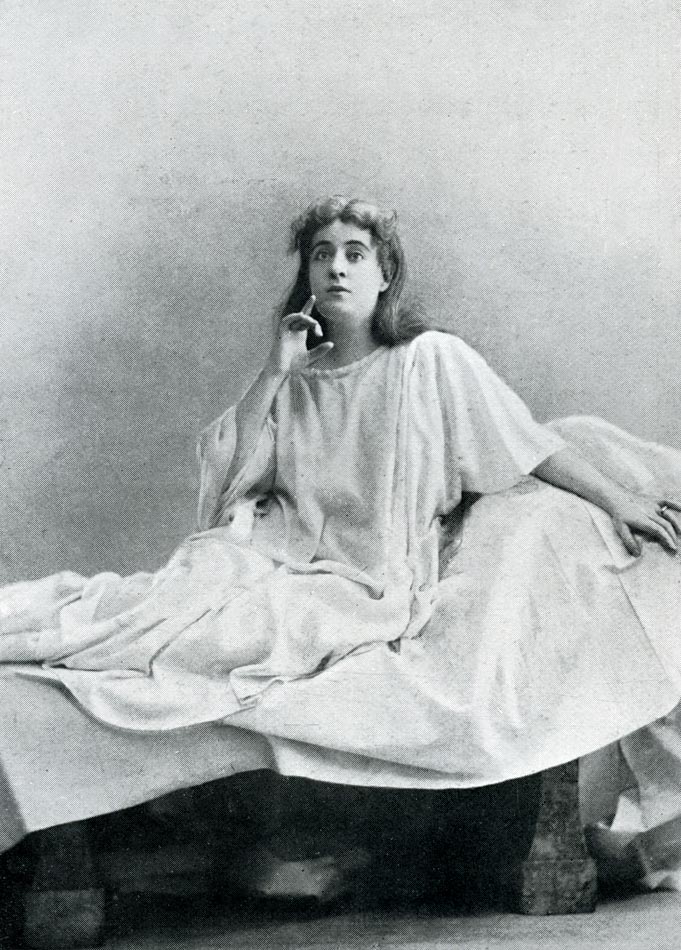
    Massenet, like Hearst, had been infatuated with Sibyl Sanderson. Sanderson, unlike her shrill, overpowered “Kane” counterpart, was a naturally gifted singer, for whom Massenet created not only “Thaïs,” but also “Esclarmonde.” “Esclarmonde” provided her with what was then the highest note in all of opera, G above high C, preceded by an F# – which Sanderson nailed with aplomb. Saint-Saëns was also a fan, and likewise crafted one of his own operas, “Phryné,” specifically for her. She must have made for a very convincing courtesan! When asked her favorite role, Sanderson quipped, “The one that allows me to display the most decolletage.”

    In her teenage years, Sanderson and Hearst had been engaged. If I had read about this before in one of the many Welles’ biographies, I had forgotten it, probably since, at the time, for me, Sanderson would have been just another name. Sanderson’s father was a politician and lawyer who became Chief Justice of the Supreme Court of California and, later, a legal advisor to the South Pacific Railroad. Hearst was still quite young, and Sanderson’s father opposed the match. Not long after, she was sent to Europe to study at the Paris Conservatory. Allegedly, Hearst continued to carry the torch for her for many years. Later, following her father’s death, she was joined by her sisters and her mother to live as expatriate socialites.

    As a singer, Sanderson achieved popularity in her adopted city and throughout Europe – Puccini wanted her to sing “Tosca” – however, elsewhere, at London’s Covent Garden and New York’s Metropolitan Opera, she received lackluster reviews. She developed difficulties with her voice and eventually wound up marrying a Cuban sugar heir. At some point along the way, she began the sad descent into alcoholism, exacerbated by depression, and she was claimed by pneumonia at only 38.

    I’ll have to refresh my memory about Welles and find out exactly how he may have learned of this particular Hearst connection. Surely, there were no tell-all biographies, at the time, of the man who threatened to crush everyone involved with the making of “Citizen Kane.”

    As the shooting of the Susan Alexander sequence approached, Welles, characteristically, improvised. He decided it might be better for Herrmann to bypass Massenet’s existing opera, and perhaps create his own, more concise, Oriental pastiche.

    In a telegram to Herrmann, Welles wrote, “Opera sequence is early in shooting, so must have fully orchestrated recorded track before shooting. Susie sings as curtain goes up in first act, and I believe there is no opera of importance where soprano leads with chin like this. Therefore suggest it be original… by you – Mary Garden vehicle… Suggest ‘Salammbo’ which gives us phony production scene of Ancient Rome and Carthage, and Susie can dress like Grand Opera neoclassic courtesan… Here is chance for you to do something witty and amusing – and now is the time for you to do it.”

    The Mary Garden reference is also of interest, since she happened to be a Sanderson pupil. Sanderson introduced Garden to Massenet, who wrote his opera “Chérubin” for her. Garden also created the role of Debussy’s Mélisande. Later, she became director of the Chicago Opera Association and staged the world premiere, in Chicago, of Prokofiev’s “The Love for Three Oranges.”

    The result of Welles’ telegram was the wholly fictional “Salammbô.” The faux opera’s subject is presumably lifted from Flaubert, but Welles’ associate, John Houseman, later revealed that the text was a pidgin creation he had cobbled together from Racine’s “Athalie” and “Phèdre.” As he put it, the result was fairly implausible and unintelligible, but dramatically effective.

    Can you imagine any team of filmmakers today being capable of pulling this off? Welles and Herrmann were in their 20s; Houseman, a little older, was in his late 30s. The creation of this scene would have required a familiarity not only with the conventions of French opera of the Belle Époque (much more superficially parodied in Andrew Lloyd Webber’s “The Phantom of the Opera”), but also the literature that inspired it. Granted, all of the participants were much closer to that world, but they all would have had to have been very well-read and possessed very discerning ears to be able to effectively emulate the genre.

    Here it is as it was seen in the film (with perhaps also a hint of “Salome”):

    Opera 1

    Opera 2

    Already, back in the day, Eileen Farrell showed what could be done with it, when Herrmann conducted the aria on CBS radio. Check out this uncovered gem, which I had never heard in this performance until only a few minutes ago:

    Kiri Te Kanawa goes for the D6 high note (optional) on this album of Herrmann hits, originally set down for RCA Records in the 1970s:

    https://www.youtube.com/watch?v=6Gu7-HsCBfY

    Incidentally, RCA’s Classic Film Scores series, a landmark of its kind – with individual volumes devoted to the music of Korngold, Steiner, Waxman, Rózsa, Newman, and Tiomkin, and a few additional ones devoted specifically to the films of Humphrey Bogart, Errol Flynn, and Bette Davis – has been reissued as a Sony box set. It’s the least expensive incarnation of the series so far. You won’t get the fancy packaging or the liner notes, but you will get hours of transporting music, in what are still the best performances of these scores available. And yes, Te Kanawa does sing Herrmann’s “Salammbô.” If you don’t already own these recordings, they are highly recommended.

    That said, for audiophiles, a series of brand new remasterings of the original RCA material is quietly being undertaken by the Dutton/Vocalion label. So far, they have completed the volumes devoted to Tiomkin, Waxman, Herrmann, Rózsa, Flynn, and Bogart, with bonus tracks included from “Spectacular World of Fantastic Film Scores,” an addendum to the original RCA series, that, for some reason, is not included in the new Sony box. You can search here:

    Home


    PHOTOS: Sibyl Sanderson (left), in one of her more demure outfits, as Thaïs; Dorothy Comingore as Susan Alexander Kane singing Salammbô


  • The Martian Chronicles NBC Miniseries Disaster?

    The Martian Chronicles NBC Miniseries Disaster?

    by 

    in
    4 responses

    So how bad was the NBC miniseries “The Martian Chronicles” (1979)? I suppose it depends on who you ask.

    Ray Bradbury, who wrote the original stories, first collected in 1950, hated it. The all-star, three-night event, produced at the height of television’s “miniseries fever,” was all set to kick-off the NBC season. But then Bradbury mouthed off to the press, and the executives got cold feet. All at once, the show was yanked from the schedule, and its debut took place far, far away, seen complete on the BBC, and elsewhere in a heavily-edited theatrical version. After the dust had settled, “The Martian Chronicles” was dropped quietly back into the NBC line-up where it was thought it might do the least damage – just before the guaranteed ratings juggernaut of the Winter Olympics.

    I don’t want to tip my cards too soon, but having re-read the book recently, I have a few issues with the adaptation myself. Roy Bjellquist and I will convene for another heady discussion, on the next “Roy’s Tie-Dye Sci-Fi Corner,” this Friday evening at 7:00.

    Then we figured we might as well make it an all-Mars weekend. So we’ll join up again on Sunday to talk about “Robinson Crusoe on Mars” (1964).

    Roy’s Tie-Dye Sci-Fi Corner is live-streamed on Facebook every Friday and Sunday at 7 pm EDT.

    https://www.facebook.com/roystiedyescificorner/

    When the movies inspire me to drink, take me to your liter!


  • Beethoven’s 250th vs. 175 Years Ago

    Beethoven’s 250th vs. 175 Years Ago

    by 

    in
    3 responses

    Remember when 2020 was supposed to be the big Beethoven year? Beethoven Beethoven Beethoven everywhere, the world wallowing in his music for the 250th anniversary of his birth – gorging itself to such a degree that no one could possibly stand to hear another note, until “Beethoven 300.”

    So how did all that work out?

    Before I cause any more tears, let’s look back to 1845 and “Beethoven 75.” The Master had been in the grave only 18 years, when a monument was unveiled in his hometown of Bonn, Germany, 175 years ago today. But it must have seemed like an eternity to the organizers.

    Although the idea had been circulated since 1828, the year after Beethoven’s death, getting anyone to actually do anything about it was like herding cats. A “Bonn Association for the Beethoven Monument” was formed, but without money, the entire enterprise was largely a symbolic gesture. Luigi Cherubini promised to conduct a benefit concert in Paris, but then backed out of it. Ignaz Moscheles succeeded in organizing one in London, but, despite the inclusion on the program of Beethoven’s “Ode to Joy,” it was poorly attended.

    In fact, there would have been no statue at all, if not for the efforts of Franz Liszt. When the total amount raised in France came to no more than 425 francs, Liszt donated 10,000 francs from his own pocket. Though only in his 30s at the time, Liszt had already retired from the concert stage, having amassed a considerable fortune and now ready to devote himself to other matters – conducting, teaching, and especially composing. But whenever there was a crisis or a disaster, Liszt could be counted on to emerge from seclusion to play in the largest hall he could find, and people would turn out to basically throw money. One of those concerts marked the last public appearance of Frederic Chopin, who shared the stage with Liszt in a recital of music for piano duo.

    In all, Liszt went to heroic lengths – more than any other figure – to see to it that Beethoven would be immortalized in bronze. His sole condition: that the sculptor be Lorenzo Bartolini. In 1840, Bartolini had created a marble bust of Liszt, of which Liszt must have particularly fond. But the committee overruled the proposal, preferring that the commission go to a German. It was Ernst Julius Hähnel who would ultimately receive the endorsement.

    As usual, Liszt took the disappointment well. A month before the unveiling, when it finally occurred to someone that there was no suitable venue to house the projected 30,000 attendees, guess who put up the money to build one? That’s right, Liszt financed what would become Beethoven Hall. The structure was erected, with contractors laboring around the clock, in just two weeks.

    Of course, Liszt was equally committed to the festivities themselves. He composed a new work, the “Festival Cantata for the Inauguration of the Beethoven Monument in Bonn,” which was heard twice. He also performed Beethoven’s “Emperor” Concerto and conducted the Fifth Symphony.

    He was in attendance at Bonn Cathedral when, on the eve of the monument’s unveiling, Louis Spohr conducted Beethoven’s “Missa Solemnis” and the Ninth Symphony, and the next morning, when the “Mass in C” was performed.

    At the ceremony was Hector Berlioz, Giacomo Meyerbeer, Ignaz Moscheles, Jenny Lind, Pauline Viardot, and other prominent musicians; also Queen Victoria and Prince Albert, King Frederick William IV of Prussia, and Archduke Friedrich of Austria.

    That afternoon, Liszt performed Beethoven, and Spohr conducted the “Coriolan Overture” and selections from “Christ on the Mount of Olives” and “Fidelio.” The day was capped with a glorious fireworks display.

    On Day 3, Liszt’s “Festival Cantata” was performed. Also, Beethoven’s “Egmont Overture,” a piano concerto by Carl Maria von Weber, arias by Beethoven and Mendelssohn, and Beethoven’s song “Adeleide.”

    Rounding out the festivities was a lavish banquet. Unfortunately, Lola Montez started dancing on a table and flirting with Liszt, which had the effect of generating an enormous scandal. The blame all came to roost on the festival’s greatest benefactor. 25 years later, for the Beethoven centennial celebrations in 1870, Liszt was not invited back.

    What have you done for us lately?


  • Herrmann Radio Days A Heart at Fire’s Center

    Herrmann Radio Days A Heart at Fire’s Center

    by 

    in
    5 responses

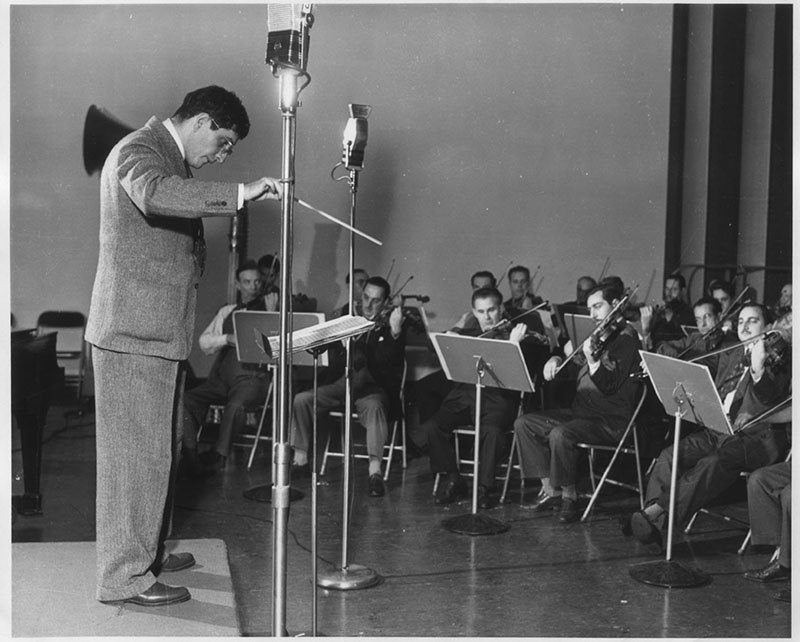
    I’m in the process of rereading Steven C. Smith’s biography of Bernard Herrmann, “A Heart at Fire’s Center,” which I first encountered nearly 30 years ago (!!!), shortly after its publication in 1991. Bernard Herrmann, of course, was one of the great film composers, perhaps the greatest, but he really got his start in the medium of radio. He was hired as a conducting assistant by CBS. It wasn’t long before he was providing original music and serving as musical director of its resident orchestra.

    It is sobering to recall just how high-minded radio was in its infancy, with the arts very much front and center. Classical music, dramatizations of classic literature, and poetry readings with musical accompaniment – all of these were a regular part of the programming at CBS. In fact, the network, in its original incarnation, had been founded by Arthur Judson, a violinist and concert promoter, who had been laughed out of NBC for his idealistic proposals.

    These were not dumbed-down music programs! Toscanini concerts with the New York Philharmonic tended to be a little more conservative (later, of course, the conductor would find a home, with his own orchestra, at NBC), but the programs supervised by Herrmann, then only in his 20s, but already possessed of an encyclopedic knowledge of both music and literature, introduced works by Charles Ives, Henry Cowell, Gian Francesco Malipiero, Alexander Gretchaninov, Nikolai Myaskovsky, Hermann Goetz, Joachim Raff, Niels Wilhelm Gade, Richard Arnell, Lord Berners, Edmund Rubbra, and countless others. Even Schoenberg and Webern could be heard over CBS during those years.

    Herrmann had known Ives personally since he was in his teens. He had discovered Ives’ “114 Songs” in the New York Public Library and was instrumental in shopping them around, even introducing them to Aaron Copland. He studied with Percy Grainger at NYU. Together, the two undertook the bass tuba, since Herrmann wanted to include the instrument in one of his orchestrations. He was also best friends with one of his Brooklyn classmates, Jerome Moross, who himself would become a notable film composer. Herrmann and Moross would sneak into rehearsals of the New York Philharmonic together at Carnegie Hall.

    Herrmann was unfailingly outspoken. Apparently he had no filter. Once, when CBS president William S. Paley balked at one of his proposals, Herrmann snapped, “You’re assuming the public is as ignorant about music as you are.” That’s just the kind of guy Herrnann was. Totally tactless, but usually right. After that, we’re told, he was given near-unlimited freedom over musical programming at CBS.

    Sometimes he would go out of his way to provoke. Once, during a rehearsal, he said to Benny Goodman, “Who told you you could play the clarinet?” Without missing a beat, Goodman responded, “Who told you you could conduct?” Everyone lived in fear of Herrmann’s acid tongue, but no one ever said no, and in fact a great many found his irascible nature to be surprisingly endearing. Often, he would deliberately stir the pot. He routinely provoked the head of the music library, which led to some lively exchanges, but these eventually resulted in a dinner invitation to the librarian’s home.

    I venture to guess, few people currently affiliated with CBS, and even fewer in its audience, have any idea of the network’s roots. It’s interesting to look back on the histories of these institutions and note how careful a balance was maintained between art and commerce. Alongside the radio comedies and entertainment music was plenty to educate the mind, enrich the soul, and ennoble the spirit. But gradually the balance shifted, as over the decades more and more ways were found to wring the sponge. Now you switch on cable, and it’s like a visit to the Circus Maximus. Little to nourish, just blood and skin. I’m convinced it has affected people’s patience, contributed to societal aggression and hostility, and impacted the nation’s overall ability to reason. There is no place for the spirit in a world fueled by adrenaline.

    In Herrmann’s day, there were those who believed that it was their responsibility to use technology as a tool to disseminate art and culture. It was seen as a civilizing influence. Herrmann himself dreamed of a time when filmed opera – as in, opera rendered cinematically – would be a thing. Good luck with that. In the meantime, he would soon come together with Orson Welles, as musical director for “Mercury Theater on the Air,” participating in the notorious “The War of the Worlds” radio broadcast and following Welles to Hollywood to score “Citizen Kane.” But already in radio, Herrmann was a force to be reckoned with.

    Interestingly, it had always been Herrmann’s ambition to be recognized as a great conductor. Leopold Stokowski was his hero. While he never realized that ambition, it was not for want of trying. Here is an audio file I came across this morning of a 1947 concert with Herrmann and the CBS Orchestra performing works by Mozart, Ravel and Cowell.

    https://pastdaily.com/2020/08/09/hilde-somer-with-bernard-herrmann-and-the-cbs-symphony-play-music-of-mozart-ravel-and-cowell-1946-past-daily-weekend-gramophone/


  • Rediscovering Glazunov’s Genius

    Rediscovering Glazunov’s Genius

    by 

    in
    4 responses

    Okay, I admit it, I have a sweet tooth. And perhaps, at a time when I have no intention of getting a haircut, much less going to the dentist, that predilection could cost me. But damn it, here it is, dental health to the dogs: I do like the music of Alexander Glazunov!

    Glazunov is one of those composers I’ve always felt a little sheepish about liking. I remember sitting at a listening bar at a record shop in Philadelphia and asking to preview a recording of Glazunov ballet music. “I know I’m not supposed to like this stuff,” I offered, apologetically.

    Admittedly, at the time, other than the Violin Concerto, I didn’t really know a lot of great recordings of his music. I found the Marco Polo releases that I had heard, with the Hong Kong Philharmonic, to be underwhelming, and these prejudiced me against the composer for years. But Neeme Järvi’s performances on Chandos were revelatory. Then of course I eventually got my hands on the Melodiya issues with Gennady Rozhdestvensky and Evgeny Svetlanov. I know it’s going to make somebody cry to read this, but I currently have in my collection four complete cycles of Glazunov’s symphonies. Not even I know how that happened.

    Okay, so he isn’t Beethoven. Who is? But at his best, his music is well-crafted, attractive (to me, anyway), and marked by an abundance of memorable melodies that would make any honest composer jealous.

    As a person, he was not without his faults. He had a real problem with alcohol, which may have contributed to his disastrous performance as conductor at the premiere of Rachmaninoff’s First Symphony, a real train-wreck that elicited a savage review from Cesar Cui and plunged the younger composer into creative paralysis.

    But Glazunov was also generous, almost to a fault. As director of the Petrograd Conservatory, he was in a position to pull strings so that a young Dmitri Shostakovich didn’t have to deal with preparatory theory and instead could plunge right into the business of composition.

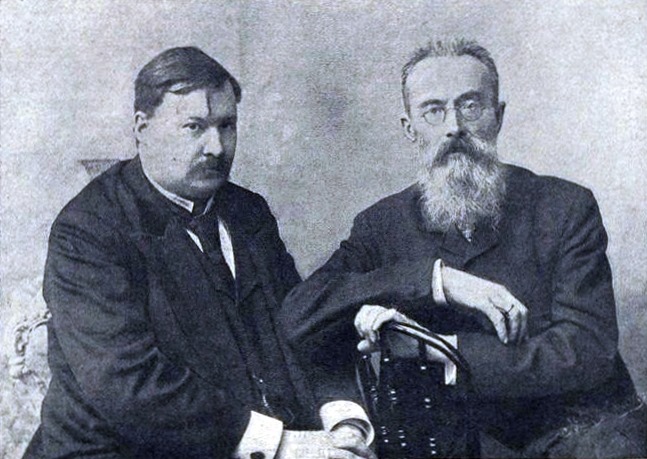
    Also, after the death of Alexander Borodin, Glazunov stepped up (with Rimsky-Korsakov) to help complete Borodin’s unfinished masterpiece, the opera “Prince Igor.” Legend has it that he wrote out the overture from memory, having heard Borodin play through it a couple of times on the piano.

    So maybe you don’t want this guy on the podium during a performance of your music, but put him on a piano bench with a bottle of vodka, and you’re in good hands.

    Glazunov’s own music can be full of serene lyricism, generously melodic, and, yes, often quite beautiful.

    Happy birthday, Alexander Glazunov! You won’t catch me going to a custard stand during COVID, but surely this is the next best thing.


    Symphony No. 4

    String Quintet in A major

    Violin Concerto

    The symphonic poem “Stenka Razin”

    “Raymonda” (selections)
    https://www.youtube.com/watch?v=nAs9mcGhtgg

    PHOTO: Glazunov (left), hanging out with Rimsky-Korsakov


Tag Cloud

Aaron Copland (93) Beethoven (95) Composer (114) Film Music (145) Film Score (143) Film Scores (255) Halloween (94) John Williams (195) KWAX (229) Leonard Bernstein (104) Marlboro Music Festival (125) Movie Music (160) Mozart (91) Opera (213) Philadelphia Orchestra (89) Picture Perfect (174) Princeton Symphony Orchestra (109) Radio (88) Ross Amico (244) Roy's Tie-Dye Sci-Fi Corner (290) The Classical Network (101) The Lost Chord (269) Vaughan Williams (105) WPRB (397) WWFM (881)

DON’T MISS A BEAT

Receive a weekly digest every Sunday at noon by signing up here


RECENT POSTS