• Zardoz Typecasting Actor’s Extreme Lengths

    Zardoz Typecasting Actor’s Extreme Lengths

    by 

    in
    2 responses

    Just how far will an actor go to avoid typecasting?

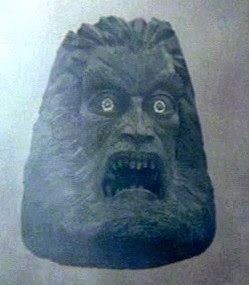
    No need to ask Sean Connery, so desperate to get away from James Bond that he exploded his cash cow by strapping on red-hot bandoliers, fire engine mankini, and thigh-high kink boots for John Boorman’s inscrutable masterpiece, “Zardoz.”

    Join Roy Bjellquist and me as we chip away at a giant stone head (floating gracefully to Beethoven’s 7th Symphony, then vomiting guns), explore the blurred relationships between myth, legend, and religion, and delve into the very mysteries of life and death, on the next “Roy’s Tie-Dye Sci-Fi Corner.”

    “Zardoz” is nothing if not ambitious. But did it – could it – ever rise to the level of its aspirations? When “Zardoz” opened in 1974, it was met by widespread confusion and scathing reviews. Is it possible that an overtly bad movie could actually mask a fairly good one?

    46 years of brain bleach has been powerless to dispel the enduring WTF of “Zardoz.” I hope you’ll join Roy and me in slack-jawed wonder on the next Facebook live-stream of “Roy’s Tie-Dye Sci-Fi Corner,” this Friday evening at 7:00 EDT.

    https://www.facebook.com/roytiediescificorner/?fref=ts


  • Buck Moon Twins: Antheil & Grainger’s Mad Genius

    Buck Moon Twins: Antheil & Grainger’s Mad Genius

    by 

    in
    12 responses

    It’s got have something to do with that Buck Moon.

    July 8 marks the birthdays of two of music’s looniest pianist-composers.

    George Antheil, self-proclaimed “Bad Boy of Music,” was born in Trenton on this date in 1900. Antheil’s “Ballet Mécanique,” scored for player pianos, airplane propellers, siren and electric bells, inspired one of the great classical music riots at its Paris premiere in 1926.

    Antheil would practice the piano with such ferocity that he would have to pause, periodically, to thrust his hands into two fish bowls filled with ice water. Before commencing a recital, he would remove a pistol from a silk holster sewn into his jacket and ostentatiously place it atop the piano, to send a message that he would brook no nonsense.

    Later, he became a Hollywood film composer, a war correspondent, the author of a column of advice to the lovelorn, an expert in endocrinology, and co-inventor, with actress Hedy Lamarr, of a frequency-hopping system for the guidance of Allied torpedoes that would become the basis for modern spread-spectrum communications technology.

    In 1944, he scored a notable success with his Symphony No. 4, after it was taken up by Leopold Stokowski and later Sir Eugene Goossens, who recorded it. Antheil was also the author of a bestselling autobiography, “Bad Boy of Music.” He died of a heart attack at the age of 59. A third recorded cycle of his symphonies is currently underway, on the Chandos label. Not bad for a boy from Trenton.

    Wouldn’t you know, Percy Aldridge Grainger was also born on this date, outside Melbourne, Australia, in 1882. Grainger, one of classical music’s great eccentrics, was an outstanding pianist and an innovative composer, who also happened to be obsessed with physical fitness. Rather than drive or take the train between towns and engagements, it was his preference to jog. He was also known to throw a ball over one side of a house, and then race around the other side to catch it.

    Enamored with Nordic culture, he went out of his way to use only Anglo-Saxon words, avoiding in his letters anything of Norman or Latin origin. However, the dominance of German music rankled him, and he loved Duke Ellington.

    He was unusually close to his mother and exhibited sadomasochistic tendencies. He donated whips and blood-stained clothes to the Grainger Museum, which he founded in 1932. (His request to have his skeleton displayed – posthumously, of course – was denied.)

    Later, while living in White Plains, NY, he experimented with electronics and “machine music,” in a sense paralleling an obsession of Antheil, who besides “Ballet Mécanique,” wrote such works as “Airplane Sonata” and “Death of Machines.”

    Sadly, only the tiniest portion of Grainger’s output is known by the general public, and he is celebrated as the composer of such folksy trifles as “Country Gardens,” “Molly on the Shore,” and “Shepherd’s Hey.” But Grainger’s treatment of harmony and rhythm could be highly original. He was a brilliant musician, and wholly unconventional in more ways than one.

    Grainger died in White Plains in 1961 at the age of 78. His remains, including his skeleton, rest in Adelaide.

    Antheil and Grainger. What are the odds? Blame it on that old devil moon.


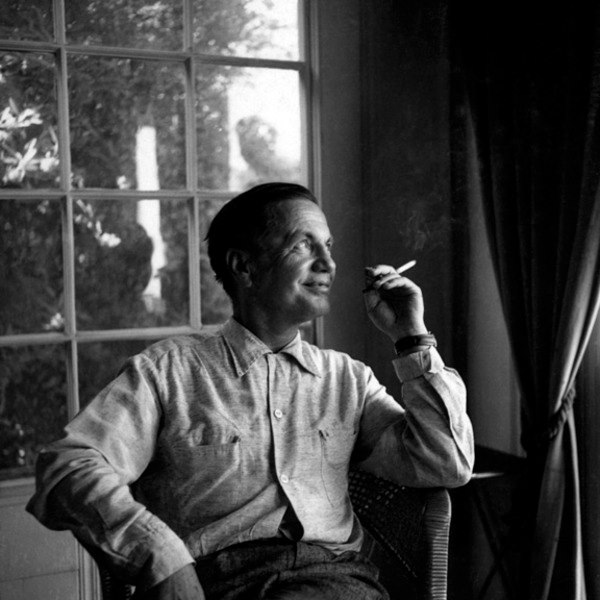
    Two peas in a pod: George Antheil, smoking, and Percy Grainger, smoking hot, in self-designed “toweling clothes”
  • Mahler’s Nicknames Decoding the Symphonies

    Mahler’s Nicknames Decoding the Symphonies

    by 

    in
    4 responses

    What’s in a name? For Gustav Mahler, a rose by any other name would not necessarily smell as sweet.

    Mahler was not overly fond of nicknames being applied to his symphonies. In the hopes of suppressing an early program he had leaked about the content of his Symphony No. 1, he withdrew the subtitle “Titan” after the work’s third performance. He may have once famously declared (while on a walk with Sibelius), “A symphony must be like the world. It must contain everything.” But, in common with Oscar Wilde’s Lord Henry, he must also have felt that “To define is to limit.”

    Mahler renounced the associations of “symphonic poem,” and although all of his symphonies are deeply personal and necessarily autobiographical, he wanted them to be heard foremost as music, music capable of being understood and enjoyed divorced from any extra-musical programs.

    Yet the subtitle “Titan” continues to dog the First. It is still encountered with frequency on concert posters, in program notes, on package designs, and over the radio. Admittedly, it is a cool nickname!

    There’s also the Symphony No. 8, handed down as the “Symphony of a Thousand” (dubbed so by a publicity-hungry impresario), the Symphony No. 2, “Resurrection,” after the Klopstock poem sung during the work’s finale, and the Symphony No. 6, commonly recognized as the “Tragic.”

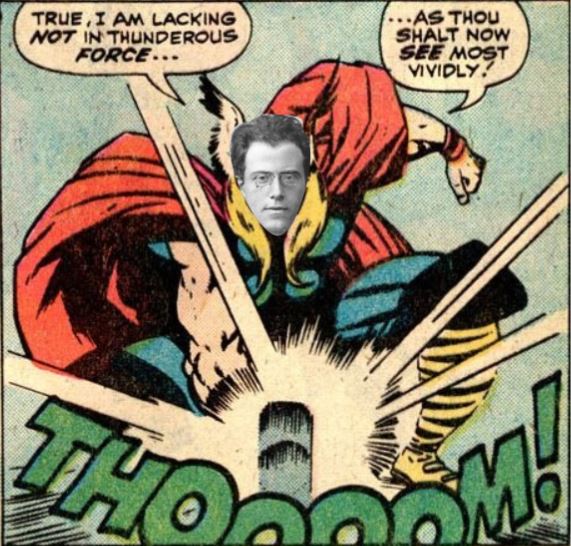
    The last movement of the Sixth notoriously contains three hammer blows. Mahler’s widow, Alma, conveyed that it was her husband’s intention that these signify three mighty blows of Fate against the work’s hero, “the third of which fells him like a tree.” These, she claimed, were tied to three tragedies in Mahler’s life: the death of their eldest daughter, Maria Anna, the diagnosis of Mahler’s heart condition (which would eventually kill him), and his forced resignation from the Vienna Opera. Inconveniently, all three of these things occurred after the work’s completion.

    When Mahler revised the symphony, he removed the last of the blows, perhaps out of superstition. What’s certain is that he was so shaken after the first performance that he omitted it from the score. Today, most performances restore the third blow.

    Any performance of the Symphony No. 6 builds tremendous anticipation in an audience, as, well into its 80-minute running time, a percussionist ponderously takes up a disproportionately large hammer, assumes a monumental position, and brings it down thunderously onto a block with not infrequently destructive force.

    Here are just a few examples:

    https://www.youtube.com/watch?v=UwljE3HsfSM&list=PLoubS-PL7KnLR4EONhdp0Ps68oTMekYS6&index=28

    https://www.youtube.com/watch?v=dXe0xbRXdZ4

    Hell, here’s the whole thing, with all three blows!

    https://www.youtube.com/watch?v=rypHeVr_X7c

    Happy birthday, Gustav Mahler. Tragedy tomorrow… comedy tonight!


  • Ennio Morricone Death A Loss for Film Lovers

    Ennio Morricone Death A Loss for Film Lovers

    by 

    in
    4 responses

    A sad day for anyone who loves the movies. Ennio Morricone is dead.

    The composer of over 500 film and television scores, he was likely the most prolific film composer of all time.

    Although he has always been very popular in America, and around the world, with tributes pouring in over the decades from both pop and classical artists, acknowledgment from the Hollywood establishment came only fairly recently. He received a star on Hollywood’s Walk of Fame in 2016, the same year he won his only competitive Academy Award, for his score to Quentin Tarantino’s “The Hateful Eight.” By then, he was 87 years-old. (He was nominated five other times, the first in 1979.) Earlier, he received an honorary Oscar, for lifetime achievement, in 2007.

    Of course, Morricone never needed Hollywood to confirm his greatness. He churned out score after score from his home in Rome, and always supplied his own orchestrations – by no means standard practice in the film industry. The sheer volume of his output ensured that he left his mark on nearly every genre, but none more indelibly than the western. His collaborations in the form with director Sergio Leone – especially “A Fistful of Dollars,” “For a Few Dollars More,” “The Good, the Bad and the Ugly,” and “Once Upon a Time in the West” – made him internationally famous.

    His music for “The Mission,” “The Untouchables,” and “Cinema Paradiso” also remains popular. His melodies are much appropriated by figure skaters, television commercials, and by the movies themselves. His music has been quoted or reused in over 150 films, in which he has had absolutely no involvement. Even in instances in which the movies were absolutely atrocious, Morricone could be counted on to draw on his unfailing professionalism, infusing the ridiculous with dramatic tension and often heartbreaking lyricism.

    No word on whether or not he was able to follow through on his commitment to write music for the 2026 Olympic Games in Milano Cortina.

    Morricone was 91 years-old. One of the last of the legends is gone.


    “The Good, the Bad and the Ugly”

    “The Mission”

    https://www.youtube.com/watch?v=L41oGXgVmZg

    Morricone conducts “Cinema Paradiso”


  • Picnic Crossword Challenge by Ross Amico

    Picnic Crossword Challenge by Ross Amico

    by 

    in
    7 responses

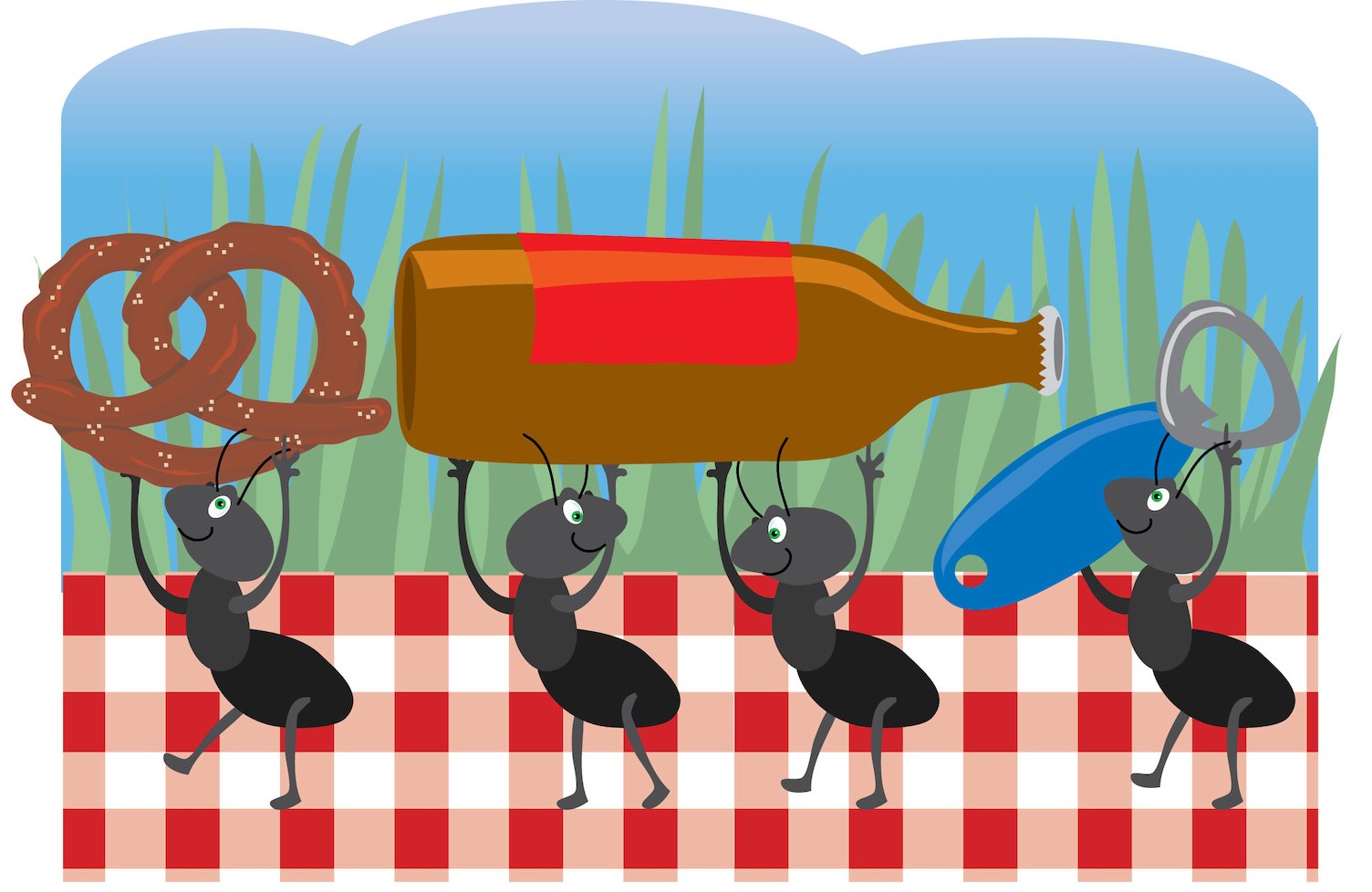
    Pack a basket and a blanket. This week’s Classic Ross Amico crossword is all about picnics. I’ll be grilling you on your knowledge of al fresco classics.

    To fill out the puzzle, follow the link and select “solve online” at the bottom of the page. You’ll then be able to type directly into the squares. Once you feel you’ve exhausted the puzzle, you’ll find the solutions by clicking on “Answer Key PDF.”

    Think you can cut the mustard? You provide the answers, and I’ll provide the ants!

    https://www.armoredpenguin.com/crossword/Data/2020.07/0506/05062051.364.html


Tag Cloud

Aaron Copland (93) Beethoven (95) Composer (114) Film Music (145) Film Score (143) Film Scores (255) Halloween (94) John Williams (195) KWAX (229) Leonard Bernstein (104) Marlboro Music Festival (125) Movie Music (160) Mozart (91) Opera (213) Philadelphia Orchestra (89) Picture Perfect (174) Princeton Symphony Orchestra (109) Radio (88) Ross Amico (244) Roy's Tie-Dye Sci-Fi Corner (290) The Classical Network (101) The Lost Chord (269) Vaughan Williams (105) WPRB (397) WWFM (881)

DON’T MISS A BEAT

Receive a weekly digest every Sunday at noon by signing up here


RECENT POSTS