• Meteor Disaster Avoided! Father’s Day Music

    Meteor Disaster Avoided! Father’s Day Music

    by 

    in
    10 responses

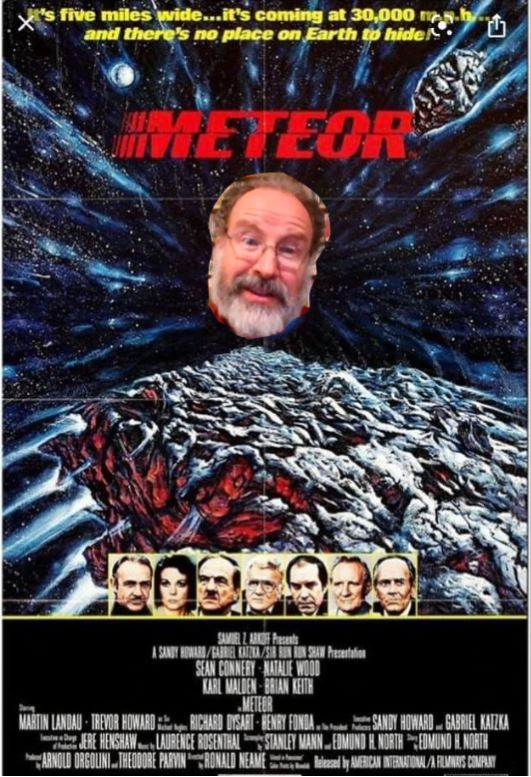
    Wait? John Williams was supposed to write the music for “Meteor?” Well, I suppose it makes sense, following on his association with “The Poseidon Adventure,” “Earthquake,” and “The Towering Inferno.” Thankfully, this was one disaster he was able to avoid.

    Share that sense of relief, as we enter the weekend with another Classic Ross Amico double-feature.

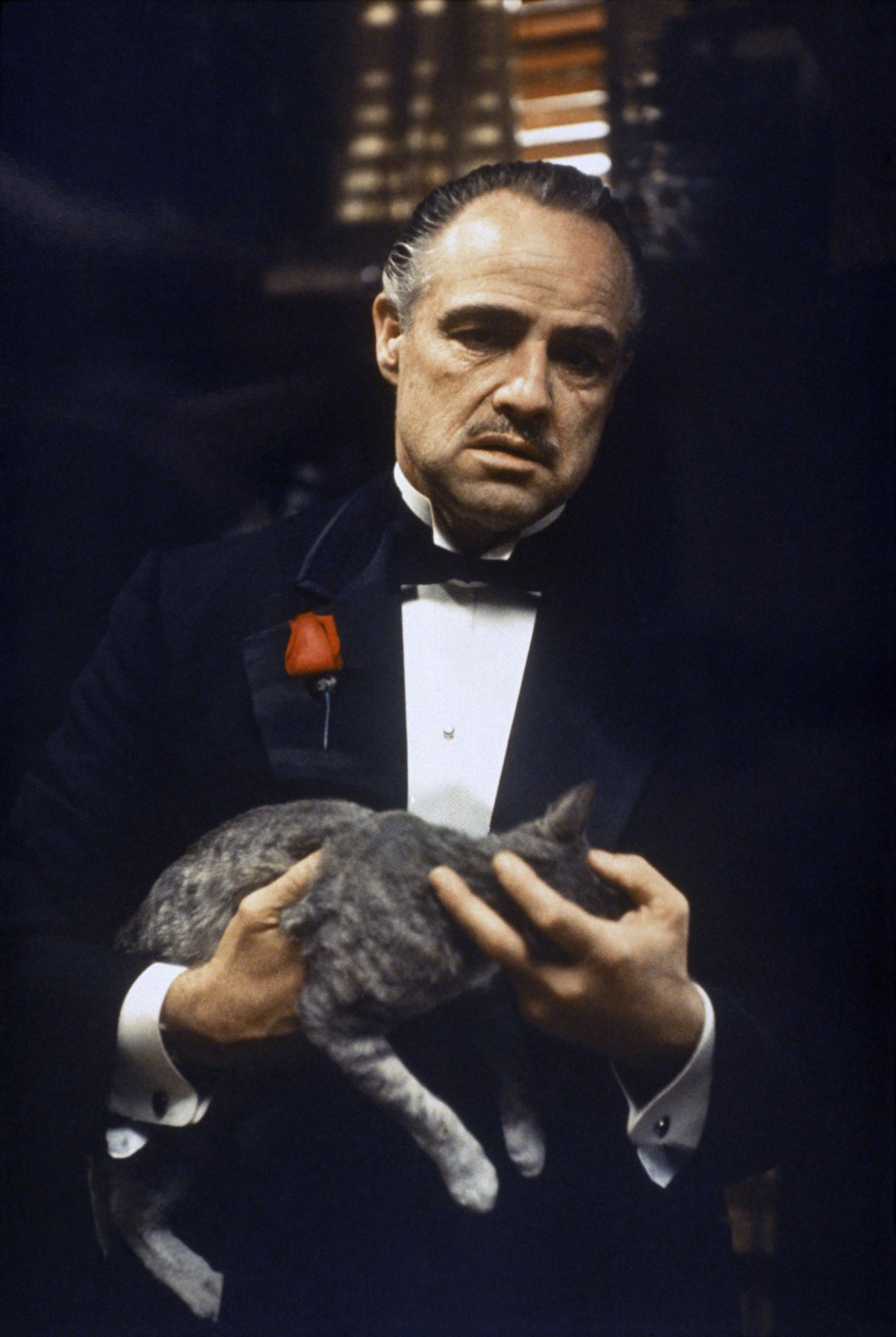
    First, it’s all about Father’s Day – with music from “The Godfather” (Nino Rota), “Field of Dreams” (James Horner), “Life with Father” (Max Steiner), and “To Kill a Mockingbird (Elmer Bernstein) – on “Picture Perfect,” music for the movies, at 6 p.m. EDT, on WWFM – The Classical Network and wwfm.org.

    Then Roy Bjellquist and I will take on The Mother of All Asteroids, as we dissect “Meteor,” on the Facebook live-stream “Roy’s Tie-Dye Sci-Fi Corner” at 7.

    https://www.facebook.com/roytiediescificorner/

    Getting ready to rock your world (literally). Mom and Dad would be so proud.

  • “Meteor” Movie Review A Disasterpiece!

    “Meteor” Movie Review A Disasterpiece!

    by 

    in
    5 responses

    Lord, do I hate “Meteor.” Despite having seen it under optimal conditions – at the late, lamented Loewe’s Astor Plaza in New York City, back in 1979 – it has persisted in my memory as one of the most excruciating couple of hours I have ever passed in a theater.

    Now, 41 years later, thanks to Roy Bjellquist, I bite down hard on a strip of leather and re-subject myself to the torment, having been invited for the third week in a row to guest co-host on “Roy’s Tie-Dye Sci-Fi Corner.” I hope you’ll join me, as I join Roy, in offering exhaustive background and sardonic insights into this stunning misfire – a disaster movie so disastrous that it cured even the most undiscriminating audiences of their mania for imperiled airplanes, capsized ocean liners, earthquake-ravaged cities, and blazing skyscrapers, until the advent of CGI. Falling close on the heels of “Hurricane” and “The Concorde… Airport ’79,” “Meteor” ensured that the genre went out in a blaze of ignominy.

    An all-star cast (led by Sean Connery), a comet, a five-mile asteroid, and a five-dollar budget add up to a recipe for disaster! This had to be the blackest mark on the resume of even the lowliest intern. Even as a viewer, I still bear the scars.

    If that’s not incentive enough for you to punch us up, I don’t know what is. I hope you’ll join Roy and me for the next “Roy’s Tie-Dye Sci-Fi Corner.” The show will be live-streamed on Facebook this Friday evening at 7:00 EDT. It may not be the greatest thing since sliced bread, but it still promises to be meatier than “Meteor.”

    https://www.facebook.com/events/2765874766978123/

    To quote a wide-eyed Karl Malden, “That meteor is five miles wide, and it’s definitely gonna hit us!!!”


  • Stravinsky Birthday A Celebration in Spring

    Stravinsky Birthday A Celebration in Spring

    by 

    in
    7 responses

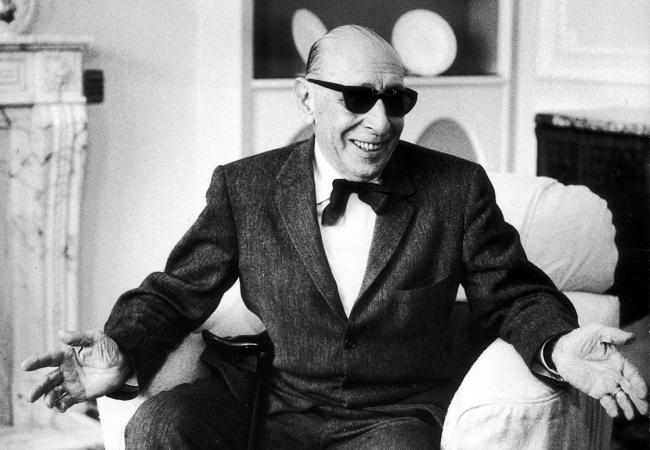
    “Igor Stravinsky was born in the spring and died in the spring. In a sense, he lived his whole life in a springtime of creativity. All his music is spring-like, newly budding, rooted in the familiar past, yet fresh and sharp, with that stinging, paradoxical combination of the inevitable and the unexpected.”

    On Stravinsky’s birthday, enjoy this brief appreciation, narrated by Leonard Bernstein, assembled not long after Stravinsky’s death:

    I especially got a kick out of the cowboy reception, around the 9-minute mark.

    Also on this date, in 1908, Stravinsky’s “Fireworks” was first performed, at the wedding of Rimsky-Korsakov’s daughter, Nadezhda, to Stravinsky’s professional rival, Maximillian Steinberg. The wedding took place a few days before Rimsky-Korsakov’s death. Stravinsky received the commission for his breakthrough ballet, “The Firebird,” in part because Serge Diaghilev heard the piece and was impressed with his orchestration.

    Stravinsky conducts “Fireworks,” from his Russian nationalist period, in Japan:

    Stravinsky, in his last public appearance, conducts his neoclassical masterpiece, “Pulcinella”:

    Stravinsky conducts one of my favorite works from his serial period, “Agon”:

    Stravinsky’s final masterpiece, “Requiem Canticles,” was first performed at Princeton’s McCarter Theatre in 1966. Against expectations, Stravinsky again conducted. The performance is led here by his assistant, Robert Craft:

    “Requiem Canticles” would be repeated at Stravinsky’s funeral five years later.

    As a bonus, here’s an article I wrote on Stravinsky in Princeton for the Trenton Times in 2016:

    https://www.nj.com/times-entertainment/2016/12/classical_music_puo_pugc_so_pe.html

    Happy birthday, Igor Stravinsky, and happy anniversary, Maximillian and Nadezhda Steinberg (née Rimskaya-Korsakova)!


  • Bloomsday 2020 Goes Virtual Thanks to COVID

    Bloomsday 2020 Goes Virtual Thanks to COVID

    by 

    in
    5 responses

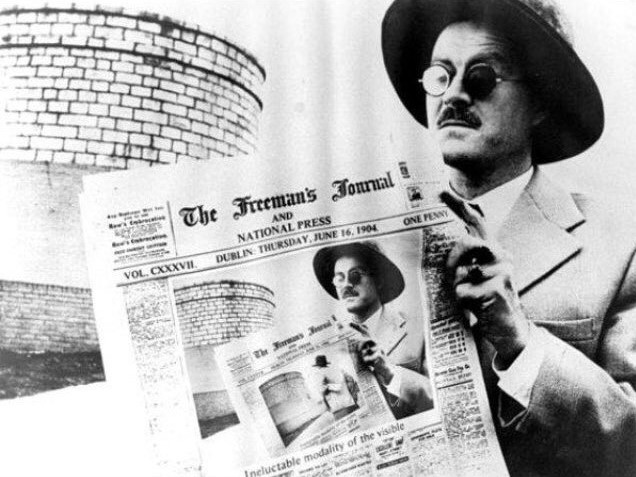
    June 16 is Bloomsday, the date on which the events in James Joyce’s novel “Ulysses” are supposed to have taken place in 1904. Ordinarily, the day is marked by celebrations world-wide, as Joyceans get together to reenact, eat, play music, drink, and of course read.

    Naturally, in the time of COVID, few sensible folk are willing to take the risk. To circumvent these unusual circumstances, the Rosenbach Museum & Library in Philadelphia – which annually cordons off the 2000 block of Delancey Street to accommodate live readings and musical performances from Joyce’s magnum opus – will this year move its celebration online. The virtual edition of the immersive Bloomsday 2020 will be live-streamed today from 11 a.m. to 8 p.m. EDT, at https://rosenbach.org/bloomsday/.

    If I am allowed a few personal observations, it took me the better part of a year to wade through “Ulysses,” and I probably never would have made it without the Rosenbach’s help. I had twice tried to navigate the imposing text, my first attempt dating back to high school, but it was only thanks to a Rosenbach seminar, led by Joyce scholar Carol Loeb Shloss – a superb guide – that I was able to attain a greater understanding of the work and get myself safely to port. I still find Joyce to be infuriating, at times, though I have to admit my fury is now tempered with respect.

    Incidentally, Joyce was a great music-lover, and quotations from opera and popular song infuse his prose in much the same way they do the works of Charles Ives.

    Here are a couple of related songs:

    Samuel Barber’s “Solitary Hotel,” on a text from “Ulysses”

    Joyce’s own “Bid Adieu to Girlish Days”


  • Edvard Grieg: Nordic Masterpieces Rediscovered

    Edvard Grieg: Nordic Masterpieces Rediscovered

    by 

    in
    5 responses

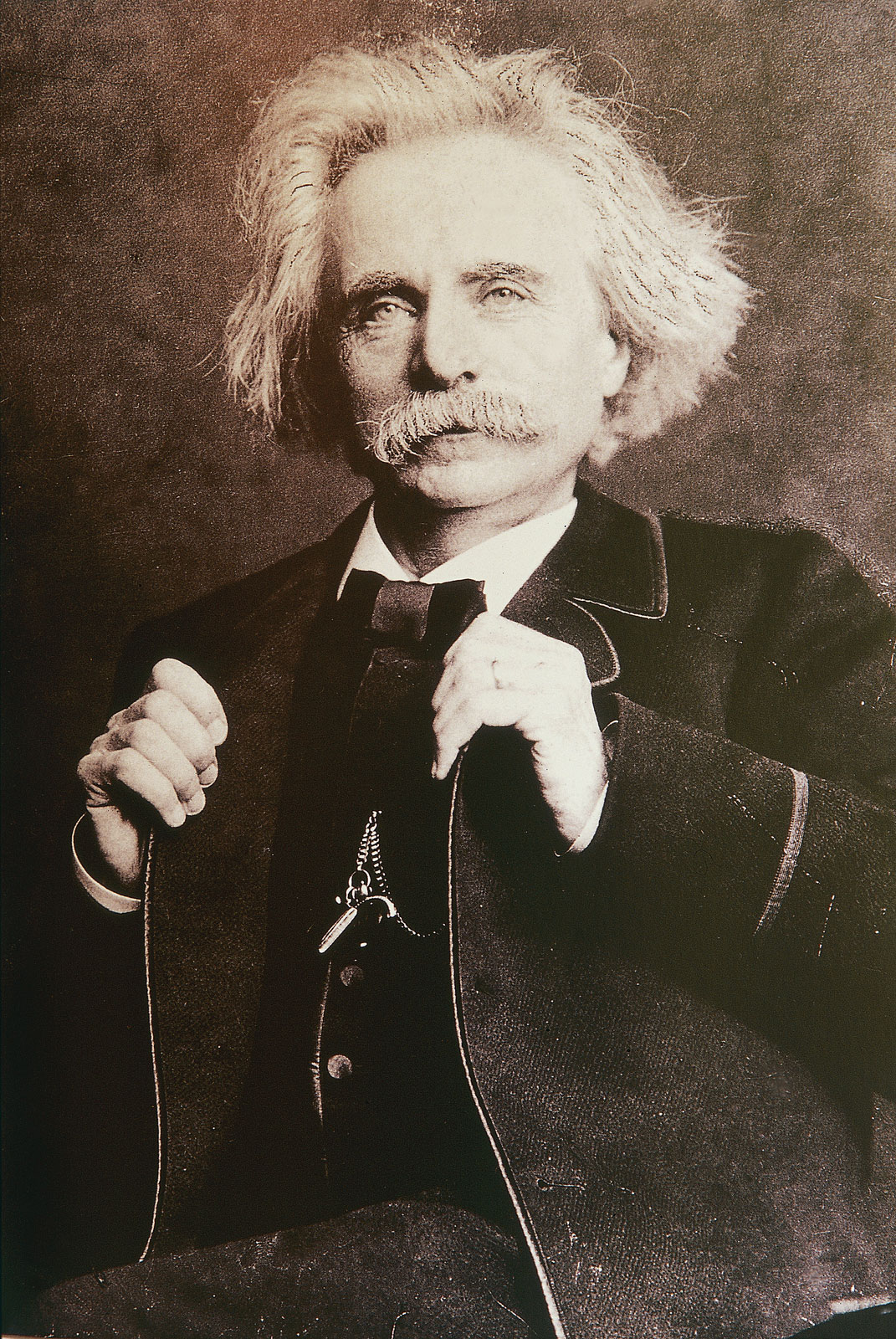
    If Edvard Grieg and Mark Twain got into a knife fight, who would win? Twain, probably. But once Grieg sat down at the piano, there would be no contest. Did this guy ever write a bad note?

    Celebrated as Norway’s greatest composer, Grieg embraced his native folk music, lovingly elevated it, and infused it with an intriguing delicacy, melancholy, and yes, lyricism. Like listening to a Nordic Schubert, you never know when a cloud will break across the fjords. Or perhaps, more to the point, a sunny jaunt across a field of wildflowers will be disrupted by an encounter with a troll.

    The most common criticism leveled against Grieg is that he was essentially a miniaturist. You may as well attack Chopin for being a sloppy orchestrator.

    From his letters, we know that Grieg himself was frustrated by his propensity for shorter works. “Nothing that I do satisfies me,” he wrote, “and though it seems to me that I have ideas, they neither soar nor take form when I proceed to the working out of something big.”

    Claude Debussy was only too happy to kick him when he was down. He famously derided Grieg’s output as so many “pink bonbons filled with snow.” Yet it has been convincingly demonstrated that Debussy owed more than a little to his Norwegian colleague in the writing of his String Quartet in G minor and in some of his own piano miniatures. What is it about Grieg that so galled the Gauls?

    Myself, I could listen to Grieg all day. In fact, I think I will.


    Neeme Järvi conducts the four “Symphonic Dances.” I used the second of these as signature music for an overnight show, back when I was starting out in community radio.

    Emil Gilels plays a selection of the “Lyric Pieces.” Gilels hedged when asked to make the recording, fearing that no one would buy it. Of course, it went on to become one of the great piano classics.

    https://www.youtube.com/watch?v=yMqnGva32Vs

    The husband-and-wife team of Augustin Dumay and Maria João Pires whip up a fair amount of unsuspected passion in the Violin Sonatas. Here’s the full album.

    Arturo Benedetto Michelangeli shatters the stereotype of Grieg as “regional” composer with this volcanic performance of the Piano Concerto in A minor:


    PHOTO: Grieg is great! Happy birthday, master!


Tag Cloud

Aaron Copland (93) Beethoven (95) Composer (114) Film Music (145) Film Score (143) Film Scores (255) Halloween (94) John Williams (195) KWAX (229) Leonard Bernstein (104) Marlboro Music Festival (125) Movie Music (160) Mozart (91) Opera (213) Philadelphia Orchestra (89) Picture Perfect (174) Princeton Symphony Orchestra (109) Radio (88) Ross Amico (244) Roy's Tie-Dye Sci-Fi Corner (290) The Classical Network (101) The Lost Chord (269) Vaughan Williams (105) WPRB (397) WWFM (881)

DON’T MISS A BEAT

Receive a weekly digest every Sunday at noon by signing up here


RECENT POSTS