• Free Opera Week at the Met: Glass, Verdi & More

    Free Opera Week at the Met: Glass, Verdi & More

    by 

    in
    6 responses

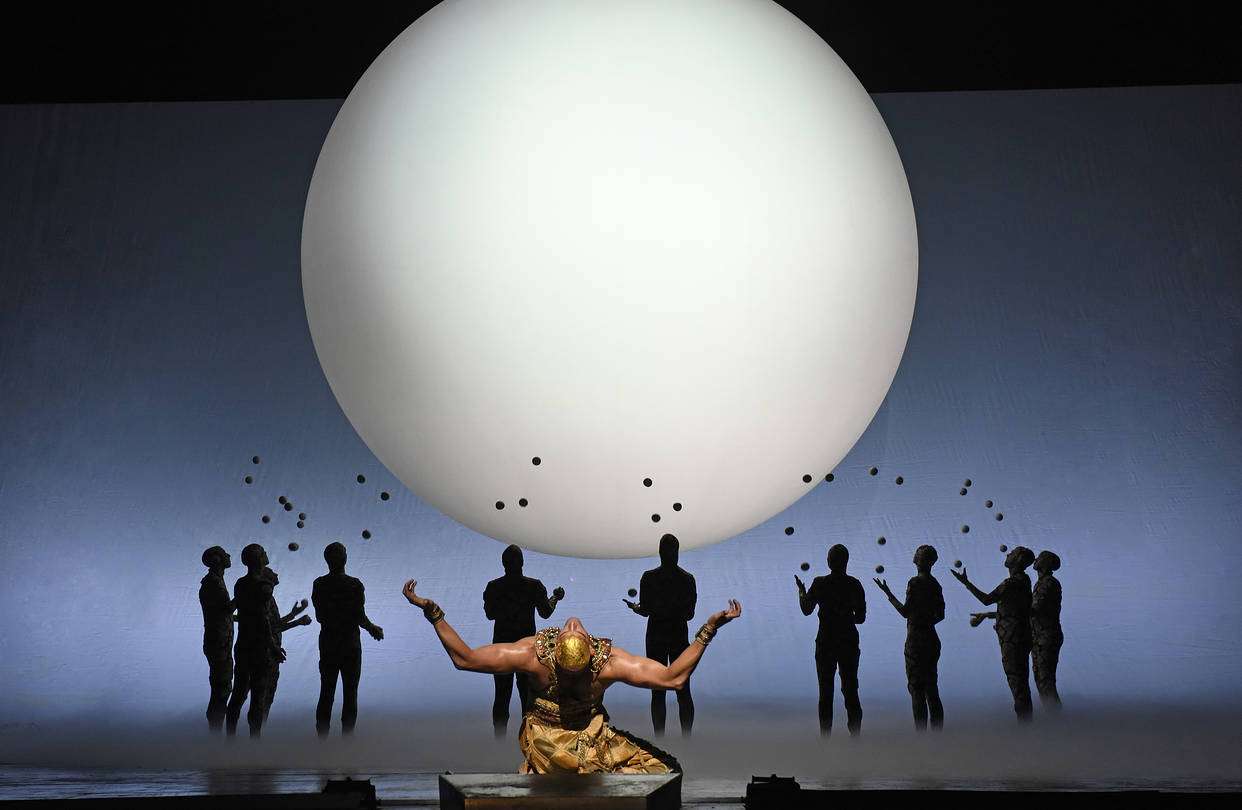
    Good Lord! Two Philip Glass operas in one week! I offer this mild oath in tribute to the monotheistic pharaoh at the center of Glass’ “Akhnaten.”

    Even if you think Minimalism drives you up a wall, try to catch the Metropolitan Opera production, which features an uncanny performance by Princeton University alumnus Anthony Roth Costanzo in the title role, impressive sets, evocative costumes, and plenty of jugglers (!).

    The Met will also offer two – count ‘em – two Rossini operas, “Armida” and “Semiramide.” The Met’s Rossini has been among the more gratifying revelations for me since the COVID-era streaming began. It sounds a little silly to state the obvious, but he’s a very theatrical composer!

    Oh yeah, and there will be two by Verdi, as well, including “La Forza” with Leontyne Price.

    The Met continues to make good on its pledge to stream free opera for the duration of the house’s shutdown. Each opera is accessible for approximately 23 hours, starting every day around 7 p.m. EDT. Handel’s “Rodelinda” streams through 6 p.m. today, at metopera.org.

    Here’s a complete schedule of this week’s offerings. You’ll find teasers and bonus materials when following the link:

    https://www.metopera.org/user-information/nightly-met-opera-streams/week-14/

    Monday, June 15
    Rossini’s Armida
    Starring Renée Fleming, Lawrence Brownlee, John Osborn, Barry Banks, and Kobie van Rensburg, conducted by Riccardo Frizza. From May 1, 2010.

    Tuesday, June 16
    Rossini’s Semiramide
    Starring Angela Meade, Elizabeth DeShong, Javier Camarena, Ildar Abdrazakov, and Ryan Speedo Green, conducted by Maurizio Benini. From March 10, 2018.

    Wednesday, June 17
    Gluck’s Iphigénie en Tauride
    Starring Susan Graham, Plácido Domingo, and Paul Groves, conducted by Patrick Summers. From February 26, 2011.

    Thursday, June 18, and Friday, June 19
    Verdi’s La Forza del Destino
    Starring Leontyne Price, Giuseppe Giacomini, Leo Nucci, and Bonaldo Giaiotti, conducted by James Levine. From March 24, 1984.

    Saturday, June 20
    Philip Glass’s Akhnaten
    Starring Dísella Lárusdóttir, J’Nai Bridges, Anthony Roth Costanzo, Aaron Blake, Will Liverman, Richard Bernstein, and Zachary James, conducted by Karen Kamensek. From November 23, 2019.

    Sunday, June 21
    Philip Glass’s Satyagraha
    Starring Rachelle Durkin, Richard Croft, Kim Josephson, and Alfred Walker, conducted by Dante Anzolini. From November 19, 2011.

  • Flag Day Crossword Puzzle Challenge

    Flag Day Crossword Puzzle Challenge

    by 

    in
    4 responses

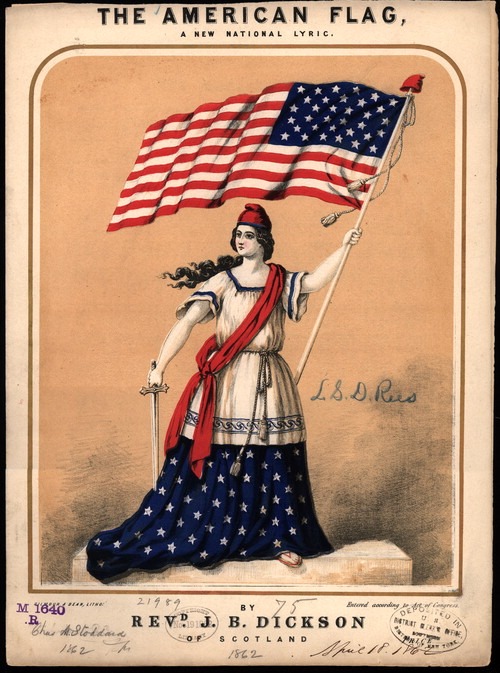
    It’s a Banner day!

    Test your musical knowledge of Flag Day favorites with this week’s Classic Ross Amico crossword.

    To fill out the puzzle, follow the link and select “solve online” at the bottom of the page. You’ll then be able to type directly into the squares. Once you feel you’ve exhausted the puzzle, you’ll find the solutions by clicking on “Answer Key PDF.”

    Earn your stripes, or see see stars at:

    https://www.armoredpenguin.com/crossword/Data/2020.06/1406/14063828.520.html


  • The Tcherepnin Dynasty of Composers

    The Tcherepnin Dynasty of Composers

    by 

    in
    5 responses

    The classical music world has certainly had its share of dynasties. There are the Bachs. There are the Bendas. There are the Strausses.

    The Tcherepnin line, which began in the 1870s, continues to the present day. This Sunday night on “The Lost Chord,” we’ll sample wares from the family business, with works from three generations.

    Nikolai Tcherepnin (1873-1945), whose father was a strict disciplinarian, who demanded he study law, became a pupil of Nikolai Rimsky-Korsakov. He himself became a teacher, took a position at the St. Petersburg Conservatory (later becoming its principal), conducted at the Russian Musical Society, the Moscow Philharmonic, and the Mariinsky Theatre, and led the debut performance of Serge Diaghilev’s famed Ballets Russes, beginning a five-year association with the company.

    In 1918, he took up over the directorship of the National Conservatory of Tbilisi, the capitol of the Democratic Republic of Georgia. With the Bolshevik takeover of Georgia in 1921, Tcherepnin moved to Paris, where he lived the remainder of his life. There, he conducted, performed as pianist, and founded the Russian Conservatory. He became president of the Belyayev publishing house, a position he maintained until his death.

    In 1909, he wrote a symphonic poem, “The Enchanted Kingdom,” a work based upon the same fairy tale that inspired the ballet “The Firebird.” Tcherepnin is said to have been an early contender to write the music for “The Firebird,” after Anatoly Liadov bowed out and before Igor Stravinsky was granted the commission.

    We’ll also hear the Symphony No. 3 by Nikolai’s son, Alexander Tcherepnin (1899-1977), whose own path led him from Russia to Paris to China (his wife was the Chinese pianist Lee Hsien Ming) to DePaul University in Chicago.

    Alexander’s sons, Serge (b. 1941) and Ivan (1943-1998), became fascinated with electronics. Ivan studied with Leon Kirchner, Karlheinz Stockhausen, and Pierre Boulez. In 1972, he became director of the Harvard University Electronic Music Studio, where he remained until his death in 1998.

    Ivan’s early music was experimental in nature. He gradually developed a tendency toward modernism and postmodernism. We’ll listen to his “Concerto for Two Continents” – the continents in question being North America and Asia, lands with which Ivan, born to Russian and Chinese parents and raised in the United States, felt a deeply personal connection. The concerto alludes to a number of familiar Russian and American folk and popular melodies. It also employs a judicious amount of electronics, making for some otherworldly effects.

    In case you’re curious, the Tcherepnin dynasty continues to flourish with its fourth generation of composers – Nikolai’s great grandsons, Stefan (b. 1977) and Sergei (b. 1981) – but tonight we only have time for three!

    Talent runs in the family. I hope you’ll join me for “Tcherepnin Troika,” this Sunday night at 10:00 EDT, on WWFM – The Classical Network and at wwfm.org.


    PHOTOS: (top) Alexander Tcherepnin and Lee Hsien Ming with their sons, Ivan and Serge; (bottom left) paterfamilias Nikolai Tcherepnin; and Ivan and Alexander at the piano


  • Black Hole Movie Chat on Roy’s Sci-Fi Corner

    by 

    in
    2 responses

    In case you missed it (and I know you did), here’s my second appearance on “Roy’s Tie-Dye Sci Fi Corner,” in which we banter about “The Black Hole” (1979) – and in the process touch upon John Barry’s music.

    New episodes of “Roy’s Tie-Dye Sci-Fi Corner” stream on Fridays and Sundays at 7 p.m. EDT.

    Roy’s guest tomorrow will be Nick Tate of “Space: 1999.” That show will take place at a special time, Sunday at 4 p.m. EDT.

    Thanks for having me back, Roy!


  • Wizard & Sorcerer Film Scores on Picture Perfect

    Wizard & Sorcerer Film Scores on Picture Perfect

    by 

    in
    3 responses

    This week on “Picture Perfect,” you’ll be spellbound (I hope) by an hour of musical selections from movies about wizards and sorcerers.

    Gandalf and Saruman duke it out in Peter Jackson’s frenetic, yet somehow ponderous adaptations of J.R.R. Tolkien’s “The Lord of the Rings,” films so bloated and poorly paced that anyone who did not read the books probably wondered what all the fuss was about. Its abundant defects didn’t keep the screen trilogy from making over a billion dollars and garnering 30 Academy Award nominations. Three of those were bestowed upon composer Howard Shore. We’ll be sampling from his music to “The Fellowship of the Ring” (2001).

    Made for a fraction of the budget, much less self-serious, and arguably way more fun is “The Sword and the Sorcerer” (1982), which holds no pretense to be anything beyond what it is: a schlocky B-movie sword and sandal swashbuckler. However, the composer, David Whitaker, aspired for something greater. Against tremendous time pressures, he turned in a marvelous score, which sounds like Erich Wolfgang Korngold on a shoestring. If this film had been made by George Lucas, Whitaker would be world famous.

    After creating one of his greatest scores for Stanley Kubrick’s “Spartacus,” Alex North had his music for Kubrick’s “2001: A Space Odyssey” rejected – and not in a nice way. (North didn’t find out about it until the lights went down at the film’s premiere.) Fortunately, the composer was able to salvage the best material for “Dragonslayer” (1981). The plot, about a bumbling sorcerer’s apprentice who faces a seemingly impossible challenge, is serviceable at best, but the dragon may yet be the most amazing committed to film. Also, the score is terrific.

    Finally, John Williams kicked off another billion dollar franchise with “Harry Potter and the Sorcerer’s Stone” (2001), which in England was released (as was the book) as “Harry Potter and the Philosopher’s Stone.” Who ever heard of a sorcerer’s stone? I guess the publishers were nervous that Americans would be put off by any association with philosophy.

    Prepare to be charmed! It’s music for wizards and sorcerers this week, on “Picture Perfect,” this Friday evening at 6:00 EDT, on WWFM – The Classical Network and wwfm.org.


    PHOTO: Saruman vexes Gandalf with the exquisite whiteness of his beard


Tag Cloud

Aaron Copland (93) Beethoven (95) Composer (114) Film Music (145) Film Score (143) Film Scores (255) Halloween (94) John Williams (195) KWAX (229) Leonard Bernstein (104) Marlboro Music Festival (125) Movie Music (160) Mozart (91) Opera (213) Philadelphia Orchestra (89) Picture Perfect (174) Princeton Symphony Orchestra (109) Radio (88) Ross Amico (244) Roy's Tie-Dye Sci-Fi Corner (290) The Classical Network (101) The Lost Chord (269) Vaughan Williams (105) WPRB (397) WWFM (881)

DON’T MISS A BEAT

Receive a weekly digest every Sunday at noon by signing up here


RECENT POSTS