• Reinbert de Leeuw Champion of Contemporary Music Dies at 81

    Reinbert de Leeuw Champion of Contemporary Music Dies at 81

    by 

    in
    2 responses

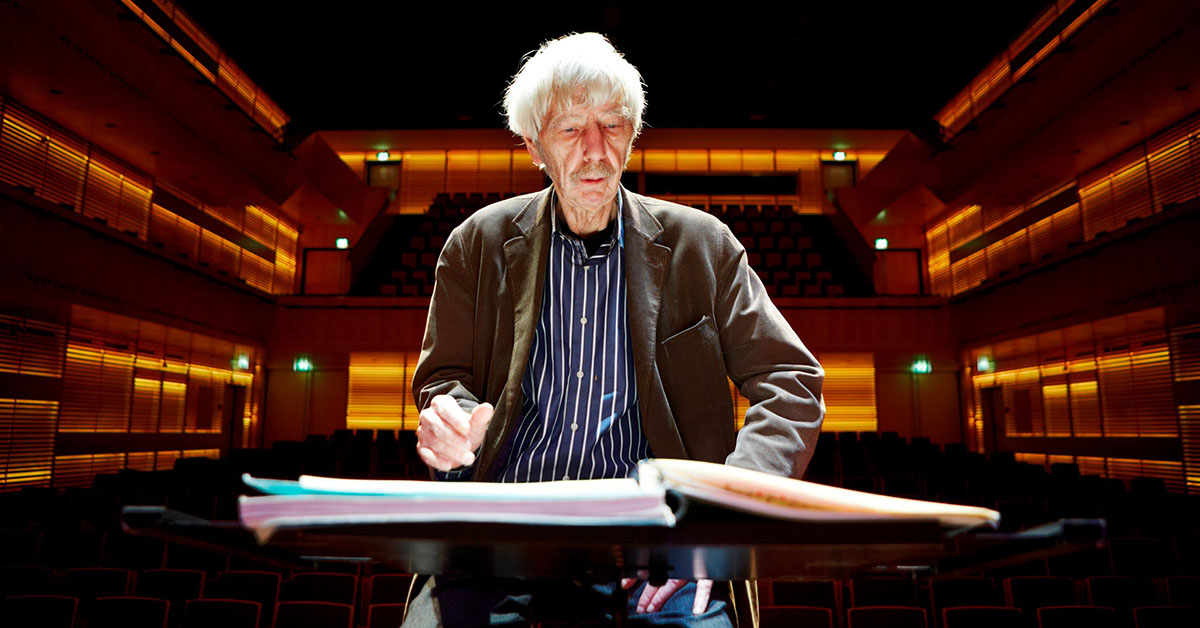
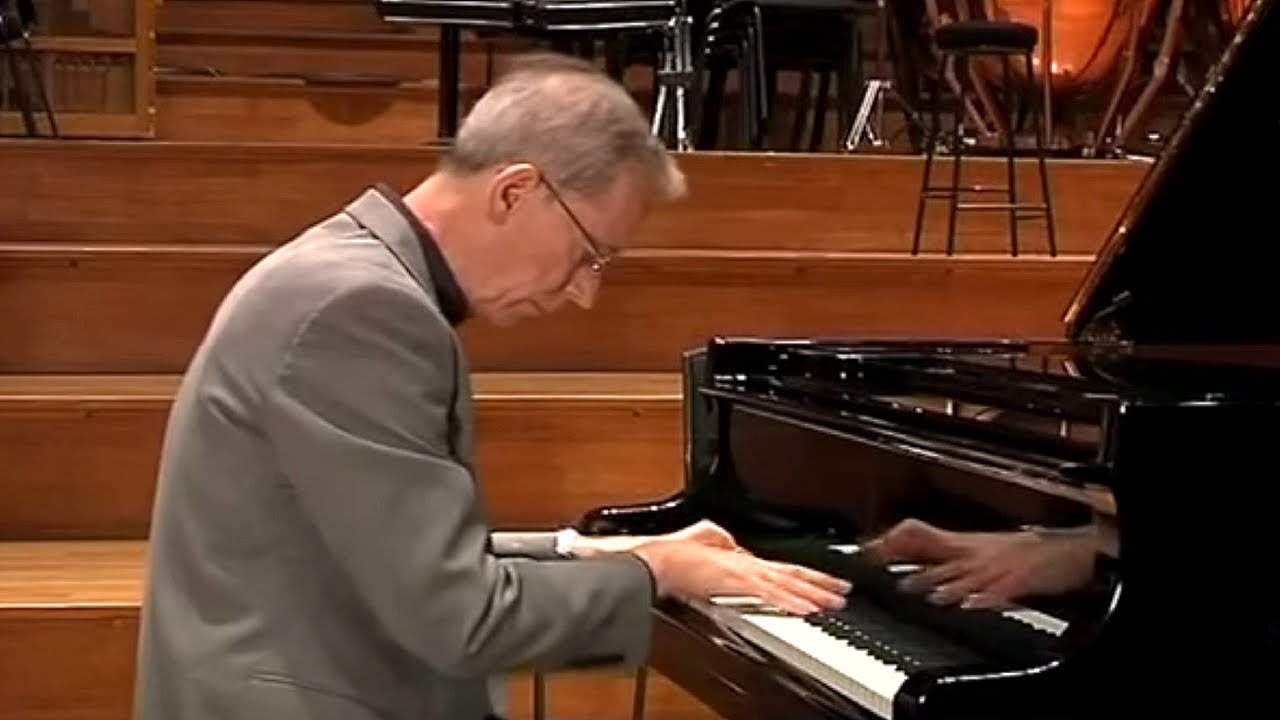
    Conductor and pianist Reinbert de Leeuw has died. Leeuw was a staunch champion of contemporary music and an absorbing interpreter of the works of Erik Satie. For Nonesuch records, he recorded music by Louis Andriessen and Steve Reich.

    He was also a longtime friend, mentor, and collaborator of Barbara Hannigan. Together, they gave some riveting recitals.

    Leeuw died on Valentine’s Day. He was 81 years-old.


    Steve Reich, “Tehillim”

    Louis Andriessen, “De Staat”

    Leeuw plays Satie:

    With Hannigan, in recital – with performances like these, who needs the translations?

    A statement issued by Nonesuch Records:
    https://www.nonesuch.com/journal/conductor-reinbert-de-leeuw-dies-81-2020-02-14


  • Margaret Bonds & Black Classical Pioneers

    Margaret Bonds & Black Classical Pioneers

    by 

    in
    3 responses

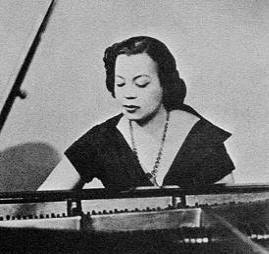
    Margaret Bonds was one of the first Black composers and performers of classical music to gain recognition in the U.S. Born in Chicago on March 3, 1913, she is perhaps best-remembered for her collaborations with Langston Hughes and for her piano work “Troubled Water.”

    This Sunday night on “The Lost Chord,” we’ll pay tribute to Bonds and her notable teachers, Florence Price and William Levi Dawson, both of whom were also important figures in the development of African-American art music.

    Price is regarded as the first African-American woman to have composed symphonies. She wrote three of them. One was performed by the Chicago Symphony Orchestra. She also wrote orchestral works, chamber music, instrumental music, and numerous choral and vocal pieces. She and Bonds shared not only a teacher-student relationship, but also became very good friends. Tonight, we’ll hear Price’s “Fantasie Nègre.”

    In addition to his many fine works for chorus, Dawson is notable for having written one of the most successful symphonies by an African-American composer, the so-called “Negro Folk Symphony.” The work was composed in 1934 and given its first performance by the Philadelphia Orchestra, under Leopold Stokowski. Dawson revised the piece in 1952, following a trip to West Africa, where he was influenced by the indigenous rhythms he encountered there. Stokowski later recorded the piece, as did Neeme Järvi with the Detroit Symphony Orchestra.

    In 1933, Bonds appeared as a piano soloist with the Chicago Symphony. She performed Price’s Piano Concerto with the Women’s Symphony Orchestra of Chicago the next year. In 1939, she moved to New York, where she continued her studies at the Juilliard School. She also studied privately with Roy Harris.

    For all her accomplishments – her collaborations with Langston Hughes, her establishment of a cultural community center in Harlem, and the composition of two ballets and several theater works – the Bonds discography is woefully thin. She’ll be represented tonight by her cycle of four songs, “Ah! Love But a Day,” and by her most-recorded piano work, “Troubled Water.”

    Shortly before her death in Los Angeles in 1972 (at the age of 59), Bonds’ “Credo” for baritone, chorus and orchestra was performed by the Los Angeles Philharmonic, under the direction of Zubin Mehta. Would that they had recorded it!

    Make an investment in Bonds. That’s “Educational Bonds” – music by Margaret Bonds and her teachers – this Sunday night at 10:00 EST, on WWFM – The Classical Network and at wwfm.org.


  • Hamish Milne Medtner Champion Dies

    Hamish Milne Medtner Champion Dies

    by 

    in
    3 responses

    Sad day for fans of Nikolai Medtner. One of his great champions, Hamish Milne, has died.

    Medtner was a good friend of Sergei Rachmaninoff. Both artists emerged from the same piano class at the Moscow Conservatory. Rachmaninoff was a lifelong advocate of Medtner’s music. Though undeniably Rach was the more successful of the two, Medtner developed a reputation as something of a pianist’s pianist.

    In fact, Rachmaninoff believed wholeheartedly in his friend’s superior talent. He once described him as “the greatest composer of our time.” Rach dedicated his Piano Concerto No. 4 to Medtner. Medtner returned the kindness by dedicating his own Piano Concerto No. 2 to Rachmaninoff. He also provided emotional support for Rach during his frequent periods of self-doubt.

    Medtner made another important friend in Jayachamarajendra Wadiyar Bahadur, twenty-fifth Maharaja of the Kingdom of Mysore. Bahadur founded a Medtner Society in London to record all of the composer’s works.

    Milne did his very best to carry on the tradition. A glance at his discography reveals an obvious preference for Medtner’s music. In addition, he recorded underplayed gems by Anatoly Alexandrov, William Sterndale Bennett, Ferruccio Busoni, Hermann Goetz, Sergei Lyapunov, Julius Reubke, Carl Maria von Weber, and Haydn Wood. He was the first pianist to set down a comprehensive survey of Medtner’s music since the composer’s own recordings, released all the way back in the 78 era.

    At the time of his death, Milne was 80 years-old.


    Medtner, Dithyramb, Op. 10, No. 2

    Piano Sonata in G minor:

    Interview with Melanie Spanswick:


  • History’s Short Span: Susan B. Anthony & Time

    History’s Short Span: Susan B. Anthony & Time

    by 

    in
    7 responses

    The longer I live, the more I realize how short history is. I was in the supermarket yesterday and at the checkout I happened to notice a special periodical celebrating the 1920s – now 100 years ago! When did that happen?

    Of course, when I was a kid, the 1920s may as well have been the Stone Age. Now I’m always playing the “equidistant game.” Though I’ve been doing so for decades, I think this is the first time I’ve actually named it. It goes something like this: We are now 30 years from 1990. 30 years before 1990, it was 1960. We are now further from 1990 than 1990 was from the Kennedy assassination. I haven’t used that one before. I tend to think more about the 1940s, and how, in the 1970s, World War II must have felt like yesterday to my grandfather.

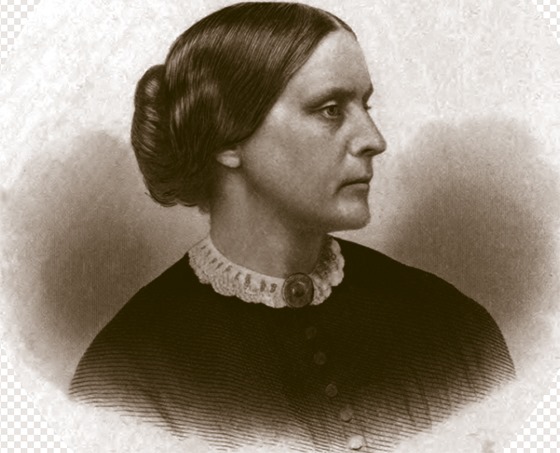
    Anyway, this whole thing is prompted by the fact that today is the 200th anniversary of the birth of Susan B. Anthony. Anthony, of course, was the women’s rights activist, who campaigned tirelessly for women’s suffrage. The 19th Amendment, guaranteeing a woman’s right to vote, was ratified only on August 18, 1920. Ancient history, right? That was within my grandparents’ lifetime! It wasn’t even 50 years before I was born. I am now further away from my birth date than my birth date was from the passage of the 19th Amendment. WTF???

    Anthony never lived to see a woman legally vote in an official election, though she did have the satisfaction of witnessing the gradual evolution of public perception of her work. Once vilified as a dangerous radical whose ideas threatened the very institution of marriage, she was honored at the White House on the occasion of her 80th birthday.

    Again, when I was a kid, it was hard for me to get my head around the continuing repercussions of slavery, when it seemed so much time had passed since the Civil War. I’m probably not saying anything new to any reflective person over a certain age, but history is so damn short, and events that appear to be long past were not really all that long ago. We are still interacting with them every day, whether we happen to be conscious of it or not.

    And yet people forget so quickly, when everything is not kept continually before them. It takes only a few years for something that is accepted as common knowledge to slip off the radar of the young, who have never been exposed to it. We see it all the time, with familiar faces who have been off the public stage for only a few years. Somebody who is 13 has only the vaguest idea of what was happening when they were 3. How do you make Hitler real and present for someone who doesn’t even remember the Fonz?

    Anyway, enough of my pontificating. Happy birthday, Susan B. Anthony – even if you did destroy marriage.

    Also, I have never been fond of your coin.


    Songs of women’s suffrage, from the Library of Congress:
    https://www.loc.gov/item/ihas.200197395/

    Songs of the Suffragettes:


  • Doomed Love in Film: Picture Perfect

    Doomed Love in Film: Picture Perfect

    by 

    in
    6 responses

    There’s no love like doomed love. We all know it’s true. Happily-ever-after is fine for lesser souls. The rest of us can’t look away from “Casablanca,” “The Age of Innocence,” or “The Umbrellas of Cherbourg.” The one that got away hangs heaviest on the heart.

    If impediments fan the flames of desire, then death must be the greatest impediment of all. This week on “Picture Perfect,” it’s an hour of bittersweet wish-fulfillment, as starred-crossed lovers connect beyond the mortal plane.

    Modern-day playwright Christopher Reeve is captivated by a portrait of early 20th century actress Jane Seymour, in “Somewhere in Time” (1980). He wills himself, through self-suggestion, back through the decades, and the two fall in love. It doesn’t end particularly well, though a tear-jerking denouement is contrived wherein the couple is ultimately reunited. Critics were not impressed, but “Somewhere in Time” is still ardently embraced by its admirers.

    The hopelessly romantic score is by John Barry. Barry wrote the music shortly after he lost both his parents, which he credited, in part, for its strong emotional content. He scored the film as a favor to Seymour, a friend. The film’s modest budget prohibited the possibility of hiring Barry at his usual fee. There are strong echoes of this music in Barry’s Oscar-winning score for “Out of Africa,” composed a few years later.

    Interestingly, Richard Matheson wrote the screenplay, basing it on one of his own novels. A prolific “Twilight Zone” scribe, Matheson was also responsible for “The Incredible Shrinking Man,” “I am Legend,” and “Hell House.” Remember when William Shatner discovered a gremlin on the wing of his plane? Matheson wrote that, too. ‘Nuff said.

    In “The Ghost and Mrs. Muir” (1947), widow Gene Tierney takes up residence in a seaside cottage in turn-of the century England and engages in philosophical jousts with the ghost of a salty sea captain, played by Rex Harrison. For a time, the tone is divertingly whimsical, but then the film transforms into a poignant love story. The music is by the great Bernard Herrmann.

    It had long been an ambition of Steven Spielberg to remake the Spencer Tracy film, “A Guy Named Joe.” In the original, Tracy’s character is killed while flying a mission during World War II. Then he returns from the Beyond to help his grieving girlfriend, a civilian pilot, played by Irene Dunne, and allow her to begin a new life with another man, played by Van Johnson.

    Spielberg’s “Always” (1989) updates the setting, with Richard Dreyfuss and John Goodman playing aerial firefighters, and Holly Hunter an air traffic controller, in the Pacific Northwest. The film follows the same basic plot line – the spirit of a dead pilot mentoring his replacement, while struggling to accept that his grieving lover needs to move on with her life. The film was not well received, but the music was by Spielberg’s house composer, John Williams.

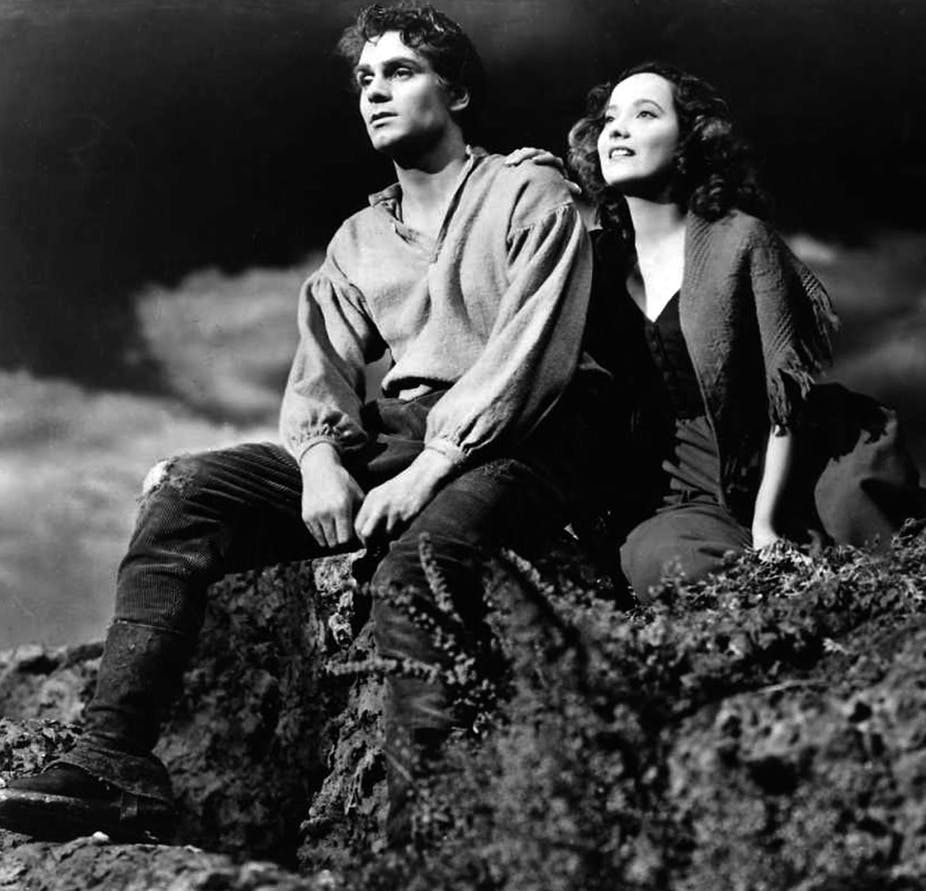
    Finally, “Wuthering Heights” (1939) is one of the all-time classic screen romances. Laurence Olivier plays the Byronic Heathcliff, whose intensity destroys the lives of everyone around him as he is consumed by animal passion for the wayward Cathy, played by Merle Oberon. Alfred Newman wrote the music, one of his best-loved scores. The film takes a lot of liberties with Emily Bronte’s original novel, and the conclusion is pure Hollywood, but we’ll take it.

    Hopeless romantics care not for the limitations of mortality. That’s “Love Eternal,” on “Picture Perfect” – music for the movies – this Friday evening at 6:00 EST, on WWFM – The Classical Network and wwfm.org.
Tag Cloud

Aaron Copland (93) Beethoven (95) Composer (114) Film Music (145) Film Score (143) Film Scores (255) Halloween (94) John Williams (195) KWAX (229) Leonard Bernstein (104) Marlboro Music Festival (125) Movie Music (160) Mozart (91) Opera (213) Philadelphia Orchestra (89) Picture Perfect (174) Princeton Symphony Orchestra (109) Radio (88) Ross Amico (244) Roy's Tie-Dye Sci-Fi Corner (290) The Classical Network (101) The Lost Chord (269) Vaughan Williams (105) WPRB (397) WWFM (881)

DON’T MISS A BEAT

Receive a weekly digest every Sunday at noon by signing up here


RECENT POSTS