• Classical Music Weekend on The Classical Network

    Classical Music Weekend on The Classical Network

    by 

    in
    4 responses

    Hungry for stimulating music and entertainment? As always, The Classical Network offers up a banquet of vittles for your weekend delectation.

    Pianist Orli Shaham will be guest host for this week’s “From the Top.” “From the Top,” of course, is a weekly program dedicated to celebrating young, classically-trained musicians. Hard to believe this show has now been around for 20 years! “From the Top” will air today at 12 p.m. EST on wwfm.org. You can also hear it at https://www.fromthetop.org/show/nprs-from-the-top-portland-me-show-380/

    Shaham has no shortage of experience working with young folk. She has brought her popular “Baby Got Bach” program to Princeton several times. Shaham will return in the spring with “Bach Yard,” an interactive program for kids, at Richardson Auditorium on March 14. For more information, visit babygotbach.org.

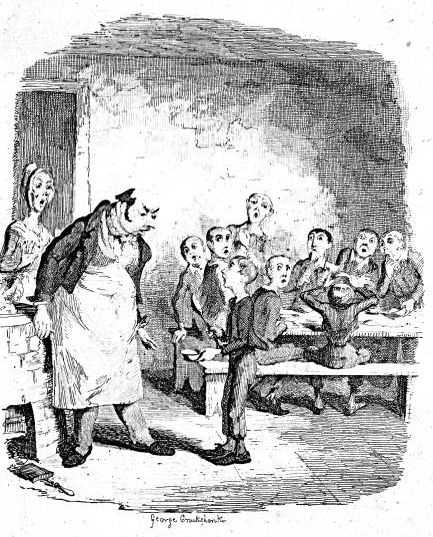
    As one who has been picking his way through “The Pickwick Papers” (what’s Christmas without 800 pages of Charles Dickens?), I also want to thank Ted Otten and Michael Kownacky for putting together what promises to be another lively and entertaining show, on this week’s “The Dress Circle – Public Radio Dedicated to the Performing Arts.” “Going to the Dickens, Part the First” will present numbers from stage and musical adaptations of Dickens’ evergreen stories and novels. Thank you very much! “The Dress Circle” will air on Sunday at 7 p.m. EST.

    And in case you’re curious, I’ll be presenting highlights from Jaromir Weinberger’s “Schwanda the Bagpiper,” a Czech folk opera for the young at heart, on “The Lost Chord,” Sunday at 10 p.m. I know you’re wondering what else it possibly has to offer beyond the famous Polka & Fugue!

    Please, suh… I want some more. Further listings available at wwfm.org. Sate yourself with a balanced diet of great musicmaking on WWFM – The Classical Network!
  • Hitchcock’s Harpsichords Crime Scores

    Hitchcock’s Harpsichords Crime Scores

    by 

    in
    3 responses

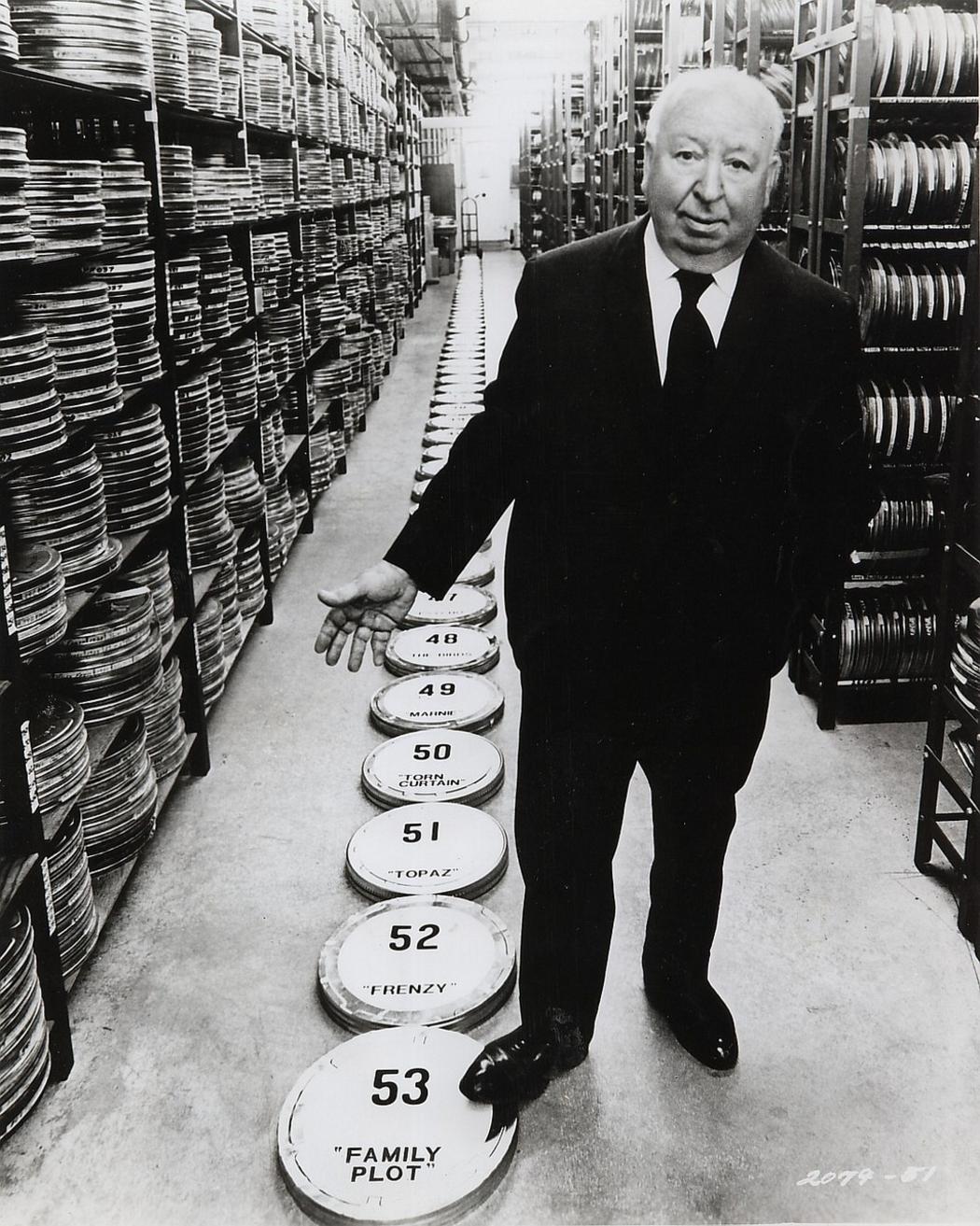
    In trying to convey the tone he was looking for in his latest motion picture, director Alfred Hitchcock stated drolly to his composer, “Mr. Williams, murder can be fun.” With this in mind, John Williams, who had just won an Academy Award for his music to “Jaws,” turned to the harpsichord.

    Because of its use in mysteries and thrillers, the harpsichord – in context, a fusty-sounding instrument – had taken on a certain mischievous quality.

    This week on “Picture Perfect,” we’ll hear selections from “Family Plot” (1976), a neglected score from the dawn of Williams’ widespread popularity, alongside Ron Goodwin’s music for “Murder She Said” (1961), the first of Margaret Rutherford’s Miss Marple films; John Addison’s “Sleuth” (1972), an adaptation of Anthony Shaffer’s play, with Sir Laurence Olivier and Michael Caine engaged in a perilous battle of wits; and André Previn’s “Dead Ringer” (1964), starring a post-“Baby Jane” Bette Davis as dysfunctional twins whose fraught relationship leads to murder.

    The order has been placed for ham on wry. Join me for an hour of wicked fun with arch harpsichords, on “Picture Perfect” – music for the movies – this Friday evening at 6:00 EST, on WWFM – The Classical Network and wwfm.org.


  • Help Wildlife Rescue Support Our Animals

    by 

    in
    7 responses

    I hope if you can do something, you will. It doesn’t have to be for this particular organization, which happens to be Australia’s largest wildlife rescue, based in New South Wales. I’m sure there are plenty of other groups that can use your help. Thanks for whatever you can do.


  • Mozart at Marlboro: An Oasis of Musical Sanity

    Mozart at Marlboro: An Oasis of Musical Sanity

    by 

    in
    5 responses

    With the world hurtling toward destruction, we’ll do our best to offer an oasis of sanity on the next “Music from Marlboro.”

    Find solace in Wolfgang’s Amadeus Mozart’s Piano Trio in B flat major, K. 502. The composer took evident pleasure in writing for the combination of violin, cello and piano. For one thing, these works provided him opportunities to connect with fellow musicians as a performer. He even regarded some as party pieces.

    K. 502 was written when Mozart was 30 years-old and at the peak of his powers. It was composed in 1786, the year of the premiere of “The Marriage of Figaro.” Like the opera, Mozart’s trio subverts a kind of class stratification, elevating the stringed instruments, formerly relegated to supporting roles, so that they attain equal footing with the piano. This egalitarian gesture allows for a kind of civilized discourse between friends.

    We’ll hear it performed at the Marlboro Music Festival in 1968, by violinist Jaime Laredo, cellist Madeline Foley, and pianist Rudolf Serkin.

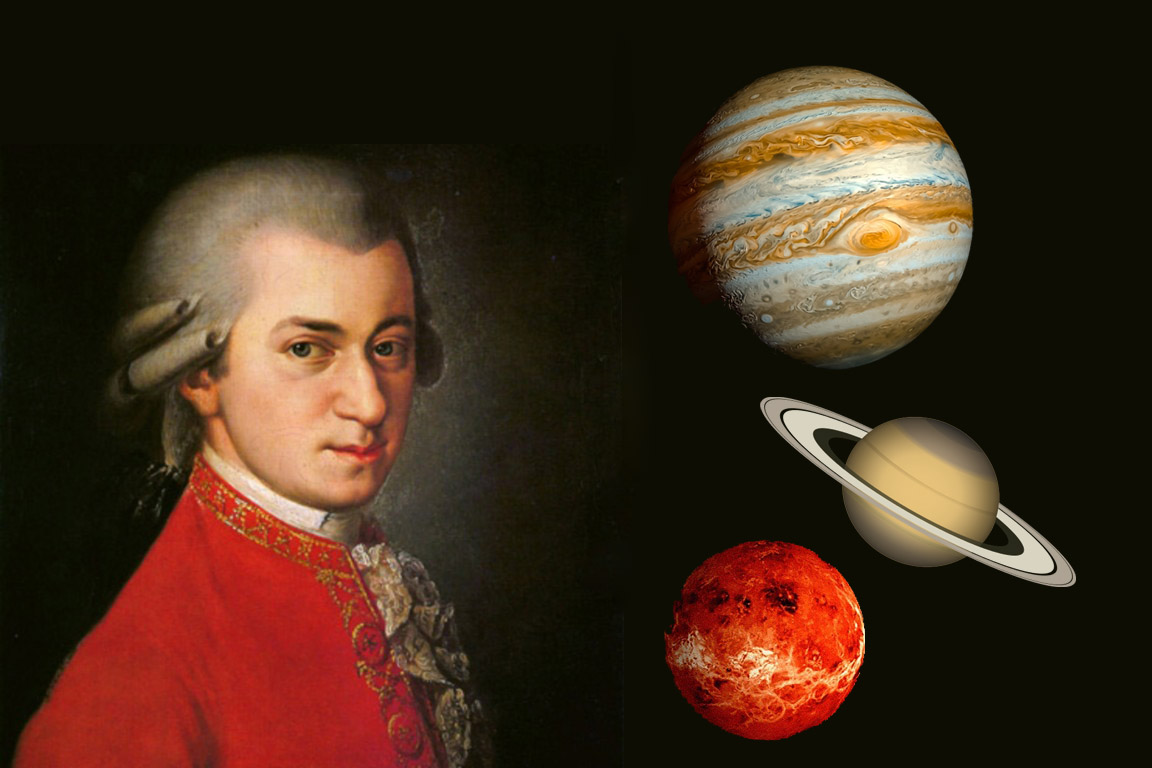
    Then Mozart reaches for the stars, both figuratively and by association. It was probably nowhere in the composer’s thoughts that his Symphony No. 41, composed in 1788, would bear the subtitle “Jupiter.” Like most nicknames, the sobriquet was bestowed by others. That said, it could hardly be more appropriate, as this is one of Mozart’s most Olympian works. It turned out to be his final symphony – and what a way to go!

    The fugato passages of the finale, with the effortless interweaving of no less than five harmonious themes, is breathtaking in its ambition and scale. The spirit of indomitable optimism is just the thing we need right now.

    We’ll hear it performed by the Marlboro Festival Orchestra in 1967, conducted by a 90 year-old Pablo Casals.

    Music may not be a cure-all, but it sure does serve to remind us that there is still beauty in the world and something noble in humanity. Would that everyone could tap into that largeness of spirit and aspire to something greater.

    It’s Mozart for sanity, on the next “Music from Marlboro,” this Wednesday evening at 6:00 EST, on WWFM – The Classical Network and wwfm.org.

    Marlboro School of Music and Festival: Official Page


  • Abbey Simon Centennial WWFM Broadcast

    Abbey Simon Centennial WWFM Broadcast

    by 

    in
    7 responses

    Today would have been the 100th birthday of “supervirtuoso” Abbey Simon. Simon, who studied with legendary pianist Josef Hofmann at the Curtis Institute of Music, died only a few weeks ago, on December 18.

    We’ll celebrate his artistry alongside that of Vladimir Feltsman, also born on this date, and Liszt rival Sigismond Thalberg.

    If that seems like an awful lot of piano music, we’ll also send birthday greetings to Zdeněk Mácal, one-time music director of the New Jersey Symphony Orchestra, and composers Hans von Bülow (the celebrated Wagner conductor), Jaromir Weinberger (of “Schwanda” fame), Benjamin Lees (a pupil of George Antheil), and Philadelphia’s own Robert Moran.

    Sorry, no time for Elvis!

    At 6:00, it’s another “Music from Marlboro.” Keep looking up, with an all-Mozart hour, including his “Jupiter” Symphony, conducted by Pablo Casals.

    I hope you’ll join me, as always, in marking time with the timeless, from 4 to 7 p.m. EST, on WWFM – The Classical Network and wwfm.org.


Tag Cloud

Aaron Copland (93) Beethoven (95) Composer (114) Film Music (145) Film Score (143) Film Scores (255) Halloween (94) John Williams (195) KWAX (229) Leonard Bernstein (104) Marlboro Music Festival (125) Movie Music (160) Mozart (91) Opera (213) Philadelphia Orchestra (89) Picture Perfect (174) Princeton Symphony Orchestra (109) Radio (88) Ross Amico (244) Roy's Tie-Dye Sci-Fi Corner (290) The Classical Network (101) The Lost Chord (269) Vaughan Williams (105) WPRB (397) WWFM (881)

DON’T MISS A BEAT

Receive a weekly digest every Sunday at noon by signing up here


RECENT POSTS