• Brahms: Beyond the Bearded Bear

    Brahms: Beyond the Bearded Bear

    by 

    in
    3 responses

    It’s amusing that the most enduring image of Johannes Brahms is that of a gruff and portly, bearded old bear, incongruously disposed to writing lullabies.

    Lest we forget, Brahms was once a slender young man with piercing blue eyes, who wore his hair long and caused Clara Schumann, 17 years his senior, to confide to her diary, “He is so masterful that it seems God sent him into the world complete.”

    Also, he liked his coffee strong.

    Don’t expect anything too grandfatherly on this week’s “Music from Marlboro,” when the focus will be on Brahms’ unusually intense Piano Quintet in F minor.

    This is not music of wistful recollection. The quintet is often tempestuous and even tragic, fueled by all the passion and earnestness of an excitable young man. Brahms began his quintet in 1862, when he was 29 years-old.

    That’s not to say the composer ever teeters over into sentiment or excess of a kind common to his fin-de-siècle successors. Even in his 20s, Brahms was too much himself ever to allow that to happen.

    Instead he takes the prototype of the piano quintet – established by his friend and mentor, Robert Schumann – and fashions it into something unsettled and at times downright sublime. We are in the presence of something great, but also perhaps a little terrifying.

    This masterpiece of Brahms’ early maturity began life as a string quintet, written under the spell of Schubert’s famous Quintet in C. Brahms showed the work in this form to Clara Schumann and his friend, the violinist Joseph Joachim. Both were full of praise, at least at first, but gradually the compliments gave way to suggestions. Joachim, in particular, admired the work’s power, but confessed he found little in it to charm.

    Undaunted, Brahms took the piece and arranged it for two pianos in 1863-64, consigning the original version, for strings alone, to flames of woe. This two-piano reworking was politely rather than enthusiastically received, and Clara, thinking now it sounded more like a transcription than an original composition, begged him to recast it once more.

    The third time proved to be a charm. The resulting quintet, which achieved its final state in the summer of 1864, was met with resounding acclaim. At last, the piece had arrived at a perfect marriage of expression and form.

    While Brahms retains the classical poise for which he is so well known, he stiffens the sinews and conjures the blood, so to speak. In fact, there are times when he ratchets up the tension so effectively it seems the music might just fly off the rails.

    We’ll hear an exciting performance from the 2007 Marlboro Music Festival, featuring pianist Richard Goode, violinists Augustin Hadelich and Benjamin Beilman, violist Samuel Rhodes, and cellist Amir Eldan.

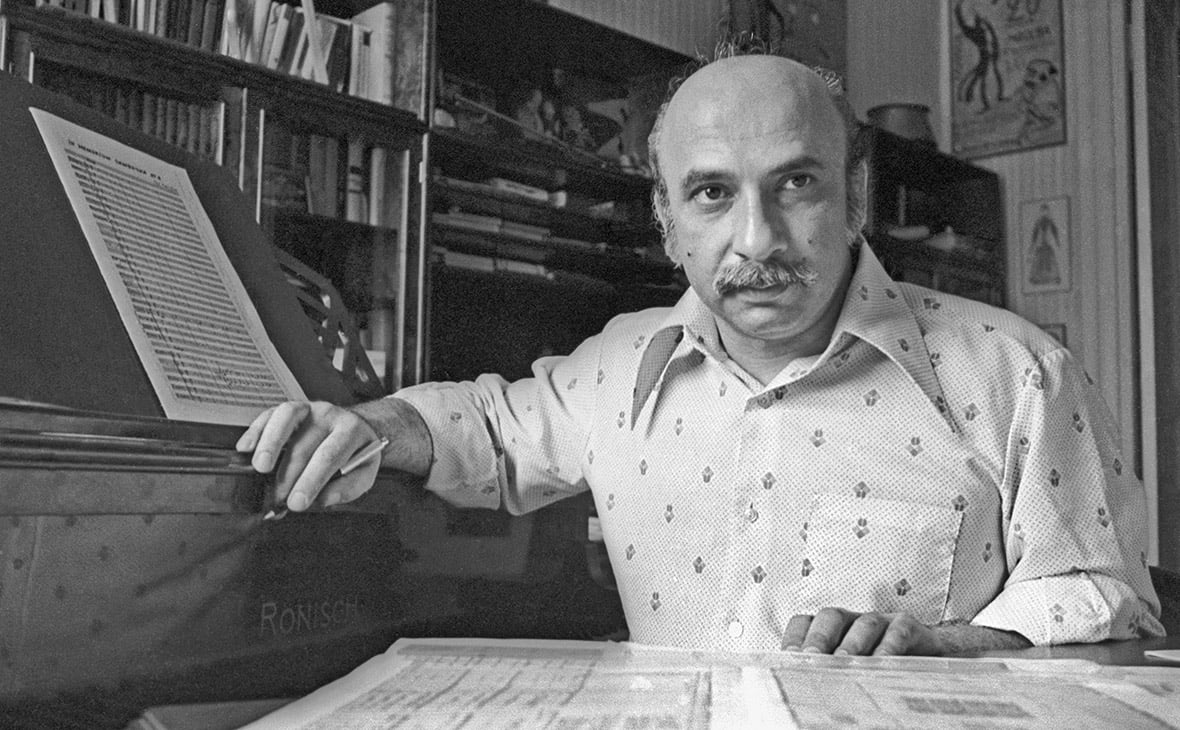
    In tandem with the whole “bearded bear” thing, Brahms is generally pigeonholed as the Classicist among Romantics. With this in mind, I’ll open the hour with a work by Walter Piston, the great American classicist, a two-time Pulitzer Prize winner, who gained esteem as one of our worthiest symphonists. These days, his symphonies are hardly ever played (more’s the pity), but we sure do hear his ballet “The Incredible Flutist” – probably his least characteristic composition.

    Piston’s 1946 “Divertimento for Nine Instruments” was performed at the Marlboro Music Festival in 1977, by violinists Young Uck Kim and Mitchell Stern, violist Karen Dreyfus, cellist Jerry Grossman, double bassist Julius Levine, flutist Julia Bogorad, oboist Roger Cole, clarinetist Stewart Newbold, and bassoonist Sol Schoenbach.

    It is, after all, called “classical music.” Tune in for worthwhile works by a pair of classicists, on the next “Music from Marlboro,” this Wednesday evening at 6:00 EDT, on WWFM – The Classical Network and wwfm.org.

    Marlboro School of Music and Festival: Official Page


    PHOTOS: Boy, Brahms… you really let yourself go!

  • IAS Concerts Where Einstein Once Roamed

    IAS Concerts Where Einstein Once Roamed

    by 

    in
    2 responses

    Albert Einstein. John von Neumann. Kurt Gödel. J. Robert Oppenheimer. The Institute for Advanced Study has been a magnet for the world’s greatest minds. But it’s also the home of some very smart concerts.

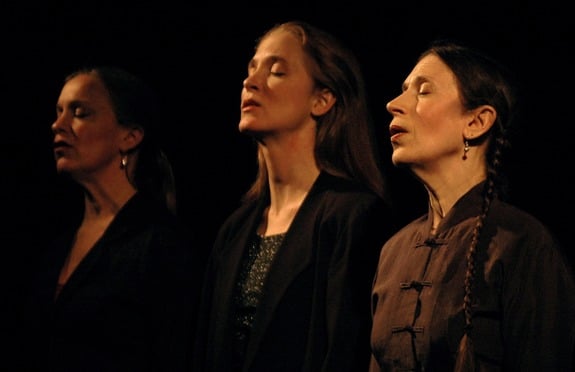
    This season, the Institute’s Edward T. Cone Concert Series will commence on Friday and Saturday with Meredith Monk and her vocal ensemble. The concerts will be held at IAS’s Wolfensohn Hall, 1 Einstein Drive, in Princeton. Admission is free, with tickets available through an online registration system. To reserve, visit ias.edu/air and click on “2019-20 Edward T. Cone Concert Series.” Acting promptly is advised. The venue seats 220, and it tends to fill up very quickly.

    For more information on this season’s concerts and to learn more about the Institute for Advanced Study, check out my article in this week’s U.S. 1 Newspaper – PrincetonInfo, out today.

    https://princetoninfo.com/concert-series-opens-with-boundary-pushing-master/


  • Giya Kancheli Georgian Composer Dies at 84

    Giya Kancheli Georgian Composer Dies at 84

    by 

    in
    2 responses

    The eminent Georgian composer Giya Kancheli has died.

    Born in Tblisi in 1935, Kancheli achieved critical acclaim through a body of seven distinctive symphonies and popular recognition for his film scores. His Symphony No. 4, dedicated “To the memory of Michelangelo,” earned him a USSR State Prize in 1976. The work received its American premiere by the Philadelphia Orchestra in 1978.

    With the collapse of the Soviet Union, Kancheli moved to the West, living first in Berlin and then Antwerp, where he was composer-in-residence with the Royal Flemish Philharmonic. Kancheli died earlier today, in his hometown of Tblisi, at the age of 84.

    Kancheli’s fourth symphony will be heard this afternoon, among my featured works, between 4 and 6 p.m. EDT. If you like the music of Henryk Gorecki or Arvo Pärt, you might want to give it a shot. We’ll also mark the birthdays today of English composer Kenneth Leighton and Dutch organist, harpsichordist, and conductor Ton Koopman, a leading figure in the HIP (historically informed performance) movement.

    Somewhere along the way, we’ll also continue our observance of the Jewish High Holy Days with Darius Milhaud’s “Études sur des thèmes liturgiques du Comtat Venaissin,” a work that references tunes from the Rosh Hashana and Yom Kippur liturgies. The piece has a something of a local connection, written as it was on a commission from the Braemer Foundation of Philadelphia.

    I’ll follow that with “Yahrzeit” by former Milhaud student Robert Moran, who has made Philadelphia his home for the past 35 years.

    At 6:00, it’s another “Music from Marlboro.” This week, the focus will be on works by Walter Piston and Johannes Brahms, as performed at the famed Marlboro Music Festival.

    I’ve got Georgia on my mind, from 4 to 7 p.m. EDT, on WWFM – The Classical Network and wwfm.org.


  • Halloween Mystery Reveal Day 2

    Halloween Mystery Reveal Day 2

    by 

    in
    5 responses

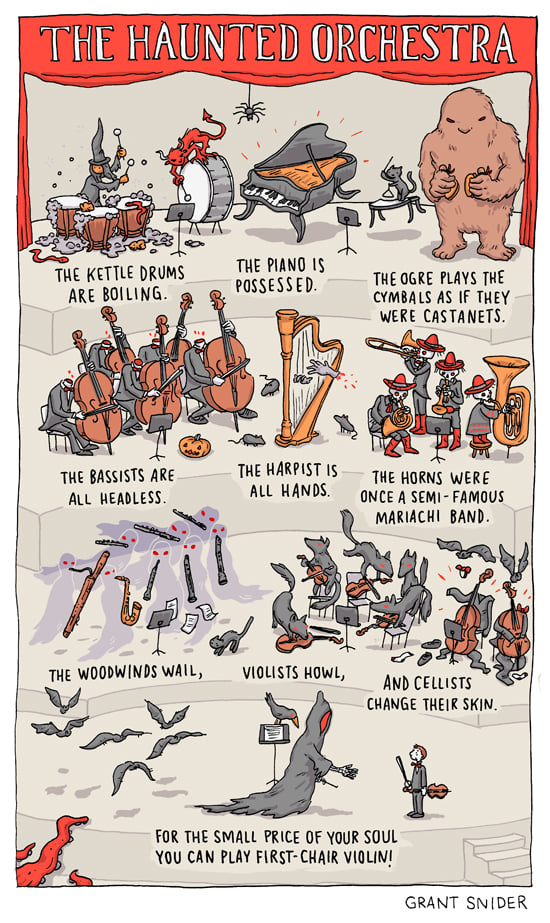
    31 DAYS OF HALLOWEEN (DAY 2)

    You have to click on the image to read the last line.


  • Remembering Jessye Norman Her Superpowers

    Remembering Jessye Norman Her Superpowers

    by 

    in
    2 responses

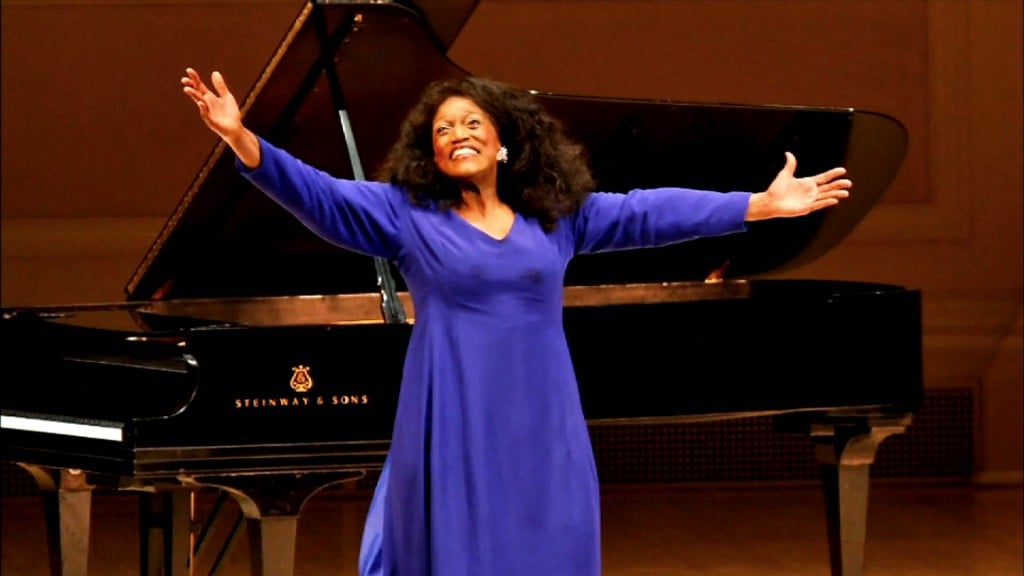
    We all know that Jessye Norman had superpowers, but does anyone else remember her actually foiling a crime? It’s on the cusp of memory, something that happened within the past decade or so (unfortunately too recent to be within my wheelhouse), but I just can’t find anything right now, doing an internet search, beyond her countless obituaries. Norman, of course, died yesterday at the age of 74.

    This afternoon on The Classical Network, we’ll celebrate this great soprano’s artistry through a number of her recordings, including – to coincide with the Jewish High Holidays – Maurice Ravel’s “Deux mélodies hébraïques.”

    For variety’s sake, we’ll also enjoy performances by pianist Paul Badura-Skoda and hornist Myron Bloom, both of whom also died within the past several days.

    Norman’s voice was powerful yet creamy, at once opulent and seductive. She never made an ugly sound. I was lucky enough to hear her live a couple of times with the Philadelphia Orchestra, back in the 1980s. It seems as if I have the uncanny ability to remember everything from 30 years ago (that’s MY superpower), but I can’t remember what happened last week.

    In particular, her performance of Berlioz’s “Les nuits d’été” (“Summer Nights”), part of an all-Berlioz evening I attended at the height of my Berlioz mania, was exquisite. And boy, did she have presence.

    Her recordings are presents I can’t wait to share.

    First, on today’s Noontime Concert, we’ll have something completely different. We’ll travel the Silk Road from China to Spain with the Eurasia Consort in a program titled “On the Road through Dunhuang: Music from the Dunhuang Caves, the Ottoman Empire, and Medieval Spain.”

    The concert was recorded on January 3, 2018, at St. Bartholomew’s Church, 325 Park Avenue, in New York City. Free Midtown Concerts are held at St. Bart’s every Thursday at 1:15 p.m.

    Today’s broadcast is another made possible in part by Gotham Early Music Scene, or GEMS. GEMS is a non-profit corporation that supports and promotes artists and organizations in New York devoted to Early Music. For more information and a complete events calendar, visit gemsy.org.

    It’s all silk and velvet this afternoon. Prepare yourself for another Norman conquest, from 12 to 4 p.m. EDT (with more to follow with David Osenberg, from 4 to 7 p.m.), on WWFM – The Classical Network and wwfm.org.


Tag Cloud

Aaron Copland (93) Beethoven (95) Composer (114) Film Music (145) Film Score (143) Film Scores (255) Halloween (94) John Williams (195) KWAX (229) Leonard Bernstein (104) Marlboro Music Festival (125) Movie Music (160) Mozart (91) Opera (213) Philadelphia Orchestra (89) Picture Perfect (174) Princeton Symphony Orchestra (109) Radio (88) Ross Amico (244) Roy's Tie-Dye Sci-Fi Corner (290) The Classical Network (101) The Lost Chord (269) Vaughan Williams (105) WPRB (397) WWFM (881)

DON’T MISS A BEAT

Receive a weekly digest every Sunday at noon by signing up here


RECENT POSTS