Happy June-a!
-
Happy June Summer Fun
by
-
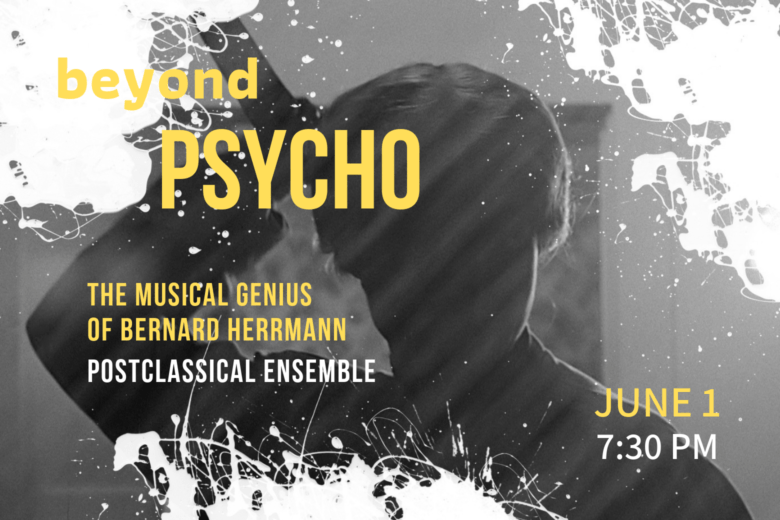
Herrmann’s Whitman Radio Play Premieres Tonight
by
2 responses
If you’re still feeling a little unsteady after yesterday’s Walt Whitman 200th Birthday Blowout, a little “hair of the dog” might just be the thing to settle the shakes. (And believe me, with Whitman, there’s plenty of hair to go around.)
Join us tonight on The Classical Network for a special live broadcast of Bernard Herrmann’s forgotten radio play, “Whitman.” Baritone William Sharp will assume the title role, with the PostClassical Ensemble conducted by Angel Gil-Ordóñez. The concert will take place at Washington National Cathedral at 7:30 p.m.
WWFM’s David Osenberg will join PostClassical executive director Joseph Horowitz and “Exploring Music” host Bill McGlaughlin for this exciting event. The program will also include Herrmann’s Clarinet Quintet “Souvenirs de Voyage” and “Psycho: A Narrative for String Orchestra.”
Herrmann, of course, achieved fame as one of the great film composers. His first film score was for Orson Welles’ “Citizen Kane;” his last was for Martin Scorsese’s “Taxi Driver.” But he is probably best remembered for his music written for the classic thrillers of Alfred Hitchcock.
Prior to his run in the movies, Herrmann worked as a conductor for the Columbia Broadcasting System. It was while at CBS that he met Welles, with whom he collaborated on “Mercury Theatre on the Air.” Among Herrmann’s assignments: Welles’ notorious “The War of the Worlds” radio broadcast.
Herrmann’s “Whitman” was written for another radio legend, Norman Corwin. Composed in 1944, the music will receive its world premiere concert performance on tonight’s program.
Following the broadcast, I’ll be on hand, in the WWFM studios, to share more Herrmann from some of his recordings.
Join us for an evening of music by an artist celebrated by PostClassical as “the most underrated 20th century American composer.” It’s all-Herrmann, from 7:30 to 10 p.m. EDT, on WWFM – The Classical Network and wwfm.org.
-
Herrmann’s “Whitman” Premieres Tonight!
by
7 responses
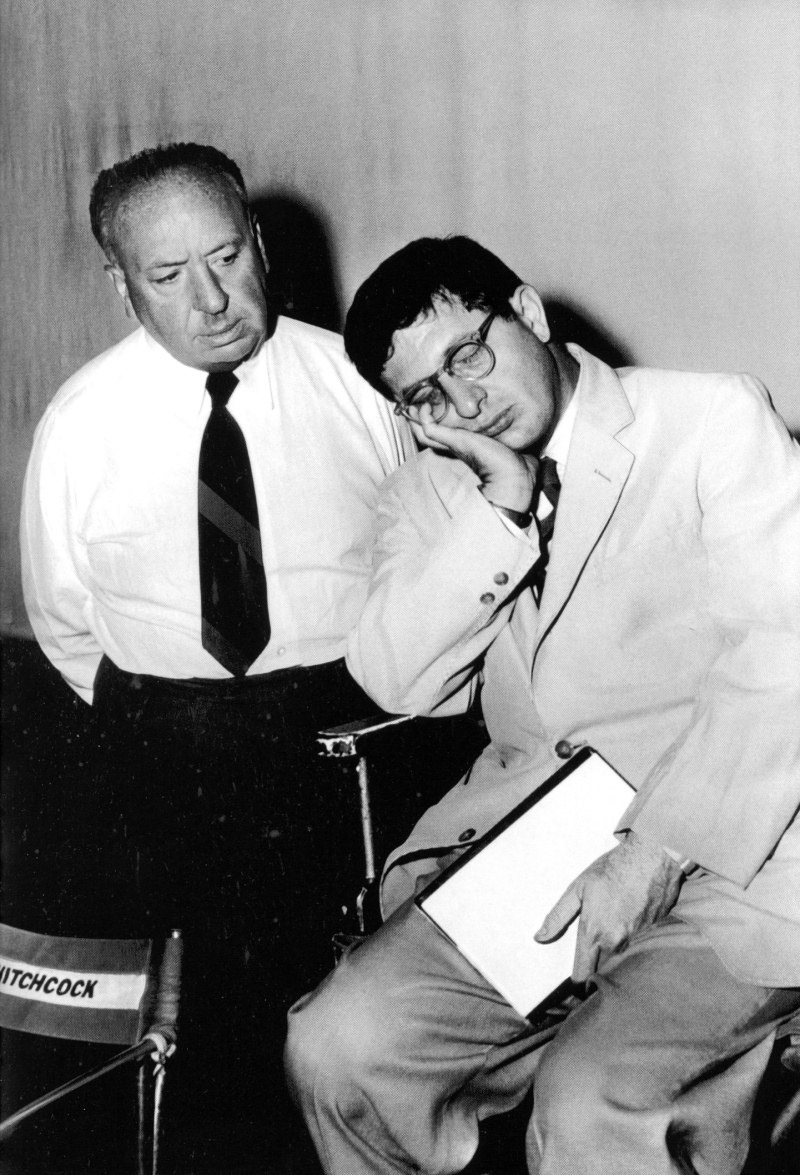
It’s a dream come true for Bernard Herrmann fans!
Join us for a special live broadcast from Washington National Cathedral of Herrmann’s forgotten radio play, “Whitman.” Baritone William Sharp will assume the title role, with the PostClassical Ensemble conducted by Angel Gil-Ordóñez. This will be the work’s WORLD CONCERT PREMIERE. Also on the program will be Herrmann’s Clarinet Quintet “Souvenirs de Voyage” and “Psycho: A Narrative for String Orchestra.” The concert will begin tonight at 7:30 p.m.
Then, following the broadcast, stick around for recorded Herrmann until 10:00.
You don’t have to be psycho to enjoy Herrmann without a Hitch, on WWFM – The Classical Network and wwfm.org.
-
Whitman Mania on WWFM Classical Network
by
6 responses
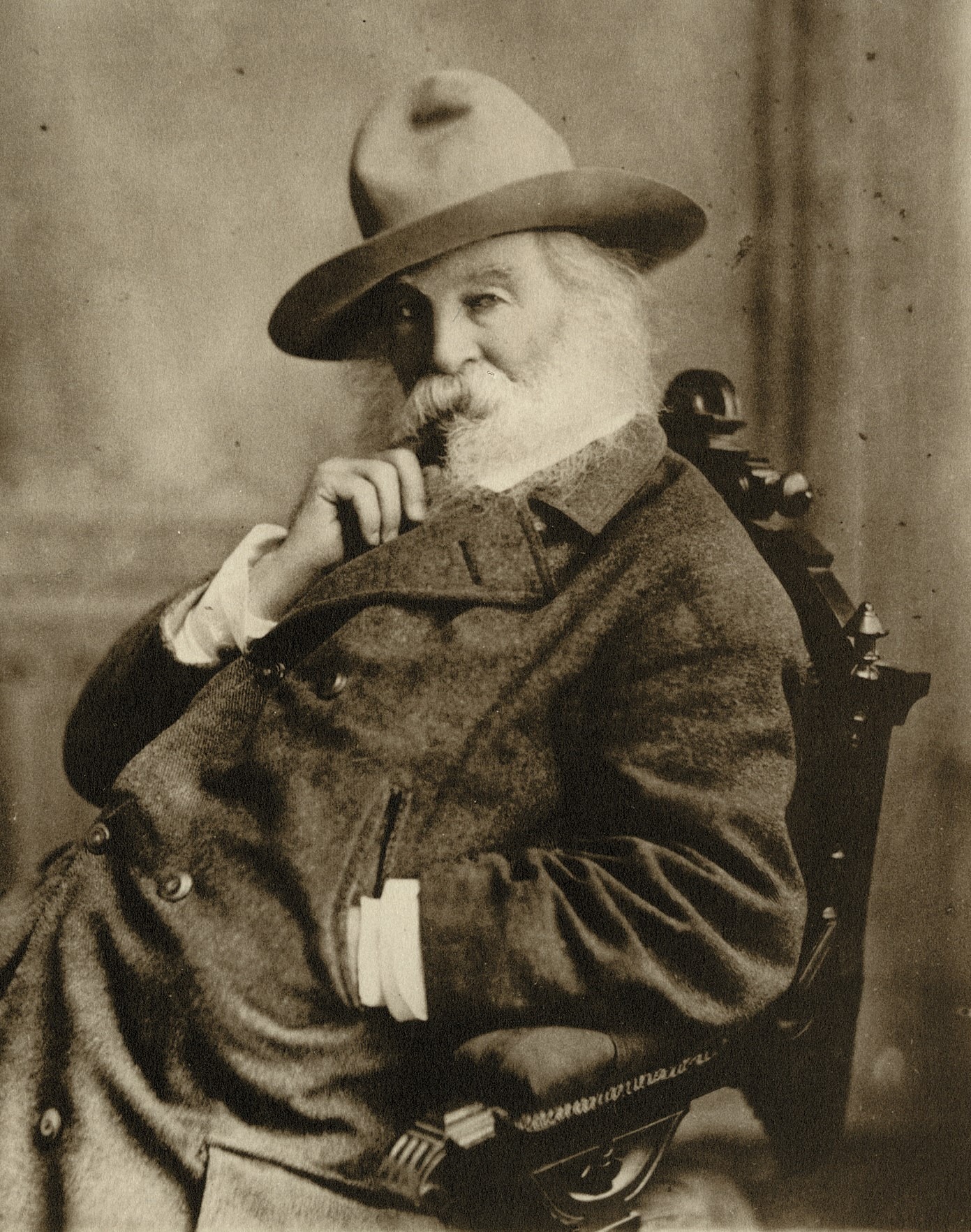
If you’ve a mania for Whitmaniana, you need look no further than WWFM The Classical Network.
Walt Whitman was born on this date in Huntingdon, New York, 200 years ago; he died in Camden, New Jersey, in 1892.
America’s national poet has inspired literally hundreds of musical responses. We’ll liven up your Friday afternoon with choral works, orchestral pieces, and songs. Join me at a special time, from 12 to 4 p.m., for a playlist of tributes to “the bard of democracy.”
On a related note, “Picture Perfect,” at 6 p.m., will offer music from movies about poetry and poets, including selections from “Dead Poets Society” (Maurice Jarre), “Lady Caroline Lamb” (Richard Rodney Bennett), “Il Postino” (Luis Bacalov), and “Cyrano de Bergerac” (Dimitri Tiomkin).
Poetry and movies will also inform an exciting live broadcast, tomorrow at 7:30 p.m., of Bernard Herrmann’s radio play, “Whitman.” Baritone William Sharp will assume the title role, with the PostClassical Ensemble conducted by Angel Gil-Ordóñez at Washington National Cathedral. The program will also include Herrmann’s Clarinet Quintet “Souvenirs de Voyage” and “Psycho: A Narrative for String Orchestra.”
In addition, some of our archived shows may be of interest. Check out our webcasts, including a four-part series devoted to Whitman on “The Lost Chord.”
Also, Rachel Katz spoke with Malcolm J. Merriweather, music director of The Dessoff Choirs, last Saturday on “A Tempo.” The Dessoff Choirs will present three world premieres of Whitman settings, as part of a Whitman Bicentennial Festival, tonight at the Church of St. Paul and St. Andrew in New York City. That show too has been archived.
To listen to the webcasts, go to wwfm.org. Click on “About Us,” then “Our Programs A-Z,” and then the individual shows, which are listed alphabetically. (“The Lost Chord” appears under the letter T.)
Or if you have the time and the patience to scroll through everything, simply click on “Classical” and then “Webcasts.”
Happiness, knowledge, not in another place but this place, not for another hour but this hour!
Join us in sounding a barbaric yawp. It’s wall-to-wall Whitman, today from 12 to 4 p.m.; “Poetry in Motion” on “Picture Perfect,” Friday evening at 6; and Bernard Herrmann’s “Whitman,” with the PostClassical Ensemble, Saturday night at 7:30, on WWFM – The Classical Network and wwfm.org.
-
Schoenberg, Paganini & Marlboro Music
by
4 responses
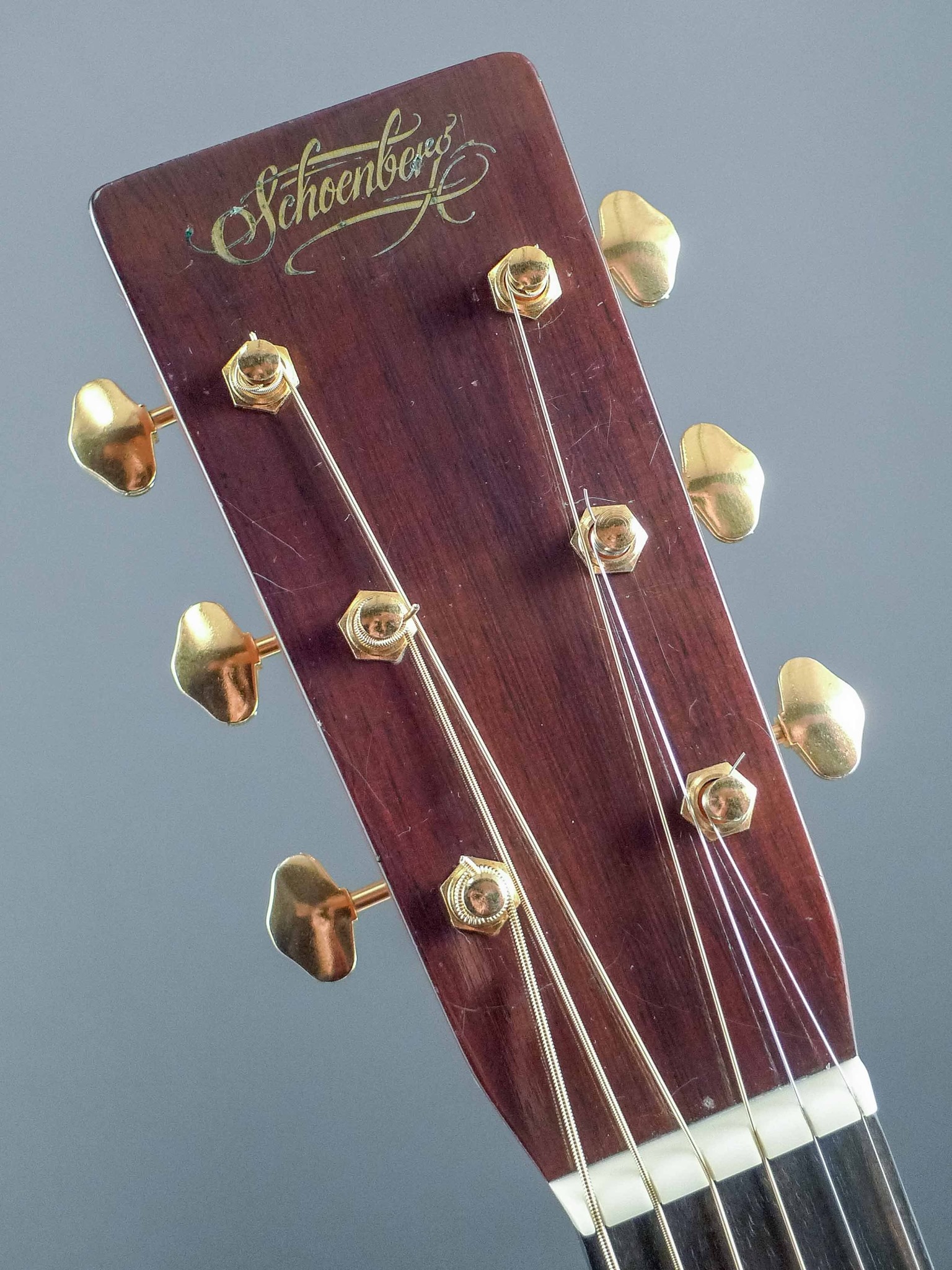
Arnold Schoenberg’s “Serenade,” Op. 24, puts me in the mind of Lorca’s weeping guitar.
Schoenberg employs the guitar as part of a loony ensemble that also includes two clarinets, mandolin, violin, viola, cello, and – in the work’s most prescient movement – voice.
On this week’s “Music from Marlboro,” we’ll hear this Janus-like piece. The Serenade may contain the first published example of Schoenberg’s twelve-tone method to employ multiple instruments (with voice) – a three-minute setting of a Petrarch sonnet – but of the other five movements, though they may push tonality beyond the breaking point, none of them are actually “twelve-tone.”
If you find yourself hanging on by your fingernails at the seeming lack of identifiable landmarks, it might be better to just let go and allow all the colors to wash over you.
The composer looks back to classical form through the use of repetitions in the opening “March,” the second movement “Minuet,” and the fifth movement “Dance Scene.” There is also a seeming affirmation of the past through the deliberate choice of Petrarch as a source of inspiration. The third movement is a set of “Variations,” and the sixth a “Song (without Words).” A “Finale” caps the piece,” which, all in all – by Schoenberg standards – is fairly light and easygoing.
We’ll hear a performance from the 1966 Marlboro Music Festival. Guitarist Stanley Silverman is one with an ensemble that also includes violinist Jaime Laredo, violist Samuel Rhodes, cellist Madeline Foley, B-flat clarinetist Harold Wright, bass clarinetist Don Stewart, mandolinist Jacob Glick, and (singing Petrarch) bass Thomas Paul. Leon Kirchner directs.
The guitar moves to the front and center in Niccolò Paganini’s Quartet No. 15 in A minor. Paganini, of course, was one of the great violinists – some posit, the greatest who ever lived – but he was also an exceptional guitarist. He composed 15 quartets for guitar and strings.
The last of these is from 1820. We’ll hear it performed in 1976, by guitarist Javier Calderon, violinist Daniel Phillips, and violist Luigi Alberto Bianchi. The cellist, 20 years-old at the time, is Yo-Yo Ma.
Marlboro musicians get a chance to exhibit their pluck, on this week’s “Music from Marlboro,” this Wednesday evening at 6:00 EDT, on WWFM – The Classical Network and wwfm.org.
Marlboro School of Music and Festival: Official Page
In a 1930 poll conducted by the Viennese newspaper Neues Wiener Tagblatt, Arnold Schoenberg and Erich Wolfgang Korngold were elected two of the most influential Austrian composers of their time. The two artists couldn’t be more different, of course – Schoenberg, the godfather of dodecaphonic music, and Korngold, the progenitor of the “Hollywood sound.” Tune in a little early, at 4:00 EDT, to enjoy some of Korngold’s music, on his birthday. I’ll also be talking with Leon Botstein about this summer’s Bard Music Festival, at Bard College. The focus of this year’s festival will be on “Korngold and His World.”
Tag Cloud
Aaron Copland (93) Beethoven (95) Composer (114) Film Music (145) Film Score (143) Film Scores (255) Halloween (94) John Williams (195) KWAX (229) Leonard Bernstein (104) Marlboro Music Festival (125) Movie Music (160) Mozart (91) Opera (213) Philadelphia Orchestra (89) Picture Perfect (174) Princeton Symphony Orchestra (109) Radio (88) Ross Amico (244) Roy's Tie-Dye Sci-Fi Corner (290) The Classical Network (101) The Lost Chord (269) Vaughan Williams (105) WPRB (397) WWFM (881)
4 responses