Happy Birthday, Irving Berlin:
And Fred Astaire (whose birthday it was yesterday):
by
Happy Birthday, Irving Berlin:
And Fred Astaire (whose birthday it was yesterday):
by
Before American composers like Jerome Moross and Elmer Bernstein made the western distinctly their own, the task of scoring the genre fell largely to European émigrés. This week on “Picture Perfect,” to coincide with the birthdays today of Max Steiner and Dimitri Tiomkin, we’ll take a look at some outside perspectives on how the West was won.
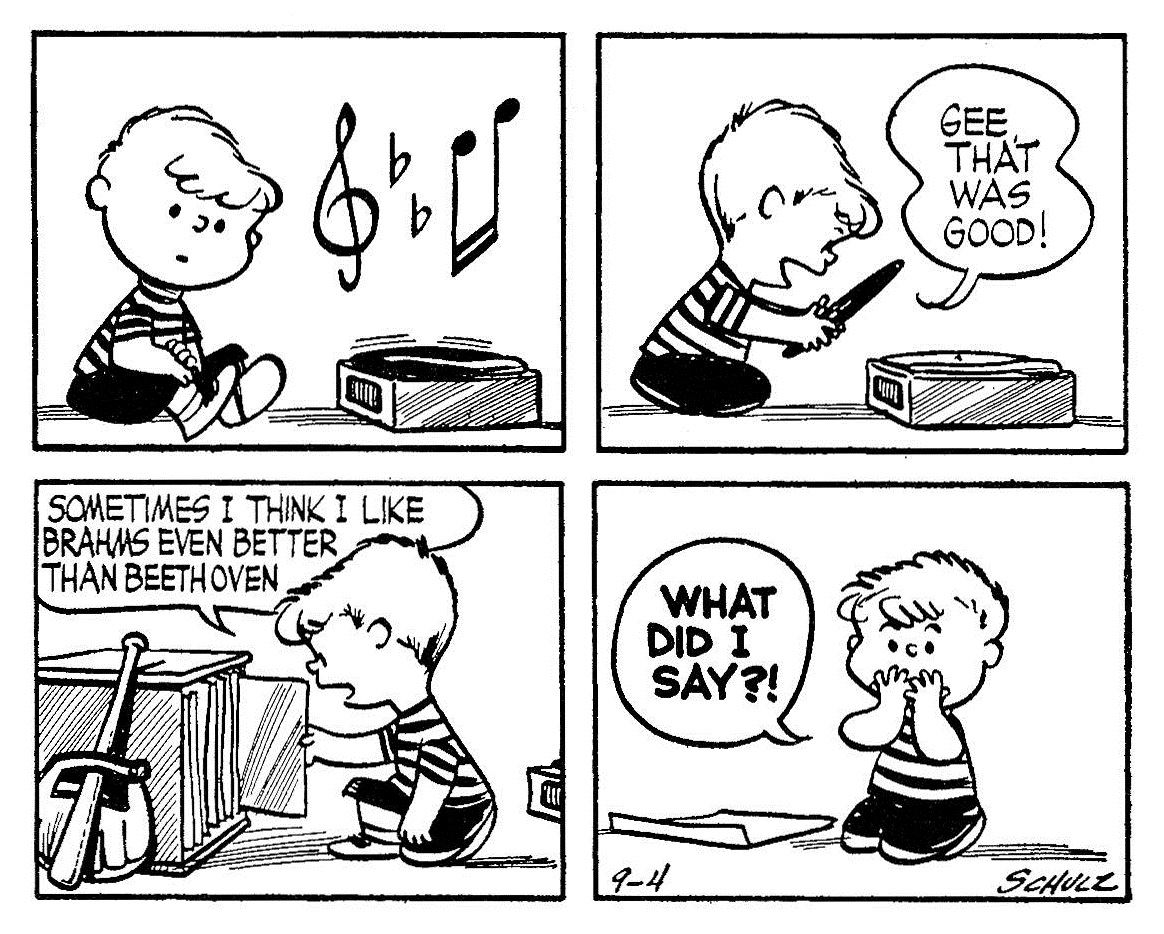
Steiner, who was literally the godson of Richard Strauss, came from Vienna, where he studied with Johannes Brahms and Robert Fuchs. He scored such classic films as “King Kong,” “Gone with the Wind” and “Casablanca.”
Among his over 300 film projects were a number of westerns. One of these was “They Died with Their Boots On” (1941), which starred Errol Flynn as George Armstrong Custer and Olivia de Havilland as Libby, the woman who becomes his wife. Steiner’s score features familiar folk material, some old-fashioned “faux” Indian music, and one of his characteristically lush love themes.
Tiomkin was a pupil of Alexander Glazunov. Born in Ukraine in 1894, he became a fresh voice of the American West, when he wrote the music for “High Noon,” the first of his western “ballad” scores. Advanced word, based on an early screening for the press, was that the picture would be a failure. However, Tiomkin had such faith in the theme song, sung in the film by Tex Ritter, that he hired Frankie Laine to record it, and the record became a world-wide hit. In fact, his score is largely credited with having saved the film.
Tiomkin was recognized with two Academy Awards: one for Best Original Song, and one for the score itself. It is the first time a composer won two Oscars for his work on the same movie. It also changed the way western scores were done. In the 1950s, Tiomkin became THE western composer of choice. He produced a number of subsequent western ballad scores, including that for “Gunfight at the O.K. Corral” (1957). Asked how it was that a composer from Ukraine could write so convincingly for the American West, Tiomkin quipped, “A steppe is a steppe is a steppe.”
Franz Waxman, perhaps another unexpected source for classic western music, was born in Upper Silesia. He arrived in the U.S. by way of Germany. Nevertheless, as part of the composer’s varied and prolific output, he did indeed score a number of films in the genre, including “The Furies” (1950), a peculiar noir-western hybrid. Walter Huston, in his final film role, plays a cattle baron who remarries and throws his empire into jeopardy. Barbara Stanwyck is his strong-willed daughter.
Hungarian-born composer Miklós Rózsa scored many films with historical settings – “Quo Vadis,” “Ben-Hur,” and “King of Kings,” among them. However, to my knowledge, his only western was “Tribute to a Bad Man” (1956). James Cagney stars as a rancher who doles out some frontier justice.
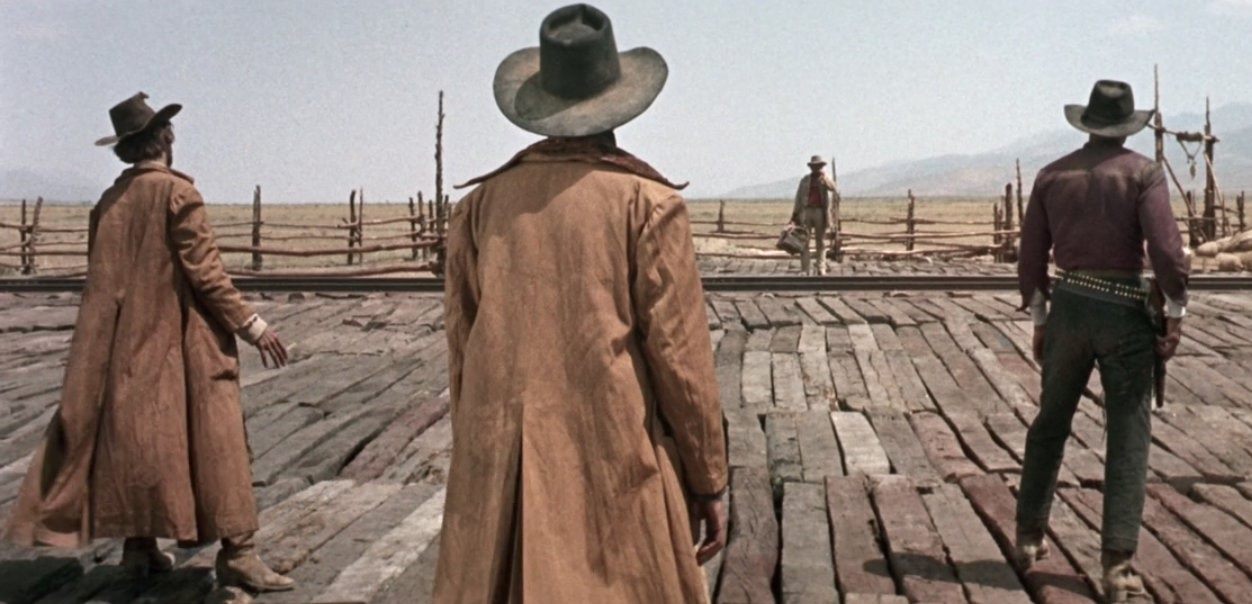
Finally, we’ll have music by Ennio Morricone, from arguably the most operatic of all spaghetti westerns, “Once Upon a Time in the West” (1968). As a reaction to Tiomkin’s ballad scores and the neo-Coplandisms of Elmer Bernstein and the rest, Morricone brings his own quirky sensibility to bear on the classic western iconography. Get ready for indelible motifs for harmonica and banjo, but also an unexpectedly moving elegiac arioso, underscoring the close of the American West with the arrival of the railroad.
Set your pocket watches for “Picture Perfect,” music for the movies. The next coach leaves this Friday evening at 6:00 EDT, on WWFM – The Classical Network and wwfm.org.

by
On the next “Music from Marlboro,” we’ll have works by two German composers who traveled widely divergent paths.
As the aging elder statesman of Romantic opulence, Richard Strauss was in his late 60s when the Nazis seized control of Germany in 1933. He was 75 at the outbreak of World War II. Controversially, he remained at home, hoping to preserve and promote German music (including his own) and to shield his Jewish daughter-in-law and grandchildren. While comprehending Strauss’ importance as a propaganda tool, Goebels wasn’t actually fond of his music, referring to him privately as a “decadent neurotic.”
All that was still decades in the future at the time Strauss wrote his Piano Quartet in C minor, in 1883-84, at the tender age of 20. Interestingly, for a composer who became celebrated for the apotheosis of the lavish tone poem, Strauss here channels his admiration for Johannes Brahms, and in a genre not generally associated with a follower of the post-Wagnerian “New Music School.” Brahms was at the height of his fame while the young Strauss was living in Berlin. In fact, Strauss attended the premiere of Brahms’ Fourth Symphony, following his appointment as music director in Meiningen at 21.
We’ll hear Strauss’ quartet, performed at the 1972 Marlboro Music Festival, with Walter Klien at the keyboard, in his early 40s and at the peak of his pianistic powers. The string players will include violinist Edith Peinemann, violist Philipp Naegele, and cellist Miklós Perènyi.
Violinist Adolf Busch lived with his family – and friend, future son-in-law Rudolf Serkin – in Berlin in the 1920s, as Serkin established himself as one of Europe’s outstanding young pianists. The musicians remained in Germany until 1927. The much-respected Busch, who was not Jewish, vehemently opposed the National Socialists. He was one of the first prominent non-Jews to do so. With the rise of Hitler, Serkin and the Busches relocated to Switzerland. Busch repudiated Germany entirely in 1933.
He and Serkin arrived in the United States, with the rest of Busch’s family, in 1938, with Europe on the brink of war. They settled in Vermont in the 1940s. There, alongside flutist Marcel Moyse, they founded the Marlboro Music School and Festival in 1951, having successfully eluded the horrors that had claimed so many others to create something of lasting beauty – a chamber music retreat in what must have seemed like a bucolic paradise.
In addition to being one of the great violinists, Busch was also a talented composer. We’ll hear his “Divertimento for 13 Solo Instruments,” from 1925, in a 1982 recording featuring Marlboro musicians: Isidore Cohen and Irene Serkin, violins; Caroline Levine, viola; Robie Brown Dan, cello; Carolyn Davis, double bass; Odile Renault, flute; Rudolph Vrbsky, oboe; Cheryl Hill, clarinet; Stefanie Przybylska, bassoon; Robin Graham and Stewart Rose, French Horns; Henry Nowak, trumpet; and Neil Grover, timpani, all under the direction of Sol Schoenbach.
The path of least resistance leads to misery, on the next “Music from Marlboro,” this Wednesday evening at 6:00 EDT, on WWFM – The Classical Network and wwfm.org.
Marlboro School of Music and Festival: Official Page
More about Strauss’ complicated relationship with the Third Reich here:
PHOTO: Adolf Busch and Rudolf Serkin in 1928
by
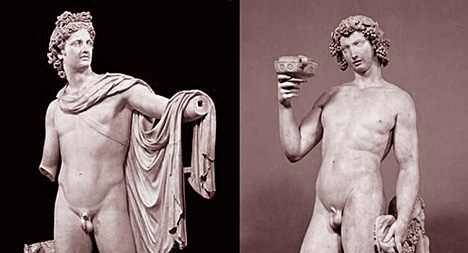
This is a contest not just between two titanic composers, but a veritable struggle between the gods.
Of the two mighty artists who were born on this date, Johannes Brahms (b. 1833), the great classicist among Romantics, was wreathed by the laurels of Apollo’s ordered rationality, and Peter Ilych Tchaikovsky (b. 1840), ever heart-on-the-sleeve, was fueled by the wine of Dionysus’ emotional truth.
We pit these musical champions against one another in the arena of public opinion today on The Classical Network, as we humbly submit to the stern judgment of our listeners. And of course, we’re hoping to raise a little money in the process.
Which of these composer rates higher in your estimation?
So as to maintain balance and not to incur the wrath of any higher powers (since, historically, the gods have been poor losers), we are looking to divide the spoils. In our quest to attain a single-day goal of $7000, for this May 7, we are asking you to contribute, in whatever amount, toward $3500 for EITHER composer.
Subjectivity is akin to voting with the heart, which should appeal very much to Dionysus, yet balance will be achieved, which, as day follows night, would surely earn the approval of Apollo. After all, both composers have earned a place in the pantheon.
A highlight of today’s broadcast will be a special Noontime Concert, in which Brahms’ “Ein Deutsches Requiem” will be presented in its entirety, in a performance by the Princeton University Chapel Choir and Orchestra, under the direction of Penna Rose.
The concert, which took place last month, was dedicated to the memory of Professor Henry Stainken Horn, Princeton Professor of Ecology and Evolutionary Biology from 1966 to 2019. Professor Horn was a member of the Chapel Choir from 1990 until his passing.
In line with our Classical argument, the performance will be prefaced by a reading from Tennyson’s “Ulysses,” by Christopher Parton, a graduate student from Princeton’s music department. Professor Horn himself read the poem to introduce last year’s Milbank Memorial Concert.
Apollonian Brahms or Dionysian Tchaikovsky? If you simply cannot decide, why not hedge your bets and leave a little offering for both? Call us at 1-888-232-1212, or contribute online at wwfm.org (click on “donate”). Then join us for TEN HOURS of Brahms and Tchaikovsky, today from 9 a.m. to 7 p.m. EDT. Thank you for your support of WWFM – The Classical Network!
PHOTOS: Apollo and Dionysus and Brahms and Tchaikovsky – game on!
by
Going on the air with the Princeton University Chapel Choir and Orchestra performing Brahms’ “Ein Deutsches Requiem” at noon. It’s all Brahms and Tchaikovsky through 7:00 EDT, as we celebrate both composers’ birthdays by raising funds to ensure a future of great classical music on the radio. Call us now at 1-888-232-1212, or donate online at wwfm.org. Thank you for your support of WWFM – The Classical Network!
Aaron Copland (93) Beethoven (95) Composer (114) Film Music (145) Film Score (143) Film Scores (255) Halloween (94) John Williams (195) KWAX (229) Leonard Bernstein (104) Marlboro Music Festival (125) Movie Music (160) Mozart (91) Opera (213) Philadelphia Orchestra (89) Picture Perfect (174) Princeton Symphony Orchestra (109) Radio (88) Ross Amico (244) Roy's Tie-Dye Sci-Fi Corner (290) The Classical Network (101) The Lost Chord (269) Vaughan Williams (105) WPRB (397) WWFM (881)
3 responses