• Klemperer A Monumental Life in Music

    Klemperer A Monumental Life in Music

    by 

    in
    6 responses

    Otto Klemperer was as monumental as his music-making. At 6 foot 5, he wore a look of granitic intensity. Seat him in front of a camera, and he assumed the gaze of a raptor staring down a field mouse.

    An associate, friend, and disciple of Gustav Mahler, Klemperer championed new works by Schoenberg, Stravinsky, and Hindemith. He tolerated no coughing or sneezing from his audience. When the New York Philharmonic failed to offer him a music directorship after 14 weeks as guest conductor, he fired off a scathing missive: “That the society did not reengage me is the strongest offense, the sharpest insult to me as artist, which I can imagine… This non-reengagement will have very bad results not only… in New York but in the whole world.” He settled in London, where a new orchestra, the Philharmonia, was created specifically for him.

    Klemperer’s power of indestructibility is legendary. No one and nothing could stop him. Not Hitler, not the U.S. State Department (that refused to renew his visa), not even a brain tumor. He made Rasputin look like a mayfly.

    His catalogue of misfortunes would have destroyed a lesser man. He suffered from severe cyclothymic bipolar disorder. He underwent surgery to remove a brain tumor “the size of a small orange.” When placed in an institution, he escaped. Later, he took a severe spill, requiring him to conduct from a chair. When he set himself on fire (while smoking in bed), he tried to douse the flames with spirits of camphor.

    I’m not sure what kind of woman would have the courage to get near him, but he managed to sire Werner Klemperer (a.k.a. Colonel Klink). On one occasion, Georg Solti knocked at the door of his dressing room, and when Klemperer answered, he was in his boxers and covered in lipstick.

    Klemperer’s career was capped by a glorious Indian summer that spanned 20 years. This juggernaut of the podium finally ground to halt at the age 88.

    Like the man, his recordings are built to last. We’ll celebrate one of the 20th century’s greatest conductors with a few of them, on his birthday.

    First, on today’s Noontime Concert, it’s a double-dollop of Baroque music courtesy of Gotham Early Music Scene, or GEMS. Dan McCarthy, Baroque viola, and Dongsok Shin, harpsichord, will perform music by Johann Gottlieb Graun, from a program titled “The Emergent Viola.” Then Vox Aquarum will offer “Anthems and Devotions by Henry Purcell.”

    These performances were captured at GEMS’ Midtown Concerts series, held at the chapel of St. Bartholomew’s Church, 325 Park Avenue, in New York City. Free concerts take place at St. Bart’s on Thursdays at 1:15 p.m. For more information, visit GEMS’ website, gemsny.org, and click on the events calendar.

    We’ll be verklempt for Klemp – and partial to Purcell – from 12 to 4 p.m. EDT, on WWFM – The Classical Network and wwfm.org.

  • Remembering Flutist Robert Stallman

    Remembering Flutist Robert Stallman

    by 

    in
    6 responses

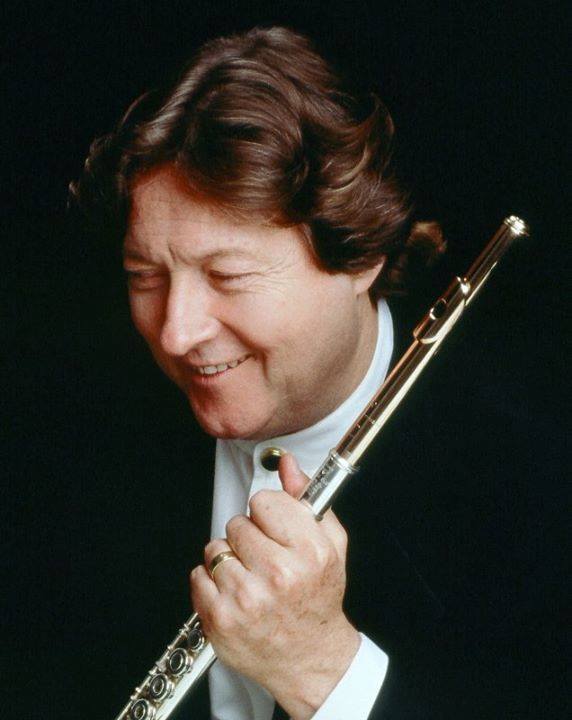
    I’m very sorry to learn of the death of my friend, the flutist Robert Stallman. Bob was one of several artists I got to know while living in Philadelphia, as a proprietor of an antiquarian book business. I scored big points by being able to identify him (“…like the flutist?”) by his name on his credit card.

    Bob and I palled around and ate a lot of lunches together. He was always neck-deep in some project or other, producing his own CDs and creating arrangements of the works of his beloved Mozart and Schubert. These went beyond mere transcriptions. They involved all sorts of creative decisions, and Bob inevitably arrived at polished and ingenious solutions to every kind of puzzle.

    I absolutely recommend his recording of Mozart “New” Quintets for Flute and Strings, on his own label, Bogner’s Café.

    Stallman studied with Jean-Pierre Rampal, recorded with Placido Domingo, and championed the music of his friend, the English composer Stephen Dodgson. In addition, he gave first performances of works by John Harbison, Karel Husa, William Thomas McKinley, and Burr Van Nostrand, among others.

    He was crazy about music, of course, but he was also fond of literature and good food. His apartment walls were adorned by letters and autographs of the great composers, which he collected.

    We started to drift apart after he and his wife, Hannah, moved to Massachusetts, maybe four or five years ago. We did do a telephone interview over the air in 2015. Prior to that, he was my guest several times on “The Lost Chord.”

    Bob was 73 years-old. I will always remember him as cheerful, garrulous, and boundlessly enthusiastic. Often, he seemed almost boyish. He was certainly far younger than his years.

    I’ll honor Bob with one of his recordings, following Otto Klemperer’s performance of Beethoven’s “Miss Solemnis” – which is to say around 3:40 p.m. EDT, on WWFM – The Classical Network and wwfm.org.
    http://www.aboutrobertstallman.com/


  • Samantha Josephson Tribute Premieres NJ Concert

    Samantha Josephson Tribute Premieres NJ Concert

    by 

    in
    4 responses

    Poignantly, the University of South Carolina awarded a posthumous degree to the parents of Samantha Josephson on Saturday. Josephson, who was a resident of Robbinsville, NJ, was found murdered in March after climbing into a vehicle she mistook for an Uber.

    The tragedy has been widely reported in the media. Now Josephson’s cousin, composer Louis A. Josephson has a written a moving tribute to her memory.

    The work, “Remember Her Name,” will be given its world premiere by the Westminster Community Chorus at the Princeton Meadow Event Center on Friday at 8 p.m. Also on the program will be choral works by Brahms, Mendelssohn, Mozart, Franck, Brant Adams, and Ēriks Ešenvalds, and orchestral music by Copland, Ravel, Dvořák, and Sibelius, performed by the Westminster Community Orchestra.

    Louis A. Josephson and Ruth Ochs, music director of the WCO, will drop by The Classical Network this afternoon at 5:00 EDT to tell us more about the concert, the new work, and What’s My Name, an organization set up by Samantha Josephson’s parents to promote awareness of the importance ride share safety (additional information at whatsmyname.org).

    I’ve also programmed music by Sir Arthur Sullivan, Joseph Achron, and Ottokar Nováček, to be offered on the anniversary of their births, and Jane Glover will conduct Haydn, among the featured selections, between 4 and 7 p.m. EDT, on WWFM – The Classical Network and wwfm.org.


  • Doris Day Dies at 97 Animal Lover RIP

    Doris Day Dies at 97 Animal Lover RIP

    by 

    in
    4 responses

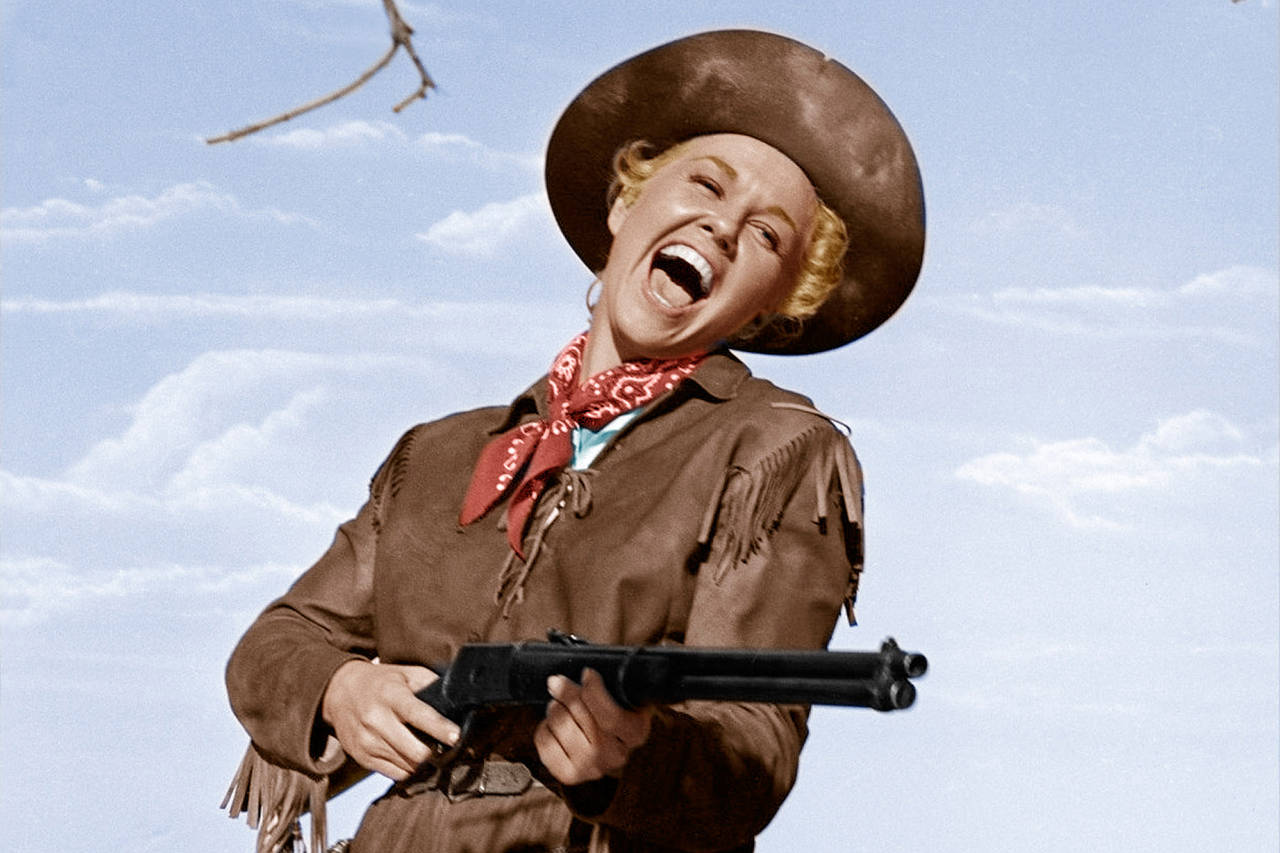
    Doris Day died this morning at the age of 97. She liked animals better than people. Me too. R.I.P.

    https://www.cnn.com/2019/05/13/entertainment/doris-day-dead/index.html


  • Whitman’s British Isles Influence

    Whitman’s British Isles Influence

    by 

    in
    5 responses

    While Walt Whitman has attained a venerable status here in the United States, as essentially America’s national poet, more surprising, perhaps, was his impact on composers of the British Isles.

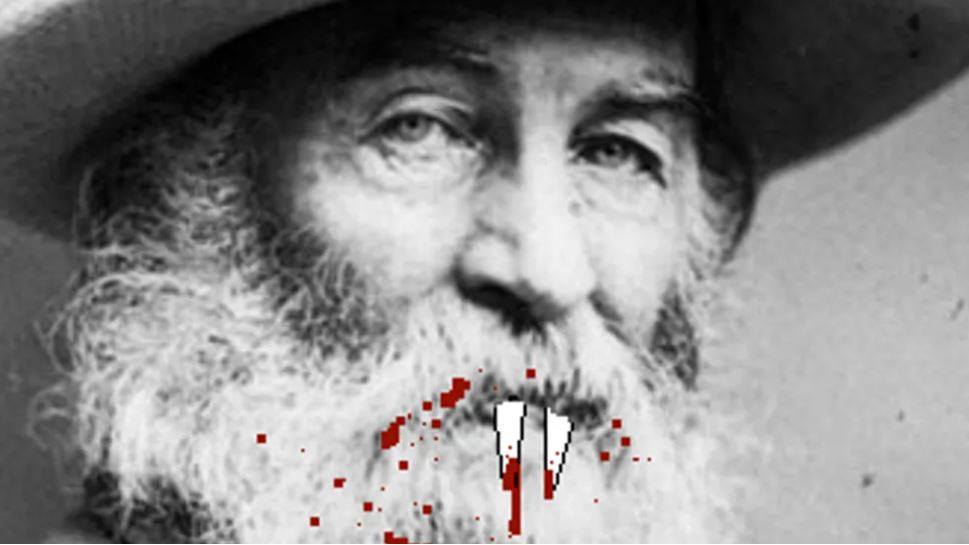
    Whitman was beloved by artists in the U.K. Interestingly, I learned in doing some reading in preparation for these shows that writer Bram Stoker was so taken with Whitman, the man, that allegedly he modeled his characterization of Dracula upon him (for more, follow the links below). And he meant it as a compliment! Stoker viewed Whitman as the quintessential man and kept up a correspondence with him until the poet’s death.

    More to our purposes, this Sunday night on “The Lost Chord,” we’ll hear two works by Gustav Holst, composer of “The Planets:” the “Walt Whitman Overture,” written in 1899, when Holst was about 25 years-old, and “The Mystic Trumpeter” from 1904.

    Holst first encountered Whitman’s poetry while still a student at the Royal College of Music. He would go on to set a number of Whitman texts. “The Mystic Trumpeter” made a particularly strong impression on him. His musical response was an important stepping stone in the composer’s artistic development, emerging as he was from a decade of Wagner worship and not yet giving himself over to the absorption of folk English material. Still, there are certainly glimpses of the mature artist to come.

    Holst’s good friend and colleague, Ralph Vaughan Williams, was also influenced by Whitman, not only in the writing of his frequently recorded “A Sea Symphony,” portions of his cantata “Dona nobis pacem,” and his work for chorus and orchestra, “Toward the Unknown Region,” but also in the less frequently encountered mini song cycle, “Three Poems by Walt Whitman.” The set consists of “Nocturne,” “A Clear Midnight,” and “Joy, Shipmate, Joy!” Written in 1925, the songs are products of Vaughan Williams’ maturity. The composer was around 53 years-old.

    Frederick Delius was yet another English composer deeply influenced by Whitman. Delius’ settings for baritone, chorus, and orchestra, titled “Sea Drift,” from 1903-04, are collectively regarded as one of the composer’s finest achievements. “Sea Drift” was composed at the peak of Delius’ vitality.

    His “Songs of Farewell,” however, were produced under quite different circumstances. Delius was both blind and paralyzed, suffering from the effects of advanced syphilis, when he received an unexpected gift in the arrival of a young musician by the name of Eric Fenby, who offered his services as an amanuensis. The result was a rekindling of Delius’ creativity.

    “Songs of Farewell,” a cycle of dreamy choral settings after Whitman, was dictated to Fenby by Delius in 1929-30. There are five songs: “How sweet the silent backward tracings;” “I stand as on some mighty eagle’s beak;” “Passage to you;” “Joy, shipmate, joy!;” and “Now finale to the shore.”

    We continue our celebration of “the good gray poet,” all month long, for the occasion of the bicentennial of his birth. Whitman was born in Huntingdon, NY, on Long Island, on May 31, 1819, and he died in Camden, NJ, on March 26, 1892.

    “Walk out with me toward the unknown region…” Join me for “The Mystic Trumpeter,” the second of four programs, this Sunday night at 10:00 EDT, on WWFM – The Classical Network and wwfm.org.


    Read Bram Stoker’s effusive letter to Whitman here:

    https://www.brainpickings.org/2019/01/09/bram-stoker-walt-whitman-letter/

    Walt Whitman’s influence on “Dracula” and (possibly) the 1931 “Frankenstein:”

    https://bigthink.com/book-think/walt-whitman-frankenstein-dracula-and-the-afterlife


Tag Cloud

Aaron Copland (93) Beethoven (95) Composer (114) Film Music (145) Film Score (143) Film Scores (255) Halloween (94) John Williams (195) KWAX (229) Leonard Bernstein (104) Marlboro Music Festival (125) Movie Music (160) Mozart (91) Opera (213) Philadelphia Orchestra (89) Picture Perfect (174) Princeton Symphony Orchestra (109) Radio (88) Ross Amico (244) Roy's Tie-Dye Sci-Fi Corner (290) The Classical Network (101) The Lost Chord (269) Vaughan Williams (105) WPRB (397) WWFM (881)

DON’T MISS A BEAT

Receive a weekly digest every Sunday at noon by signing up here


RECENT POSTS